
- User-generated content can drive awareness, consideration, conversion, and retention when deliberately designed for each funnel stage.
- High-performing UGC relies on authentic creators, strong first-3-second hooks, clear problem-solution narratives, and platform-native video structure.
- Scalable UGC performance depends on repeatable systems for creator sourcing, briefing, production workflows, creative testing, and asset management.
User-generated content (UGC) has evolved into a core driver of performance marketing. Across DTC and enterprise brands alike, I’ve seen UGC boost creative efficiency and customer trust when it’s deployed with strategy. But too often, it’s mishandled as filler content, produced without structure or testing, and stripped of the strategic intent that makes it truly effective.
This article unpacks how UGC becomes a repeatable growth lever. I’ll break down the infrastructure, creative systems, sourcing, and testing strategies that drive real performance. If you’re managing acquisition, media, or creative at a growth-focused brand, this will give you a clear, practical framework to elevate and scale your UGC program with intent.
The Strategic Role of UGC in the Brand Ecosystem
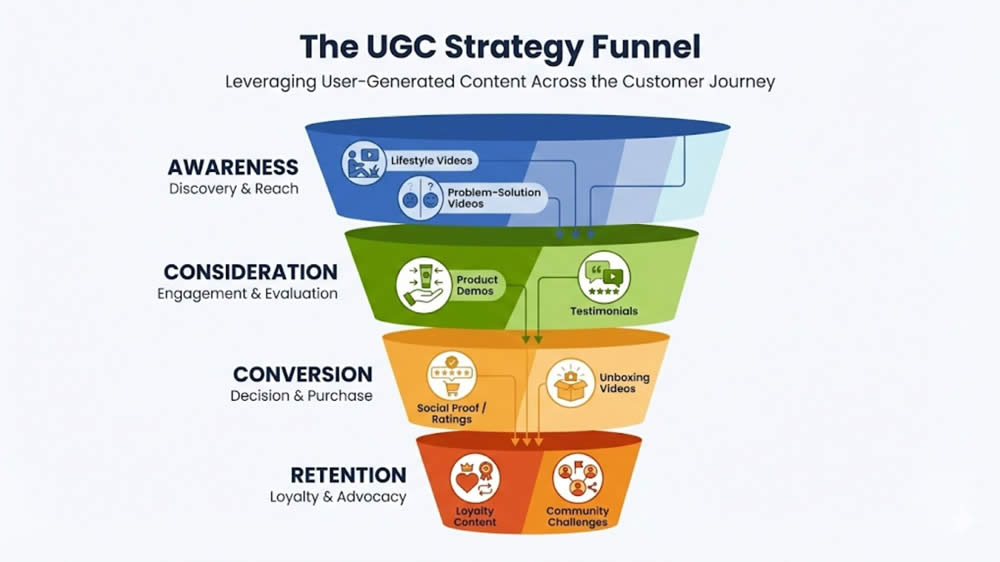
UGC Across the Funnel
One of the first things I do with clients is map out how UGC fits across their entire customer journey. Too often, UGC is limited to top-of-funnel creative or used only for retargeting. In reality, UGC can power every stage of the funnel:
- Awareness: Create relevance and attention through authentic, platform-native storytelling.
- Consideration: Answer objections and showcase product benefits through social proof.
- Conversion: Drive urgency with trust-based narratives from relatable creators.
- Post-purchase: Reinforce satisfaction and encourage community content for retention.
This means we’re not just thinking about UGC as video content, but as a strategic message delivery system that can be shaped for any step of the user’s path to purchase.
UGC Within the Creative Mix
UGC isn’t meant to replace studio or branded content, nor is it just influencer work in disguise. Instead, it complements both. While influencer campaigns lean on the creator’s audience, UGC focuses on the content itself and how well it performs inside your media strategy.
Here’s how I think about positioning UGC in the broader creative stack:
- Use UGC to test hooks, storytelling angles, and audience objections quickly.
- Use branded content to reinforce authority, craftsmanship, or heritage messaging.
- Use influencer content when reach and community engagement are the priority.
When you view UGC as one layer in a modular creative engine within a broader content marketing ecosystem, it unlocks new levels of testing velocity and message precision that most brands are missing today.
What Makes a Great UGC Video? (With Examples)
Key Traits of High-Performing UGC
Truly effective UGC follows a clear set of creative principles. It doesn’t matter if it’s filmed on an iPhone or a RED camera; if the delivery feels flat, the hook is weak, or the message is unclear, performance will suffer. High-performing UGC grabs attention fast, speaks directly to the viewer’s needs, and feels platform-native. That combination is what drives real action.
The most consistent traits we build into successful UGC include:
- Authenticity: The creator sounds and looks like someone the audience trusts.
- Strong hook: The first 3 seconds spark curiosity or deliver a problem statement.
- Real-user framing: “Here’s what helped me” beats “Here’s what this product does.”
- Platform-specific structure: TikTok needs chaos and pacing; Meta prefers clarity and CTA control.
These traits aren’t optional. They form the foundation of UGC that performs in live campaigns, not just looks good on a content calendar.
Examples of Effective UGC Styles
Certain UGC styles reliably outperform others, especially when they’re matched to funnel stages and platform intent. These formats succeed because they combine emotional relevance with clarity and native execution. We’ve tested each of these dozens of times across verticals, from beauty and skincare to CPG and SaaS.
Two standout examples include:
- TikTok unboxing with voiceover : This format blends quick visuals with relaxed commentary. It’s ideal for capturing curiosity and increased CTRs; we’ve seen up to 4x improvements over static product shots.
- Problem → solution skit: Great for retargeting, this structure mirrors the viewer’s struggle and positions the product as the fix. It’s fast, relatable, and converts well when framed with humor or directness.
When planned intentionally, these formats create not just engagement but scalable ad performance. That’s the difference between content that entertains and content that converts.
UGC Content Archetypes and Performance Profiles
High-Performance Formats
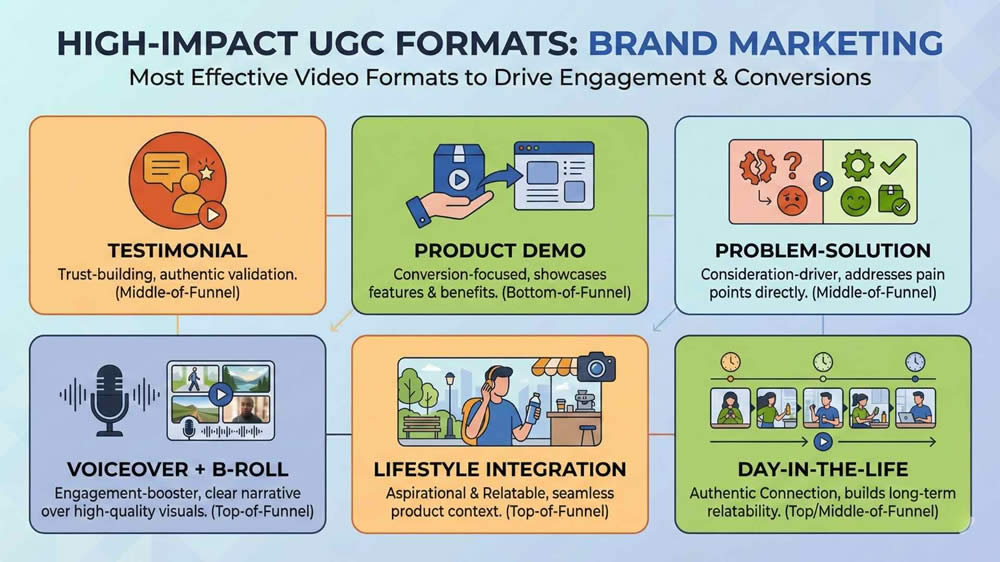
In every campaign, we rely on a set of proven UGC formats that map well to specific goals. Each format has different strengths, and the key is knowing when to use which. For instance, talking-head testimonials build trust and speak directly to conversion-stage concerns, while a fast-cut lifestyle montage might serve to drive initial intrigue.
Here are some of the best-performing archetypes in my experience:
- Direct-to-camera testimonials: Great for explaining product benefits with personal emotion.
- Unboxing and how-to demos: Ideal for introducing new products or showing ease of use.
- Voiceover with lifestyle B-roll: Combines visual storytelling with a narrative arc.
- Problem-solution skits: Works especially well on TikTok and Meta, where dramatization increases watch time.
- Day-in-the-life integrations: Subtle, relatable content that naturally includes the product.
Each format can be adapted to the tone of your brand and the platform you’re targeting. I recommend building a format matrix by product line and campaign goal to avoid repetition and better map creative to performance KPIs.
Matching Format to Funnel Stage
UGC should not be a one-size-fits-all format. When deployed strategically, different styles of UGC serve different stages of the funnel. For example:
- Top-of-funnel: Problem-solution videos, quick-hitting skits, or punchy lifestyle pieces.
- Mid-funnel: Testimonials, tutorials, and breakdowns that address objections.
- Bottom-of-funnel: Direct call-outs to offers, benefits, and social proof in high-trust formats.
This kind of mapping allows creative teams and media buyers to be in sync, eliminating the randomness that often plagues ad account creative deployment.
Creator Sourcing and Operational Scalability
Creator Selection Methods
Most brands make the mistake of treating creators like influencers. Performance UGC creators are different. You’re not hiring them for their reach. You’re hiring them for their delivery, clarity, platform fluency, and ability to follow structured briefs. That’s why a repeatable sourcing engine is crucial.
Here are the primary sourcing routes I recommend:
- Creator marketplaces : Tools likeBounty, Minisocial, Trend.io, and Billo are reliable for volume.
- Manual outreach: DM outreach works well for niche verticals or brand-aligned creators.
- Internal rosters: Build long-term relationships with top performers and re-engage them per campaign.
- Community callouts: Turn loyal customers into content creators with incentives or programs.
The goal is to never scramble for creators again. Maintain a rotating bench that you can call on monthly and vet new ones constantly to expand creative range.
Scaling with Systems
Once sourcing is under control, you need workflows that allow UGC to scale without quality dropping off. That means:
- Centralizing briefs, feedback, and approvals
- Building shared folders for content tracking
- Creating SOPs for creator onboarding and review
I also recommend assigning internal creative managers to oversee creator relationships and review first drafts before they go to editing. That pre-QA step cuts revisions in half and ensures output stays aligned with the original brief.
Creative Briefing and Content Direction
Brief Structure and Strategy
If your briefs are vague or overly prescriptive, you’re going to get weak UGC. A strong brief empowers the creator with the right message and structure while giving them creative room to personalize the delivery. I’ve written hundreds of UGC briefs, and the most effective ones always include:
- Hook direction: Ideas or references for scroll-stopping openings
- Emotional angle: The feeling or transformation the product provides
- Value props: Clear explanation of features, but framed as outcomes
- Visual requirements: Framing, lighting, product visibility
- Voice and tone: Should it be casual, excited, skeptical, etc.
- Avoid list: Phrases, framing, or competitor references that are off-limits
This structure not only ensures message control but also gives creators a clear path to execute confidently and with consistency across videos.
Balancing Authenticity and Brand Control
You can’t script authenticity, but you can direct it. The best UGC creators don’t just read a list of bullet points. They internalize the product value and deliver it in their own language. This is why we push for structured spontaneity. Give creators the “why” behind the message and trust them to execute in a way that aligns with their personal style.
We also implement a two-step review process:
- Rough cut preview: Check for message clarity and tone before post-production
- Final review: QA for compliance, branding, and export format
This keeps things fast without sacrificing quality, which is critical when your media team needs fresh content weekly.
UGC Production Workflow: From Creator to Ad Unit
Workflow Phases
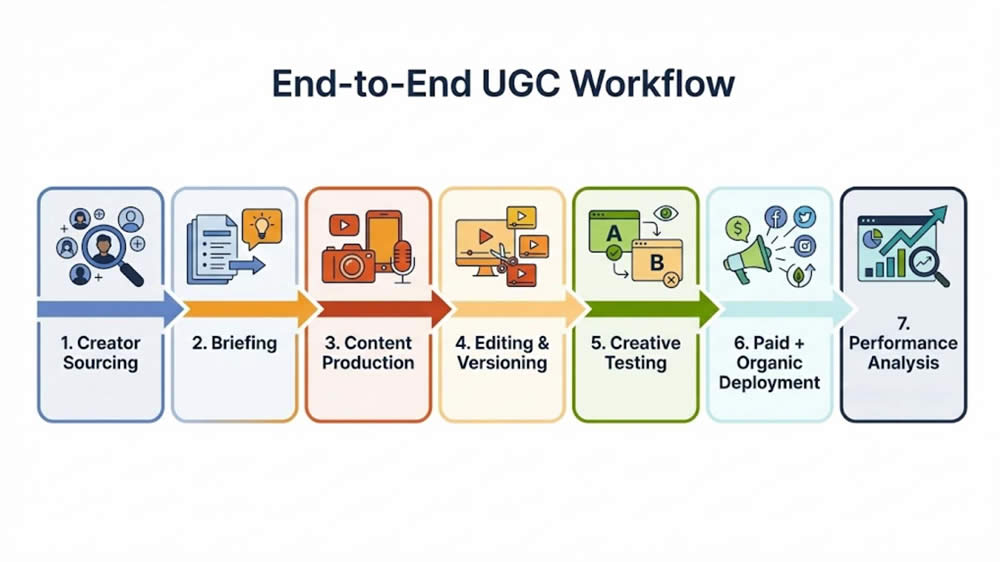
To get from idea to usable ad creative efficiently, we follow a six-phase UGC workflow that we repeat monthly:
- Creator sourcing and vetting
- Brief development and delivery
- First draft submission
- Internal feedback round
- Post-production (edits, subtitles, cuts)
- Asset tagging and deployment
Each step has a documented owner, clear deadlines, and required checkpoints. We use Airtable or Notion to manage this pipeline and assign accountability.
Post-Production and Delivery Formats
Once we’ve approved raw content, our editing team steps in to create variants. Here’s what we typically deliver for each piece:
- Primary cut (30–45 seconds)
- Short version (under 15 seconds for hooks or Reels)
- Subtitle and non-subtitle versions
- 9:16, 1:1, and 4:5 aspect ratios for platform flexibility
- Optional VO-only version for modular use
These deliverables feed directly into our testing pipeline and reduce the need to re-edit later when a new campaign brief comes in.
Performance Distribution: Paid, Organic, and Hybrid Models
UGC in Paid Media
UGC works best when built for paid media. That’s where we get scale, control, and testing speed. But performance depends on how well creative blends into the native platform experience rather than feeling like a traditional advertisement. I make sure every asset is designed to convert, not just look good.
Here’s how we most commonly deploy UGC across channels:
- Meta (Facebook/Instagram): Used as dark posts or native ad creatives in feed, stories, and Reels. Hook-first structure with CTA in the last 5 seconds works best.
- TikTok Spark Ads: Posted organically on creator handles and then whitelisted for paid. This allows for engagement carryover and higher native trust.
- YouTube Shorts: Repurposed vertical content placed into Shorts campaigns or integrated into Performance Max asset groups.
Each platform demands different creative cues, and the best UGC systems account for that before the first shot is even filmed.
Organic and Hybrid Approaches
While paid unlocks scale, organic UGC offers engagement, brand perception, and authenticity at a different level. The trick is to plan your hybrid approach from the beginning; don’t treat organic and paid as two separate worlds.
Here are hybrid strategies we’ve executed effectively:
- Creator-led organic first: Have the creator post on their own feed. Then license the post and run it as paid under their handle using whitelisting or Spark.
- UGC repost strategy: Post customer content on your brand’s handle, but ensure it’s of high enough quality to blend into your paid strategy later.
- UGC-for-retargeting: Use customer video clips in email, SMS, or even on post-click landing pages.
This blended strategy increases trust and gives your paid ads added social validation. When viewers see the same content they’ve encountered in an organic context, it feels more cohesive and believable.
Advanced Creative Testing and Performance Analysis
Testing Methodologies
Creative testing is where UGC evolves from simple content into a measurable driver of business results. I’ve seen campaigns where one variation of a 30-second testimonial outperforms another by 6x ROAS, simply due to hook pacing and tone. This is why we test at the modular level. Instead of just “does this video work?”, we ask “what’s working inside this video?”
Here are the most common testing experiments we run:
- Hook testing: Test the same script with three alternate intros (problem statement, question, or high-energy moment).
- CTA testing: Move call-to-action from the end to the middle or try multiple phrasing styles.
- Format comparison: Talking-head vs. VO-over-footage to see which format gets more attention and click-through.
Creative Fatigue and Refresh Protocols
A high-performing UGC asset doesn’t stay evergreen forever. Fatigue sets in, especially in high-frequency paid campaigns. The trick is recognizing fatigue early and having a protocol for rotating in fresh content before ROAS decays.
We monitor three key fatigue indicators:
- Decline in CTR over 7-day trailing averages
- CPC increases without audience change
- Post engagement drop for Spark or whitelisted content
When two of these are detected, the creative is flagged and replaced with a new variant. We aim to refresh creatives every 3 to 4 weeks, and always keep 3 to 5 variants queued in testing so we never face a dead zone in asset availability.
Asset Management and Versioning for Scale
Asset Structuring and Tagging
UGC at scale can get messy. Without a centralized structure, you end up with duplicate edits, missing usage rights, or confusion about what variant lives where. That’s why we implement asset libraries with strict naming conventions and tagging structures.
Our asset database tracks each UGC piece with:
- Creator name
- Format (testimonial, demo, etc.)
- Funnel stage usage
- Performance rank (e.g., top 20% CTR)
- Usage rights expiration date
- Platform specs (aspect ratio, duration, subtitles)
We use Airtable, Notion, or Google Sheets with filters and status tags to keep this clean. This enables teams to self-serve the content they need without redundant requests or re-edits.
Content Versioning Playbook
Every UGC asset is versioned to maximize utility across platforms and campaign types. From a single 60-second creator video, we produce:
- Full-length edit: For use in stories or long-form feed placement
- Microcut hooks: 5 to 15-second teaser versions
- Subtitled and non-subtitled variants
- Text-overlay formats: With headlines adapted for specific audiences
- Platform-specific exports: 9:16, 1:1, 4:5, with tailored intros
Versioning isn’t just about resizing; it’s about adapting messaging to different placements, audiences, and contexts. Done right, one creator video can produce six to eight high-performance variants without diluting the core message.
Internal Enablement: Making UGC Work Across Departments
Cross-Departmental Integration
UGC is often seen as a performance media asset, but its full value is only unlocked when it’s shared across departments. I’ve worked with teams where UGC was isolated in the paid ads silo, and others where it was integrated into brand, creative, CX, and even sales enablement. The difference in results is night and day.
Here’s where we’ve expanded UGC use cases internally:
- Brand: Use UGC in brand campaigns to show customer love and build credibility.
- CX: Deploy testimonial clips in help centers and email replies to improve trust.
- Email & SMS: Embed short videos into post-purchase flows or product drops.
- Sales: In B2B settings, we’ve even used UGC to validate product credibility on landing pages.
Getting buy-in across teams requires education. I recommend running a quarterly internal UGC demo to showcase results, explain processes, and show where each team can contribute or benefit.
Legal, Compliance, and Usage Alignment
Another critical component is ensuring that the legal, brand, and media teams are aligned on usage rights, disclaimers, and licensing. We build legally approved templates for:
- Creator licensing agreements
- Platform-specific usage clauses (Meta, TikTok, YouTube)
- Disclosure policies and branded content tagging
- Content exclusivity and reuse periods
When compliance becomes a proactive part of your UGC workflow, you reduce bottlenecks and avoid the dreaded “take down that video” Slack message that ruins campaign momentum.
UGC Audit Framework for In-House Teams
Audit Dimensions
If your UGC program has been running for more than 60 days, you need to pause and evaluate. We run UGC audits every quarter to assess efficiency, quality, and alignment with performance goals. The audit has five main dimensions:
- Input volume: Are you generating enough content per product line or campaign?
- Format variety: Are you overusing one UGC style? Where’s the creative fatigue?
- Performance spread: Are winners consistent or flukes? Do you have a hit rate?
- Funnel coverage: Do you have UGC tailored for TOFU, MOFU, and BOFU?
- Internal process flow: Is sourcing, briefing, editing, and approval streamlined?
We document this using a scorecard that flags gaps, inefficiencies, or over-dependencies. Then we design a 90-day sprint to rebalance and upgrade the system.
Sprint-Based Optimization
Post-audit, we set three key sprint goals:
- Content goal: Increase format or creator diversity
- Process goal: Reduce production cycle from X to Y days
- Performance goal: Increase % of tested creatives hitting ROAS benchmark
Sprint-based upgrades keep the program evolving without overwhelming the team. UGC isn’t a one-and-done initiative. It’s a creative channel with its own rules, rhythm, and refresh rate.
Final Thoughts: UGC as a Growth Lever, Not a Tactic
Too many brands treat UGC like an experiment. Something to “try” when budgets are tight, or campaigns stall. But those of us deep in performance marketing know that UGC, when treated seriously, is a creative discipline with real strategic weight. It can drive down CAC, accelerate testing velocity, and bridge the gap between brand voice and customer trust.
If you’re going to win with UGC, you need systems. You need a sourcing pipeline, a briefing protocol, a testing methodology, and an internal playbook that every team can plug into. This article is just a starting point. The real work is building the team, tooling, and trust to run UGC as a core part of your creative engine. When you get that right, UGC stops being a tactic and becomes a reliable lever for growth.
About LocalEyes: Powering UGC and Performance Video for Modern Brands
At LocalEyes, we know firsthand what it takes to produce UGC-style content that actually converts. For over seven years, we’ve helped hundreds of brands transform customer stories and creator-driven narratives into high-performance video assets. Whether it’s direct-to-camera testimonials, product walk-throughs, or social-first content designed to win in Meta or TikTok ad environments, we bring a creative and strategic lens to every frame we produce.
With more than 3,900 videos delivered and over 500 five-star reviews, we’ve earned our spot as one of America’s most trusted video production partners. Our Emmy Award-winning production team and coast-to-coast presence allow us to execute at scale without sacrificing speed or story. If your brand is ready to take UGC to the next level, not just as content, but as a performance engine, then let’s talk. Reach out to LocalEyes to see how we can help you build a UGC pipeline that drives measurable business results.

Founder at LocalEyes Video Production | Inc. 5000 CEO | Emmy Award Winning Producer