- Video marketing drives brand salience and purchase intent by embedding messages through storytelling, sound, and visuals across all funnel stages.
- Modular, platform-native video strategies enable scalable, personalized content tailored to audience, channel, and buyer journey position.
- Effective video systems require structured workflows, performance-based testing, and alignment across media, CRM, sales, and product functions.
As someone who has worked on video campaigns for global enterprises and challenger brands alike, I’ve seen firsthand how video marketing can either be a game-changing force or an under-leveraged asset. This guide is not about surface-level tips or beginner how-tos. It’s a strategic playbook designed for professionals looking to integrate video deeply into their marketing architecture, with precision, scalability, and measurable impact.
We’ll explore how video functions across the funnel, how to ideate effectively, what production workflows make the most sense at scale, and how to align video with paid, owned, and earned media efforts. The guide focuses on building a sustainable content engine, architecting platform-native creative, setting up measurement frameworks, and ensuring internal systems support consistent, high-quality video output.
<
Strategic Role of Video in Brand Marketing
The Marketing Power of Video
Video does more than communicate information. It creates memory. Through story, sound, and visuals, video encodes messages into long-term recall, influencing brand salience, preference, and purchasing behavior in ways no other medium consistently achieves.
Video’s strength also lies in its flexibility across channels. It can anchor TV campaigns, drive digital performance, support CRM, and scale across paid, owned, and earned media. When orchestrated well, video becomes a system of emotional and rational persuasion.
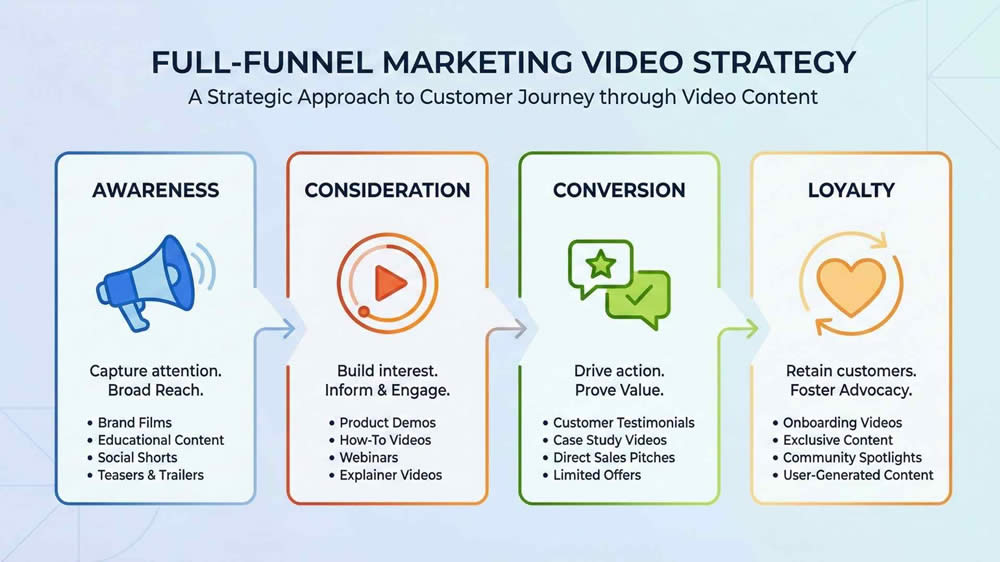
Role of Video Across the Funnel
Different funnel stages require different creative approaches, and video adapts effectively at each level:
- Top funnel focuses on reach, emotion, and brand affinity
- Mid funnel emphasizes education, clarity, and social proof
- Bottom funnel drives action through demos, CTAs, and urgency
Leading brands no longer rely on single hero videos. Instead, they deploy interconnected video systems. A cinematic opener may drive awareness, followed by retargeted explainers or testimonials shaped by behavioral signals. This orchestration is intentional and strategy-driven.
Categorizing Video Content by Marketing Objective
Awareness-Driven Formats
Awareness video must do more than introduce a brand. It needs to position, differentiate, and emotionally connect within seconds. This often takes the form of cinematic brand films, animations, or polished narratives made for YouTube, CTV, or social campaigns.
But reach isn’t the only goal. The strongest awareness videos are built for resonance and memorability. That requires aligning execution with brand strategy:
- Voice, tone, and visuals reinforce the brand’s positioning
- Story arcs reflect the company’s core promise or worldview
- Sound, pacing, and motion fit the audience’s expectations
Engagement and Consideration Content
Mid-funnel audiences are evaluating your offer. Now they want to understand product value, differentiation, and credibility. This is where we use explainers, mini-documentaries, behind-the-scenes looks, and thought leadership videos. Episodic formats are especially powerful for engagement.
Clear, relevant communication beats generic claims. A demo showing real workflow impact is more persuasive than empty value props. Tailor your message to each decision-maker:
- CMOs want business outcomes and messaging logic
- Ops leads care about implementation and efficiency
- Technical buyers expect depth, clarity, and credibility
Conversion-Focused Video
Conversion video is surgical. These assets need to collapse time-to-purchase and reduce friction at the decision point. We often rely on formats such as testimonial-driven case studies, punchy demo videos, personalized landing page video explainers, or direct response-style social videos. These videos should feature clear calls to action, offer anchors, or scarcity levers when appropriate.
One mistake I see brands make is overproducing conversion videos. You don’t need drone shots or sweeping cinematography. You need clarity, credibility, and customer-centric proof. A 45-second video with a well-structured testimonial can outperform a $100K brand film if the targeting is right and the pain point is resolved convincingly.
Post-Purchase and Loyalty Content
Post-purchase video is a high-impact, often-overlooked stage in the customer lifecycle. Think onboarding tutorials, thank-you messages, user-generated content (UGC), or previews of upcoming features. These videos strengthen loyalty and keep the brand relationship alive beyond the transaction.
The goal isn’t polish, it’s authenticity. When customers see real users or team members, it builds trust. These formats work especially well:
- Behind-the-scenes access
- UGC compilations
- Personalized onboarding and milestone moments
They reduce churn, promote upsells, and drive organic advocacy when done with care.
Internal and Partner-Facing Videos
Video isn’t just for customers. It’s a powerful tool for internal communication and partner enablement. Internal explainers, onboarding series, and executive video briefings help unify messaging across functions more effectively than static docs or long emails.
When launching a new product, these videos help align teams quickly and clearly. They’re equally effective for external partners:
- Internal training ensures consistent messaging across sales and marketing
- Partner videos clarify pricing, positioning, and updates across distributed teams
Platform-Native Video Strategy
Platform Mechanics and Format Constraints
Each platform has its own design language, UX behaviors, and technical constraints. A video that performs on YouTube might stall on Instagram or feel awkward on LinkedIn. Dimensions, length, captioning practices, and thumb-stopping thumbnails all matter. But beyond specs, what really matters is platform psychology, how users behave and consume content on each channel.
For example:
- Instagram and TikTok reward vertical video and rapid hooks within the first two seconds
- LinkedIn favors B2B context, personal storytelling, and clear professional value
- YouTube demands strong intros, sustained engagement, and watch time optimization
Algorithm-Aware Creative
Algorithms evolve constantly. They respond to user behavior, content velocity, and platform trends. Great video content adapts to these changes. Success on TikTok may depend on native audio use. On YouTube, it might hinge on thumbnails and metadata.
We design creatively with distribution in mind. That means:
- Multiple versions for different platforms and placements
- Modular scripts with flexible CTA sections
- Formats built to enable A/B testing and rapid iteration
Being creative is essential. Structuring content for how it’s delivered is what makes it perform.
Ideation Frameworks for Repeatable Creative
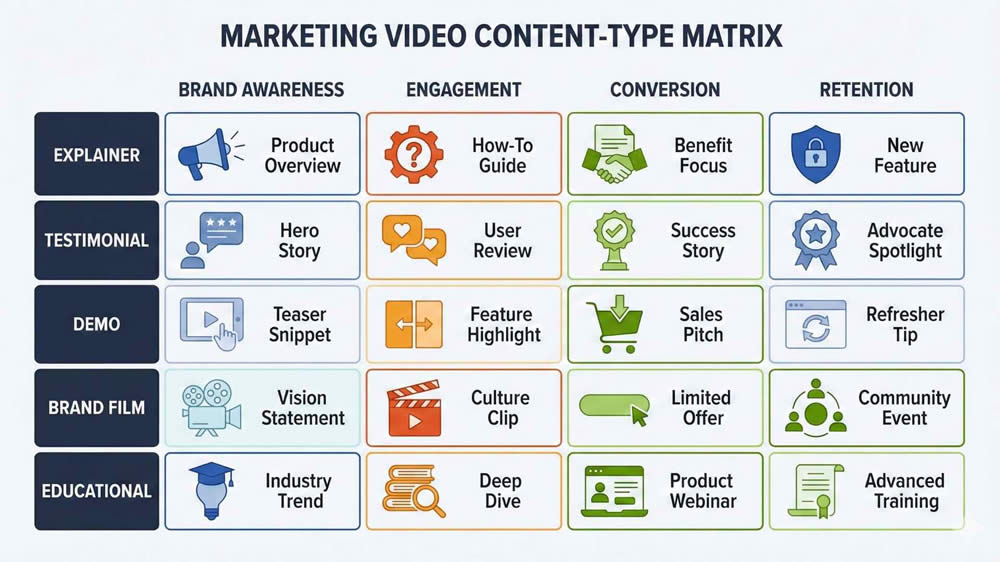
Strategic Messaging Grids
Strong video ideas don’t begin in post-production. They start with a grid, a structured framework that maps:
- Audience segments
- Buyer journey stages
- Value propositions
- Emotional drivers
This matrix helps ensure message diversity and content precision. For example, a B2B SaaS company might align videos for Ops Directors, CFOs, and IT Leads across onboarding, optimization, and expansion. Each point on that grid becomes a targeted micro-moment with strategic clarity.
Modular Content Strategy
Modular video means building reusable footage components. Instead of creating one final cut, we develop a library of assets different CTAs, audience variations, and messaging blocks. From a single shoot, we can generate dozens of high-impact variations.
This strategy is essential for large-scale or multilingual campaigns. It allows for:
- Fast testing of performance-driven variants
- Localization without full reshoots
- Agile creative swaps based on data insights
It’s about scale and flexibility without sacrificing message control.
Video Production: Models, Teams, and Workflow Design
Internal vs External: Who Should Own What
Not every video project should be outsourced, nor should everything be done in-house. I typically recommend that high-velocity, low-lift assets, like FAQs, demo walkthroughs, or founder messages, stay internal. Complex campaigns, brand films, or animation-heavy assets are better suited to external agencies or specialist teams.
Your decision matrix should include factors like:
- Time sensitivity
- Creative complexity
- Technical requirements
- Internal bandwidth
Some brands also use hybrid models where internal teams own scripting and rough cuts, while external vendors polish or finish content. What matters is building a system that supports your cadence without compromising creativity or speed.
Workflow and Collaboration Models
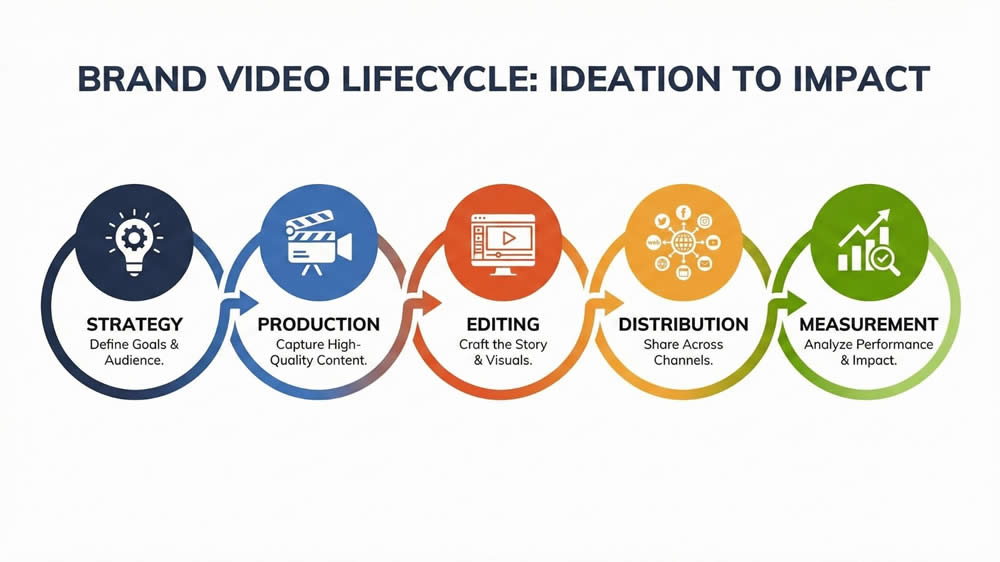
A high-functioning video workflow includes pre-production, approval cycles, distribution readiness, and asset management. The friction often comes from poor briefing or misalignment on brand expectations. That’s why we document everything, from shot lists and style guides to voiceover tone and typography rules.
In collaboration-heavy teams, workflow tools matter. We rely on:
- Project managers (Asana, Trello)
- Review platforms (Frame.io, Wipster)
- Cloud-based asset libraries (DAMs)
Each stakeholder, marketing, creative, legal, and localization, needs clear visibility across the pipeline. Systems create predictability, not just output.
Building a Content Engine: Volume Without Sacrificing Quality
Editorial Calendars and Cadence Strategy
Consistency outperforms one-off hits. Brands with long-term visibility and message clarity usually win. Editorial calendars help plan by mapping:
- Campaign timing
- Platform formats
- Messaging themes
- Audience segments
A smart cadence isn’t about volume. It’s about matching platform speed with content purpose. Some brands post daily micro-content, others prefer biweekly deep dives. The key is sustaining engagement without overwhelming teams or compromising creative quality.
Repurposing and Recycling Best Practices
Creating new video content is expensive in time, money, and creative energy. Repurposing is not just a cost-saving tactic; it’s a strategic approach to maximizing asset performance. We start by building content with repurposing in mind. That means filming with multiple camera angles, scripting variant intros and outros, and tagging footage with metadata for future use.
A 90-second product video, for example, can yield:
- A 15-second social teaser
- A feature-specific cut for CRM
- A looped version for paid ad use
- A voice-over swap for different personas
This approach requires upfront planning, but it extends the life and reach of every asset. It also supports platform-native distribution without starting from scratch each time.
Creative Performance: Analytics, Testing, and Optimization
Defining Video KPIs by Objective
Measuring video performance isn’t a one-size-fits-all exercise. Metrics vary based on where the video sits in the funnel:
- Awareness videos: impressions, view-through rate (VTR), brand lift
- Mid-funnel content: engagement rate, watch time, click-through rate
- Conversion videos: form fills, purchases, downloads, meetings booked
We define video KPIs within the broader context of campaign analytics. This prevents misreading surface-level metrics. A 15-second video with a 40% VTR might seem weak until you realize it drove a 3x higher conversion rate on a landing page. Without funnel-aware KPIs, performance is easy to misinterpret.
Testing Methodologies
Creative testing in video is both an art and a science. We test elements like opening frames, CTA placement, background music, copy overlays, and presence of on-camera talent. On platforms like YouTube and Meta, we use A/B and multivariate testing to isolate impact. Even simple changes, like scene order, can produce statistically significant improvements.
vThe key is to test with intention:
- Use control groups to isolate variables
- Avoid testing too many variables at once
- Stagger tests across funnel stages (what works at the top may fail in retargeting)
- Where possible, connect test outcomes to revenue, not vanity metrics
This approach helps refine creative based on real behavior, not guesswork.
Cross-Functional Integration
Aligning Creative with Paid Media
Paid media can amplify great creative, but it can’t fix weak strategy. Too often, video assets are pushed live without alignment on targeting, sequencing, or CTA logic. We work with media teams to ensure durations match platform specs and creative maps properly to audience cohorts.
We also consider frequency caps. One high-impact video seen too often will fatigue viewers. That’s why we build sequences:
- Awareness spot
- Mid-funnel explainer
- BOFU testimonial
Each plays a role in guiding the user journey while avoiding repetition.
Content and CRM Team Collaboration
Video isn’t just for ads and social feeds. CRM teams can use video to boost engagement across email, SMS, and in-app channels. Personalized video content, from onboarding tutorials to contract overviews, significantly increases click-through and retention metrics. But CRM teams often struggle to find the right assets or create them efficiently.
We solve this by developing a shared asset library categorized by audience segment, funnel stage, and intent. CRM managers can then plug in the right video at the right time, without needing a new production cycle. This systematization allows for real-time personalization without overwhelming the creative pipeline.
Sales Enablement Video
Sales teams need targeted content that supports their outreach and demos. We create:
- One-minute product demos
- Objection-handling animations
- Vertical-specific reels
We partner with sales leaders to identify key friction points and then deliver video bundles tailored to different delivery contexts, from pitch decks to outbound emails.
Video in Product and Customer Success
Embedding video into the product experience is a force multiplier. It reduces onboarding time, increases feature adoption, and supports proactive customer success. Whether it’s a tooltip video, a tutorial embedded in a dashboard, or a monthly feature update walkthrough, these assets build trust and reduce churn.
Product marketers and customer success teams must be looped into the content planning process. They often have unique insights into customer pain points, which should inform content priorities. With the right handoff processes, we ensure that product-driven videos don’t sit in silos; they become part of a holistic content ecosystem.
Governance, Documentation, and Brand Stewardship
Video Brand Guidelines
Just like design systems, brands need detailed video guidelines. This includes rules for:
- Motion graphics
- Typography and color grading
- Audio use and tone of voice
- Visual pacing and transitions
We build living documentation that spans creative principles and tactical details, so in-house teams and agencies can execute consistently across all channels.
Legal and Compliance for Video
Video content raises unique legal and compliance challenges. Brands must secure talent rights, music licensing, and ensure content is compliant with advertising standards and regional laws like GDPR or CCPA. This is especially critical in healthcare, finance, or enterprise SaaS where regulatory scrutiny is higher.
We embed legal reviews into the pre-production process. Scripts, visual references, and claims are vetted early to avoid costly post-production revisions or takedowns. We also maintain an internal rights management tracker, so we know when licenses expire or where usage is restricted by territory or platform.
Template Libraries and Reuse Systems
Templates reduce production friction while maintaining quality. We maintain organized libraries of:
- Motion templates
- Caption styles
- Sound beds
- Intro/outro animations
Each asset is tagged by format, use case, and brand tier. This structure accelerates production without sacrificing brand integrity.
Accessibility Standards
Accessibility is no longer optional. Captions, descriptive audio, and interface-friendly design elements are table stakes. We ensure all videos are accessible by default, not just as a compliance measure, but as a commitment to an inclusive brand experience.
We use standardized tools to generate and validate captions, design color-safe graphics, and build versioned assets for internationalization. The goal is simple: make sure every viewer, regardless of device, language, or ability, can access and understand the message.
Closing Insights and Implementation Roadmap
Brands that win with video today are not the ones with the biggest budgets. They are the ones with the clearest intent, strongest systems, and most aligned cross-functional teams. Video marketing at scale isn’t about doing more for the sake of it. It’s about building a resilient engine that can support multiple objectives, audiences, and platforms without sacrificing strategic clarity.
If you’re just beginning to formalize video as a core brand function, start with a roadmap:
- Outline your core use cases
- Audit existing assets
- Document your workflow needs
- Invest in foundational templates and systems
Build your video marketing function like you would any key operational unit: with discipline, ownership, and vision.
Turn Your Brand’s Video Strategy Into Reality with LocalEyes
At LocalEyes, we don’t just talk strategy, we build it into every frame we produce. Everything you’ve read in this guide reflects how we work with our clients day in and day out. With more than 3,900 videos delivered for over 300 companies nationwide, we know what it takes to create high-performing, brand-aligned video content that drives results.
From testimonial and explainer videos to full-funnel content systems, we combine Emmy Award-winning production value with a deep understanding of strategic marketing. Our full-service teams operate out of major hubs like New York, Austin, Los Angeles, and Chicago, giving us the national scale and local market expertise to support campaigns of any size.
If you’re looking to elevate your video strategy and need a production partner who understands performance, scale, and storytelling, we’d love to connect. Reach out to us at LocalEyes to start building a smarter, more impactful video ecosystem for your brand.

Founder at LocalEyes Video Production | Inc. 5000 CEO | Emmy Award Winning Producer