- Effective marketing videos are planned around a single defined objective, buyer-funnel stage, success metrics, and primary distribution channel.
- Scalable video production requires platform-specific concepts, modular scripts, and deliberate capture to generate multiple reusable assets from one shoot.
- High-performing video systems integrate editing, versioning, distribution, and analytics into a repeatable workflow that improves results over time.
In professional environments, a marketing video isn’t just a creative asset, it’s a conversion tool, a brand enforcer, and a scalable content asset. It shapes perception, drives action, and educates decision-makers, but only when built with strategic intent and operational discipline. I’ve seen teams treat video as a siloed creative effort, and the results reflect that. When video is aligned with broader marketing objectives, even a single well-executed campaign can deliver outsized value.
This guide is for marketers, producers, and creative directors who already understand the fundamentals. Rather than covering basics, it outlines a tactical, scalable, performance-driven approach to marketing video, from strategic alignment to optimized distribution. Whether you lead production or manage agencies, this framework is designed to help you build repeatable success at scale.
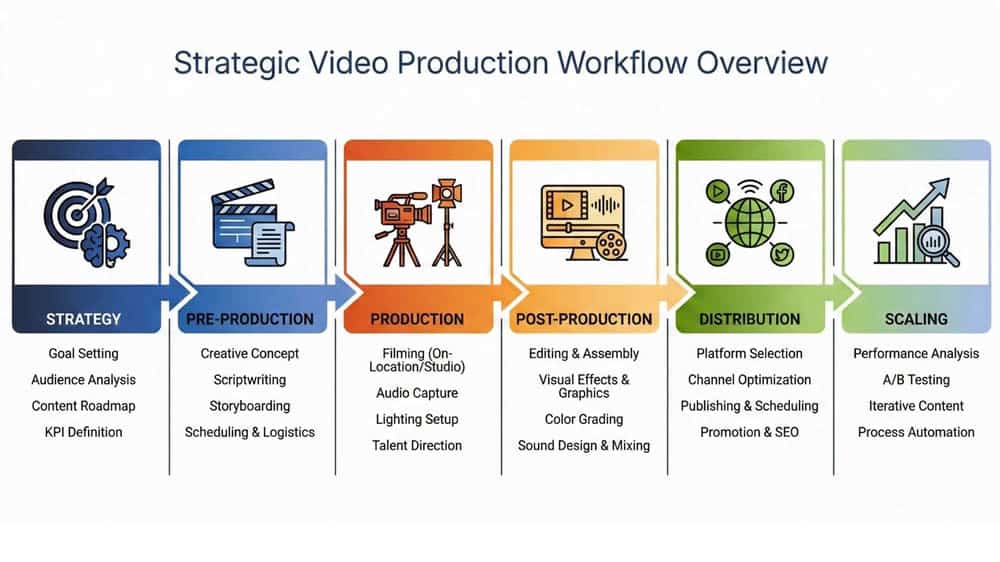
Strategic Foundation
Objective-Driven Production Planning
The most common source of failed video campaigns is unclear objectives. If your creative team doesn’t know what the video is supposed to do, they’ll optimize for what looks good or feels complete, not what actually drives results. That’s why every project I run starts with hard definitions of success, long before storyboarding or scripting. One video can’t do everything. You need to choose whether it’s an awareness builder, a product explainer, a conversion driver, or something else entirely.
For clarity, I document the following before we even open a camera case:
- Funnel stage: Where in the buyer journey is this video most useful?
- Primary objective: Awareness, engagement, lead gen, conversion, retention?
- Supporting KPIs: View-through rate, CTR, demo sign-ups, trial starts?
- Distribution channel: Organic? Paid? Email? Embedded?
By answering those questions up front, we build creativity with purpose. That level of clarity also prevents revision fatigue and post-launch disappointment when stakeholders measure the wrong outcome.
Audience Intelligence and Content Calibration
Producing for “everyone” is producing for no one. I dig deep into audience data before a single word of script is written. While many marketing teams lean on static personas, I supplement that with actual behavioral and platform-specific data. How is this audience interacting with other content? What are their objections? Where are they dropping off in the funnel?
In B2B contexts, audience calibration means dialing in technical precision and business relevance. For consumers, emotional pacing and visual resonance take the lead. Either way, messaging must be shaped by the audience mindset. Here’s how I adapt the tone and form:
- C-suite B2B buyers: Prioritize clarity, ROI narratives, and strategic framing
- Mid-level decision makers: Emphasize ease of implementation and peer validation
- Consumers: Lead with benefits and emotional context, then introduce proof
That level of nuance impacts everything, from script language and pacing to visual design and VO tone. It’s not just who the audience is, but where their head is at when they encounter the video.
Platform and Channel Strategy
You cannot optimize a single video for all platforms without compromise. A YouTube pre-roll, a LinkedIn carousel embed, and a TikTok vertical loop all have completely different structural demands. In my process, platform decisions are made before concept development. That way, we’re not retrofitting a one-size-fits-all asset into different boxes, it’s built to spec from the start.
At this stage, I document specs and strategic adaptations per platform:
- YouTube: Emphasize narrative depth, clear value in first 5 seconds, SEO-ready metadata
- LinkedIn: Prioritize thought leadership tone, make use of subtitles for mute playback
- TikTok/Instagram Reels: Hook in 1–2 seconds, fast pacing, vertical framing, raw aesthetic
- Email or landing pages: Concise, benefit-driven, and conversion-oriented
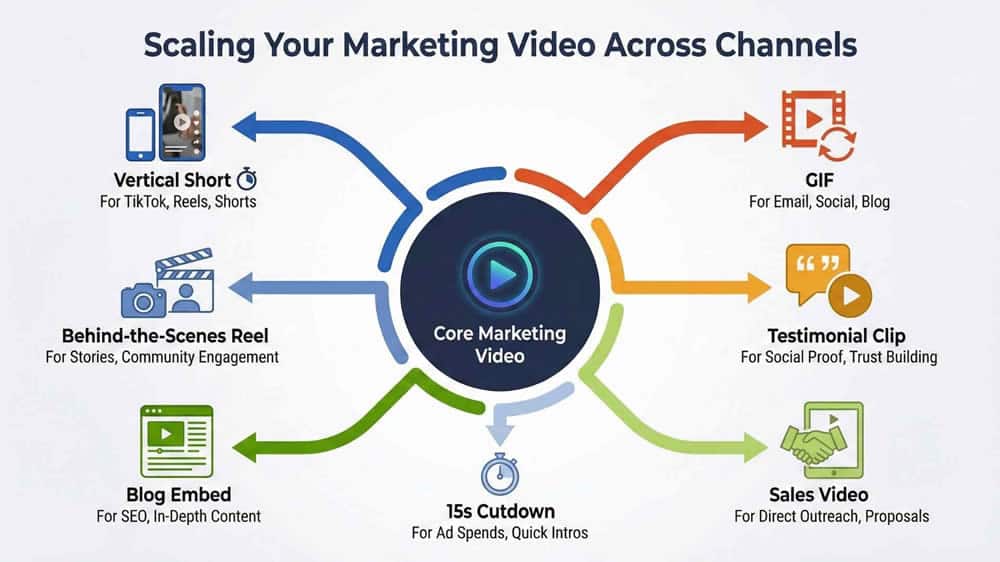
I also plan for atomization here, intentionally creating modular scenes that can be cut into:
- A core 60–90 second video
- 15–30 second cutdowns
- GIFs or teaser loops
- CTA-focused variants
The key is thinking of your shoot not as a one-off, but as a content supply chain.
Pre-Production Mastery
Creative Concepting and Messaging Framework
Concepting doesn’t start with visual style. It starts with the message. Before I even talk to a director or designer, I define a clear message hierarchy, what the audience needs to walk away understanding, feeling, or doing. From there, we explore different conceptual vehicles that can carry that message: narrative stories, testimonials, demonstrations, or visual metaphors.
This phase often involves friction between creative instincts and marketing strategy. That’s normal. But the best concepts are the ones that support business outcomes and creative impact. To keep us grounded, I always use a messaging framework that includes:
- Core statement: What’s the main takeaway or insight?
- Key benefits: Why should the viewer care?
- Proof points: What backs up the claims?
- CTA direction: What’s the intended action after watching?
When we build creative around these pillars, the end result always feels more coherent, compelling, and usable across different teams.
Script Development for Precision and Flexibility
Scripting is one of the most under-leveraged opportunities in video production. Too often, teams focus on visuals first, then write VO or dialogue that reacts to footage. I do the reverse. The script leads everything, timing, structure, and asset planning. And for marketing video, that script must be efficient, clear, and modular.
Here’s how I write with flexibility in mind:
- Use modular sections with clean transitions, so we can remove or rearrange segments
- Include optional VO lines for alternate versions (with or without CTAs)
- Write visually: Suggest what we’ll see alongside what we say
- Leave space for text overlays or motion graphics in the script formatting
The goal is to produce one script that can become four different assets, not four different scripts. This saves time, aligns cross-functional teams, and makes post-production significantly more efficient.
Storyboarding and Visual Planning
Storyboarding isn’t just for animators or large-scale shoots. It’s a vital alignment tool. Even a rough shot list with annotated frames helps clients, producers, editors, and motion designers align early on visual flow. I often build visual plans using:
- Rough thumbnail sketches or reference images
- Scene notes (shot type, framing, subject movement)
- Notes on overlays, typography, or animation
- Aspect ratio planning (for repurposing to 1:1, 9:16, and 16:9)
This document acts as the creative contract before we ever hit record. It’s also where we spot practical issues like whether a scene can be used across vertical and horizontal formats, or whether we’ve accounted for logo-safe zones in social crops.
Logistics, Budgeting, and Team Structure
Production logistics should be as tight as the creative. I start with a full production calendar that breaks down responsibilities, dependencies, and internal deadlines. From crew hiring and gear rentals to location scouting and backup shoot days, everything is documented.
Budgeting is split across:
- Creative development
- Production (crew, equipment, talent, locations)
- Post-production (editing, sound, animation, versioning)
- Contingency (reshoots, delays, overtime, scope creep)
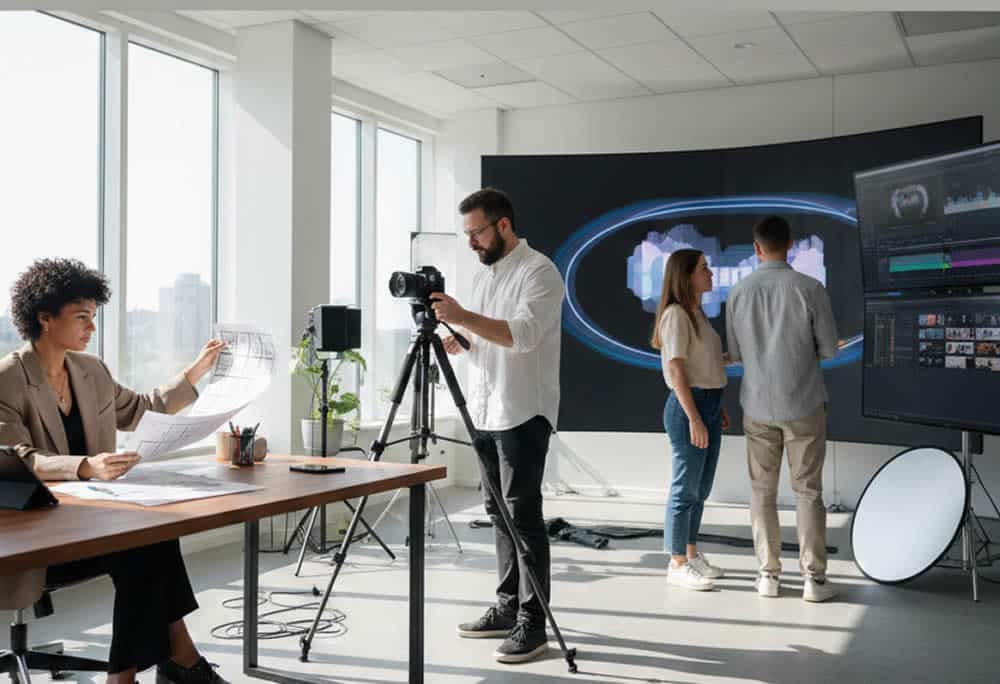
Team structure is mapped with clear role boundaries. A lean crew might consist of:
- Director/DP
- Producer
- Audio technician
- Gaffer/grip
- Assistant or PA
Scaling up depends on complexity, but I avoid unnecessary bloat unless multiple units are shooting simultaneously.
Production Execution
Shooting for Multi-Asset Scalability
On shoot day, the camera captures more than footage, it captures future flexibility. Every scene is an opportunity to multiply value. I plan and shoot deliberately for scalability. This includes capturing alternate framings, unused VO takes for variations, and plenty of clean B-roll for future edits.
Here’s how I approach scalable capture:
- Wide, medium, and close-up shots of key scenes to enable different cut styles
- Neutral background takes that can be reused for product or social overlays
- Extra B-roll with natural transitions and ambient motion
- Silent versions for subtitle-driven social content
The objective is to turn a 2-day shoot into a 6-month asset library.
Lighting, Camera, and Audio Best Practices
You don’t need Hollywood gear, but you do need reliable, professional-grade equipment. I focus on setups that prioritize efficiency and consistency.
- Cameras: Sony FX6, Canon C70, or similar, lightweight but broadcast-quality
- Audio: Dual recording with shotgun and lavalier mics, synced to timecode
- Lighting: Key light + fill + rim light setups for interviews; softboxes for skin tone accuracy
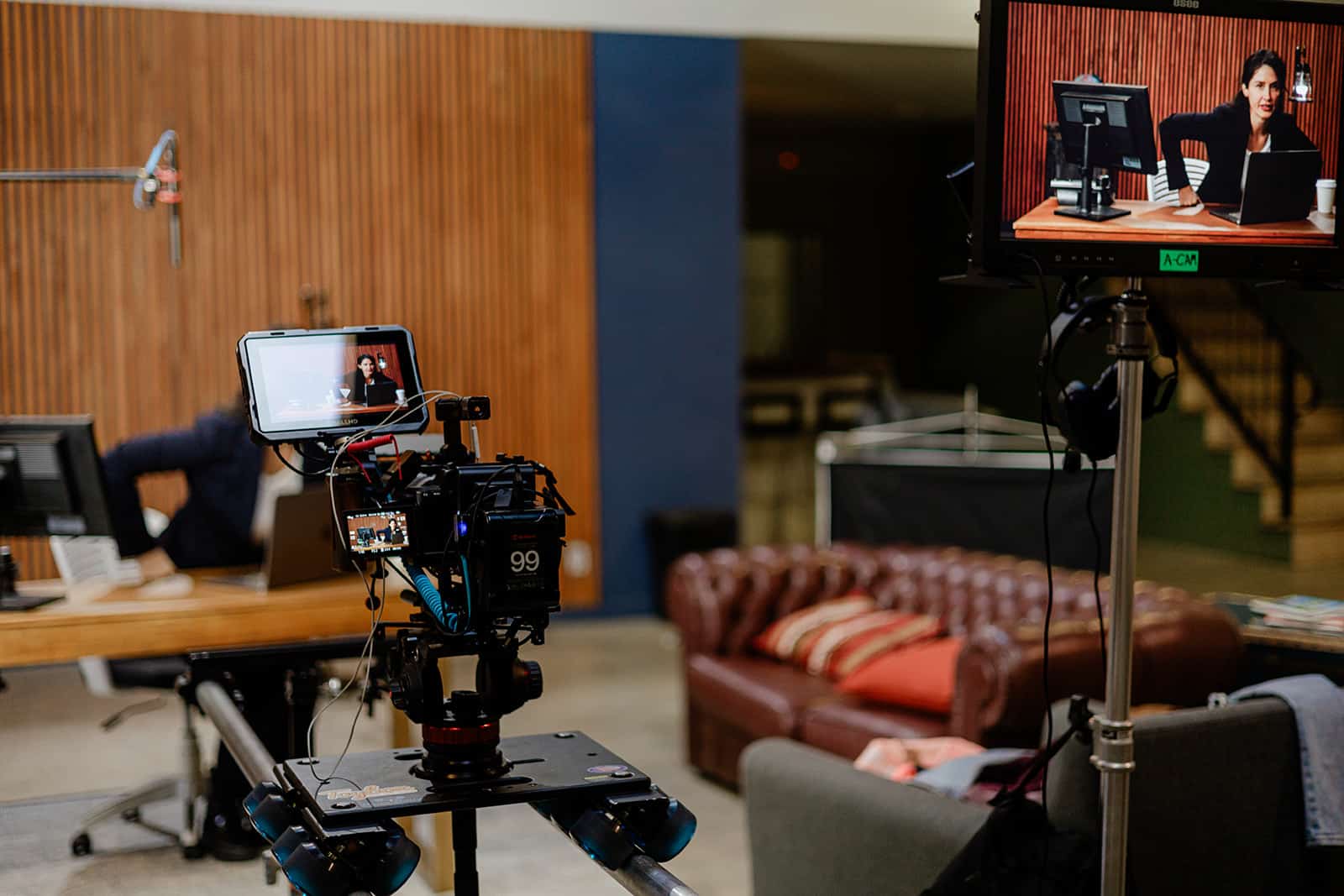
- Monitoring: On-set playback on calibrated monitors to ensure exposure, framing, and color profiles look consistent
Audio gets special treatment. Bad audio makes good footage useless, so I never settle for in-camera mics or “fix it in post” shortcuts. Every production includes a dedicated sound recordist.
On-Set Efficiency and Quality Control
A smooth shoot isn’t about speed, it’s about preparation and decisiveness. I start every shoot day with a shared shot list, reviewed with the full crew during call time. Everyone knows the priorities, the pacing, and the timing of key scenes. When working with clients on set, I build in review windows to avoid post-shoot surprises or reshoots.
On-set quality control is mandatory. We review footage as we go using calibrated monitors and proxy playback systems. If you’re not watching your footage during the shoot, you’re gambling with post. We check for:
- Focus and exposure consistency
- Clean audio (no background noise, distortion, or dropouts)
- Performance alignment with brand tone
- Visual continuity across scenes (especially if shooting out of order)
If a critical take doesn’t feel perfect, we re-shoot. It’s cheaper to do it right once than to patch together a fix in post.
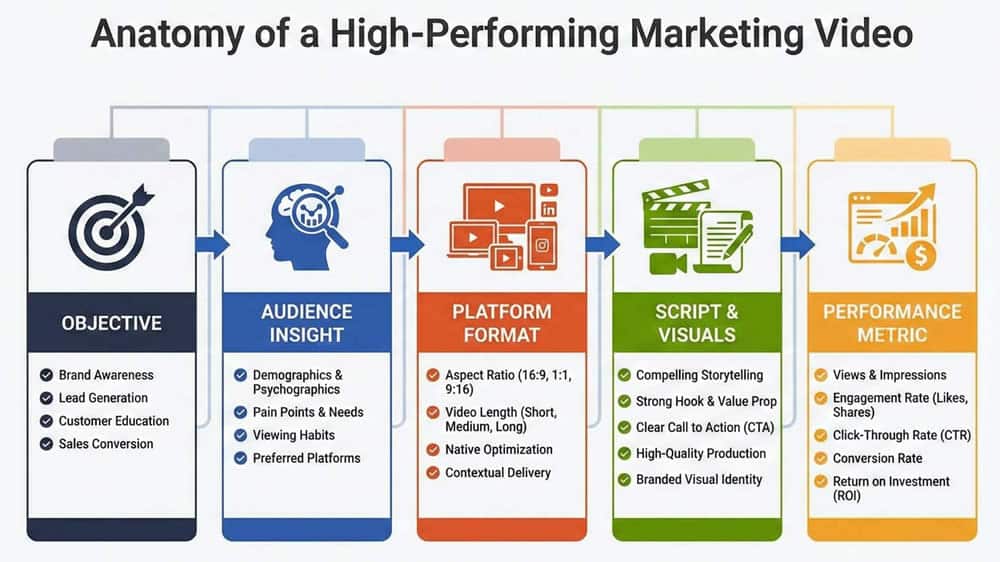
Post-Production Workflow Optimization
Editing for Narrative and Performance
Editing is where everything gets shaped into something useful. I start with a rough assembly to test flow and identify pacing gaps. Then I move into tightening sequences, adjusting rhythm, and refining transitions. Editing isn’t just about what you show, it’s about what you choose not to show. Cutting aggressively is often the most important step toward clarity.
Here’s how I approach editing for performance:
- Lead with the hook: What’s going to keep the viewer for the first 5 seconds?
- Follow the narrative structure: Setup > Value > Proof > CTA
- Use intentional transitions: Motion or cuts should feel purposeful, not decorative
- Cut for energy: Especially on social formats, speed and dynamism matter
I also plan for multiple versions during editing. A 60-second master might generate:
- 30s and 15s cutdowns
- A/B tested variants with different CTAs
- Platform-optimized crops (1:1, 9:16)
- Silent autoplay versions with on-screen text
This is where your modular scripting and thoughtful coverage during production really start to pay off.
Sound Design, Music, and Voice
Audio elevates the message when handled correctly. It also ruins otherwise great edits if ignored. I approach audio with as much structure as video.
- Voiceover: Re-record if needed. Don’t settle for “good enough” VO if the pacing or tone is off.
- Music: Pick a track that enhances emotion without competing with voice or dialogue. I often license from curated platforms or work with composers when brand tone calls for it.
- Sound design: Layer in subtle whooshes, impact sounds, and environmental audio where needed.
Every sound element is adjusted and mixed to maintain balance. Transitions should feel seamless. Nothing should pull the viewer out of the experience.
Color Correction and Grading Pipeline
Once the edit is locked, we move into color correction and grading. These are separate steps. First, I match exposure, contrast, and white balance across all footage to establish consistency. Then we apply creative color grading to establish tone and visual style.
I build our grading pipeline around the following:
- LOG to Rec.709 conversion using custom LUTs or manual grading
- Skin tone isolation to ensure natural, flattering representation
- Saturation and contrast balancing to reinforce emotional tone
- Export-safe monitoring to avoid compression artifacts or blown highlights
Good color work should feel invisible, it supports the story rather than standing out.
Versioning and Localization
Versioning should be baked into the editing plan, not added as an afterthought. For campaigns running across multiple regions or platforms, I pre-build alternate endings, visual swaps, and language overlays directly into the project timeline. This makes localization faster and far less painful.
Key versioning steps include:
- Subtitles in multiple formats (.SRT for YouTube, burned-in for social)
- Text-in-graphic variants for different languages or offers
- Platform-specific exports (frame rate, aspect ratio, bitrate)
- Alternate CTA versions for A/B testing
If you’re exporting dozens of versions, automated render templates and naming conventions become essential. Without them, things get messy fast.
Performance-Driven Launch and Distribution
Publishing Workflows and Asset Management
Once the videos are approved, distribution begins, and this is where operations matter most. I centralize final deliverables in a structured asset management system so everyone from marketing to sales to media buyers can access the correct version.
A typical asset library includes:
- Master versions, tagged by platform and usage
- Thumbnail files and metadata docs
- Social cutdowns labeled by aspect ratio
- Campaign notes for usage (expiration dates, targeting, CTAs)
I also sync with media teams on publishing calendars to align creative go-live with spend pacing. There’s no point in having final files ready if the campaign isn’t prepared to support them.
Video SEO, Metadata, and Discovery Tactics
For discoverability, YouTube and search-driven platforms require intentional metadata optimization. I write SEO-optimized titles that prioritize clarity over cleverness. The first two lines of your description should summarize the value and include a link to the next step.
My typical metadata checklist includes:
- Title: Clear, keyword-optimized, front-loaded with value
- Description: Short summary, call-to-action, relevant tags
- Tags: High-value keywords, product names, campaign IDs
- Thumbnails: CTR-tested, high contrast, clear focal point, minimal text
- Schema markup: For videos embedded on landing pages
Video discovery isn’t magic, it’s structure and testing.
Analytics-Driven Optimization
After launch, the feedback loop begins. I treat every video like a live experiment. We set up performance dashboards that connect platform analytics to business outcomes: not just who watched, but what they did after.
Metrics I monitor closely include:
- View-through rate (VTR): Are people watching past 50%?
- Click-through rate (CTR): Are they taking the next step?
- Drop-off analysis: When and where are they leaving?
- Variant performance: Which intro, CTA, or VO performs better?
This data gets compiled into post-campaign retrospectives and directly informs the next shoot. The result is a production process that learns and improves every time.
Scaling, Systematization, and Team Enablement
Video Ops Infrastructure
Scaling video isn’t about hiring more editors. It’s about building a system that allows creative, marketing, and production teams to work in sync. I’ve worked on teams where a 2-person crew outproduced 10-person teams, simply because they had shared documentation and repeatable workflows.
The key assets to scale video ops include:
- Playbooks: Covering pre-production, review cycles, compliance, etc.
- Templates: Creative briefs, shot lists, scripting frameworks, release forms
- Approval workflows: Clear steps for internal and external feedback
- Naming conventions: For all projects and files across production stages
With these pieces in place, you can onboard freelancers or hand off segments without losing quality.
Content Atomization and Lifecycle Management
A single video can power dozens of marketing touchpoints, but only if planned that way. I design video content to be modular and reusable. We break out:
- Short loops for social
- Quotes for email headers or testimonials
- Behind-the-scenes content for recruitment or culture
- Audio snippets for podcast promos or internal training
I also revisit high-performing videos every 3–6 months. Often, we can freshen them with new intros, updated CTAs, or minor re-edits, without starting from scratch.
Tech Stack and Tooling
The tools you choose shape the velocity and quality of your output. My stack typically includes:
- Production: Sony/Canon mirrorless or cinema cams, LED lighting kits, Rode or Sennheiser audio
- Post: Adobe Premiere, After Effects, DaVinci Resolve
- Review/Collab: Frame.io for client review, Google Drive or LucidLink for asset sharing
- Hosting/Analytics: Wistia or Vidyard for gated content, YouTube for public channels
- Project Management: Notion or Asana for calendars, creative briefs, and status tracking
You don’t need the most expensive setup. You need the most reliable and repeatable one.
Final Thoughts
Building a marketing video today isn’t about creative intuition alone. It’s about aligning business strategy, creative storytelling, technical execution, and operational systems into a coherent process. The organizations that succeed with video at scale are the ones that treat it as a structured discipline, not a one-off task.
When video becomes part of your marketing infrastructure, not just your content calendar, it begins to compound. Every campaign gets faster. Every edit gets smarter. And every asset drives more value. That’s how we move beyond making videos, and start building video systems that scale.
Putting This Marketing Video Framework Into Practice With LocalEyes
If you’ve made it this far, you know that producing a marketing video isn’t just about cameras and scripts, it’s about building content that drives business outcomes. At LocalEyes, we’ve built our entire model around that belief. Whether we’re creating a 30-second product cutdown, a full-funnel video campaign, or an enterprise-level brand film, our process is designed to combine creative excellence with measurable impact.
For over seven years, we’ve helped more than 300 clients turn strategic goals into powerful video assets. With over 3,900 videos produced and an Emmy Award-winning team spread across 11 major cities, we’re uniquely positioned to bring local expertise and national scale to every project. From New York to Los Angeles, from tech startups to Fortune 500s, we help our partners cut through the noise with content that performs.
If your team is ready to elevate your video strategy, or if you simply want a partner who understands how to blend creativity with marketing precision, we’d love to talk. Reach out to LocalEyes and let’s turn your next idea into your best-performing asset yet.

Founder at LocalEyes Video Production | Inc. 5000 CEO | Emmy Award Winning Producer