Key Takeaways
|
Most business-to-business (B2B) product videos fail when the format decision gets treated like a creative preference instead of a performance decision.
Your team needs to support the pipeline, improve conversion rates, and give sales assets they can actually use. But the conversation often drifts into whether animation feels more modern or live action feels more human.
The better question is which format helps your buyer understand the product faster, trust it sooner, and take action with less friction. Live action can create credibility that animation cannot replicate, while animation can explain a complex workflow in 30 seconds that would take a five-minute demo to unpack.
The live action vs animation decision becomes more complicated when your campaign needs both credibility and product clarity. This guide breaks down where live action, animation, and hybrid video each work best so you can choose the format that supports buyer trust, product clarity, and pipeline impact.
The Difference Between Live Action and Animation: What Actually Impacts ROI
Most buyers don’t care whether your video is live action, animated, or hybrid. They care whether it helps them understand the product, trust the message, and take the next step with less friction.
That’s what impacts return on investment (ROI): not the format itself, but how well the format supports movement through the funnel.
The wrong production style creates drag:
- Live action can build credibility, but it can leave buyers unclear on how the product works.
- While animation can explain a complex workflow, it can feel disconnected from the people and business behind the solution.
The best product marketing video is chosen by the specific barrier between your buyer and the next conversion point, whether that is a demo request, sales conversation, opportunity progression, or closed deal.
| ROI Driver | Live Action Is Best For | Animation Is Best For | Hybrid Is Best For |
| Buyer Trust | Proving the company, customer, or environment is real | Keeping attention on the concept instead of the people | Pairing human credibility with product clarity |
| Product Clarity | Showing a product or process that can be filmed clearly | Visualizing abstract, technical, or workflow-based ideas | Connecting the user experience to the system behind it |
| Conversion Support | Strengthening testimonials, demos, and sales conversations | Supporting explainers, onboarding, and feature education | Creating assets for paid, landing pages, SDR outreach, and sales |
| Asset Longevity | Capturing a stable message that will not need frequent updates | Updating product screens, UI, or messaging more easily | Preserving core footage while refreshing animated elements |
| Pipeline Use | Building confidence in later-stage conversations | Educating buyers in top- and mid-funnel campaigns | Supporting a multi-asset campaign system across the funnel |
When to Choose Live Action vs Animation
The right format depends on the buyer friction you need to remove. Live action is strongest when trust is the barrier. Animation works best when understanding is the barrier. Hybrid video makes sense when your campaign needs both credibility and clarity across multiple channels.
When to Use Live Action
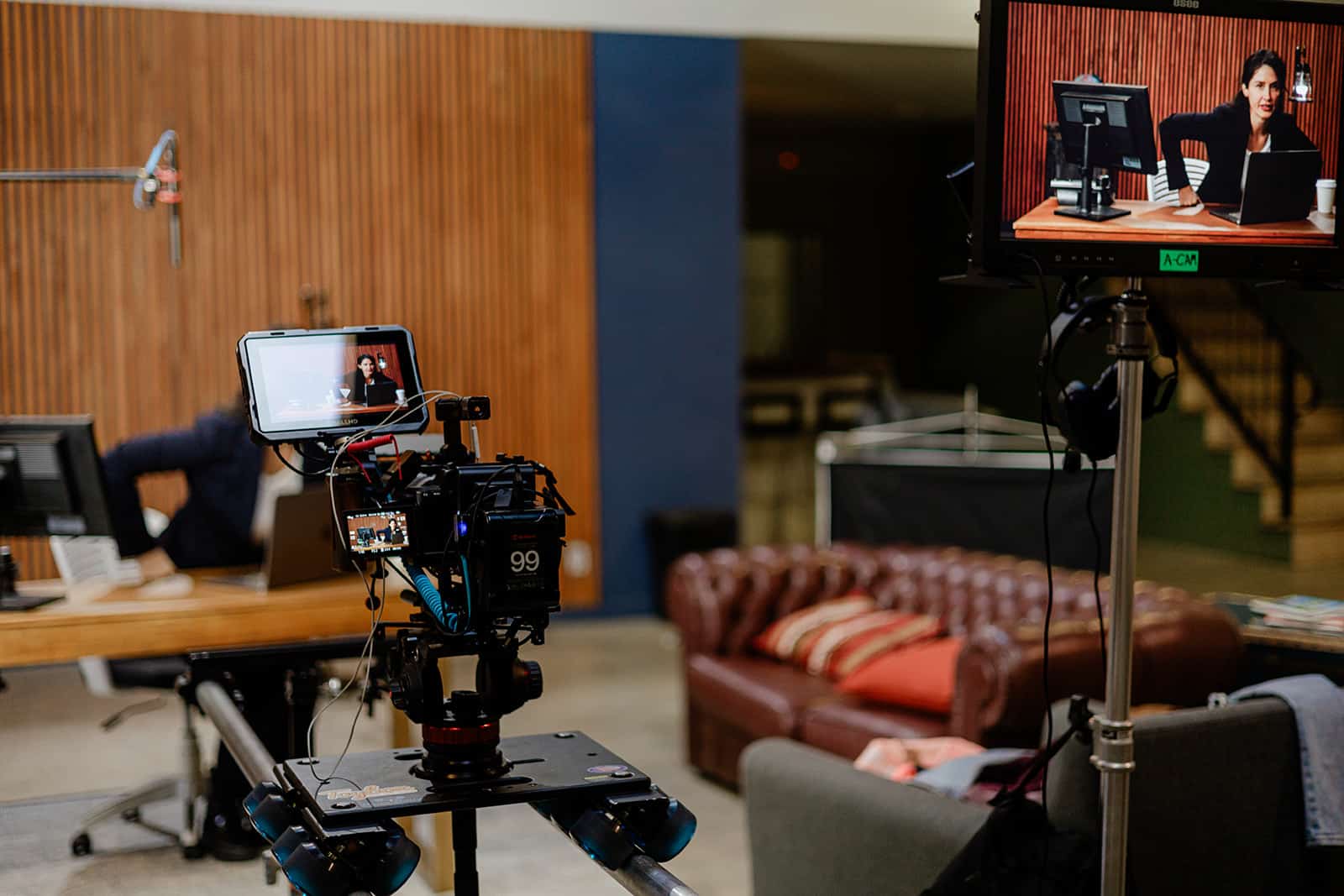
A strong live action product video helps buyers see real people, real products, and real environments. That makes it useful when your product has a physical component, your buyers are risk-sensitive, or your sales cycle involves several stakeholders who need confidence before moving forward.
Live action works best when the video needs to make your company feel credible, accountable, and real.
- Customer Testimonials: Real customers create proof that is difficult to replicate with animation alone.
- Product Demonstrations: Buyers can see the product in use instead of relying on abstract claims.
- Executive Messaging: Leadership visibility can build confidence during high-consideration campaigns.
- Event Recaps: Real footage gives launches, conferences, and customer moments more weight.
- Sales Enablement Assets: Human delivery often feels more persuasive in later-stage conversations.
Teams evaluating live action vs animation for video ads often use live action for middle- and bottom-funnel campaigns where trust carries more weight than novelty. A clear 60-second product walkthrough with strong messaging and channel-specific variants will usually outperform a vague brand video that says very little about the product.
When to Use Animation
Animation works best when the product is difficult to visualize. For software-as-a-service (SaaS), fintech, cybersecurity, healthcare technology, and infrastructure platforms, buyers often need to understand workflows, integrations, data movement, or back-end systems that cannot easily be filmed.
Animation gives you control over abstraction. You can simplify complexity without watering down the product story.
Animation is especially useful for:
- Technical Workflows: Show how information moves through a product or platform.
- Backend Infrastructure: Make invisible systems easier to understand.
- API Interactions: Explain product connections without leaning on documentation.
- Data Visualization: Make reporting, analytics, and automation more digestible.
- Compliance or Security Concepts: Show abstract risks and safeguards clearly.
- Product Onboarding: Walk users through what to do next.
Animation also gives your team more flexibility after launch. If your product changes often, animated assets are typically easier to revise than live footage. Many companies evaluating animated vs live-action promotional videos use animation when product positioning, user interface (UI), or platform features are likely to evolve.
The tradeoff is credibility. If animation becomes too abstract, buyers may understand the workflow but still feel disconnected from the company behind it.
When to Use Hybrid
Hybrid video works best when your campaign needs the trust of live action and the clarity of animation. It can feature real people, customer environments, or executive voices, while using motion graphics, UI animation, or product overlays to explain what happens behind the scenes.
This approach is especially useful for product marketing videos that need to serve multiple channels or buyer stages. A single hybrid campaign can support paid media, landing pages, sales development representative (SDR) outreach, sales enablement, and retargeting without forcing every asset into the same format.
Hybrid video works well when you need:
- Human Credibility: Live action gives the message a real face and voice.
- Product Clarity: Animation can explain workflows, UI movement, and technical concepts.
- Campaign Flexibility: Mixed assets can be adapted into shorter paid, sales, and landing page cuts.
- Sales Alignment: Buyers get a clear explanation without losing the trust factor.
- Longer Shelf Life: Animated elements can often be refreshed without rebuilding the entire campaign.
Hybrid is often the strongest choice when your product is complex, your buying committee is skeptical, and your campaign needs more than one final edit.
Cost, Timeline, and Flexibility Tradeoffs
Most buyers ask about production costs too late in the process. Not because cost is unimportant, but because budget, timeline, and flexibility are all shaped by the format decision. The reality behind animation vs live action production costs is more nuanced than “live action costs more.”
- Live-action timelines are shaped by crew coordination, filming days, locations, talent, travel, approvals, and post-production.
- Animation timelines are shaped by concepting, design complexity, motion style, revisions, localization, and how many campaign versions your team needs.
- Hybrid video adds another layer because it requires both production planning and motion design, but it can also create more usable assets from the same core idea.
The bigger strategic issue is not the initial production budget. It’s whether the asset system still works six months later. A single hero video with no paid variants, landing page edits, SDR cutdowns, or refresh plan creates operational waste regardless of format.
The better question is: Which format gives your team the most useful assets across the funnel, on a timeline your campaign can actually support? That shift toward campaign systems is why many B2B teams move away from one-off productions.
How Video Format Changes by Channel
The right video format can change depending on where the asset will run. The strongest campaigns match the format to the channel, buyer stage, and conversion goal.
Different channels create different constraints around attention span, context, and buyer intent. The same campaign often performs better with a mix of live action, animation, and hybrid assets instead of a single master edit.
- Paid Media: Short-form ads need to create clarity quickly before the viewer scrolls away. Hybrid and animated cuts often perform well because they can communicate product value faster.
- Landing Pages: Buyers usually need more context before booking a demo. Animated explainer videos and hybrid walkthroughs can simplify technical products without forcing buyers into a sales conversation too early.
- Sales Enablement: Live action product videos, customer testimonials, and executive messaging often work better in later-stage conversations where credibility is more important than speed.
- Product Launch Campaigns: Hybrid video production can combine real product context with animated feature callouts, UI movement, and rollout messaging across multiple channels.
- Retargeting Campaigns: Short animated or mixed-media edits can reinforce a specific pain point, objection, or product differentiator without repeating the entire story.
This is also why many B2B teams evaluating explainer video style eventually move away from one-off deliverables. The highest-performing campaigns are built as coordinated asset systems designed for multiple placements, buyer stages, and conversion points across the funnel.
How LocalEyes Helps You Choose the Right Video Format
LocalEyes helps B2B marketing teams choose video formats based on pipeline goals, buyer friction, and message clarity, not personal preference. Live action, animation, and hybrid production can all work when they are tied to the right business outcome.
We don’t start by asking which format looks better. We start by asking what the video needs to change: buyer understanding, trust, conversion quality, sales confidence, or opportunity movement. From there, we shape the format around the job each asset needs to do.
For teams comparing product video animation and live action, the goal is to build performance-driven creative that helps buyers understand, trust, and move forward.
See how LocalEyes applies that same approach to animation video production services built for B2B marketing teams.

Founder at LocalEyes Video Production | Inc. 5000 CEO | Emmy Award Winning Producer