
Key Takeaways:
|
Video marketing return on investment (ROI) is the question that shows up after the campaign recap, when the view count looks good and finance wants a revenue answer.
For business-to-business (B2B) marketing leaders, that gap is the problem. A brand video can earn attention, support sales, and influence pipeline, but weak measurement makes the investment look softer than it is.
According to Wyzowl’s 2025 video marketing survey, 93% of marketers say video gives them a positive ROI. The harder part is explaining how that ROI was measured.
This guide explains how to measure video performance beyond views, connect brand video production to conversion and pipeline outcomes, and report results in a way your chief finance officer (CFO) and chief revenue officer (CRO) can actually use.
How to Measure Video Marketing ROI Step-by-Step
Measuring video marketing ROI gets easier when the campaign is built around business outcomes from the start. The process comes down to three decisions:
- What revenue goal the video supports
- How you will calculate return
- How long you will measure performance before judging results
1. Start With Revenue Impact Instead of Reach
B2B teams need to separate attention metrics from revenue metrics. A campaign with 100,000 views and weak conversion performance is not automatically successful, while a campaign with lower reach but stronger opportunity creation may produce far more business value.
Engagement indicators include:
- Watch time
- Video completion rate
- Click-through rate
- Engaged sessions
- Assisted conversions
These metrics show whether people are paying attention and taking the next step. However, they don’t prove ROI on their own.
To measure ROI from these signals, you need to connect them to outcomes like higher landing page conversion rates, faster sales qualified lead (SQL) creation, lower acquisition costs, or shorter sales cycles.
2. Build the ROI Formula Using Costs and Attributable Return
A surprising number of marketing teams still calculate video ROI loosely enough that finance can’t validate the numbers. The standard formula is straightforward:
Video Marketing ROI = Revenue Attributed to Video − Video Investment ÷ Video Investment × 100.
The challenge is defining both sides accurately. Video investment should include production, strategy, messaging, paid distribution, asset versioning, platform costs, and internal campaign management time.
Attributable return should account for pipeline sourced from video campaigns, influenced revenue, improved conversion rates, reduced acquisition costs, retention or expansion impact, and sales cycle acceleration.
This becomes easier when your campaign architecture is designed for attribution from the beginning. For example, a structured campaign system might include:
- A hero video for paid LinkedIn campaigns
- Short paid variants for retargeting
- Sales development representative (SDR) outreach placements
- Landing page embeds
- Sales enablement clips
3. Set a Realistic Measurement Window
One of the fastest ways to underreport B2B video ROI is measuring too early. Brand video campaigns targeting mid-market and enterprise buyers rarely produce full-funnel impact within a few days, especially when multiple stakeholders and longer buying cycles are involved.
If your average sales cycle runs 60 to 180 days, measuring ROI after two weeks creates incomplete reporting. A more realistic framework is:
- 30 Days: Engagement and conversion indicators
- 60 Days: Pipeline influence and SQL creation
- 90+ Days: Revenue attribution and deal acceleration
Different assets produce value at different points in the buyer journey. A landing page video may influence form conversions immediately, while a sales enablement clip may affect deal velocity weeks later.
Which Video Marketing Metrics Actually Matter?
Not every key performance indicator (KPI) deserves equal weight. B2B marketing leaders need reporting that connects engagement to business performance instead of stacking vanity metrics into a dashboard nobody trusts.
| Business Goal | Video Type | Primary KPI | Secondary KPI |
| Increase qualified pipeline | Brand video | Influenced pipeline | Target account engagement |
| Improve paid performance | Video ad | Video conversion rate | Cost per acquisition |
| Increase landing page efficiency | Website video | Form fill rate | Watch time |
| Support sales conversations | Sales enablement clip | Opportunity acceleration | Stakeholder engagement |
| Improve retargeting performance | Short paid variant | Demo request rate | Click-through rate |
| Strengthen buyer education | Product or explainer video | Sales-qualified actions | Video completion rate |
A high-performing video often improves the efficiency of paid media, landing pages, email, and sales outreach instead of creating an entirely new acquisition source. For additional benchmark data, review B2B video marketing ROI statistics.
The most useful video marketing metrics usually fall into three categories.
Revenue and Pipeline Metrics
Leadership teams use revenue and pipeline metrics for budget decisions. They include:
- Pipeline generated
- SQL volume
- Opportunity creation rate
- Revenue influenced
- Customer acquisition cost
- Sales cycle length
- Return on ad spend
If video performance can’t connect to one of these outcomes, the reporting remains incomplete.
Conversion Metrics
Conversion metrics show whether video improved buying behavior across the channels you already run. KPIs to track include:
- Video conversion rate
- Landing page conversion lift
- Demo request rate
- Form completion rate
- Click-through rate (CTR) from video campaigns
Marketing leaders can use these metrics to understand whether the asset helped move prospects closer to action.
Engagement Metrics
Engagement metrics can help diagnose whether the message is holding attention. They include:
- Watch time
- Average percentage viewed
- Video completion rate
- Audience retention
- Repeat viewers
- Engaged sessions
However, these metrics need context from conversion and pipeline data before they can support a budget decision.
How to Track Video Marketing ROI Across Channels
Attribution gets harder when video appears in multiple places across the buyer journey, which is exactly how most B2B campaigns operate. Prospects may encounter video through paid campaigns, retargeting, SDR outreach, landing pages, webinar promotions, email nurture sequences, and sales presentations before they become opportunities.
A single-touch attribution model rarely captures that influence. Most B2B teams need a multi-touch view that connects video engagement to:
- First-Touch Influence: Measures whether video helped introduce prospects to the brand, campaign, or offer early in the buyer journey.
- Assisted Conversions: Tracks whether video supported later actions such as demo requests, form fills, or content downloads.
- Opportunity Acceleration: Shows whether video helped move active deals through the pipeline more efficiently.
- Target Account Engagement: Identifies whether key accounts watched, revisited, or shared video content during the sales process.
- Revenue Influenced Over Time: Connects video-supported campaigns to influenced pipeline and closed-won revenue.
If your current campaigns are still built around isolated assets, a structured video marketing strategy guide can help teams build campaigns around measurable business outcomes.
What Gets Left Out of Most Video ROI Calculations
Many video ROI calculations appear precise but omit important inputs. Undercounting costs or overcounting revenue weakens reporting, not strengthens it, because leadership cannot trust the model behind the numbers.
A more complete ROI calculation should account for:
- Full Production and Distribution Costs: Include pre-production, production, editing, revision cycles, media spend, platform costs, and internal planning time.
- Sales Enablement Usage: Track whether sales teams use the video in outreach, follow-up, demos, or active opportunity conversations.
- Post-Launch Optimization: Include the work required to test thumbnails, adjust cuts, improve landing page placement, or shift budget toward stronger-performing assets.
- Attribution Assumptions: Name whether revenue is sourced, influenced, or weighted. Partial attribution is still useful when the assumptions are clear.
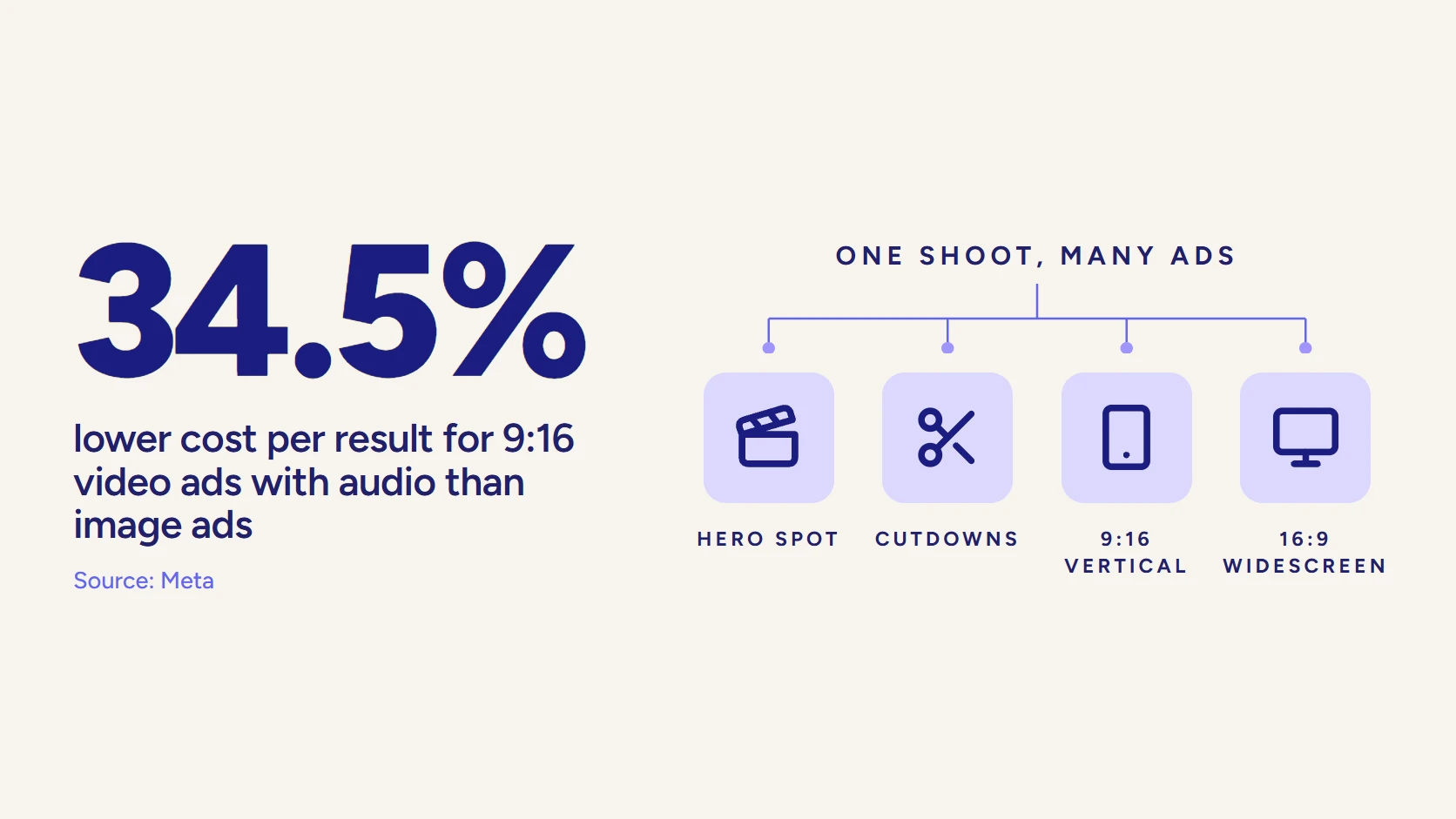
- Reuse Value: Account for how one production supports multiple channels, formats, and buyer stages instead of measuring only the hero asset.
Finance-friendly reporting does not require false precision. It requires consistent inputs, clear assumptions, and a model your team can apply again when planning the next campaign.
Template: A Simple Dashboard for Reporting Video Marketing ROI
Executives want clearer business reporting. A useful video ROI dashboard should show what the campaign cost, what it influenced, and how results were attributed.
Core reporting fields should include:
- Campaign Details: Campaign name, timeframe, channels, and attribution model used.
- Investment Inputs: Production investment, paid media spend, platform costs, and internal campaign management time.
- Performance Metrics: Video engagement metrics, video completion rate, landing page conversion rate, and customer acquisition cost.
- Pipeline Outcomes: SQLs generated, pipeline influenced, revenue attributed, and return on ad spend (ROAS) or ROI percentage.
- Attribution Context: Whether reporting uses first-touch, last-touch, or multi-touch attribution, plus the sales cycle length included in the analysis.
A dashboard without attribution context creates confusion quickly. Clear reporting helps executives understand whether the campaign influenced pipeline, directly sourced opportunities, or improved performance across supporting channels.
For teams building a more consistent reporting process, LocalEyes’ guide to measuring video performance and ROI offers a useful next step.
How to Present ROI in a Way Leadership Teams Trust
The strongest ROI reporting combines numbers with operational context. Present video results alongside the metrics that shape budget decisions:
- Conversion Benchmarks: Show whether video improved landing page, paid media, or demo request performance.
- Channel Efficiency: Compare acquisition costs, click-through rates, and campaign performance before and after video deployment.
- Pipeline Contribution: Clarify whether video sourced, influenced, or accelerated opportunities.
- Sales Velocity: Explain whether video-supported deals moved through the pipeline faster.
- Campaign Scalability: Show how one production engagement created assets for paid media, SDR outreach, landing pages, and sales enablement.
For example, high-converting video ads should be reported in the context of the broader demand gen campaign they support, not evaluated as standalone creative.
How LocalEyes Helps Teams Turn Brand Video Into Measurable Business Value
LocalEyes helps B2B marketing teams connect brand video production to real demand generation outcomes by building campaign systems designed for performance from the start. Instead of treating video as a standalone creative project, the focus is on creating multi-asset content built for the channels already driving pipeline.
That approach gives marketing leaders clearer attribution, more measurable touchpoints, and stronger reporting visibility across the funnel. A single engagement can support awareness, conversion, and sales acceleration at the same time because each asset is mapped to a specific stage of the buyer journey and a defined business objective.
Stronger ROI often starts before filming, with better planning around audience, message, placement, conversion path, analytics, customer relationship management (CRM) visibility, attribution, and urchin tracking module (UTM) tracking.
If your team needs brand video production services built around pipeline, not just production delivery, LocalEyes can help plan the assets, placements, and measurement framework before filming starts.

Founder at LocalEyes Video Production | Inc. 5000 CEO | Emmy Award Winning Producer