
Key Takeaways
|
Most business-to-business (B2B) teams are not short on video options. They’re short on confidence that the next video will do more than look good in a campaign recap.
According to research from Wyzowl, 82% of video marketers say video delivers a good return on investment (ROI), so the question is no longer whether video can work. It’s whether the asset is built to drive the right business outcome.
A promo video should not be treated as a polished announcement with a call to action (CTA) attached at the end. It should create momentum toward a specific action, whether that means registrations, demo requests, landing page conversions, or sales qualified leads (SQLs).
This guide clarifies what a promo video is, when it works, and where it fits inside a demand gen system.
What Is a Promo Video?
A promo video is a short, conversion-oriented asset designed to create momentum and drive a specific next action. That action might be:
- Sign up for a webinar.
- Explore a product launch.
- Click through to a landing page.
- Engage with a campaign.
A promo video is a category, not a format. It might be a 30-second paid social asset, a 60- to 90-second launch video, or a short clip embedded in an email or sales development representative (SDR) sequence. What matters is its role in the system.
This is where most teams get it wrong. They try to compress product explanation, brand storytelling, and campaign messaging into a single asset. The result is a video that feels comprehensive but fails to drive any action.
Promo videos are not meant to explain everything. They are meant to create clarity quickly and move the viewer forward. They capture attention and hand off to deeper assets like explainers, demos, or other video content marketing types that fit within the broader strategy.
Promo Video vs. Other Video Types
The fastest way to waste budget is to use the wrong video format for the job. Here’s how promo videos compare:
| Video Type | Primary Goal | Typical Length | Best Use Case |
| Promo Video | Drive action and momentum | 15-90 sec | Campaign launches, paid media |
| Teaser Video | Build curiosity | 10-30 sec | Pre-launch awareness |
| Explainer Video | Clarify product or value | 60-120 sec | Mid-funnel education |
| Demo Video | Show functionality | 2-5 min | Sales and evaluation |
| Brand Video | Build perception | 60-120 sec | Top-of-funnel storytelling |
| Video Ad | Drive conversion (paid) | 6-30 sec | Paid acquisition channels |
The tradeoff is simple. Promo videos prioritize clarity and action. Other formats prioritize depth, trust, or storytelling.
If you choose the wrong format for the job, the outcome will be wrong regardless of how good the execution is. This is especially relevant when comparing teaser vs. promo video approaches, where the difference is subtle but important.
What Makes a Promo Video Effective
The highest-performing promo videos are built on constraint. They focus on one message, one audience, and one clear action.
- Clarity: The viewer should understand why the video matters within the first few seconds. Not the full story, just the reason to keep watching.
- Channel Alignment: A video built for LinkedIn paid distribution behaves differently from one placed on a landing page. That affects length, pacing, and how quickly the message is delivered. There is no universal ideal length. There is only channel fit.
- Message Discipline: A simple video with a clear idea will outperform a highly polished video that tries to say too much. This is where most teams misallocate budget. They over-invest in visuals and under-invest in messaging.
- Visual Support: Visuals still matter, but only insofar as they support the message. If the viewer cannot explain what the video is about in one sentence, the video is not working.
- Strong CTA: The viewer should know exactly what to do next, whether that is registering, clicking through, or booking a demo. This is where promo videos connect directly to pipeline outcomes.
For more context, this video marketing funnel guide explains how different assets map to different stages.
H2: When Promo Videos Actually Drive Results
Promo videos perform best when the underlying strategy is already defined. They amplify momentum, but they do not create it.
You see this most clearly in a few campaign scenarios:
- Product or Feature Launches: The positioning is already set, the audience is known, and the message is focused. The promo video becomes the entry point that drives traffic into a landing page with deeper content. For example, a software-as-a-service (SaaS) launch promo might run as a 30-second LinkedIn asset, drive traffic to a launch page, and hand off to a deeper explainer or demo for buyers who need more context.
- Campaign Rollouts: A promo video acts as the hook across paid and owned channels. It captures attention, delivers a clear message, and pushes the viewer toward the next step.
- Event or Webinar Promotion: When the audience is defined and the value is clear, a short video can reduce friction and build urgency more effectively than static assets.
- Landing Page Conversion Support: A promo video can reinforce the core value proposition and help the viewer decide what to do next.
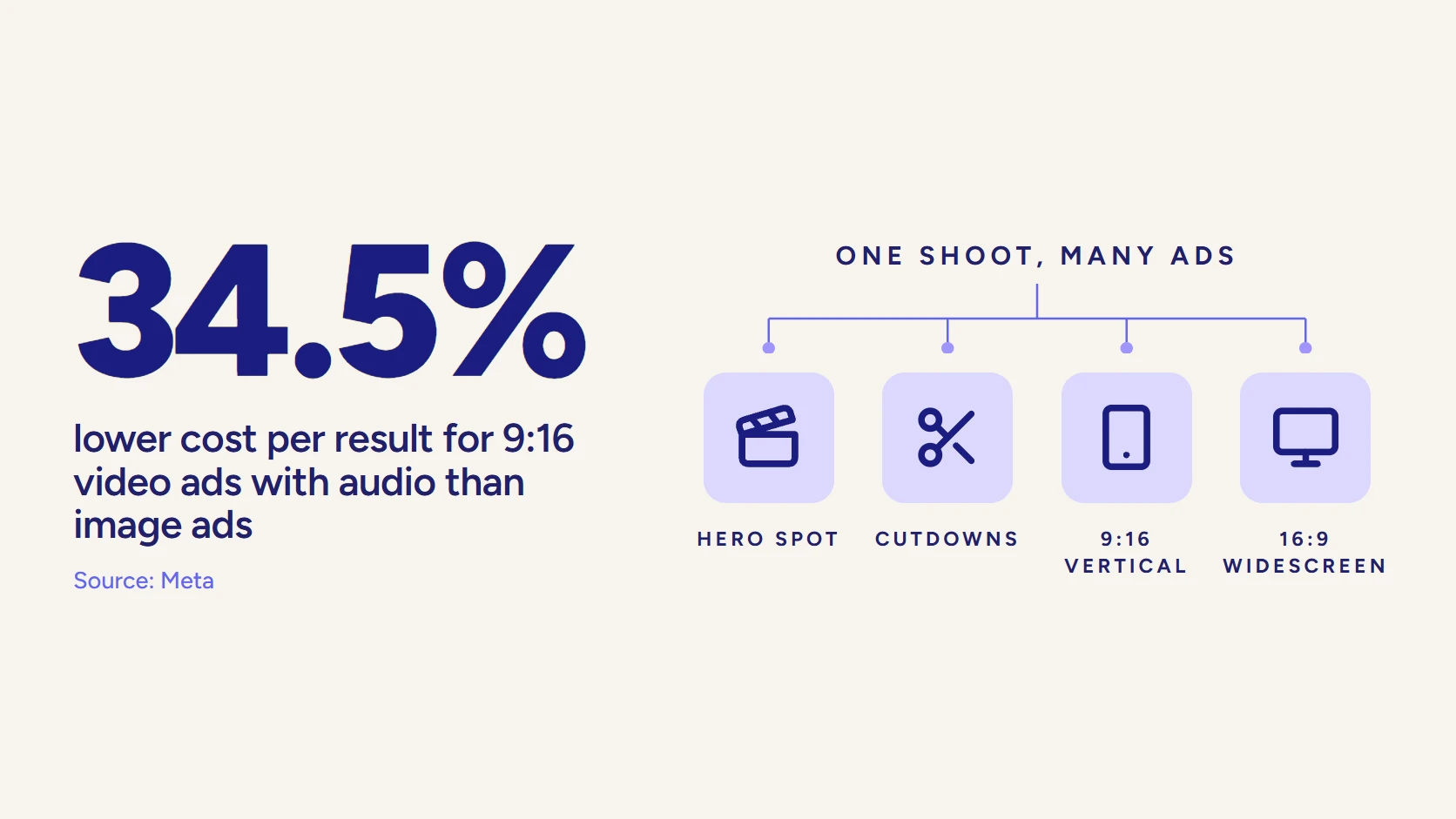
- Paid Social Performance Assets: Promo videos often work best as multiple variants, with shorter cuts optimized for different platforms and placements.
The consistent pattern across all of these scenarios is that the promo video sits inside a system. It’s not a standalone deliverable. It’s one component of a broader campaign architecture.
These promotional video examples for business can help you see how this plays out in practice.
H2: Where Promo Videos Fail
Most promo video failures are strategic, not creative. The issue usually starts when the video is treated as a production task instead of a campaign asset. By the time the edit is done, the real problem has already been baked into the brief.
- Trying to Solve Multiple Goals: One video cannot launch a product, tell a brand story, and promote an event at the same time. When everything is included, nothing stands out. Pick one objective and build around it.
- Unclear Audience: If the video is “for everyone,” it converts no one. Without a defined audience, the message becomes too broad to drive action.
- Weak or Missing Offer: A promo video without a strong offer becomes passive awareness content, and awareness alone doesn’t move the pipeline.
- No Distribution Strategy: A strong video without a clear plan for where it will live and how it will be used is effectively invisible.
- Overloaded Messaging: A common B2B mistake is combining product features, testimonials, and event promotion into one asset. It feels comprehensive but quickly turns into noise.
H2: Decision Framework: Choosing the Right Promo Video Approach
The right promo video approach should come from the campaign goal, not the creative concept. Before production starts, the team needs to define what the asset is meant to do, where it will live, and what action it should drive. Otherwise, the format becomes a guess.
- Audience: Who is this video for right now? A promo video aimed at cold prospects should not carry the same message as one built for in-market buyers or existing opportunities.
- Offer: What specific action should the viewer take? The offer might be a product launch page, webinar registration, demo request, or campaign landing page.
- Channel: Where will this video live? A LinkedIn paid asset, landing page video, email embed, and YouTube pre-roll all require different pacing, framing, and lengths.
- Role in the Funnel: Is this asset meant to create awareness, support consideration, or drive conversion? The answer changes how much context the video needs to provide.
Once those answers are clear, the output becomes much easier to define. A product launch may need a 60- to 90-second hero video supported by 15- and 30-second paid variants. An event promo may work better as short-form social content paired with an email embed. A paid campaign will likely need multiple platform-specific cuts.
The decision happens before production. If you skip this step, no level of execution will fix the outcome. For a more tactical breakdown, see the guide on how to make a promo video.
H2: How LocalEyes Connects Promo Videos to Demand Gen Performance
Most vendors deliver a single video. That is not how promo videos drive the pipeline. LocalEyes builds multi-asset campaign systems designed to perform inside existing demand gen channels.
A typical engagement includes a 60- to 90-second hero video, along with 15- and 30-second paid variants, channel-specific formats for platforms like LinkedIn and YouTube, and placements designed for landing pages and SDR outreach.
The difference is not just in the deliverables. It’s in how those assets are structured to support buyer stages, integrate with campaigns, and drive measurable outcomes like conversion rate and SQLs.
A promo video works best when planned as part of the campaign, rather than as an afterthought.
Explore our promotional video production services to see how LocalEyes builds campaign-ready assets designed to drive pipeline, not sit unused after launch.

Founder at LocalEyes Video Production | Inc. 5000 CEO | Emmy Award Winning Producer