Key Takeaways
|
Testimonial video examples should teach you how customer proof works in the real buying process.
For B2B teams, the best examples do more than place a happy customer on camera. They show a specific buyer problem, a credible decision, and an outcome that the next buyer can use internally.
Many teams still treat testimonial content as soft proof for a homepage. Enterprise buyers need more. They need validation that helps a buying committee feel more comfortable moving a major decision forward.
- TrustRadius’ 2025 report found that 77% of buyers looked at user reviews when making a software purchase, and vendors underestimated buyer-user conversations: vendors estimated 38%, while the actual figure was 54%.
- 6sense’s 2025 B2B Buyer Experience Report found that 95% of winning vendors were already on the buyer’s Day One shortlist. Four out of five deals were still won by the pre-contact favorite.
This article breaks down five testimonial formats that help sales and marketing teams build trust, prove value, and support enterprise decisions.
Why Testimonial Video Examples Matter More in Enterprise Sales Now
Enterprise buyers rarely make decisions alone.
They compare vendors, defend budgets, manage risk, and bring multiple stakeholders into the conversation. A testimonial needs to help them do that work.
The old model was simple: collect praise from a satisfied customer. That feels reassuring internally. It often gives buyers very little to use.
A stronger model creates proof that buyers can carry into the next meeting.
The difference is easy to see:
- Low-Context Praise: “The team was great to work with.”
- Useful Proof: “We cut review time by 30% and gave sales clearer follow-up content.”
The second example gives the buyer something specific. It also gives sales a proof point that fits a real objection. That is where B2B testimonial videos become shared revenue assets, not one-off content pieces.
Strong testimonials can support:
- Marketing: Build credibility on pages, campaigns, and nurture paths.
- Sales: Answer buyer concerns with peer proof.
- Customer Success: Show adoption, expansion, or use-case maturity.
- Leadership: Connect customer outcomes to business priorities.
Enterprise buyers need evidence that feels specific enough to repeat.
A good testimonial gives them language they can bring back to finance, operations, IT, or the executive team.
What the Best Testimonial Video Examples Have in Common
Strong testimonials feel natural because they are well-framed.
Authenticity does not mean loose structure. The strongest customer testimonial videos sound conversational, but every part of the story has a job.
They usually include context, challenge, decision, result, and relevance.
| Element | Why It Matters | What Weak Versions Miss |
| Clear Customer Context | Shows why the story applies to the buyer | Generic praise without industry or role fit |
| Specific Challenge | Gives the story tension and credibility | A flat success story with no pre-existing state |
| Measurable Outcome | Helps buyers justify the decision internally | Vague wins that sound nice but lack proof |
| Natural Speaker | Builds trust through real customer language | Over-scripted lines that sound approved by committee |
| Reusable Structure | Supports web, sales, paid, and deal-room use | One long video with no flexible clips |
The person on camera matters too. A senior leader can speak to business impact. A team lead can speak to adoption. A daily user can speak to practical change.
The right speaker depends on what the buyer needs to believe next.
Numbers, context, and relevance do more persuasive work than a polished setup. A clean shot helps. A specific customer story does more.
The best video case studies help stakeholders remember the proof, not the production.
Example 1: The ROI-Led Customer Story
An ROI-led customer story works when the buyer needs financial clarity.
This format usually features a customer explaining the business change in plain terms. The strongest versions connect the original problem to a measurable result.
For example, a B2B SaaS customer might explain how the platform reduced manual reporting time. The video does not need to cover every feature. It needs to clearly show the operational or financial shift.
- A weak version says, “We loved the product.”
- A stronger version says, “We reduced reporting time by 20% and gave managers weekly visibility.”
That proof changes the conversation. It helps decision makers defend spending internally. It also gives marketing and sales a concrete result to use across pages, decks, emails, and retargeting.
This format works especially well for CFO-facing and VP-level buyers.
Those buyers need evidence tied to time, cost, risk, revenue, or productivity. The testimonial should make that connection easy to repeat.
The lesson is simple: Lead with the business change.
Product admiration belongs in the background. Measurable proof belongs in the edit.
Example 2: The Objection-Handling Testimonial
Some of the best testimonial videos start with hesitation.
That sounds risky. It is often what makes the story believable.
An objection-handling testimonial focuses on the concern that almost stopped the buyer. That concern may be implementation, adoption, complexity, leadership buy-in, or internal resistance.
A customer might say:
- “We were worried implementation would slow the team down.”
- “Our biggest concern was adoption across locations.”
- “We needed proof this would work with our existing process.”
Those early concerns make the testimonial more believable.
The next buyer may have the same doubts. When they hear a customer name the concern, explain what changed, and describe the result, the story feels more useful. It answers the objection without making sales say it directly.
This format is useful in lower-funnel sales conversations.
A rep can send the clip after a prospect raises the same objection. Marketing can use it on product pages, comparison pages, or nurture paths where hesitation is expected.
The strongest versions do not overplay the drama. They name the concern, explain what happened, and show the outcome.
The lesson: hesitation creates contrast. A testimonial without tension can feel like applause. A testimonial with a real concern can feel like evidence.
Example 3: The Two-Voice Enterprise Testimonial
Enterprise deals usually involve more than one buyer.
A two-voice testimonial reflects how those deals actually move. It includes strategic proof from a decision maker and practical proof from someone closer to daily use. Here’s how they usually work:
- One speaker may be the executive sponsor. They can explain why the decision mattered, what business risk existed, and what outcome justified the investment.
- The second speaker may be the operational champion. They can explain adoption, workflow impact, team response, or day-to-day value.
- Together, they give the next buyer a fuller view of the decision.
This format works well when the buying committee includes financial, technical, and operational stakeholders. Each viewer needs a different kind of confidence before moving forward.
For example, the executive can explain why the investment made sense. The user can explain why the team actually adopted it.
That mix helps your testimonial speak to more than one concern because:
- Leadership wants confidence in the business case.
- Users want proof that the change will work in practice.
- Sales need both points available when the deal gets serious.
A single senior leader can create authority. A single end user can create relatability. A two-voice structure can connect both.
The lesson: speaker strategy matters. Do not choose the most senior person by default. Choose the speaker mix that mirrors the decision your next buyer needs to make.
Example 4: The Short-Form Proof Clip for Paid and Retargeting
Not every testimonial needs to be long.
Short-form proof clips can work well in paid social, retargeting, landing pages, and sales follow-up. The key is to give each clip one clear job.
A strong clip should deliver one sharp proof point.
That might be one result, one quote, one objection, or one moment of clarity. It should not try to summarize the full customer story.
A vague montage usually fades fast.
A successful short-form clip supports the message around it. If a landing page claims faster implementation, the testimonial clip should directly reinforce that claim.
For example:
- Retargeting: A 15-second clip answers one common hesitation.
- Paid Social: A customer names one result tied to the campaign message.
- Sales Follow-Up: A customer explains how they made the internal case.
- Landing Page: A quote reinforces the page’s main proof point.
Short proof works because it matches the buyer’s moment.
The viewer may not be ready for a full customer story. They may only need one credible piece of evidence before taking the next step.
The Lesson: short clips work when the proof is specific. They are not weaker versions of the full story. They are focused assets built for faster buying moments.
Example 5: The Testimonial Built as a Reusable Content System
The strongest testimonial projects are planned for reuse before filming begins.
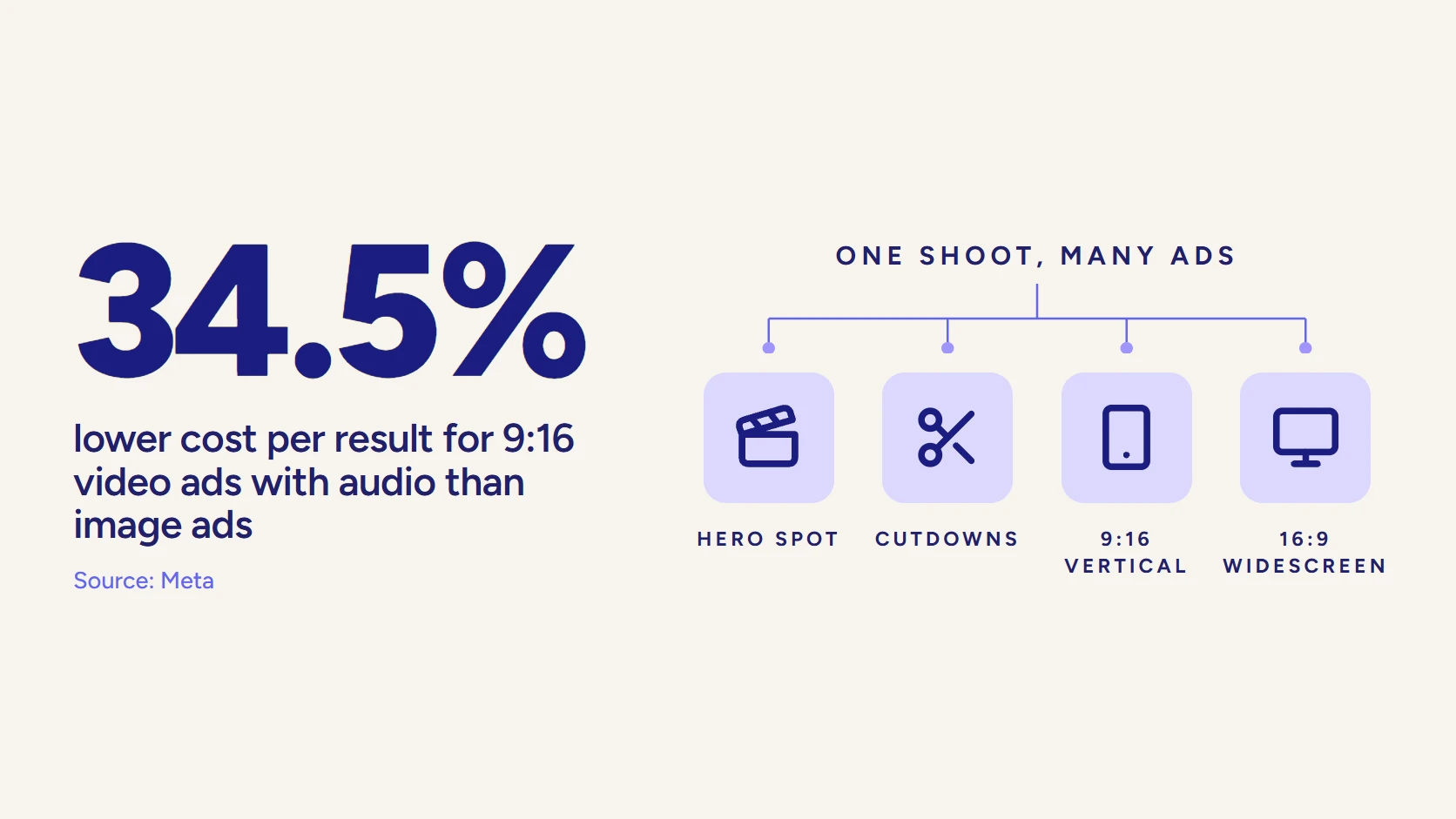
One customer interview can produce more than one asset. The full story may support the website. Short clips may support paid campaigns. Sales snippets may answer objections. Written quotes may support case-study pages or decks.
This turns customer story videos into a proof system.
A planned testimonial shoot can create:
- Full Customer Story: A 60- to 90-second proof asset for web and sales.
- Short Proof Clips: 10- to 20-second segments for paid, social, and retargeting.
- Sales Snippets: Short answers tied to objections or use cases.
- Landing Page Edits: Clips that support specific page claims.
- Deal-Room Assets: Proof buyers can share internally.
- Written Excerpts: Pull quotes for pages, decks, or email.
This planning changes the value of the project.
The customer gives their time once. Your team gets proof that can support multiple buying moments.
A one-and-done testimonial often gets a launch push and then fades. A reusable proof system stays active across web, sales, paid, and nurture.
The lesson: plan outputs before the interview. The footage should be captured with the final use in mind. Otherwise, the best moments may never make it into the assets your sales and marketing teams need.
What Stronger B2B Teams Are Doing Differently With Testimonial Video Examples
Stronger teams have stopped treating testimonials as a content request.
They treat them as a proof system for real buying conversations.
The process starts with three questions:
- Which buyer concern should this story answer?
- Which speaker can make the proof believable?
- Where will the proof be used after launch?
Those answers shape the interview, shoot plan, editing structure, and final deliverables.
This also changes how teams evaluate B2B testimonial video examples. A strong example should do more than look credible. It should show how the asset could help a real deal move forward.
Strong teams map testimonials to personas, objections, and deal stages. They plan versions for web, paid media, sales follow-up, and internal buyer sharing.
They also avoid forcing one customer story to do every job.
One customer may speak best to implementation. Another may speak best to adoption. Another may speak best to the financial impact. The proof library gets stronger when each story has a defined role.
Trust now depends on specificity and expertise.
Generic brand language cannot carry an enterprise buying decision. A customer with a real problem and a clear result gives buyers evidence they can use.
LocalEyes Helps Teams Create Testimonial Videos That Drive Results
The strongest customer story gives buyers language they can repeat in an internal meeting.
A good testimonial should help them explain the problem, reduce perceived risk, and make the case for the next step. That takes more than a polished interview. It takes a plan for who the story needs to persuade and where the proof needs to show up.
LocalEyes helps B2B teams shape testimonial videos that focus on real buyer concerns, business outcomes, and channel use. We plan the story before production starts, so the final assets work across your website, product pages, paid media, sales follow-up, deal rooms, and customer marketing.
One customer interview can become a primary story, short proof clips, paid variants, landing page edits, and sales placements. That gives your team customer proof with a clear job across the buying journey.
Explore our testimonial video production services when your next customer story needs to do more than fill a page.
Start with the buyer’s question the story needs to answer. The right proof gets a lot easier to build from there.

Founder at LocalEyes Video Production | Inc. 5000 CEO | Emmy Award Winning Producer