Fast answer
Key Takeaways
- Dallas has no shortage of crews; for a B2B team the differentiator is a partner that ties video to pipeline, not just camera work.
- Match the format to the buyer stage: brand film for awareness, product video for launch, customer story for proof, executive video for trust.
- For multi-market programs, a distributed crew with centralized producers holds one standard across every city.
- Premium B2B campaign work in Dallas typically starts around $20,000 and scales into $50,000 to $150,000 programs.
- Vet on process and proof (Emmy recognition, 300+ five-star reviews, Fortune-tier clients), never on lowest price.
Type “video production Dallas” into a search bar and the page fills up fast. Directory listicles. Crew-for-hire pages. Platforms promising a 14-day turnaround. Look past the noise and nearly every result is selling the same unit: a shoot. For a marketing leader at a mid-market or enterprise B2B company, that is the wrong thing to buy.
The real question was never who owns a camera in the Dallas-Fort Worth metroplex. It is which Dallas video marketing agency can build video that moves a pipeline number, not footage that looks good on a reel and does nothing after.
This guide is written for that buyer, and it moves in a deliberate order:
- The market. What makes Dallas-Fort Worth a serious B2B video market in the first place.
- The vetting. How to judge a company on process rather than reel, and which format fits which stage of your funnel.
- The economics. How to hold one standard across markets, and what premium work actually costs.
If you are a VP of Marketing or a demand-gen lead weighing a five-figure spend, slow down on the vetting, format, and pricing sections. They are where the money is won or lost.
What Makes Dallas a Serious B2B Video Market?
Dallas-Fort Worth holds one of the densest clusters of corporate headquarters in the country, and that single fact rewrites the job video has to do here. This is not a market of local shops filming local ads. It is a market of enterprise brands, national marketing teams, and B2B buyers who research long before they ever take a call.
The Headquarters Density
The numbers carry the argument. In 2026, 24 Dallas-Fort Worth companies landed on the Fortune 500, a dense concentration of exactly the mid-market and enterprise marketing teams a performance video partner is built to serve. A few names set the scale:
- McKesson. The Irving-based healthcare giant ranked number five on the 2026 list, one of the largest companies in the country.
- CBRE. The commercial real estate leader anchors a deep bench of property and services brands across the metroplex.
- Tenet Healthcare. A national hospital operator whose marketing runs inside strict compliance lines.
- Kimberly-Clark. A consumer and B2B manufacturer with a national marketing org headquartered in Irving.
The relocation pipeline points the same way. Companies keep moving headquarters and regional operations into North Texas, and every arrival adds another marketing org that will eventually need video that performs rather than video that merely looks expensive.
What That Means for Your Video
For your team, that context cuts two ways. Your buyers are sophisticated, so a video that only looks polished clears the bar for entry and differentiates nothing. And because DFW hosts hundreds of industry conferences a year, from healthcare and retail summits to sector-specific trade shows, a single week of event coverage can seed months of marketing assets.
Now consider the verticals that anchor the region. Every one of them sells something complex to a skeptical buyer, which is precisely the situation where video has to explain and earn trust rather than decorate:
- SaaS and enterprise software. Complex platforms that a buyer has to understand before a demo ever happens.
- Healthcare. High-trust, compliance-bound work where credibility matters more than gloss.
- Financial services. Regulated products that need to signal stability and expertise.
- Enterprise services and logistics. Operations at scale that video has to make legible to a cautious committee.
Picture a product launch timed to a major DFW conference. In one week it can reach thousands of qualified buyers and land in front of a dozen direct competitors, all watching the same feed. That is a content marketing opportunity, not a production task. Teams that win here plan the asset set and the distribution before they book a crew, and they treat each shoot as a quarter’s worth of supply rather than a one-time deliverable.
Which Dallas Industries Rely Most on B2B Video?
The short answer: the ones selling something complex to a cautious buyer. In North Texas that means enterprise technology, healthcare, financial services, and logistics, and each leans on video for a different reason.
- Enterprise technology. Texas Instruments and AT&T are headquartered in Dallas, Toyota Motor North America runs its continental operations from nearby Plano, and a thick layer of SaaS and fintech fills in around them. For these teams the highest-value asset is usually a product or platform video that turns a technical capability into something a buyer can follow in ninety seconds, which is why our roundup of Dallas explainer video companies for tech demos exists.
- Healthcare. McKesson and Tenet Healthcare sit at the center of a wide network of hospital systems, payers, and device makers, and their video has to earn trust while staying inside strict compliance lines. That work favors patient stories, procedure explainers, and executive thought leadership over flashy brand spots.
- Financial services. Charles Schwab, Comerica, and a cluster of banks and wealth managers need video that signals stability and expertise to a research-heavy buyer.
- Logistics and real estate. Southwest Airlines, CBRE, and the region’s freight and commercial real estate players use video to explain operations at scale.
One thread connects all of them: patience. These are B2B brands whose buyers research for months, so a single credible customer story can outwork a season of paid ads.
How Do You Vet a Dallas Video Production Company?
Vet on where the work starts and what you own before the camera rolls, not on the polish of the reel. A great reel proves a company can shoot. It says nothing about whether the finished video will hit a business goal.
Three Kinds of Partner You’ll Meet
You will meet three types of company in Dallas, and knowing which one you are talking to settles most of the decision. The generic vendor sells production capacity and competes on price. The cinematic boutique sells craft and competes on awards. A B2B marketing team is usually after a third thing: a partner whose starting point is your business objective and whose track record is measurable results, not festival credits. Here is how the three compare on the checks that actually predict outcomes.
| What to check | Generic vendor | Cinematic boutique | LocalEyes |
|---|---|---|---|
| Starts from | A shot list | A creative vision | Your business objective (Goal-First) |
| Deliverable before the shoot | A quote | A treatment | The Video Blueprint you own |
| Multi-market delivery | Subcontracts it | Local only | 10 US markets, one standard |
| Optimized for | Lowest bid | Awards | Pipeline and SQLs |
| Proof | A reel | Festival credits | Emmy, 300+ reviews, Zapier / Harvard-tier work |
The Questions That Predict Outcomes
You might assume the deciding question is about gear or crew size. It is not. Three checks tell you far more than any equipment list:
- What do I own before the shoot? A vendor hands you a quote and a boutique hands you a treatment, a creative pitch you do not really control. What you want instead is a strategic plan you keep no matter what happens next. With LocalEyes Video Production Dallas, that deliverable is The Video Blueprint, agreed under a Goal-First Alignment process so the objective, the message, and the metric are settled before anyone books a location.
- Can you prove outcomes, not taste? An award-winning reel is a green flag, but a track record of moving business metrics, whether enrollment, sales lift, or qualified pipeline, is the flag that maps to your job. Weigh verified reviews and real client outcomes ahead of reel polish, every time.
- Who actually does the work? A directory or platform can connect you to a crew, but a crew is not a creative team. A producer, a director, and post talent who built your Blueprint keep the brand consistent across a multi-asset program in a way a rotating cast of per-project subcontractors never will.
Our guide on how to choose a video production partner lays out the full set of questions to run on that first call.
A few answers should end the conversation early:
- They lead with day rates. A partner who quotes a rate before asking what the video must accomplish is selling capacity, not outcomes.
- They point only to logos and adjectives. A company that can never name a measurable result usually has none to show.
- They frame strategy as a free add-on. A shop that treats the plan as a giveaway rather than the first deliverable will improvise the part that matters most.
Any one of those is a yellow flag. All three together tell you which side of the vendor-versus-agency line you are standing on.
Which Video Format Do You Actually Need?
Start from where the buyer is and what you need them to do next, then pick the format that serves that stage. The most expensive mistake a marketing team makes is buying the format it finds impressive instead of the one the buyer stage requires.
| Video format | Buyer stage | Primary goal | Typical placement |
|---|---|---|---|
| Brand film | Awareness | Reposition, brand halo, recruiting | Homepage hero, paid social |
| Product / platform video | Consideration | Launch, product marketing, conversion | Product pages, launch, retargeting |
| Customer story | Decision / proof | Sales enablement, credibility | Sales, industry, ABM |
| Executive / event | Trust / ABM | Exec presence, keynotes, internal comms | Conferences, ABM, employer brand |
The Four Workhorse Formats
A brand film is not a substitute for a product video, and a customer story does a job neither can. Here is what each format is built to do, and where it belongs:
- Brand film. The top-of-funnel piece that carries brand identity, repositions how the market sees you, and pulls double duty for recruiting. It belongs on the homepage and in paid social, and if a distinctive, emotive brand video in Dallas is what your positioning needs, this is the asset that makes buyers feel something before they know what you sell.
- Product or platform video. The consideration-stage workhorse that turns features into a story a buyer can follow. For SaaS and enterprise software it is often the highest-leverage piece a team can commission, because it does the explaining that sales would otherwise repeat on every call. Our breakdown of product video production covers what separates a demo that converts from one that just documents features, and a Dallas-based explainer video team can build the version tuned to a technical buyer.
- Customer story. The proof-stage asset. Buyers trust other buyers more than they trust you, so a credible customer testimonial video does more for sales enablement than any amount of brand polish, and your sales team pulls it into account-based sequences.
- Executive and event video. The trust builder. Keynotes, thought-leadership pieces, and conference coverage in Dallas put your leaders in front of the market, and given how many conferences DFW hosts, event capture is an efficient way to feed all four formats from a single week of production.
Build for Distribution From the Start
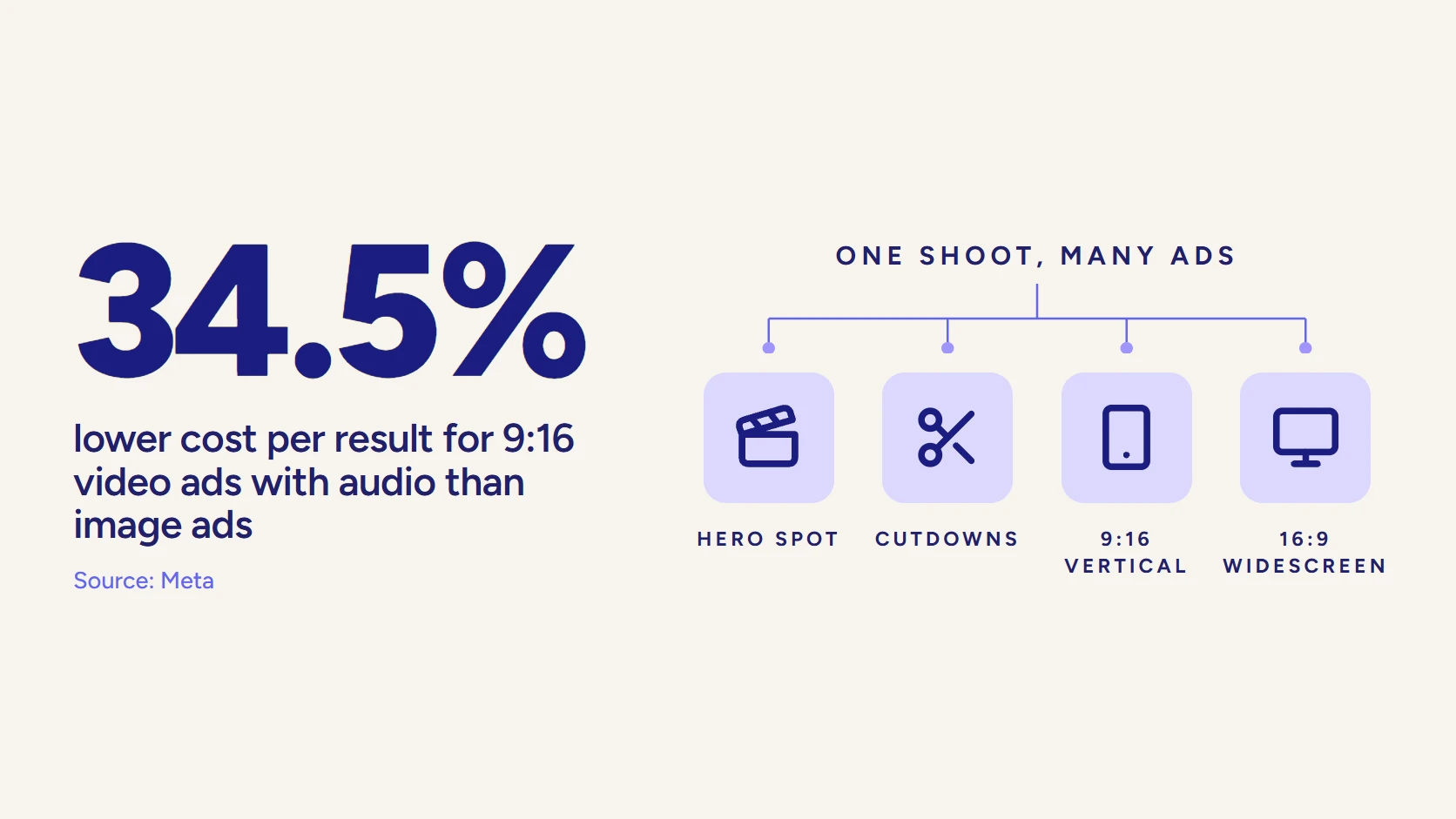
Do not lose the distribution lens, because it decides whether any of this pays off. A format is only as valuable as the channels it reaches, so plan every asset for social from the start rather than adapting it after the fact. In practice that means shooting with vertical and square crops in mind, keeping the first three seconds hook-first, and cutting each hero into channel-ready versions.
Video built for LinkedIn, YouTube, and paid social behaves like a different asset than a single 16:9 file dropped on a landing page, and the gap shows up in reach and in pipeline. If you remember one thing here, it is this: most strong programs run several formats together across the funnel rather than betting everything on one hero film. Match the format to the stage, keep the spend proportional to the job, and give every asset something specific to do.
LocalEyes Video Production Dallas
See how LocalEyes Video Production Dallas builds performance video for B2B marketing teams.
Can One Partner Deliver Across DFW and Beyond?
Plenty of Dallas companies can shoot in Dallas. The harder problem is consistency across markets. If your buyers, offices, or events span Dallas, Austin, Houston, and three other cities, a local-only shop cannot hold one standard, and a platform that subcontracts to whichever freelancer is free cannot promise it either.
The Distributed Model
The model that solves this is a distributed crew with centralized producers. Local crews who already know the city, its locations, and its light handle the ground work, while a central production team owns the creative direction, the standard, and the deliverable in every market. That is how a multi-city program keeps the same premium look and the same strategic through-line whether the camera is in North Texas or on the coast. LocalEyes Video Production runs this as The LocalEyes Production Standard across 10 US markets.
How LocalEyes holds one standard across markets
- Goal-First AlignmentThe objective, the message, and the success metric are settled before any location is booked.
- The Video BlueprintA strategic plan you own names the audience, buyer stage, formats, and metric for every market.
- Distributed crews, centralized producersLocal crews handle each city while a central team owns creative direction and the quality bar.
- Full-service post and cutdownsStrategy, production, post, and channel-ready 15, 30, and 60-to-90-second versions live under one roof.
The payoff for a marketing leader is simple. You brief once and get a consistent result everywhere, instead of managing a different vendor, a different quality bar, and a different invoice in each market. Location scouting, permitting, and logistics across the Dallas metroplex fall to people who work here, not to freelancers sourced cold.
Full-service scope is what makes the seam-free version possible. When strategy, production, post, and channel-ready cutdowns live under one roof, the handoffs where multi-vendor projects usually break simply go away, and one hero asset can become 15-second, 30-second, and 60-to-90-second versions for LinkedIn, YouTube, and retargeting. A single shoot feeds the whole content calendar instead of producing one file that lives on one page.
Where Do You Shoot in Dallas, and Who Handles Permits?
Great locations are part of the creative, not an afterthought, and Dallas gives a production real range. The right backdrop signals as much about a brand as the script does, so it is worth knowing what the metroplex offers.
Where Dallas Shoots Well
A few settings do most of the work for B2B brands:
- Downtown and the Arts District. Glass towers and modern civic architecture that read as corporate and established.
- Deep Ellum and Trinity Groves. Texture, color, and character for brands that want energy rather than polish.
- The Plano and Frisco corridor. Corporate campuses that supply the polished interiors an enterprise brand usually wants on camera.
Then comes the logistics layer most buyers never think about until it stalls a shoot. Filming on public streets, in city parks, or at municipal facilities in Dallas requires a permit, and productions typically coordinate that through the city and the regional film commission. Larger setups add more:
- Permits. Filed ahead through the city and film commission for public and municipal locations.
- Proof of insurance. Required for most public and many private sites before a crew can set up.
- Off-duty officers. Booked for traffic control on larger street-level productions.
This is where a local crew earns its keep. A team that already works the metroplex knows which building managers say yes, how far ahead a permit needs to be filed, and where to stage gear near a downtown location without a parking fight. A crew flown in for the day knows none of that, and the schedule pays the difference. So make it a screening question. Ask any partner who pulls the permits, who carries the insurance, and who scouts the locations before you sign. If the answer is “you do,” you are hiring a crew, not a video marketing agency.
What Does Premium B2B Video Cost in Dallas?
Cost is the question the directory pages dodge, and the one buyers care about most. The honest answer: price depends on scope, which means the number of assets, shoot days, and markets.
The Two Tiers
There are really two tiers in this market, and confusing them is where budgets go wrong:
- General production work. Most Dallas video production services fall somewhere between $5,000 and $25,000 depending on complexity. That range is where crew-for-hire and single-video work lives, and our guide to corporate video production costs breaks down what actually moves the number.
- Premium campaign work. This sits in a different tier because it is a different product. You are not buying a video, you are buying a system of assets engineered to move pipeline, with the strategy, multi-market delivery, and cutdowns that implies. Campaign work in Dallas typically starts around $20,000 for a focused project and scales into the packages below.
| Package | Investment | Best for |
|---|---|---|
| Brand campaign | $50K | Single hero film + channel cutdowns |
| Growth campaign | $75K | Hero plus supporting assets across the funnel |
| Multi-asset campaign | $100K | Several formats, multiple markets |
| Enterprise campaign | $150K | Full multi-market, multi-stage rollout |
Look at what actually scales the number. It is not fancier cameras. It is more of the funnel covered and more markets served: a brand campaign anchors on one hero film with cutdowns, a growth campaign adds supporting assets across awareness, consideration, and decision, and an enterprise campaign becomes a full multi-market, multi-stage rollout.
What the Premium Tier Buys
It also helps to know what the premium tier actually includes beyond the shoot day. A campaign program usually covers:
- Strategy and scripting. The Blueprint work that decides what gets made and why.
- A dedicated team. A lead producer and director who stay with the account start to finish.
- Finishing craft. Professional color grading and sound mixing on every asset.
- Assets and graphics. Licensed music, motion graphics, captions, and thumbnails.
- Channel-ready cutdowns. A full set of platform versions with clear usage rights.
A cut-rate quote quietly omits half of that. That is how two “Dallas video” bids can differ by a factor of five and both look honest on the surface, so compare scope line by line, not just the number at the bottom. Priced against the lowest bid, premium work never wins. Priced against the outcome, a program that generates qualified pipeline over months is a fundamentally better trade than a single good-looking video that does one job once.
So here is the move: judge cost per use and per result, not per file. A premium partner should tell you what the video must do before quoting how much it will cost. For a sense of who does full-service campaign work in this market, see our roundup of the top Dallas corporate video companies for campaign work.
Video that has to work?
Book a discovery call with LocalEyes Video Production and start from the goal, not the brief.
How Does a Dallas Video Marketing Agency Fit Your Wider Strategy?
Video is not a line item that sits apart from the plan. It is the raw material that feeds the rest of it. A capable Dallas video marketing agency treats a shoot as a supply run for the whole funnel rather than a single deliverable, and that mindset is what separates a marketing partner from a production vendor.
The data backs the priority. In a Web Video Marketing Council survey cited in our own research, 96% of B2B marketers were already using video and 73% said it positively affects marketing ROI.
So the live question is no longer whether to invest but how to make the investment work harder, and our breakdown of why video reliably lifts marketing returns lays out the reasons in full.
Make One Shoot Do the Work of Ten
Working the investment harder comes down to distribution and reuse. One hero shoot should feed a long list of surfaces, each in the format that channel actually rewards:
- LinkedIn. Short, subtitled, native cutdowns built for a sound-off feed.
- YouTube. The hero film and longer explainers that reward watch time.
- Paid social. Hook-first versions cut for retargeting and prospecting.
- Sales enablement. A customer story or demo dropped into the deck and the deal room.
- Onboarding and events. Assets that carry into the product experience and the next booth.
That is the gap between a video that lives on one landing page and a content engine that keeps producing quarter after quarter. Know the buyer before the camera rolls, too. The video aimed at a CFO is not the video aimed at an end user, and a partner who asks about the target audience and the buying committee first will build something the sales team can genuinely use. Tie every asset back to a defined stage and a real plan, the way our guide to building a video marketing strategy lays out, and the spend stops reading as a cost and starts behaving like a channel.
How Do You Know the Work Actually Performs?
Every agency claims to drive results. The ones worth hiring can point to specific, verifiable proof rather than adjectives. Before you sign, ask for measurable outcomes in a category near yours, named clients you can recognize, and third-party validation you can check.
LocalEyes at a glance
Two of those rows are the ones a growth leader should weigh, because they are business outcomes rather than vanity metrics:
- 90% sales increase for NewAir. A verified client outcome that shows video moving revenue, not just impressions.
- Multi-million-dollar enrollment impact for USC. The line between video as a cost center and video as a pipeline engine.
The rest of the stack backs the craft and the trust. An Emmy and 300-plus five-star reviews say the work and the client experience are real. A Net Promoter Score above 95 says clients come back. Anchor work for clients of the caliber of Zapier and Harvard says the process holds up under enterprise scrutiny.
So apply one test to any Dallas partner you consider. Not “can you show me a reel,” but “can you show me what a video did for a company like mine, and prove it.” If the answer is a number with a client’s name attached, you are talking to the right kind of partner. If it is an adjective, keep looking. Our guide to measuring what a video actually returns gives you the framework to hold them to it.
How Long Does Production Take, and Can You Retain a Team?
Timelines track scope, but there are useful benchmarks. Many general corporate projects in the Dallas market run 6 to 12 weeks depending on complexity. A focused LocalEyes Video Production project typically runs 30 to 45 days from kickoff to final delivery, because the Video Blueprint is agreed before the camera rolls and the mid-project churn that stretches schedules never starts.
A focused LocalEyes Dallas project: 30 to 45 days
- Kickoff and Goal-First AlignmentScope the objective and lock the message so the plan is set before any shoot date.
- Video Blueprint and pre-productionScripting, location scouting, and permits across the metroplex, the stages that most often stretch a schedule.
- ProductionThe shoot runs efficiently because the hard decisions are already made, and multi-market days can run in parallel.
- Post, cutdowns, and deliveryColor, sound, motion graphics, and channel-ready versions finished to one standard.
Where the Calendar Actually Goes
Here is the part most buyers get wrong. The stages that consume the most calendar are strategy alignment and creative approval, not the shoot itself. Lock the objective, the message, and the look early and you protect the schedule better than any other single move. With those settled up front, production and post move predictably, and multi-market shoots can run in parallel rather than in sequence.
The Retainer Option
What if you need video continuously rather than once? Then an ongoing program or retainer relationship is usually the better structure, and it compounds in a way one-off projects cannot:
- Less re-briefing. A retained partner keeps your strategy, brand standard, and Video Blueprint in place instead of starting cold each time.
- A calendar, not a queue. Work produces against a content plan that feeds demand generation, sales enablement, onboarding, and social.
- Compounding knowledge. The team learns your product, your buyers, and your positioning over time, so each quarter is faster to brief and sharper than the last.
That is how a marketing team turns video from a series of one-off projects into a repeatable pipeline input, which is the whole point of tying video to a video marketing strategy in the first place. Bottom line: if you are weighing a launch, a campaign, or a multi-market rollout in Dallas, the right next step is a conversation that starts from the goal, not the gear. A partner who leads with your business objective, hands you a plan you own, proves outcomes, and holds one standard across every market is the one most likely to make the spend pay back.
Video that has to work?
Book a discovery call with LocalEyes Video Production and start from the goal, not the brief.
Frequently Asked Questions
How much does video production cost in Dallas?
What should I look for in a Dallas video production company?
How long does a corporate video take to produce?
Do you work with B2B and SaaS companies?
Can you handle multi-city or national shoots from Dallas?
Do you handle location scouting and permits in Dallas?

Founder at LocalEyes Video Production | Inc. 5000 CEO | Emmy Award Winning Producer