Fast answer
Key Takeaways
- Boston and Cambridge form the largest life sciences cluster in the US; for a B2B team the differentiator is a partner that ties video to pipeline, not just camera work.
- The metro's heaviest B2B video buyers are life sciences and biotech, higher education, healthcare, financial services, and enterprise SaaS.
- Match the format to the buyer stage: brand film for awareness, product video for launch, customer story for proof, executive video for trust.
- Plan distribution before the shoot so one production yields a hero asset plus channel-ready cutdowns for LinkedIn, YouTube, paid social, and sales enablement.
- For multi-market programs, a distributed crew with centralized producers holds one standard across every city.
- Premium B2B campaign work in Boston typically starts around $20,000 and scales into $50,000 to $150,000 programs.
- Vet on process and proof (Emmy recognition, 300+ five-star reviews, Fortune-tier clients), never on lowest price.
More than 1,200 biotech companies sit inside the few square miles around Kendall Square. That density makes Boston and Cambridge the largest life sciences cluster in the country, and it tells you something about the audience you are selling to: technical, skeptical, and unusually well funded.
Sell into that world and you learn fast that video is not a commodity. The regional economy runs on three engines at once, and each one buys video for a different reason.
- Life sciences. Anchored at Kendall Square, where a biotech has to make complex science legible to expert reviewers and investors.
- Higher education. Roughly 44 colleges enrolling about a quarter of a million students, all competing for the same applicants and donors.
- Enterprise, finance, and healthcare. Software, asset management, and hospital systems that pitch complex products to expert buyers.
Search “video production Boston” expecting a clean shortlist and what comes back is a wall of crews, all promising high-quality footage and a fast turnaround. That is not the same thing as a partner.
Here is the distinction that matters. A film crew captures a shoot. A B2B video partner decides what the video has to accomplish, for which buyer, at which stage, then builds an asset that nudges that person toward a decision.
So who should a biotech platform, a research university, or an enterprise brand actually hire? The company that starts from your business objective and can prove the work drives pipeline. At five and six figures, that proof is the only thing that de-risks the spend.
What follows is the buyer’s walk-through: how to vet a company, which format you need, what it costs, how long it takes, and what proof to demand before you sign.
Why Does Boston B2B Video Take More Than a Film Crew?
Because the products Boston companies sell resist easy explanation, the work becomes a strategy problem before it is ever a camera problem, and only a partner who starts from the message can solve it.
Consider what each buyer is up against, because none of these is a lighting challenge:
- Biotech. It has to make a mechanism of action legible to a scientific reviewer and a finance lead in the same asset.
- Universities. A single brand film has to move a prospective student, a donor, and a faculty recruit at once.
- Enterprise software. An abstract platform has to become something a VP can picture her team using on a Monday morning.
None of that is a camera problem. It is a strategy problem that video happens to solve.
Why the Standard Boston Listing Falls Short
Most pages ranking for “video production Boston” publish a service menu (corporate videos, event coverage, social clips, motion graphics, drone work) that is all useful and none of it a plan. A generic vendor shoots whatever brief you hand over and returns it polished. A B2B partner interrogates the brief first, asking what it is for, who watches it and where in the funnel, and what success looks like in pipeline terms rather than view counts.
You might assume any competent crew clears this bar. For a technical or executive audience it does not, and the reason is simple: that upfront rigor is the line between an expensive brand film parked on a homepage and a system of assets that helps close deals.
Why Gloss Backfires in Boston
There is a regional tell worth naming. Boston buyers distrust gloss for its own sake, and a cutting-edge look that reads like an ad underperforms with scientific and academic audiences who reward clarity and credibility over spectacle. The strongest Boston B2B work reads as confident and precise, not loud. A B2B-native partner makes that creative-direction call on instinct, while a rent-a-crew defaults to whatever looks impressive on a reel.
Does Boston B2B Video Actually Drive Pipeline?
Yes, and the evidence is not subtle. Teams that treat video as a revenue tool report it moving leads and sales, not just impressions. The catch is that the outcome comes from the plan, not the camera.
The numbers back it up. In Wyzowl’s 2026 survey, 82% of marketers said video gives them a good return on investment, 85% said it helped generate leads, and 83% said it directly increased sales.
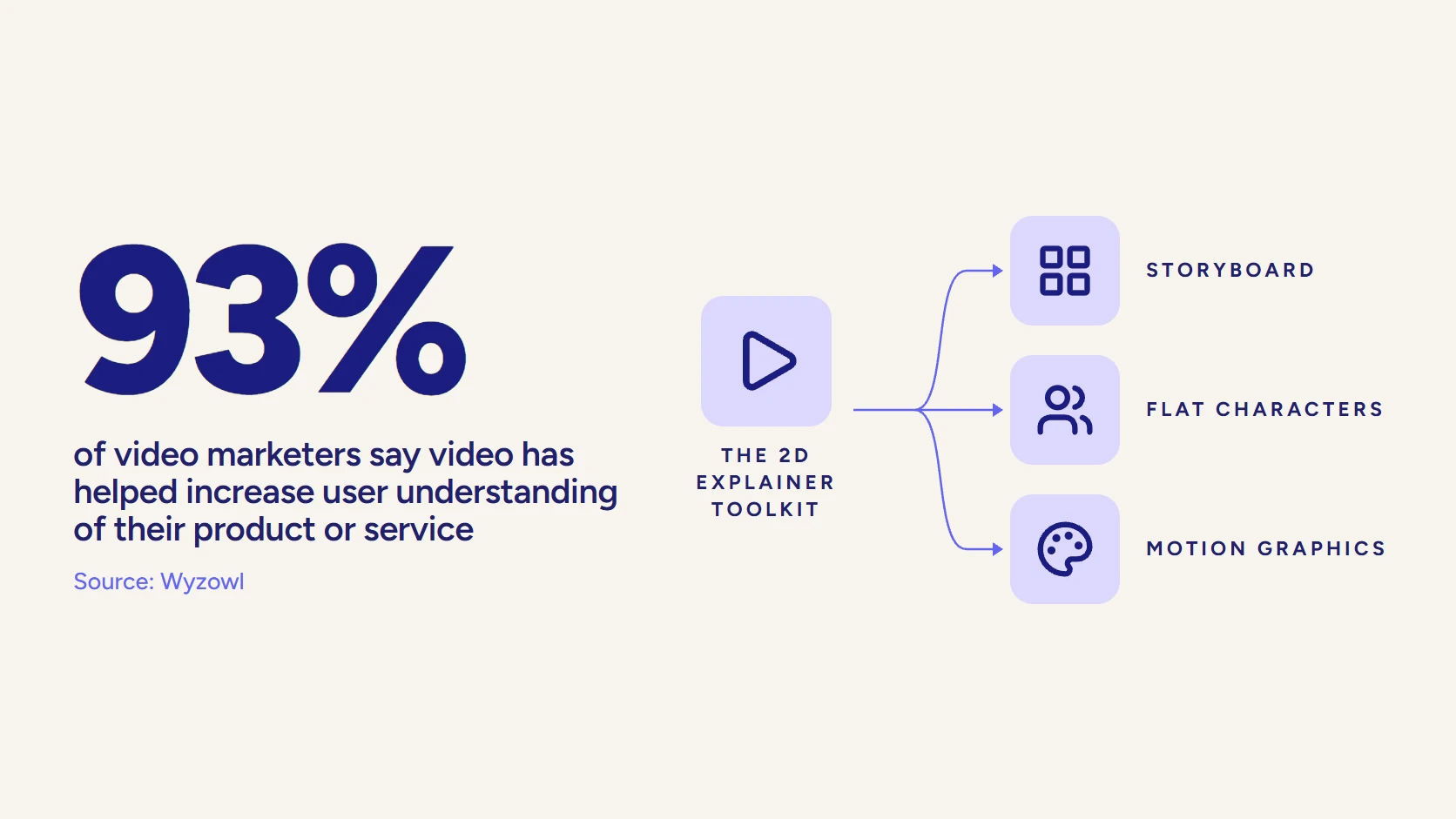
Buyer behavior tells the same story from the other side. That same research found 85% of people have been convinced to buy a product or service by watching a video, and 93% of video marketers credit video with improving how well prospects understand what they sell. Which is precisely the problem a Boston biotech or platform company is trying to solve.
One quieter benefit matters for a technical sale. Video keeps a serious buyer on the page long enough to absorb a complex idea, and 82% of marketers say it has increased dwell time. A longer, more informed visit is exactly what feeds a considered B2B decision.
Measure Pipeline, Not Plays
None of that shows up if you measure the wrong thing. A view count tells you a video was served, not that it moved anyone. A B2B team should track the signals that actually connect to revenue instead:
- Influenced pipeline. Opportunities where a prospect engaged with the video before converting.
- Demo requests. The direct action a product or explainer video is built to drive.
- Assisted conversions. Deals the asset touched somewhere along the path, even when it was not the last click.
- Dwell time. How long a serious buyer stays on the page to absorb a complex idea.
Our guide to how to measure B2B brand video ROI lays out which numbers to trust. Here is a practical test for any Boston partner, or any video marketing agency Boston teams shortlist: ask how they would measure whether this specific asset worked. A team that answers in pipeline terms is thinking about your business; one that answers in views is thinking about its reel. There is a full framework for calculating video marketing ROI if you want to hold them to it.
How Do You Vet a Boston Video Production Company?
Vet on process and proof, not on the reel and the price. Almost every full-service shop can show attractive footage, which proves they can run a camera. It does not prove they can move your numbers.
The useful signal is what happens before anyone shoots, and whether the team can point to outcomes instead of accolades. Most video production companies Boston buyers meet fall into three types, and the table below lays out where they diverge.
| What to check | Generic vendor | Cinematic boutique | LocalEyes |
|---|---|---|---|
| Starts from | A shot list | A creative vision | Your business objective (Goal-First) |
| Deliverable before the shoot | A quote | A treatment | The Video Blueprint you own |
| Multi-market delivery | Subcontracts it | Local only | 10 US markets, one standard |
| Optimized for | Lowest bid | Awards | Pipeline and SQLs |
| Proof | A reel | Festival credits | Emmy, 300+ reviews, Zapier / Harvard-tier work |
Read it left to right and the pattern is clear:
- The generic vendor. It starts from a shot list and optimizes for the lowest bid, which is fine when you already own the strategy and just need hands on the day.
- The cinematic boutique. It starts from a creative vision and optimizes for awards, which can yield beautiful brand films that rarely map to a funnel.
- The B2B partner. It starts from the business objective and hands you a strategic plan you own before the camera rolls.
At LocalEyes Video Production that plan is the Video Blueprint, produced through a Goal-First Alignment process and delivered as an artifact the client keeps. It names the audience, the buyer stage, the message, the formats, and the success metric before a single day is booked.
The One Question That Sorts Crews From Partners
So here is the single most useful thing to ask any Boston company on a first call. Not for a quote, but for a walk-through of how they decide what to make. “Tell us what you want and we will shoot it” means you are buying a crew; an answer that starts with your goals and your pipeline means you are buying a partner.
One more move matters here. Ask for relevant work, not just any work. An award-winning wedding reel says nothing about whether a team can make a biotech platform or a university brand legible to the right audience, and our walk-through on how to choose a video production partner lays out the questions worth asking before you sign.
Which Video Format Does Your Boston Team Actually Need?
The most common and costly mistake is commissioning the wrong format. Teams ask for “a brand video” when the pipeline actually needs a product explainer, a customer story, or an executive piece for an account-based program. Start from the buyer stage you are trying to move and the format usually picks itself.
Match the Format to the Buyer Stage
The matrix below maps the four workhorse B2B formats to the stage they serve, the goal they carry, and where the asset tends to run.
| Video format | Buyer stage | Primary goal | Typical placement |
|---|---|---|---|
| Brand film | Awareness | Reposition, brand halo, recruiting | Homepage hero, paid social |
| Product / platform video | Consideration | Launch, product marketing, conversion | Product pages, launch, retargeting |
| Customer story | Decision / proof | Sales enablement, credibility | Sales, industry, ABM |
| Executive / event | Trust / ABM | Exec presence, keynotes, internal comms | Conferences, ABM, employer brand |
Where each format earns its budget depends on who is buying:
- Biotech and SaaS. The product or platform video pays back fastest, because it converts consideration-stage traffic on product pages and in retargeting.
- Universities and hospital systems. The brand film and the customer story carry the load, one building the halo and the other supplying credible proof.
- Enterprise ABM teams. Executive thought-leadership video is often the missing piece, giving a named account a reason to trust the people behind the platform.
Plan for Reuse, Not One-Offs
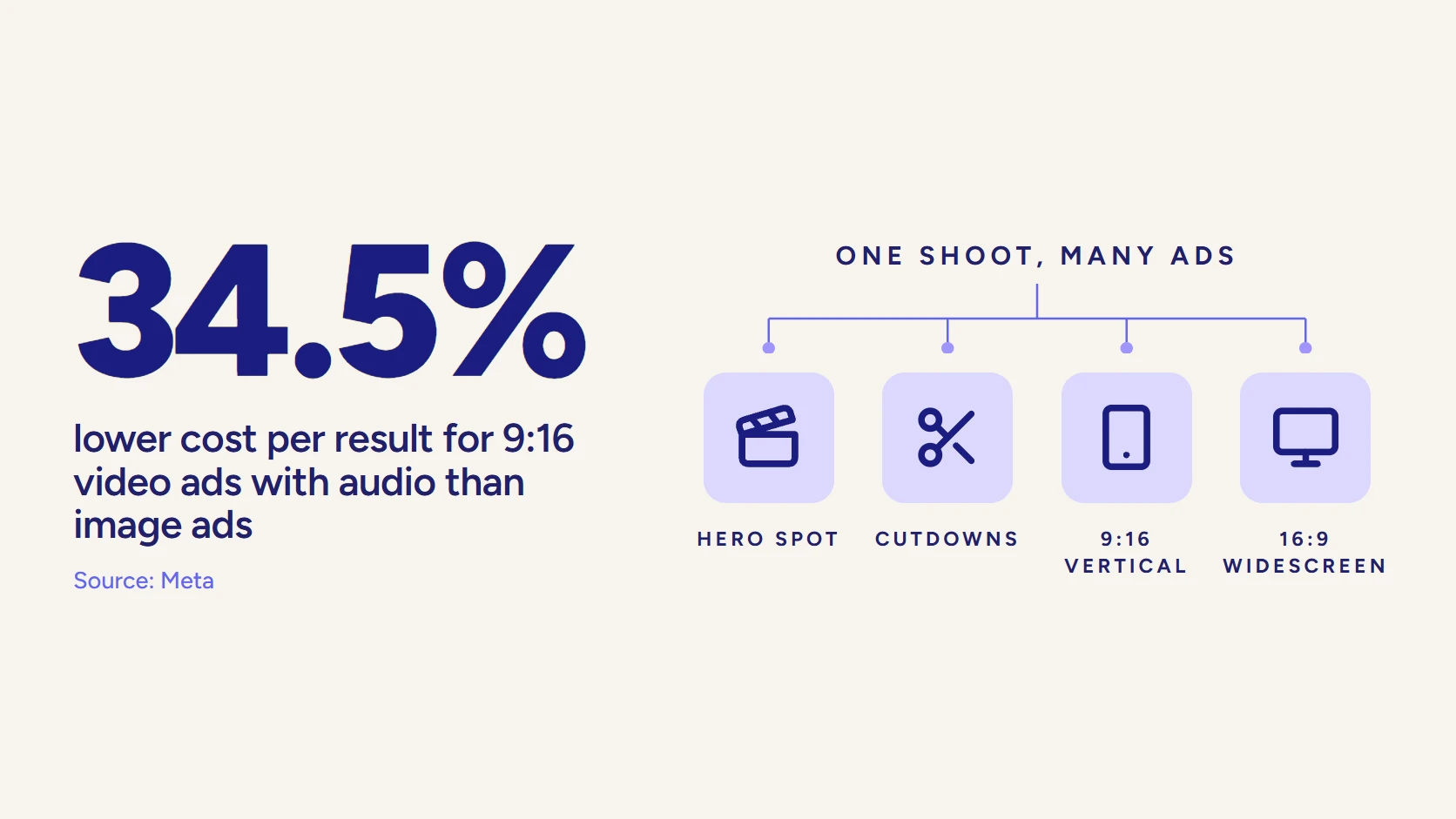
The other reason to think in formats rather than one-offs is reuse. A single well-planned shoot should yield a hero asset plus a set of cutdowns (15, 30, and 60 to 90 second versions) engineered for LinkedIn, YouTube, and paid social from the start.
Take event video. A keynote or customer summit filmed once can seed a highlight reel, a set of speaker clips, and months of social content, as long as someone planned the distribution before the doors opened. There is a full playbook for repurposing event footage into year-round B2B content. Motion graphics and sound design then hold the system together so every asset reads as one brand rather than a pile of unrelated clips, which is exactly what a crew hired for one day rarely delivers.
How Should a Boston Team Distribute and Repurpose Each Video?
Plan the distribution before the shoot, so a single production yields a hero asset plus channel-ready cutdowns for LinkedIn, YouTube, paid social, sales enablement, and the website. The distribution plan should shape the shot list, not get bolted on in the edit.
Think of it as one shoot feeding many surfaces, each with a job of its own:
- The hero film. Anchors a campaign page and carries the full story for a warm, engaged viewer.
- The 60-second cut. Runs as a paid ad, where a tighter edit has to earn attention fast.
- The 15- and 30-second versions. Carry LinkedIn and paid social, built for a sound-off feed.
- Quote and speaker clips. Seed weeks of organic posts from a single day of filming.
Why LinkedIn and Sales Enablement Get Forgotten
LinkedIn deserves its own line, because it is where most Boston B2B buying committees actually spend attention. Short, subtitled, native-uploaded video built for a sound-off feed beats a link to a three-minute film almost every time, so the cutdowns are not an afterthought. They are the point.
Sales enablement is the surface teams forget. A customer story or a product explainer dropped into a deal room or a follow-up email gives a rep something a slide cannot, and it keeps the message consistent from first touch to close. Product and platform video earns its keep on the pages where consideration-stage buyers convert, and the way SaaS companies use professional product videos is a useful model for any Boston platform team.
The reuse math is what makes premium video efficient. Where a day crew hands back one file, a planned program returns a library, and a look at the main online video distribution platforms shows how far a single well-produced asset can travel once someone planned for it.
How Long Should a Boston B2B Video Be?
There is no single right length. Match the duration to the buyer stage and the channel, and lean shorter than instinct suggests, because attention on a B2B feed is thin and unforgiving.
Buyers say so directly. In Wyzowl’s 2026 research, 63% of people said a short video is how they would most like to learn about a product or service, far ahead of articles, infographics, or a sales call.
Default Lengths by Stage and Channel
Use that to set defaults rather than guessing each time:
- 15 to 30 seconds. The workhorse for LinkedIn and paid social, where a cold feed rewards a fast, subtitled cut.
- 60 to 90 seconds. The right fit for a product page or a homepage hero that has to explain without stalling.
- Two to three minutes. About right for a customer story, once a buyer is already engaged and wants the proof.
- Several minutes. Reserved for an executive thought-leadership piece or a deep webinar, where the audience has opted into the topic.
Longer runs have their place, but only with a warm audience, because the people who click a webinar have already opted into the subject. That is a very different context from a cold feed. The costly habit is making one long film and hoping it works everywhere. It almost never does. The fix is the same planning discipline that drives the whole program: decide the stage and the channel first, then cut to the length that stage rewards.
LocalEyes Video Production Boston
See how LocalEyes Video Production Boston builds performance video for B2B marketing teams.
Which Boston Industries Rely Most on B2B Video?
Five sectors drive most of the metro’s serious B2B video demand: life sciences and biotech, higher education, healthcare, financial services, and enterprise SaaS. Each buys video for a different reason, and each rewards a partner who already speaks the category.
Boston's B2B Video Market by the Numbers
The demand is not evenly spread, and the order tells you where the budgets concentrate:
- Life sciences and biotech. The clear leader. MassBio counts more than 1,700 member organizations across the state and calls Massachusetts the world’s premier life sciences hub, so a biotech has to explain a mechanism of action to reviewers, investors, and recruits at once.
- Higher education. With roughly 44 colleges and about 260,000 students in the metro, universities use brand films, donor pieces, and program videos to compete in one of the most saturated academic markets in the country.
- Healthcare. The highest bar for accuracy and trust, where a video has to satisfy a compliance team, a clinician, and a patient at once, which is what our healthcare video production work is built around.
- Financial services. A global center of asset management and fintech that uses executive and explainer video to make a regulated product feel credible, exactly what financial services video production is designed to do.
- Enterprise SaaS. The fastest-growing buyer of the five, where the product explainer usually earns its budget first, often paired with the format guides on product video production in Boston and explainer video production in Boston.
The through-line across all five is legibility under scrutiny. These are expert audiences that reward clarity and punish gloss, which is why a partner with real category reps beats a generalist crew every time, and it is why the same discipline runs through our educational video production in Boston for the region’s academic and training buyers.
What Does Boston B2B Video Production Cost?
Pricing is the question ranking Boston pages dodge, so here it is straight. The market splits into two very different tiers, and knowing which one a quote belongs to is half the battle.
What the Entry-Level Rates Actually Buy
At the low end, platform vendors advertise Boston shoots by the crew size:
- Around $1,000. A one-person-band day, one operator with a camera.
- Roughly $2,500. A multi-crew shoot with a small team on set.
- About $7,500. A higher-end production with more gear and hands.
Other Boston pages quote a broader $5,000 to $25,000-plus band for typical corporate work. Those numbers are real, and they describe execution. Someone shows up, shoots, and edits. They do not describe strategy, a multi-asset campaign, or accountability for pipeline.
Where Premium B2B Pricing Sits
Premium B2B campaign video sits above that. As an industry estimate, purposeful campaign work in Boston generally starts near $20,000 for a single focused project and scales into the $50,000 to $150,000 range for multi-asset programs, consistent with the $25,000 to $50,000-and-up minimums national agencies publish for enterprise-grade work.
The step up is not fancier cameras. It is the strategy, the multiple formats, the channel-ready cutdowns, and the fact the work is built to drive conversions rather than document an event, and our breakdown of what B2B teams should budget for corporate video shows where the money goes. LocalEyes Video Production packages that as a clear offer ladder, so there are no scope surprises.
| Package | Investment | Best for |
|---|---|---|
| Brand campaign | $50K | Single hero film + channel cutdowns |
| Growth campaign | $75K | Hero plus supporting assets across the funnel |
| Multi-asset campaign | $100K | Several formats, multiple markets |
| Enterprise campaign | $150K | Full multi-market, multi-stage rollout |
Read those tiers this way. You are not buying minutes of footage, you are buying a set of assets mapped to your funnel plus the cutdowns that let each one run across channels. A blended engagement often lands in the $20,000 to $45,000 range depending on the asset set, shoot days, and number of markets.
The premium is real, and it is justified when video is treated as a revenue tool a demand-gen team runs for months rather than a cost line for one deliverable. For enterprise brands weighing a national program, the higher tiers usually cost less per asset than commissioning each city and each format separately. Judge the spend per use, not per project. A hero brand film that also yields a launch cutdown, a recruiting edit, a set of social clips, and sales-enablement footage is doing the work of five separate buys.
How Long Does a Boston Corporate Video Take, and Can You Retain a Team?
Timeline is where expectations and reality collide. Quotes for corporate video production Boston teams receive range widely: some vendors cite six to twelve weeks for a standard project, while platform models promise turnarounds as fast as one to four days for simple edits. Both can be true, depending on scope.
For a strategic B2B piece, most LocalEyes Video Production projects run 30 to 45 days from kickoff to final delivery. The work moves through five stages.
Inside a 30 to 45 Day Boston Production
- ScopingAlign on the business goal, the audience, and the buyer stage the video has to move.
- The Video BlueprintThe plan you own, produced through Goal-First Alignment, naming the message, formats, and success metric.
- Pre-productionScripting, casting, and location scouting across labs, campuses, hospitals, and downtown offices.
- The shootEfficient on set because the hard decisions were already locked in the Blueprint.
- PostEdit, motion graphics, sound design, and the channel-ready cutdowns for every surface.
You might expect a disciplined process to be slower. In practice it is faster, because the hard decisions get made before anyone stands on a set. With audience, message, formats, and metric agreed in the Blueprint, the shoot is efficient and the edit does not spiral through rounds of “actually, can we try.”
The stages that eat timelines are almost always scripting and approvals, not the filming, so locking the plan early is the single best way to protect a launch date. Need an accelerated timeline for a launch or an event? That is a scoping conversation, not a reason to skip strategy.
Why Location Scouting Matters in Boston
Location scouting is part of that pre-production work, and it matters in a city where a biotech lab, a university campus, a hospital, and a downtown office each carry different access, permitting, and lighting realities. Boston has a deep bench of distinctive Boston film locations, and a partner who handles scouting as routine removes a whole category of risk.
When to Move From Project to Retainer
Many Boston B2B teams move from project work to a retainer once they see the value, because ongoing video mapped to the funnel almost always beats commissioning one-off films as needs arise. A retained partner already knows your brand, your standards, and your pipeline, which compresses every project after the first.
Video that has to work?
Book a discovery call with LocalEyes Video Production and start from the goal, not the brief.
What Separates Premium Boston B2B Video From a Basic Shoot?
Four craft layers separate a premium asset from a competent one. A one-day crew can skip all four and still hand back sharp footage, which is exactly why sharp footage is a low bar.
- Creative direction. The judgment that decides how a mechanism of action or a platform should be framed for a skeptical expert, which for Boston’s scientific audiences usually means restraint, because clarity reads as credibility and spectacle reads as an ad.
- Motion graphics. The heavy lifting a camera cannot do, turning a data set, a process, or a software interface into something a viewer can follow.
- Sound design. The layer buyers feel without noticing, where a clean mix and tight edits make a piece feel like it came from a serious company rather than a phone.
- Brand consistency. The point where a system beats a one-off, because shared color, type, motion, and voice compound the library into a recognizable brand.
Brand consistency is the through-line in a real brand video strategy for modern B2B teams, and the absence of the other three quietly undercuts trust on a high-stakes purchase.
Where Animation Carries the Story
Animation earns a mention on its own, because it is often the cleanest way to show what a camera cannot reach: a molecule, a data pipeline, an interface state. For platform and life-sciences work, animation video production in Boston frequently carries the part of the story live action cannot.
What Proof Should a Boston B2B Buyer Demand?
On a high-stakes spend, proof reduces risk more than any reel can. Awards tell you a company can make something beautiful. A B2B buyer needs to know whether the work performs and whether other serious clients trust the team.
Ask for three things before you sign:
- Verified reviews. Ratings on third-party platforms a vendor cannot edit, not just testimonials on its own site.
- Named clients in your category. Work adjacent to life sciences, higher ed, healthcare, finance, or SaaS, not a general logo wall.
- Real outcomes. Documented results tied to specific campaigns, the kind of number a reel never shows.
The snapshot below is the LocalEyes Video Production proof stack, and it is a fair template for what to expect from any partner at this tier.
LocalEyes at a glance
Two numbers matter more than the rest, because they are outcomes rather than accolades. A 90% sales increase for NewAir and a $2 million-plus enrollment impact for USC are the kind of results a buyer should ask every company to produce. If a Boston vendor can only show a reel and a logo wall, press for what the video actually did.
The named-client signal matters too. Anchor work for a research university like Harvard and an enterprise brand like Zapier tells a biotech, higher-ed, or SaaS buyer the team already speaks their language and holds up under a sophisticated marketing organization.
Verify the Track Record Yourself
Do the verification yourself rather than taking the deck at face value. Third-party platforms like Google, Clutch, DesignRush, and GoodFirms show real client reviews and ratings a vendor cannot edit, and cross-checking a claimed track record against them takes ten minutes and saves a bad hire. If a company’s own site is the only place its praise exists, treat that as a signal.
On the surface this is a crowded market of interchangeable vendors. Underneath, the noise is mostly self-ranking. A page that calls itself the number one video company in Boston is asserting, not proving, while reviews, a measurable NPS, Emmy recognition, and documented outcomes are checkable. The checkable version is the one that should carry the weight of a five or six figure decision.
Can One Partner Run Multi-Market Programs From Boston?
Picture a Boston marketing team that does not stop at Boston: a biotech with sites in more than one metro, a university recruiting and fundraising nationally, an enterprise brand running campaigns across several regions at once. The moment a program crosses city lines, a purely local crew becomes a liability. The standard drifts from market to market and the footage no longer cuts together as one brand.
The model that solves it is a distributed crew with centralized producers, which is how LocalEyes Video Production holds one production standard across 10 US markets. Local crews bring on-the-ground access in each city while centralized producers keep the creative direction, brand identity, and quality bar constant everywhere.
A summit filmed in Boston, a customer story shot in another metro, and a product piece captured somewhere else all arrive looking like they came from the same team, because they did. That is exactly what a generic vendor cannot promise when it subcontracts multi-market work to whoever is free.
If you remember one thing, make it this: choose a partner as if the program will scale, even when the first project is local. Starting with a company built for one standard across many markets means the second and third projects, and the eventual national rollout, never start over.
Explore Boston Formats and Guides
For a deeper look at specific formats, LocalEyes Video Production Boston covers corporate video production in Boston, brand video production in Boston, and event video production in Boston, while the guides to Boston’s top video production agencies and Boston explainer video companies for B2B SaaS launches are useful next reads.
What Should a Boston B2B Buyer Check Before Signing?
Run every shortlisted partner through the same short list before you commit. If a company stalls on any of these, you have your answer, and the full rundown of the top Boston video production company options is a useful cross-reference.
- They start from your goal, not a shot list. The first call should open with your pipeline and your buyer, not a quote or a gear list.
- They hand you a plan you own. Ask for a written blueprint that names the audience, buyer stage, message, formats, and success metric before any shoot is booked.
- They show relevant work. Category reps in life sciences, higher ed, healthcare, finance, or SaaS matter far more than a general highlight reel.
- They can prove outcomes. Look for documented results tied to real campaigns, not just awards and a logo wall.
- They plan distribution up front. The cutdowns and channel versions should be scoped before the camera rolls, not improvised in the edit.
- They price to the asset set. A clear offer ladder mapped to deliverables beats a vague day rate with surprises later.
- They hold one standard across markets. If the program might scale beyond Boston, confirm the same producers and quality bar travel with it.
The right time to talk is when you have a launch, a campaign, or a program in view and want a partner who starts from the goal, not the camera.
Video that has to work?
Book a discovery call with LocalEyes Video Production and start from the goal, not the brief.
Frequently Asked Questions
How much does video production cost in Boston?
What should I look for in a Boston video production company?
How long does a corporate video take to produce?
Do you work with B2B and SaaS companies?
Can you handle multi-city or national shoots from Boston?
Does B2B video actually drive pipeline?
Which Boston industries use B2B video most?

Founder at LocalEyes Video Production | Inc. 5000 CEO | Emmy Award Winning Producer