
Key Takeaways:
|
Video ads production has become harder to evaluate because most vendors can produce visually compelling work. What separates a useful production partner is whether they understand how creative needs to perform inside paid channels, sales workflows, and pipeline-focused campaigns.
Many business-to-business (B2B) marketing teams learned the expensive version of this lesson. The video looked strong internally, but it launched late and produced limited results because the creative was never built for distribution or channel adaptation.
This article breaks down how to evaluate video ad production companies based on cost structure, timelines, deliverables, and strategic fit before committing budget.
What Is Video Ads Production, and Why Does the Hiring Decision Matter?
Video ads production is the process of creating video assets built for paid distribution, campaign execution, and conversion-focused marketing channels. It differs from general corporate video production because ad creative must work within short attention windows, platform-specific formats, and measurable demand generation environments.
IAB projects digital video ad spend will reach $72 billion in 2025, with digital video expected to account for nearly 60% of total U.S. TV and video ad spend. That makes production quality important, but channel fit and asset planning even more so.
A production company can deliver a strong video that still underperforms in market because the creative was never structured for paid media placement, retargeting, testing, or buyer-stage messaging.
Many B2B video ad campaigns underperform because no one defined how the asset needed to function before production began.
Video Ads Need a Campaign Asset System
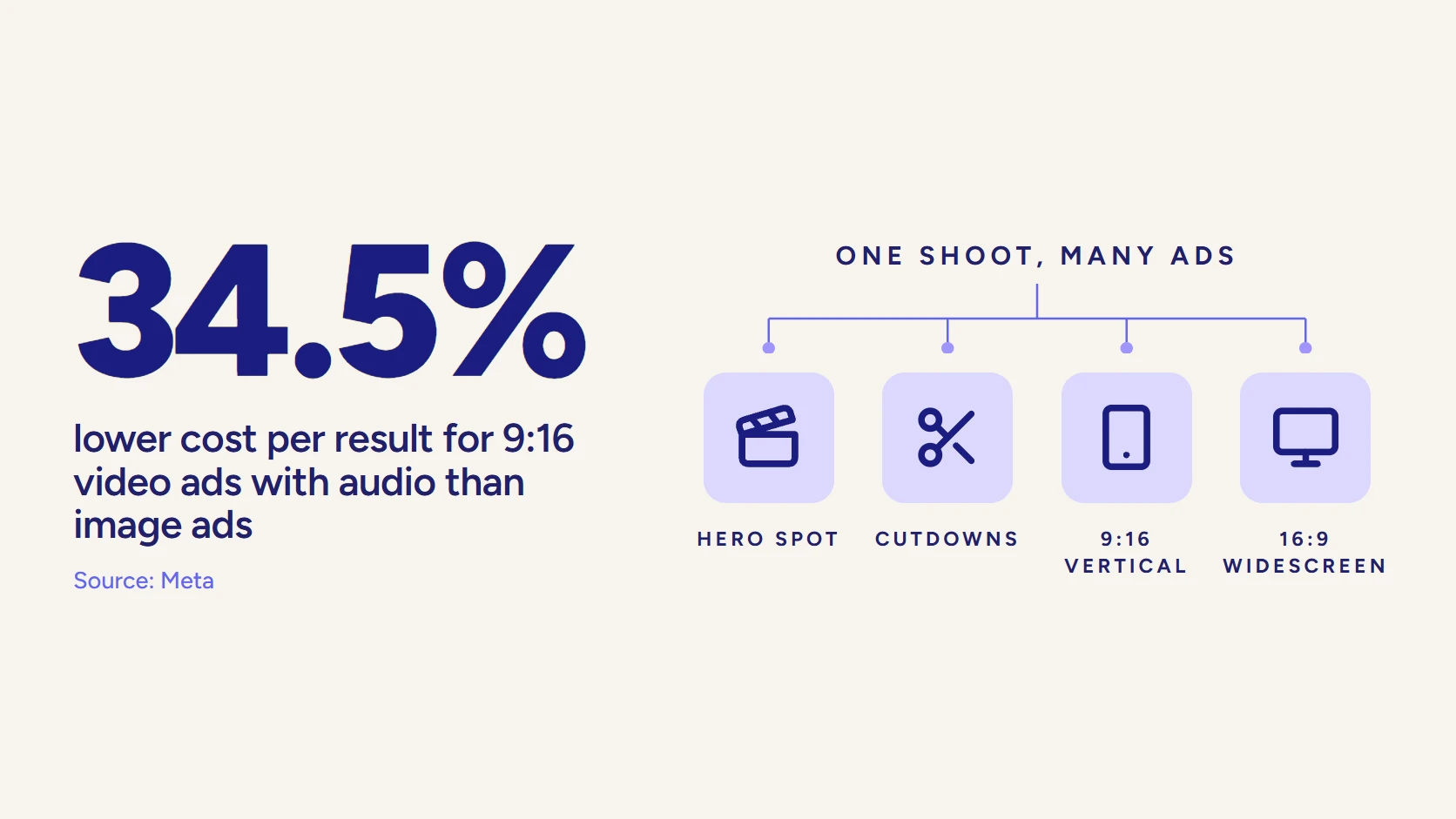
The old production model centered around one “hero video.” Stronger video ads production starts with a campaign asset system designed for multiple placements and buyer interactions. One shoot may generate:
- A 60- to 90-second hero video
- 15-second paid social cutdowns
- LinkedIn variations
- YouTube preroll assets
- Sales outreach clips
- Captioned versions for silent autoplay
- Retargeting variants
- Landing page placements
This structure changes the value of production because the asset package can support paid media, sales enablement, retargeting, and website conversion from the same production investment.
Video ads production also moves faster than traditional corporate production. Paid media environments reward pacing, message clarity, platform-specific formatting, and rapid testing cycles.
Experienced buyers evaluate production partners on pipeline contribution, campaign structure, and operational processes rather than cinematography alone.
How Much Does Video Ad Production Cost?
Video ad production costs vary because scope changes quickly. A lightweight paid social shoot with one filming day and limited edits operates differently from a multi-location campaign with paid variants, motion graphics, executive approvals, and sales placements.
Most buyers run into issues when they compare quotes without comparing scope. A lower estimate may exclude paid media cutdowns, usage licensing, platform formatting, or revision rounds that become necessary later.
What looks affordable up front can become more expensive once the campaign launches.
| Scope Level | Typical Budget Range | What Is Usually Included | Best Fit |
| Lightweight Paid Social Shoot | $5K-$15K | One filming day, basic edit, limited revisions, and short-form ads | Simple awareness campaigns |
| Mid-Market Campaign Package | $15K-$40K | Hero video, paid variants, motion graphics, captions, and multiple edits | B2B demand generation campaigns |
| Multi-Channel Campaign System | $40K-$85K | Multi-day production, channel adaptations, strategy support, and sales assets | Software-as-a-service (SaaS) and healthcare marketing teams |
| Enterprise Campaign Production | $85K-$200K+ | Multiple locations, advanced animation, extensive versioning, and large approval structures | National campaigns and enterprise launches |
Buyers evaluating broader commercial video production cost and video advertising costs should focus less on the headline number and more on what the scope includes. Reusable assets, paid variants, and channel-ready exports often determine whether the production investment supports the full campaign or only the first launch asset.
What Buyers Are Actually Paying For
Filming is only one part of the investment. Planning and post-production often determine whether the final assets are usable across paid media, sales outreach, landing pages, and retargeting.
Video ad production budgets usually cover three phases:
- Pre-Production: Strategy alignment, scripting, creative development, scheduling, casting, and logistics.
- Production: Crew, equipment, filming days, talent, locations, lighting, audio, and direction.
- Post-Production: Editing, graphics, captions, revisions, exports, platform formatting, and paid variants.
A strong production partner defines audience fit, buyer stage, messaging, and deliverables before the cameras turn on.
Hidden Costs That Surprise Buyers Later
Many unexpected costs come from scope gaps, not production surprises. Clarify these items with vendors before signing:
- Extra Revisions: Additional edit rounds beyond the contracted amount
- Usage Licensing: Talent or music restrictions tied to ad distribution
- Localization: Alternate language versions or regional adaptations
- Travel Expenses: Crew transportation and location logistics
- Aspect Ratio Exports: Vertical, square, and widescreen versions
- Additional Cutdowns: Paid variants requested after production wraps
- Rush Delivery: Accelerated timelines that require overtime editing
Most of these costs are manageable when they are discussed upfront. Problems emerge when the scope assumes one finished video while the marketing team needs a broader campaign system.
What Timeline Should You Expect From a Video Ad Production Company?
Most buyers underestimate how much of the timeline happens before and after filming. The shoot day is the most visible part, but scripting, approvals, logistics, editing, and revisions usually take more time.
A lean production engagement may move from kickoff to delivery in two to four weeks. Larger B2B campaigns involving executive stakeholders, multiple deliverables, and paid media coordination often require 6 to 12 weeks.
Factors That Affect the Production Timeline
Many production delays are decision-making problems, not technical problems. Several factors shape how quickly a video ad campaign can move:
- Creative Development: Messaging alignment, scripting, and audience review
- Approval Structure: Executive feedback cycles and stakeholder coordination
- Pre-Production Logistics: Scheduling, casting, locations, and crew planning
- Production Complexity: Filming days, production locations, and talent needs
- Post-Production Scope: Graphics, animation, captions, paid variants, and exports
- Revision Rounds: Internal review timelines and final stakeholder sign-off
A team may approve a hero concept, then realize weeks later that they also need LinkedIn cutdowns, vertical formats, and retargeting edits that were never scoped.
Rushed schedules also increase costs. Compressing the timeline often means overtime editing, faster approvals, and less room for strategic refinement. A realistic timeline signals operational maturity.
What Deliverables Should a Strong Video Ads Production Partner Provide?
Many production companies still deliver video as if it were 2018: one final file and a Dropbox link. Modern paid media campaigns need assets built for multiple channels, buyer stages, and campaign uses.
A strong deliverable package may include:
- Hero Video: Primary 60- to 90-second campaign asset
- Paid Media Variants: 15-second and 30-second ad cutdowns
- Platform Adaptations: Vertical, square, and widescreen formats
- Captioned Versions: Silent autoplay support for LinkedIn and paid social
- Short-Form Edits: Retargeting clips and remarketing assets
- Sales Placements: Sales development representative (SDR) outreach clips or landing page assets
- Usage-Ready Exports: Channel-specific formatting and compression
For buyers evaluating broader video ad content types, deliverables should map directly to how the campaign will deploy. A SaaS team may need buyer-stage edits for product evaluation, while a healthcare team may need audience-specific versions with stricter review requirements.
A types of commercials guide can also help buyers understand whether a partner can support multi-channel campaign execution instead of one finished asset. Better deliverables improve testing speed, media flexibility, and the usable lifespan of the production investment.
What Questions Should You Ask Before Hiring a Video Ad Production Company?
Pricing, timelines, and portfolio quality matter, but they rarely show whether a partner can support performance-focused campaigns. Better questions reveal how the team handles strategy, distribution, approvals, and asset reuse.
Ask specific questions like:
- How do you adapt creative for different paid channels?
- What paid media variants are included?
- Who owns scripting and messaging development?
- How are revision rounds and approvals structured?
- How do you plan for buyer-stage messaging?
- What formats are included for LinkedIn, YouTube, and paid social?
- How do you support SDR outreach or sales enablement?
- How do you structure campaigns for asset reuse after launch?
The answers should show whether the company thinks beyond filming. A performance-focused partner will discuss distribution, messaging, conversion pathways, deliverable structure, and campaign usage before focusing on creative polish.
Better questions reduce budget risk by surfacing scope gaps before contracts are signed.
Where Buyers Go Wrong When Comparing Video Ad Production Companies
The biggest mistake is overvaluing the reel and undervaluing the process. A polished portfolio does not show how a company manages revisions, adapts creative for channels, structures deliverables, or handles stakeholder approvals.
Common comparison mistakes include:
- Comparing Unequal Scopes: One quote includes paid variants and channel formatting, while another only includes one final file.
- Ignoring Revision Terms: Limited revision rounds can create expensive post-production problems.
- Over-Focusing on Aesthetics: Visual quality matters, but campaign usability matters more.
- Skipping Distribution Planning: Creative built without channel strategy often underperforms in paid media.
- Underestimating Approvals: Weak process structure creates delays and rework.
The cheaper quote often ends up being the more expensive option. If the scope excludes paid variants, captions, LinkedIn formatting, sales edits, or retargeting clips, the campaign can slow down after production wraps.
Production evaluation should connect back to broader planning considerations within a video marketing strategy guide. Video production decisions affect campaign scalability, distribution efficiency, and sales alignment long after the final edit is delivered.
How LocalEyes Approaches Video Ads Production for Performance-Minded Teams
LocalEyes builds video ads around how each asset will support paid media, sales outreach, landing pages, retargeting, and sales enablement from the start.
A typical engagement may include a 60- to 90-second hero video, paid media cutdowns, LinkedIn and YouTube variants, sales-ready placements, buyer-stage messaging adaptations, and channel-optimized exports.
For B2B marketing leaders managing pipeline goals with limited internal bandwidth, that structure matters. You need assets that can move through the channels your team already runs without creating more production debt after launch.
Explore LocalEyes’ video ad production services to see how performance-driven video systems support paid media, sales workflows, and demand generation execution.

Founder at LocalEyes Video Production | Inc. 5000 CEO | Emmy Award Winning Producer