Key Takeaways
- A branded content studio makes storytelling that builds brand, not ads that chase a click.
- It is not the same as an ad agency (which buys and optimizes media) or a production company (which executes a shoot you already scoped).
- For B2B, branded content is worth it when buyers are doing most of their research alone and need a reason to trust you before a call.
- The best studios think in campaign systems, so one core story produces many usable assets across channels and buyer stages.
- Hire one when the project is too important to hand to a vendor who needs managing.
The phrase gets used loosely. Some people mean a publisher’s in-house unit that produces sponsored articles, and others mean a boutique that makes pretty films. This guide separates the term from the work that actually matters to a marketing leader who owns a number.
What Is a Branded Content Studio?
A branded content studio is a team that develops and produces content built around a brand’s story, point of view, and values, made to engage an audience first and sell second.
The category grew out of publishing, where branded content studios were in-house units that helped advertisers create native, editorial-style pieces for a publication’s audience.
The model spread because the format works. People will spend real time with a good story, and they will skip a banner in under two seconds.
That publishing origin still shapes how the term is used, but it has outgrown it. Today a branded content studio can sit inside an agency, operate as an independent shop, or live inside a video partner that treats brand storytelling as its main job.
What stays constant is the intent. The work is supposed to shift how an audience perceives a company, not to push a single transaction.
For a B2B marketing leader, the definition needs a sharper edge. A branded content studio worth hiring does three things in order. It finds the story that only your company can tell, then builds that story into assets people actually watch and share.
The third part is where most work falls short. A real studio connects those assets to the channels where buyers decide, so brand work shows up as pipeline rather than as a line item nobody can defend at the next budget review.
Where the Term Comes From, and Why It Matters Now
Branded content earned its reputation against advertising on a simple measure: recall. A Nielsen analysis of more than 100 pieces of branded content found it drove 86% brand recall versus 65% for pre-roll ads.
People remember stories. They tune out interruptions. That gap is the whole reason a studio model exists, and it is why brand teams keep funding storytelling even when performance budgets tighten.
Branded Content Studio vs. Ad Agency vs. Production Company: Who Actually Does What?
These three get used as if they are interchangeable. They are not. Each owns a different part of the work, and hiring the wrong one is the most common way B2B teams waste a brand budget.
Think of it this way. A production company will happily shoot a film you have not figured out yet. An ad agency will happily run media behind a message that has no story underneath it. A branded content studio is built to handle the part in the middle, the thinking and the storytelling, and the strongest ones carry it through to how the work performs.
| Dimension | Branded content studio | Ad agency | Production company |
| Core job | Develop brand-led storytelling and the asset system around it | Plan, buy, and optimize paid media and campaigns | Execute a shoot or edit to a defined brief |
| Starts with | The story and the business goal | The media plan and the offer | The script or shot list you bring |
| Owns strategy? | Yes, narrative and content strategy | Yes, media and channel strategy | Rarely, strategy is usually the client’s |
| Typical output | Brand films, customer stories, series, multi-asset campaigns | Ad creative, media buys, performance reporting | Finished footage, one polished deliverable |
| Success measure | Attention, recall, brand lift, and (done right) pipeline contribution | CPA, ROAS, reach, conversions | On-time, on-spec delivery |
| Best when you need | A reason for buyers to trust and remember you | To put spend behind an existing message | To produce something already scoped |
The Overlap That Confuses Buyers
The lines blur because good firms do not stay in their box. Some ad agencies have a content studio inside them. Some production companies have added strategists.
So the question to ask is not what a firm calls itself. It is where the firm starts.
If the first meeting is about media spend, you are talking to an agency. If it is about call sheets and day rates, you are talking to production. If it is about what the work needs to do for the business and what story will get you there, you are talking to a studio that thinks the way you need it to.
Why “Production Company” Is the Most Expensive Default
Most B2B teams default to a production company because the deliverable feels concrete. The hidden cost shows up later.
A production company optimizes for a clean shoot, so it asks you to arrive with the strategy solved. When the script is weak or the story was never found, you get a beautiful video that does not change anyone’s mind, plus a second round of spend to fix it.
A studio absorbs the thinking up front, which is the part most internal teams do not have the bandwidth to do well.
What Does Branded Content Really Mean (and Not Mean) for B2B Audiences?
Branded content for B2B is storytelling that reflects your company’s voice, values, and point of view while being genuinely useful or interesting to a professional audience, without leading with a hard pitch. Done well, it earns trust before a buyer is ready to talk.
A few quick examples make the line clear. A customer story that shows how a finance team actually solved a reporting problem is branded content. A founder’s clear take on where their category is heading is branded content. A product demo with a coupon at the end is an ad.
What It Is
- Story-led, not offer-led. The audience gets something (insight, clarity, a point of view) before they are asked for anything.
- Distinct to your brand. It uses your language, your customers, and your perspective, so it could not be swapped with a competitor’s logo.
- Built to be remembered. The goal is recall and trust, which is exactly where the format beats advertising.
- Useful across the journey. It supports awareness, but it also helps a buyer evaluate fit and carry your story into an internal decision.
What It Isn’t
- A disguised ad. If the only point is the call to action, it is advertising wearing a story costume, and audiences see through it.
- Volume content. Ten thin blog posts and a stock-footage explainer are not branded content. They are filler that makes a complex offer look like everyone else’s.
- A vanity film. A cinematic piece that wins internal applause but never connects to a buyer decision is brand spend with no job.
- A one-off. A single asset that disappears after launch wastes the most expensive part, the story you found to make it.
Why This Matters More in B2B Than It Used To
B2B buying has moved away from the sales rep. Gartner found that 61% of B2B buyers now prefer a rep-free buying experience. Across an entire purchase, buyers spend only about 17% of their time meeting with potential suppliers, and even less with any single one.
Picture that as a workday. If a buyer gives the whole decision ten hours, fewer than two of them happen in front of any vendor at all. The rest is research you never see.
Forrester goes further, describing modern B2B buying as a process of confirmation rather than selection, with most buyers starting with at least one vendor already in mind. Larger purchases are increasingly routed through self-serve digital channels rather than a conversation.
Read those numbers together and the case for branded content gets concrete. If buyers form preferences mostly on their own, the brands they remember and trust during that quiet research window are the ones that make the shortlist.
Branded content is how you get into that memory before the buyer is willing to take a call. It also pays back at the top of the funnel, where one study found people are 14% more likely to seek out additional content from a brand after seeing branded content.
When Should a B2B Team Hire a Branded Content Studio?
Not every project needs a studio. If you have a tight brief, a solved message, and you just need a clean shoot, a production company is the right call.
Hire a branded content studio when the thinking is the hard part, the stakes are high, or your story is not landing on its own. Here are the signals that the moment has arrived.
The Decision Checklist
- Buyers do not understand or remember why you are different. Your category is crowded, your demos look like everyone else’s, and the difference lives in your head but not in your content.
- The project is too important to micromanage. A launch, a repositioning, a fundraise, or an executive’s flagship message where a generic result is not acceptable.
- You need a system, not a single asset. Marketing, sales, demand gen, and paid all need versions of the same story, and you do not want to brief that five separate times.
- Your team is out of strategic bandwidth. You can manage production, but you do not have the time to find the story, structure the narrative, and map every cutdown.
- Brand has become hard to defend in the budget. Leadership keeps asking what brand spend returns, and you need work that connects visibly to pipeline rather than to view counts.
- You are entering a high-trust or regulated buy. Finance, healthcare, and security-sensitive categories where the buyer’s first job is to decide whether you are safe to choose.
If three or more of these are true, a studio earns its fee. If none are, you may only need production help, and that is fine.
The point of the framework is to stop teams from buying strategy they do not need, or, more often, from buying a shoot when what they were missing was the strategy.
A Quick Scenario Test
Picture a Series B platform company with a product the market keeps confusing for a cheaper tool. The VP of Marketing has a launch in ninety days, three internal stakeholders, and a sales team asking for assets that do not exist yet.
Here is how each partner reacts. A production company would ask for a finished script. An ad agency would ask for a media budget.
A branded content studio would start by finding the one idea that separates the product, build it into a hero story, and plan the sales clips, paid cutdowns, and landing-page versions from the same shoot. That is the difference between spending on a video and investing in a campaign.
What Should You Look for in Strategy Depth, Storytelling, and Campaign-System Thinking?
Once you have decided you need a studio, the reel is the least useful thing to judge it on. Almost any competent shop can show pretty footage.
The qualities that separate a real partner from an expensive vendor show up before and after the shoot, in how they think and how they plan. Use the criteria below as a scorecard.
Strategy Depth
- They ask what the work needs to do, not what you want to make. The first conversation should be about the business goal and the buyer, not the visual treatment.
- They can find a story you could not. Look for evidence they have turned a dry B2B offer into something a human would actually watch.
- They put strategy on paper. A real partner gives you a tangible strategic document you own before anyone picks up a camera, so the plan is a deliverable, not a vibe.
Storytelling Craft
- Clarity over decoration. The work should make a complex idea simpler, not just prettier. Polished and pointless is still pointless.
- Distinct voice. Their portfolio pieces should feel like the brands they were made for, not like the same template with new logos.
- Proof handled well. In B2B, customer outcomes and credible numbers carry the story. Watch how they weave proof in without turning a film into a brochure.
Campaign-System Thinking
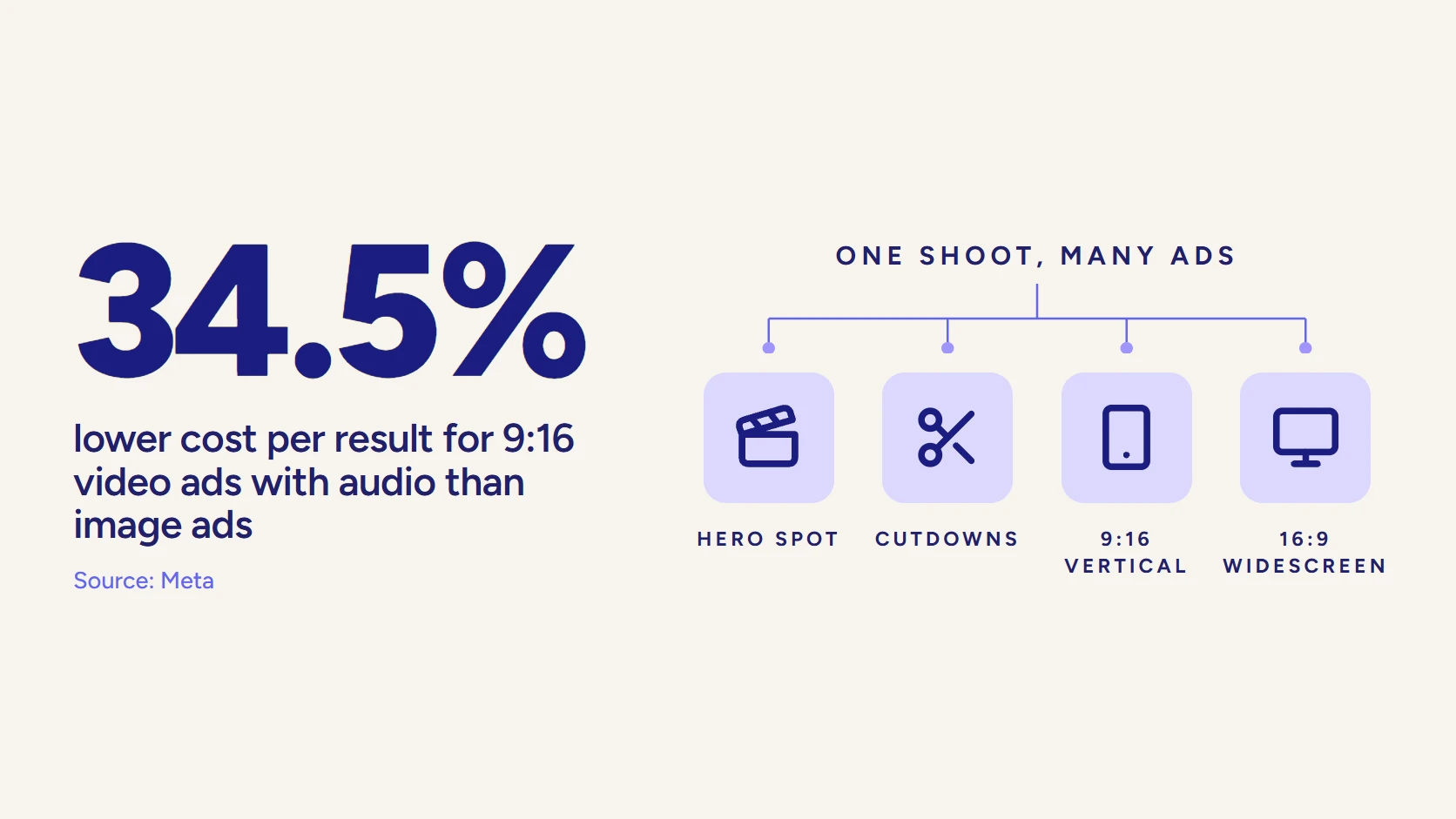
- They plan the asset system before production. One core story should produce a hero piece, sales-ready clips, paid cutdowns, and channel-specific versions, mapped before the shoot, not scavenged after it.
- They build for reuse. Ask how a single engagement supports awareness, sales enablement, and retargeting at the same time.
- They connect to your channels. The work should be engineered to live inside your existing demand gen and sales motion, because B2B video performs as revenue infrastructure only when it is integrated across those systems.
Reliability and Fit
- They reduce your workload. A good partner handles the thinking and the logistics so you brief once and manage less.
- They manage stakeholders. If your project has three to seven reviewers, ask how they run approvals so the story does not get edited into mush.
- Their reviews talk about process. Consistent feedback about communication, organization, and reliability matters more than a single flashy case.
At LocalEyes, this is the lane we built the company around. Our process runs on Goal-First Alignment, where every project starts from what the video needs to do for the business rather than from the creative brief.
The Video Blueprint gives you a real strategic document you own before the camera rolls. The LocalEyes Production Standard holds the same premium bar across 10 cities, which is where multi-market and tight-deadline programs usually fall apart for other partners.
How Does Branded Content Connect to Pipeline and Brand Authority?
The objection to brand work is always the same. It is hard to measure, so it is hard to fund.
The answer is not to abandon storytelling for pure performance ads. It is to build branded content that does a brand job and a pipeline job at once. Here is how the connection actually works.
Brand Authority Compounds Where Buyers Research Alone
Since buyers spend most of their journey without a rep and form a shortlist before they ever raise a hand, the brands they trust in that window have an advantage that performance ads cannot buy at the last minute.
Branded content is how you build that trust early. Its recall advantage over advertising means the story is more likely to be there in the buyer’s head when the consideration set forms.
Authority is not a soft outcome here. It is the thing that gets you into a confirmation-driven buying process before it starts.
The Asset System Is Where Brand Turns Into Pipeline
A single brand film is hard to attribute. A campaign system is not. When the same story is cut into a hero asset, sales clips, paid variants, and landing-page versions, each piece lands in a place you already measure.
Think of one story doing four jobs at once. The brand film builds memory. The sales clip helps a rep move a deal. The paid cutdown drives a known channel. The landing-page version lifts conversion on a page you track.
That is how a studio makes brand spend legible to a CFO, by routing one story through revenue-facing channels instead of leaving it as a view count.
Branded Content Qualifies Attention, It Does Not Just Collect It
Clear storytelling also improves the quality of the pipeline it creates. A vague video attracts viewers who do not understand the offer. A precise one helps the right buyer self-identify, ask better questions, and arrive at a sales conversation already convinced of the basics.
That is the difference between traffic and trust. It is also why branded content and demand gen are not rivals. The content earns the attention, and the system turns it into a booked call.
What Are the Common Mistakes B2B Teams Make With Branded Content?
Most disappointing brand projects fail for predictable reasons. Avoiding these is half the battle.
- Buying a shoot when you needed a strategy. The footage is fine. The story was never found. This is the most expensive mistake because it usually leads to a reshoot.
- Leading with the visual reference instead of the buyer. Teams arrive with three films they like and let taste drive the brief. Style should follow the message, not the other way around.
- Producing one asset and stopping. A hero video with no cutdowns leaves paid, sales, and SDR teams stretching one file across five jobs it was never built for.
- Treating branded content as a hidden ad. The moment the story exists only to set up a pitch, recall and trust collapse, and the format’s whole advantage is gone.
- Chasing views as the goal. Reach with no connection to a buyer decision is a metric that feels good and funds nothing.
- Hiring on the reel alone. A reel proves a firm can shoot. It does not prove they can find a story or plan a system. Judge the thinking.
- Letting the budget set the lane. Choosing the cheapest production option often costs the most once missing deliverables and campaign gaps show up after launch.
What Are the Most Common Questions About Branded Content Studios?
What Is a Branded Content Studio in Simple Terms?
It is a creative partner that builds brand-led storytelling, like films, customer stories, and series, designed to engage an audience and build trust rather than push a single offer. For B2B, the strongest studios also connect that storytelling to pipeline so it supports sales and demand gen, not just awareness.
How Is a Branded Content Studio Different From an Ad Agency?
An ad agency plans, buys, and optimizes paid media, starting from the media plan and the offer. A branded content studio starts from the story and the business goal, then builds the assets around it.
So you hire an agency to put spend behind a message and a studio to create the message and the work worth remembering. Some firms do both, so ask where they start the conversation.
Is a Branded Content Studio the Same as a Video Production Company?
No. A production company executes a shoot you have already scoped and is measured on delivering it cleanly. A branded content studio owns the strategy and storytelling before production and plans how the work performs after it.
If you arrive with a finished script, production may be all you need. If the story still has to be found, you need a studio.
What Does a Branded Content Studio Cost for B2B Work?
Pricing varies with scope, but serious B2B branded content is a strategic investment rather than a commodity line item. Premium engagements are usually built as multi-asset campaigns, which is why teams evaluate them on total value created across channels, not on a single day rate.
If a quote looks cheap, confirm whether it includes strategy and the full asset system or just one finished file. The cheapest option often becomes the most expensive once gaps appear after launch.
Who Owns the Branded Content a Studio Produces?
Ownership should be clear in the agreement before the project starts. A strong partner gives you the strategic blueprint and the final assets to own and reuse across your channels. Confirm rights to raw footage, edits, and usage up front, especially if you plan to cut new versions internally later.
How Is Branded Content Distributed for a B2B Audience?
The best work is planned for distribution before the shoot. One core story becomes a hero asset for your site, cutdowns for LinkedIn and YouTube, clips for sales outreach and follow-up, and variants for retargeting.
Distribution is not an afterthought. It is the reason the asset system exists, because B2B video only performs when it is integrated across your demand gen and sales channels.
How Do You Measure Whether Branded Content Works?
Measure it on two levels. Brand metrics like recall, brand lift, and engagement show whether the story landed, and branded content tends to beat advertising on recall. Pipeline metrics show whether the system worked, by tracking how the sales clips, paid cutdowns, and landing-page versions perform in channels you already measure.
Tying each asset to a known channel is what makes brand spend defensible.
When Should a B2B Team Hire a Branded Content Studio Instead of Doing It In-House?
Hire one when the project is high-stakes, your story is not landing, you need a full asset system rather than a single video, or your team is out of strategic bandwidth. If you only need a clean shoot of an already-solved message, in-house plus a production company can be enough. The studio earns its fee when the thinking is the hard part.
How Do You Build Branded Content That the Pipeline Can Actually Feel?
If your next brand project is too important to hand to someone who needs managing, that is the moment to bring in a partner who handles the thinking and the storytelling, then engineers the work to perform inside your demand gen and sales channels. LocalEyes builds branded content as campaign systems for B2B marketing teams accountable to pipeline, with a strategic blueprint you own before production starts and a premium standard held across every market we serve.
See how our work supports paid media, sales enablement, and buyer education in our portfolio, explore our brand video production services, and when you are ready, talk through your project and get an estimate.

Founder at LocalEyes Video Production | Inc. 5000 CEO | Emmy Award Winning Producer