Key Takeaways:
|
B2B marketing teams rarely struggle to collect customer feedback. The harder problem is turning customer reviews and testimonials into assets that support pipeline creation, sales conversations, and stakeholder trust across long buying cycles.
A loosely recorded customer quote can serve as social proof. A professionally produced testimonial asset can help sales teams handle objections, strengthen landing pages, improve retargeting creative, and give buyers more confidence before a demo ever happens.
Trust already plays a central role in how buyers evaluate vendors. According to BrightLocal, 49% of consumers trust online reviews as much as personal recommendations. In B2B environments with longer buying cycles and multiple stakeholders, testimonial videos help add context, specificity, and decision-stage proof that buyers can reuse internally.
This guide explains why professional video testimonials create stronger buyer proof than DIY reviews, how to preserve authenticity during production, and how one customer story can become a sales-ready asset system.
DIY Reviews Capture Reactions; Pro Testimonials Build Proof
DIY reviews and professional video testimonials serve different purposes. DIY feedback captures a customer’s immediate reaction, while a professional testimonial shapes that experience into a story buyers can evaluate.
A short webcam review can still be useful. It may add authenticity to social channels or reinforce customer satisfaction. But most DIY reviews lack the information B2B buyers need to reduce internal risk.
Professional testimonial production focuses on building a usable business narrative. The distinction becomes clearer when you compare what each format is built to do.
| DIY Reviews | Professional Video Testimonials |
| Informal reactions | Structured customer story |
| Limited context | Buyer-stage messaging |
| Single-use content | Multi-asset campaign system |
| Inconsistent audio and framing | Controlled production quality |
| Reactive recording process | Planned interview strategy |
| Generic praise | Specific implementation and outcome details |
The difference is not production quality versus authenticity. Buyers are sophisticated enough to recognize when a testimonial feels overproduced. The real advantage comes from giving the customer enough structure to explain their experience clearly, credibly, and in a way future buyers can use.
The Interview Strategy Is Where Most Value Is Created
The interview process shapes whether a testimonial becomes useful sales proof or generic praise.
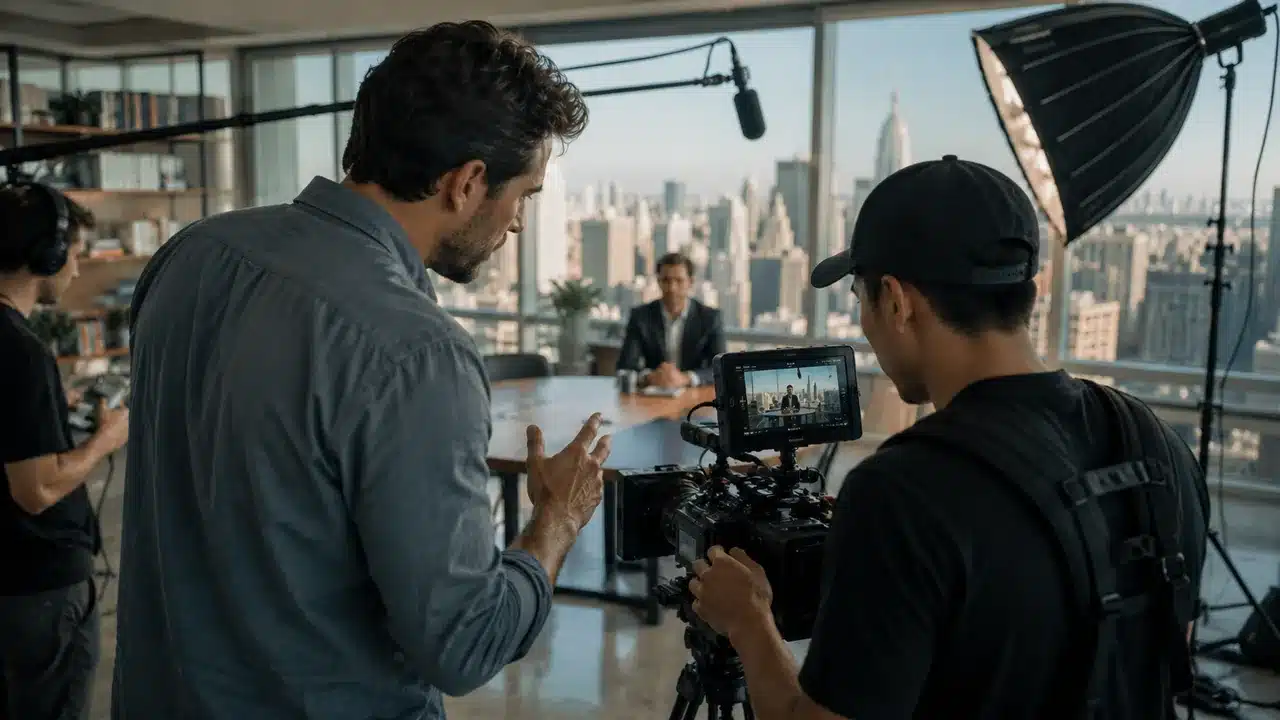
Strong testimonial video production starts before cameras are rolling. Interview planning helps uncover the operational details buyers actually care about during evaluation. Without that structure, most interviews default to vague compliments that sound interchangeable across vendors.
A structured interview typically guides the conversation toward:
- The Original Problem: What operational issue, bottleneck, or growth challenge triggered the search for a solution?
- The Evaluation Process: What concerns or objections existed before purchase?
- Implementation Experience: How difficult was onboarding, rollout, or adoption?
- Business Outcomes: What changed after implementation?
- Peer Advice: What would the customer tell another company evaluating similar vendors?
B2B buyers are often building an internal case for change. They need proof they can reuse with finance, operations, procurement, and leadership teams.
A customer saying “the experience was great” adds limited value. A customer explaining how the rollout shortened onboarding time, improved reporting visibility, or accelerated sales conversations creates proof future buyers can actually use.
Better Production Makes the Story Easier to Trust
Buyers are more likely to trust testimonial content when they can hear the speaker clearly, follow the pacing naturally, and understand the context around the story being shared.
Poor lighting or imperfect framing will not automatically destroy trust. But distracting production issues can make legitimate customer experiences harder to process.
Professional production makes the story easier to follow through:
- Audio Quality: Clear dialogue reduces listener fatigue and keeps attention on the customer’s experience instead of technical distractions.
- Visual Context: Office environments, workflows, product footage, or team interactions help reinforce the reality of the customer relationship.
- Interview Pacing: Structured editing removes repetition while preserving the speaker’s natural delivery.
- Story Flow: Organized sequencing helps buyers follow the problem, decision process, implementation, and outcome without confusion.
- Consistency Across Assets: Professionally captured footage creates hero videos, paid cutdowns, landing page placements, and SDR outreach without quality gaps.
This becomes especially important when testimonial assets are reused across demand gen channels. A rough webcam clip may work for one social post. It is harder to repurpose for paid campaigns, homepage placements, sales decks, or retargeting sequences where consistency shapes how buyers perceive the brand.
The operational advantage is flexibility. One customer story can create multiple buyer touchpoints without requiring a new production cycle for every channel.
Compliance and Accuracy Matter More Than the Edit
Customer testimonials are marketing assets, but they also carry compliance risk when claims are edited too aggressively or presented without context.
The Federal Trade Commission requires endorsements and testimonials to reflect honest opinions and real experiences. Brands cannot fabricate customer opinions, imply unsupported outcomes, or materially misrepresent results.
Accuracy also affects buyer trust. Sophisticated buyers are already skeptical of exaggerated claims and heavily edited marketing language. Overproduced testimonials often lose credibility because the message feels engineered instead of genuine.
Professional testimonial video production should improve clarity without changing the customer’s meaning.
That includes:
- Maintaining Accurate Context: Edits should preserve the customer’s actual experience and intent.
- Avoiding Unsupported Claims: Outcome statements should reflect real business results, not implied guarantees.
- Representing Customers Honestly: Testimonials should not create unrealistic expectations about implementation timelines or performance.
- Using Clear Disclosure Practices: Compensation, partnerships, or incentives should follow FTC disclosure guidance where applicable.
The strongest testimonial assets feel specific, grounded, and operationally believable. Buyers trust stories that sound like real implementation experiences because most enterprise purchases involve multiple stakeholders, competing priorities, and careful internal review.
One Customer Story Should Produce More Than One Asset
Most B2B marketing teams are already under pressure to increase output without increasing vendor management complexity. Recording one customer conversation and publishing a two-minute edit leaves too much value unused.
One customer interview should create more than a single finished video. With the right production plan, the same story can become:
- Hero Testimonial Videos: Full customer stories for homepage, landing page, or campaign usage.
- Paid Media Variants: Shorter cuts designed for LinkedIn, YouTube, or retargeting campaigns.
- Pain-Point Clips: Segments focused on onboarding, implementation, revenue contribution, or operational challenges.
- Industry-Specific Versions: Verticalized edits aligned to healthcare, SaaS, fintech, or enterprise use cases.
- Sales Enablement Assets: Short clips sales teams can embed inside outreach sequences or proposal workflows.
- Event And Presentation Content: Testimonials adapted for webinars, conference sessions, or investor communication.
This multi-asset structure is what separates campaign-ready testimonial systems from standalone video projects.
Explore how testimonial video production turns customer stories into buyer-stage assets for paid distribution, landing pages, and sales enablement workflows.
Professional Testimonials Support Sales Conversations Long After Launch
The strongest professional video testimonials continue working after the original campaign goes live.
Buyers revisit proof content during procurement reviews, executive approvals, and implementation planning. Sales teams use testimonial clips to answer objections, reinforce credibility, and bring customer context into active deal conversations.
That usefulness depends on what the original interview captures. If the customer only gives broad praise, the final asset may work for awareness but struggle in later-stage sales conversations.
Many B2B companies discover this too late. They approve a quick customer review video because it feels faster or cheaper up front, only to realize the footage cannot support broader revenue conversations afterward.
Asking these questions before production can help close that gap:
- Internal Buy-In: Will this asset help buyers defend the purchase internally?
- Sales Use: Can sales teams reuse it during active deals?
- Outcome Clarity: Does the story explain operational outcomes clearly?
- Channel Fit: Can the footage support multiple channels and buyer stages?
- Shelf Life: Will the asset still feel credible six months from now?
Build Professional Video Testimonials With LocalEyes
Professional video testimonials work best when they are planned as campaign assets from the beginning. The story needs to feel honest, but it also needs enough structure to show how buyers evaluate risk, compare vendors, and defend decisions internally.
LocalEyes helps B2B marketing teams turn customer stories into sales-ready video systems built for demand gen, pipeline support, and buyer confidence. That can include a 60-90 second hero testimonial, paid media cutdowns, landing page placements, SDR clips, and channel-ready edits from one production process.
Review the portfolio to see how structured customer proof assets work across paid media, web, and sales enablement.
When you’re ready to plan a testimonial campaign around buyer-stage messaging and sales enablement, contact LocalEyes to start the conversation.
Author

Founder at LocalEyes Video Production | Inc. 5000 CEO | Emmy Award Winning Producer