
Key Takeaways:
|
Animation for business has become less about style and more about communication efficiency. Business-to-business (B2B) marketing leaders are under pressure to explain complex products, workflows, and systems faster while supporting pipeline goals across paid campaigns, sales enablement, onboarding, and buyer education.
Animation projects often fail because teams treat them as a creative format rather than a way to make complex ideas easier to act on. A strong video means very little if buyers still leave confused about how the product works or why it matters.
This guide breaks down when animation makes sense for B2B teams, which formats work best for different use cases, and how to structure corporate animation video production around business outcomes instead of visual novelty.
What Is Animation for Business and When Does It Make Sense?
Animation for business helps teams explain products, services, and processes that are difficult to show through live action alone. It’s most useful when buyers need to quickly understand abstract concepts, such as software workflows, compliance steps, API integrations, cybersecurity logic, or healthcare operations.
A live-action interview can describe a workflow. Animation can show how that workflow moves, changes, and creates value. That context can reduce explanation time, align stakeholders faster, and make complex ideas easier to evaluate across departments.
Animation also supports the full buyer journey:
- Awareness Campaigns: Simplify complex market problems for paid and organic distribution.
- Consideration-Stage Content: Explain platform logic, integrations, or implementation workflows before a sales call.
- Sales Enablement: Help SDRs and AEs communicate technical value consistently.
- Onboarding and Training: Standardize post-sale education across teams and locations.
- Internal Communication: Clarify operational changes, compliance requirements, or executive initiatives.
Why Animation for Business Is Especially Effective in B2B
Animation turns complicated ideas or workflows into sequences buyers can follow. In software-as-a-service (SaaS), healthcare, fintech, logistics, cybersecurity, and enterprise operations, animation can show how data moves, how permissions work, or how a regulated process unfolds step by step.
That clarity supports several business needs:
- Faster Buyer Understanding: Animation can simplify technical workflows before a sales call.
- Stronger Internal Alignment: Marketing, sales, revenue operations (RevOps), procurement, and executive stakeholders can work from the same explanation.
- Better Channel Performance: Clearer education can reduce friction across landing pages, sales conversations, onboarding, and demand generation campaigns.
- Easier Updates Over Time: User interface (UI) changes, product screenshots, and localized versions are often simpler to revise than live-action footage.
Many teams pair animation with broader campaigns produced by a corporate video production company, ensuring messaging stays consistent across paid media, sales enablement, and owned channels.
Which Business Animation Styles Fit Different Use Cases?
Animation style should follow the communication job. When the format is centered on what buyers need to understand, the final asset is easier to follow, repurpose, and defend internally.
A simple decision framework can help before you compare specific styles:
- Use live action when trust, emotion, or credibility needs to carry the message.
- Use animation when buyers need to understand an abstract workflow, system, or product concept.
- Use hybrid formats when the message requires both human presence and visual explanation within the same asset.
Use the table below to match the animation format to the message — not to rank which style is best.
| Animation Style | Best For | Strength | Tradeoff |
| 2D Animation | SaaS explainers, onboarding, demand gen | Clear and efficient communication | Less dimensional realism |
| Motion Graphics | Data visualization, enterprise workflows, presentations | Fast comprehension of systems and processes | Limited emotional storytelling |
| 3D Animation | Medical devices, manufacturing, engineering products | Detailed technical visualization | Higher production complexity |
| Character Animation | HR, recruiting, training, internal communication | Humanizes abstract concepts | Can feel less premium in enterprise contexts |
| Hybrid Live Action + Animation | Executive messaging, premium B2B campaigns | Combines human trust with visual clarity | Requires tighter production coordination |
2D Animation and Motion Graphics
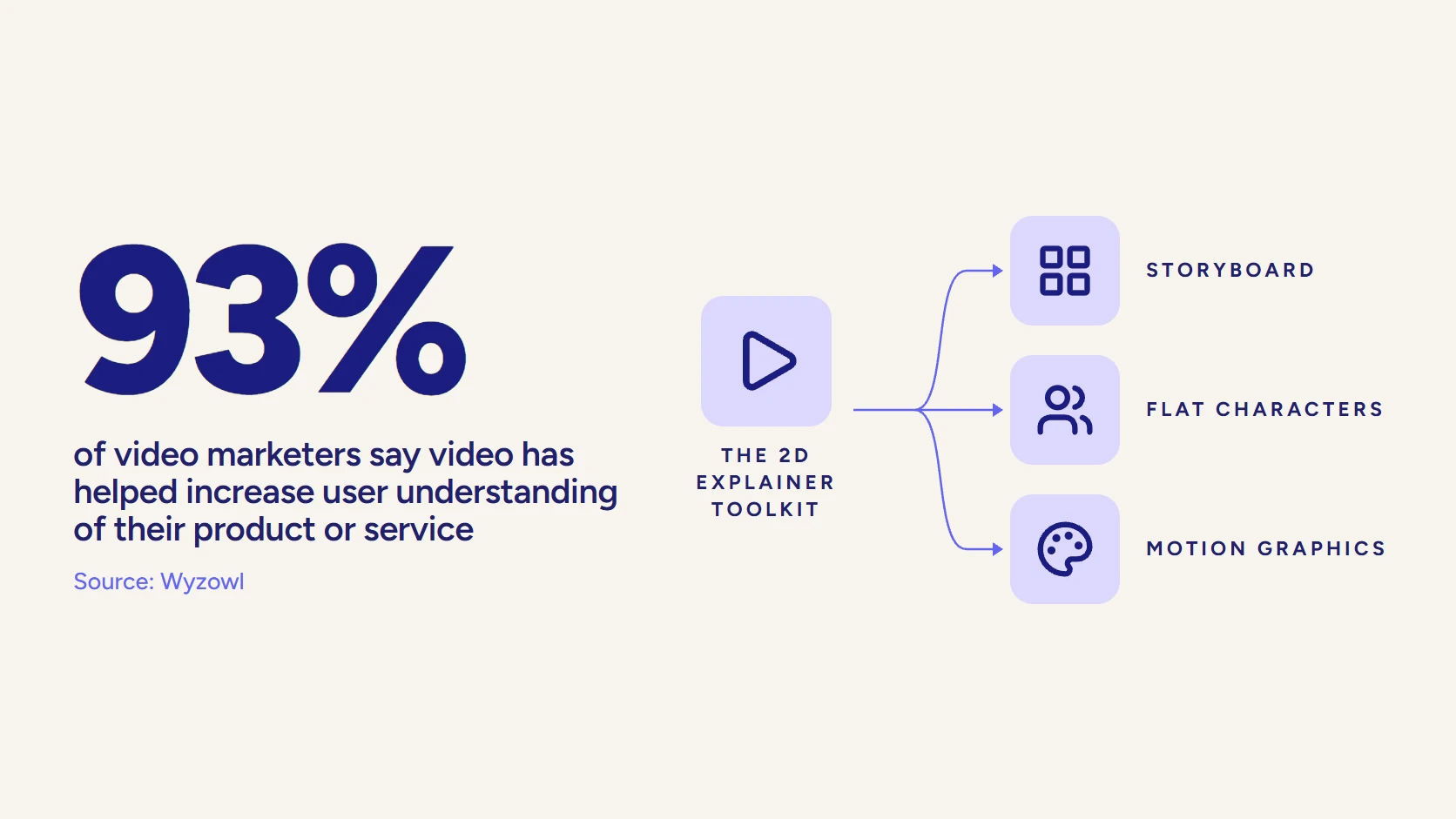
For most B2B teams, 2D animation and motion graphics provide the best balance of clarity, flexibility, and production efficiency.
These formats work particularly well for software platforms, enterprise services, analytics tools, fintech products, and operational workflows. They simplify the message without overcomplicating the visuals.
Motion graphics also work well in broader marketing efforts. One core animation can often become sales clips, paid media cutdowns, landing page modules, or onboarding assets.
That flexibility explains why many animated promotional videos for business rely heavily on motion-driven storytelling instead of cinematic complexity.
3D Animation and Technical Visualization
3D animation becomes more valuable when buyers need dimensional understanding. Medical devices, industrial equipment, and hardware demonstrations can benefit from detailed visualization that would be difficult or expensive to capture physically.
This format helps when buyers need to see:
- Internal product mechanics
- Product assembly sequences
- Technical interactions
- Environmental simulations
- Cross-sectional views
- Operational movement
The tradeoff is production overhead. More realism usually means longer timelines, additional rendering complexity, and tighter revision management.
Hybrid Animation for Premium Brand Clarity
Hybrid production combines live action with animation overlays, UI sequences, or motion graphics.
This approach works well when human trust matters alongside technical explanation. Executive interviews, product launches, healthcare communication, and higher-ticket B2B campaigns often benefit from showing real people while using animation to clarify abstract ideas.
Elements That Make Corporate Animation Video Production Successful
Most corporate animation video production problems start before the first scene is animated. Teams choose visual references, color palettes, or animation styles before defining the communication goal. That creates revisions, stakeholder confusion, and assets that look good but explain very little.
Strong animation campaigns start with structure. The communication hierarchy, buyer-stage message, script, storyboard, and distribution plan should be clear before production begins.
The strongest production process usually includes:
Script and Storyboard Discipline
Animation starts with the message, not the software. If you’re evaluating what makes a good explainer video, the first test is whether the script makes the idea easier to understand.
The script should clarify what the audience needs to understand, how the information should unfold, and what action the viewer should take. Storyboards then turn that structure into a visual strategy.
Reusable Design Systems
Well-structured animation creates assets that can support future campaigns. Icon libraries, UI treatments, motion behaviors, typography rules, transitions, and brand illustrations make future product marketing, onboarding, and sales enablement content faster to produce and easier to keep consistent.
Multi-Channel Versioning
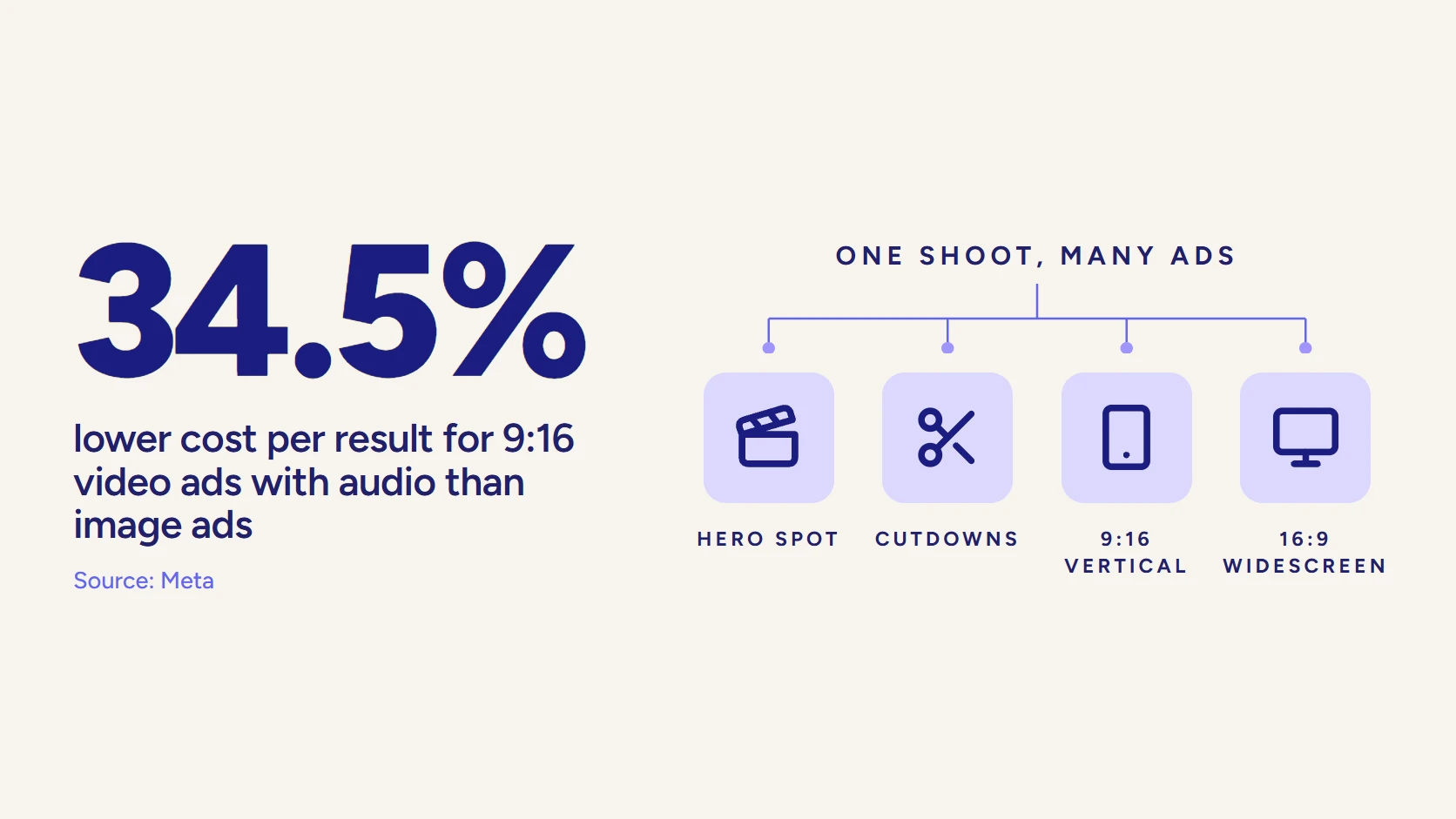
One master animation is rarely enough for demand gen. A strong production plan accounts for hero versions, shorter paid cutdowns, LinkedIn edits, website embeds, sales clips, onboarding adaptations, and executive presentation formats. This improves asset lifespan and reduces the need to rebuild similar messages from scratch.
Where Companies Use Animation Video Production Services Most Effectively
Once the core message is built, animation can support multiple campaign and enablement needs from the same creative foundation. Those use cases usually fall into two buckets: customer-facing education and internal alignment.
Common use cases include:
- Product Explainers: Clarify complex software, infrastructure, or operational workflows.
- Paid Media Campaigns: Support LinkedIn, YouTube, retargeting, and awareness campaigns.
- Website Hero Content: Help buyers understand the product faster on high-intent pages, reducing the need for long copy or repeated sales explanations.
- Sales Enablement: Help account executives explain technical concepts consistently.
- Onboarding and Training: Standardize internal education across teams and regions.
- Investor Communication: Simplify business models, operational processes, or growth strategies.
- Executive Communication: Clarify organizational initiatives or operational transitions.
Many companies use SaaS explainer video examples as reference points because they demonstrate how one visual system can support multiple stages of buyer education simultaneously.
Risks and Tradeoffs Teams Should Understand Before Choosing Animation
Animation solves many communication problems, but it doesn’t solve all of them. Some teams choose animation because it feels modern or operationally easier than live action. That shortcut usually creates weak messaging decisions later.
Before investing in animation video production services, teams should evaluate the tradeoffs carefully.
- Human Trust Sometimes Matters More: Executive messaging, customer testimonials, recruiting campaigns, and relationship-driven content often perform better with real people on screen.
- Complexity Increases Revision Cycles: Animation changes may look simple, but they often require cascading edits across scenes, motion, timing, and voiceover synchronization.
- Over-Designed Visuals Reduce Clarity: Extra motion, characters, or effects can make the message harder to follow. Sophisticated motion means little if the audience leaves confused.
- AI-Generated Animation Still Has Limitations: AI tools can accelerate ideation and lightweight content production, but brand-critical communication still requires strategic scripting and production oversight.
- Animation Is Not Automatically Faster or Cheaper: Once stakeholder approvals, storyboard revisions, localization, and multi-format exports are added to the process, timelines can expand quickly.
- Format Mismatch Creates Friction: Some products require live demonstrations, customer interviews, or real-world credibility signals that animation cannot replace effectively.
Production discipline matters more than novelty. The strongest animation decisions come from understanding the communication problem first, then choosing the format that solves it most efficiently.
Teams evaluating the best animation video companies should focus less on style alone and more on how vendors structure strategy, approvals, versioning, and downstream campaign usability.
How LocalEyes Helps B2B Teams Use Animation Strategically
Most B2B animation underperforms because it is treated like a standalone creative asset instead of part of a broader demand generation system.
LocalEyes approaches animation differently by aligning production decisions with buyer education, sales enablement, and campaign deployment before development begins.
A typical engagement may include:
- 60- to 90-second hero animations
- Paid media cutdowns
- LinkedIn and YouTube variants
- Sales development representative (SDR) outreach placements
- Website integrations
- Buyer-stage messaging adaptations
The operational advantage comes from structuring animation as part of a reusable campaign rather than as a one-off asset.
Explore LocalEyes’ animation video production services to build animated campaign assets around buyer education, sales enablement, and the channels already responsible for pipeline.

Founder at LocalEyes Video Production | Inc. 5000 CEO | Emmy Award Winning Producer