Key Takeaways
|
A brand video production team can only build a shareable asset when the brief explains why anyone would share it.
Most business-to-business (B2B) teams often struggle because the idea is too broad. “Tell our story” isn’t enough for a vice president (VP) of marketing trying to drive pipeline, support sales, and justify spend.
A brand video should give your audience something worth carrying forward. That might be a point of view, a customer truth, a category tension, or a sharper way to explain the problem your team solves.
The stakes are higher when buyers are doing more work before sales enter the room.
- Gartner B2B Buying Research found 75% of B2B buyers prefer a rep-free sales experience, which puts more pressure on digital content to create clarity and confidence.
- Edelman and LinkedIn’s 2025 B2B Thought Leadership Impact Report found that 79% of hidden decision-makers are more likely to advocate for a request for proposals (RFP) from companies that consistently produce high-quality thought leadership.
Strong ideas create internal movement before your sales team enters the room.
This guide covers how to brief a production team, shape the idea, and plan brand video assets people can actually use across channels.
A Shareable Brand Video Starts With a Shareable Idea
People rarely share company overviews. They share ideas that help them look informed. They share a useful perspective, a sharp observation, a credible proof point, or a story that gives language to something they already feel.
For B2B teams, this changes the starting point for brand video production. The first question shouldn’t be, “What do we want to say about ourselves?” A better question is: “What will our audience want to repeat after watching?”
That shift forces the brief to get more specific.
A shareable brand video usually starts with one clear tension. The audience should recognize the problem within the first few seconds.
Examples of strong tensions include:
- The Buyer Is Under Pressure: Your audience needs a faster way to explain business impact.
- The Category Feels Crowded: Buyers need a sharper reason to care.
- The Old Approach Is Broken: Your audience knows the usual playbook no longer works.
- The Stakes Have Changed: A familiar problem now carries more risk or visibility.
This is where many brand videos go soft. They try to cover the company’s history, mission, values, team culture, product promise, and market category in a single asset. The result may look polished, but the viewer has nothing clean to repeat.
A shareable idea gives the production team a spine for every creative choice. It shapes the opening line, interview questions, visuals, pacing, cutdowns, and calls to action. It also extends the final asset beyond a single homepage placement.
The best brand videos don’t ask the audience to admire the company. They give the audience a useful idea they can take into their next conversation.
What to Give Your Brand Video Production Team Before Creative Starts
A strong brand video starts with inputs.
Your production team can shape a better concept when they understand the business job behind the video. Without that context, the creative direction usually drifts toward a generic company story.
Before creative development begins, give the team the details that change the work:
- Audience: Who needs to watch, care, and repeat the idea later?
- Campaign Goal: Should the video support launch momentum, trust, pipeline, sales enablement, or internal alignment?
- Channel Plan: Will the asset live on your website, on LinkedIn, in paid media, in email, in sales decks, or on event pages?
- Brand Voice: How should the video sound when compared with your written content and sales language?
- Proof Points: What claims can you support with customer evidence, metrics, product details, or market context?
- Internal Stakeholders: Who needs input before the concept, script, and final edit move forward?
- Approval Constraints: What legal, compliance, product, or executive review should be planned early?
- Examples: Which brand video examples feel close to the tone, pace, or structure you want?
These inputs help the production team make sharper decisions. They affect the opening hook, interview questions, visuals, locations, edit structure, and final deliverables. They also prevent the most common brand video problem: a good-looking asset with no clear job to do.
A useful brief should answer one simple question before the creative starts: “What should the viewer understand or repeat after watching?”
If your team can’t answer that yet, the production team should help them get there before the first concept is pitched.
How to Turn Brand Strategy Into a Video People Remember
Brand strategy becomes memorable when it turns into a clear viewing experience.
A strong brand video doesn’t need to explain everything your company does. It needs to make one idea feel specific, credible, and worth remembering.
That happens through creative choices with a real purpose.
- Message Hierarchy: Decide what the viewer needs to understand first, second, and last. The strongest idea shouldn’t be buried halfway through the video.
- Interview Questions: Ask questions that pull out tension, proof, and perspective. Avoid questions that only invite polite company descriptions.
- Story Arc: Move from a recognizable problem to a sharper point of view. Then, show what changes when the viewer sees the issue differently.
- Visual Direction: Use visuals to support the message, not decorate it. Show the work, people, product, or environment only when it adds meaning.
- Pacing: Keep the edit moving, but give important ideas enough room to land.
This is where a video production team turns strategy into something people can actually use.
For example, “we help companies grow” is forgettable. A sharper video might show why a specific growth problem has become harder, then give the viewer a clearer way to think about it.
That kind of message is more likely to be shared internally. Someone can send it to a teammate and say, “This explains the problem we keep running into.”
That’s the standard for a shareable brand video. It gives the audience language they can use after the video ends.
Plan for the Brand Video Cuts People Will Actually Use
A shareable brand video shouldn’t rely on a single master file.
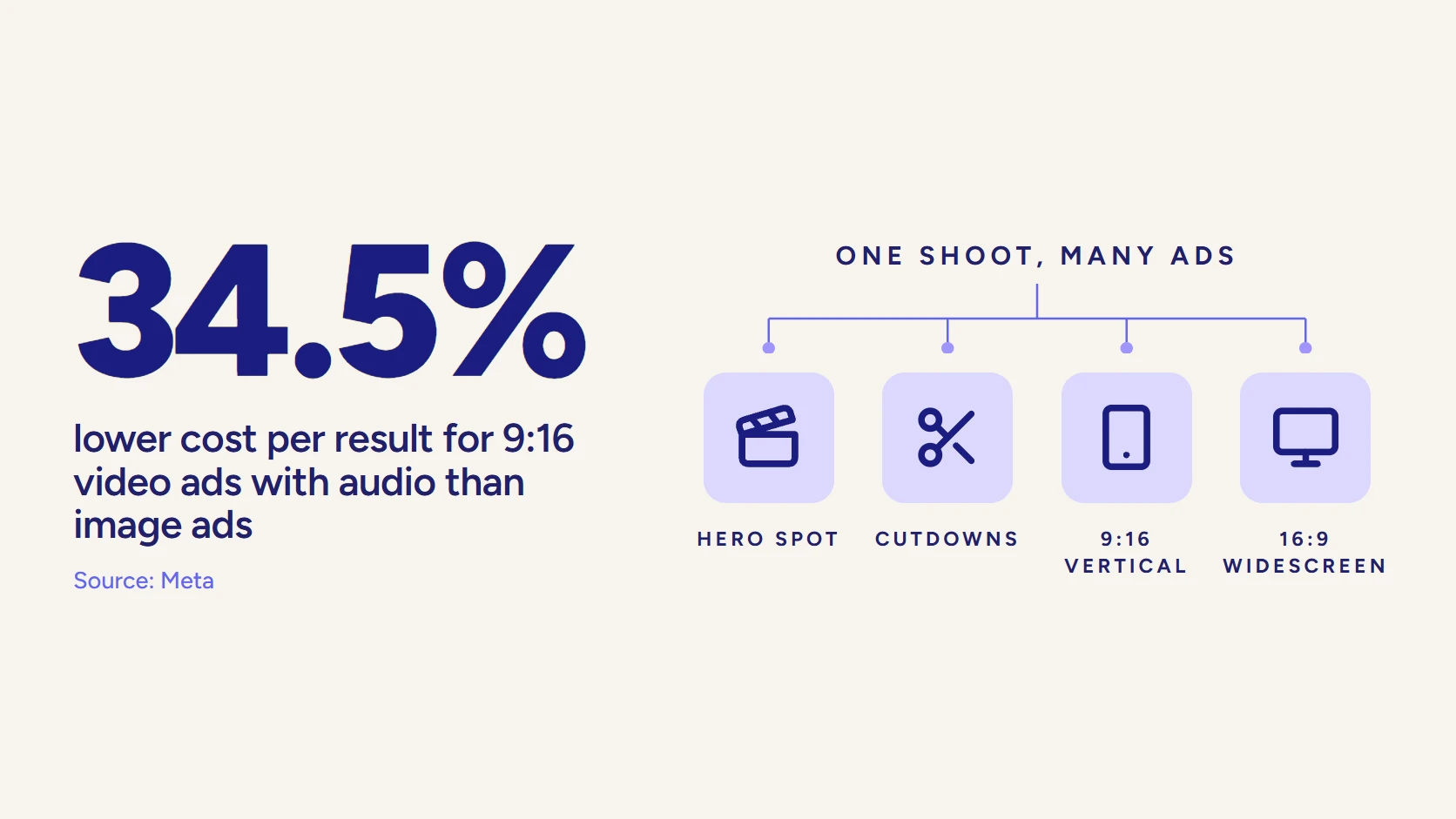
Your team will need different cuts for different moments:
- The homepage version needs more context.
- A paid variant needs a faster hook.
- A sales snippet needs one sharp idea a rep can send after a call.
Plan those versions before production starts.
| Asset | Best Use | What to Plan Early |
| Hero Video | Website, launch page, and campaign anchor | Core message, story arc, and strongest proof point |
| Social Cuts | LinkedIn, organic social, and executive posts | First-frame hook, captions, and square or vertical framing |
| Paid Variants | Retargeting, paid social, and YouTube | Shorter openings, one call to action (CTA), and platform-safe text |
| Sales Snippets | Sales development representative (SDR) outreach, follow-up emails, and deal support | Buyer objections, proof points, and specific use cases |
| Website Placements | Homepage, product pages, and landing pages | Page context, supporting copy, and next step |
This planning changes how the shoot works and protects your budget.
The production team can capture alternate lines, cleaner proof points, tighter transitions, and extra visual options. That gives editors more to work with later.
A brand video that only works in one place has a short shelf life. A campaign-ready production gives your team more ways to use the same idea across web, paid, sales, and social.
The best time to plan those cuts is before the first shot list is finalized. By the time the edit is done, reuse gets harder. Earlier planning gives every asset a job.
Brief the Outcome, Not Just the Brand Video Deliverable
A weak brief asks for a brand video. A stronger brief explains what the video needs to change to resonate with the audience.
Before the creative process starts, define the outcome in plain language. What should the viewer feel, repeat, and do after watching?
Use these questions to sharpen the brief:
- Feel: Should the viewer feel urgency, confidence, recognition, trust, or curiosity?
- Repeat: What line, idea, or problem should they be able to explain to someone else?
- Do: Should they visit a page, share the video, book a meeting, support a decision, or rethink the category?
- Use: Where will your team use the asset after launch?
- Measure: What signal shows the video helped the campaign, sales motion, or internal conversation?
This gives your production team better creative direction and keeps the final asset from becoming a polished company summary. The video has to support a business moment. That might be a product launch, a category point of view, a sales enablement push, or a demand generation campaign.
The best production partner should help clarify the outcome before recommending the format. That’s how a brand video becomes useful beyond the first approval meeting.
Build a Brand Video Around the Campaign Job It Needs to Do With LocalEyes
A brand video gets stronger when the brief starts with the job. Before scoping production, define the audience tension, the idea worth sharing, and the channels where the asset needs to work. Then, plan the deliverables around that use.
LocalEyes helps B2B teams turn brand strategy into campaign-ready video assets. That can include a 60- to 90-second hero video, paid variants, social cuts, website placements, and sales snippets.
The work starts with the message your audience should remember. Then, we shape the production plan around how your team will use it across demand generation, sales, and owned channels.
When you’re ready to scope the next campaign, bring the audience, core idea, channels, and desired next step. We’ll help turn those inputs into a practical production plan.
Explore our brand video production work to see how a brand video can become more than one polished asset.

Founder at LocalEyes Video Production | Inc. 5000 CEO | Emmy Award Winning Producer