
Key Takeaways
|
Programmatic video ads use automated buying to place video creative across digital inventory through platforms such as demand-side platforms (DSPs) and supply-side platforms (SSPs).
For business-to-business (B2B) programmatic advertising, reaching the right account is only the first step. The ad still has to earn attention, explain relevance, and move the viewer toward action.
Google, Kantar, and Marketing Week research found that 8 in 10 marketers see creative quality as a key driver of effectiveness, yet fewer than half measure its impact. That gap is the opportunity.
This article explains why better targeting is no longer enough. Auction-based buying, real-time bidding, and audience automation have become standard tools. The performance gap now often comes from creative quality, message fit, placement, and audience state.
Programmatic Video Ads Now Compete on Creative Quality
Programmatic used to feel differentiated because the media buying was more advanced.
- Better audiences
- Smarter bidding
- Broader inventory
- Cleaner automation
Those advantages still matter, but serious advertisers can now access many of the same tools. When the infrastructure becomes similar, the creative gets exposed.
A software-as-a-service (SaaS) company can reach the right buying committee with precise targeting. But if the video opens with a vague product claim, the impression still gets wasted.
A healthcare brand can buy premium connected TV (CTV) advertising inventory. But if the ad doesn’t respect the buyer’s context, the placement cannot fix the message.
Programmatic creative quality now shapes whether the media plan has anything useful to amplify.
| Old Programmatic Mindset | Stronger Programmatic Mindset | Business Impact |
| Buy smarter inventory | Build stronger creative systems | Better use of paid impressions |
| Rely on targeting precision | Match message to audience state | More relevant buyer education |
| Run one general video | Create variants by role and stage | Less wasted attention |
| Optimize after launch | Plan creatively for placement upfront | Stronger early performance signals |
| Judge success by media metrics | Measure attention, recall, and downstream action | Clearer campaign learning |
This shift changes the production brief.
The question is no longer “Can we reach the right people?” Most teams can. The better question is “What will those people understand in the first few seconds?”
Match Creative to Placement, Audience State, and Buying Stage
Strong programmatic teams treat creative as part of campaign architecture.
They don’t hand one finished file to the media and expect every placement to work the same way. CTV, preroll, native placements, retargeting, and account-based video ads each create a different viewing moment.
The creative brief should reflect those differences.
- CTV Advertising: Use more room for story, brand presence, and credibility. The viewer may stay longer, but the message still needs structure.
- Skippable Preroll: Use a faster hook and clearer first seconds. The ad has to earn attention before the skip decision.
- Native Video Placements: Make the creative feel useful in-feed. The viewer didn’t arrive asking for a sales pitch.
- Retargeting: Use more specific messaging based on prior engagement. The viewer already knows something about you.
- Account-Based Video Ads: Match proof to buying committee roles. Economic buyers, technical evaluators, and end users need different reasons to care.
The audience’s state changes the message, for example:
- A cold audience needs fast relevance.
- A warm audience may need proof.
- An active account may need confidence around implementation, risk, or business impact.
A stronger creative video ad production strategy starts with those differences before production begins.
The placement isn’t a delivery detail. It shapes what good creative needs to do.
Creative Quality Changes Whether the Impression Has Value
Creative quality determines whether the impression earns attention, creates understanding, and gives the viewer a reason to remember the brand.
Optimization can improve delivery. It cannot rescue a weak message.
Strong programmatic video creative usually does a few things well:
- Earns Attention Early: The first seconds show visual intent and a reason to keep watching.
- Introduces the Brand or Message Fast: Delayed branding can waste valuable attention.
- Focuses on One Clear Idea: One ad shouldn’t carry the entire pitch deck.
- Uses Proof When Trust Matters: Real people, expert perspectives, or customer context can make the message more credible.
- Quickly Establishes Relevance: The viewer should understand why the ad applies to their role or problem.
Video completion rate can help, but it’s not sufficient on its own. A high completion rate may indicate that the placement held the viewer’s attention. It doesn’t prove the viewer understood the message, remembered the brand, or took the next step.
B2B video ads need sharper creative discipline.
A 30-second ad with five features, three audiences, and a soft ending usually underperforms before optimization starts. One clear buyer problem or outcome gives the media system something stronger to scale.
Creative quality turns targeting into communication.
Measure Programmatic Video Beyond Media Efficiency
Programmatic video can become too media-centric.
Teams watch cost per thousand (CPM), inventory, view-through rates, and completion rates while underinvesting in the message itself. However, those metrics don’t tell the full story.
A campaign can hit the right account list and still fail, but why?
- Maybe the opening is too generic.
- Maybe the ad speaks to a technical evaluator with executive language.
- Maybe the creative fits CTV but feels awkward in a native feed.
Use measurement to learn about business movement, not only delivery, for example:
- Attention Quality: Did the viewer understand the point?
- Message Retention: Can the audience remember the brand and idea?
- Downstream Engagement: Did viewers click, revisit, search, or enter nurture?
- Sales Usefulness: Can clips support follow-up or account conversations?
- Pipeline Influence: Did the campaign support qualified opportunities?
Placement-specific performance also needs context.
A native video ads guide can help your team compare how different ad environments shape viewer behavior. Native creatives often need a different hook than preroll or CTV.
Media efficiency should support learning. It shouldn’t become a substitute for stronger creative judgment.
Build Programmatic Video as a Campaign-Ready Asset System
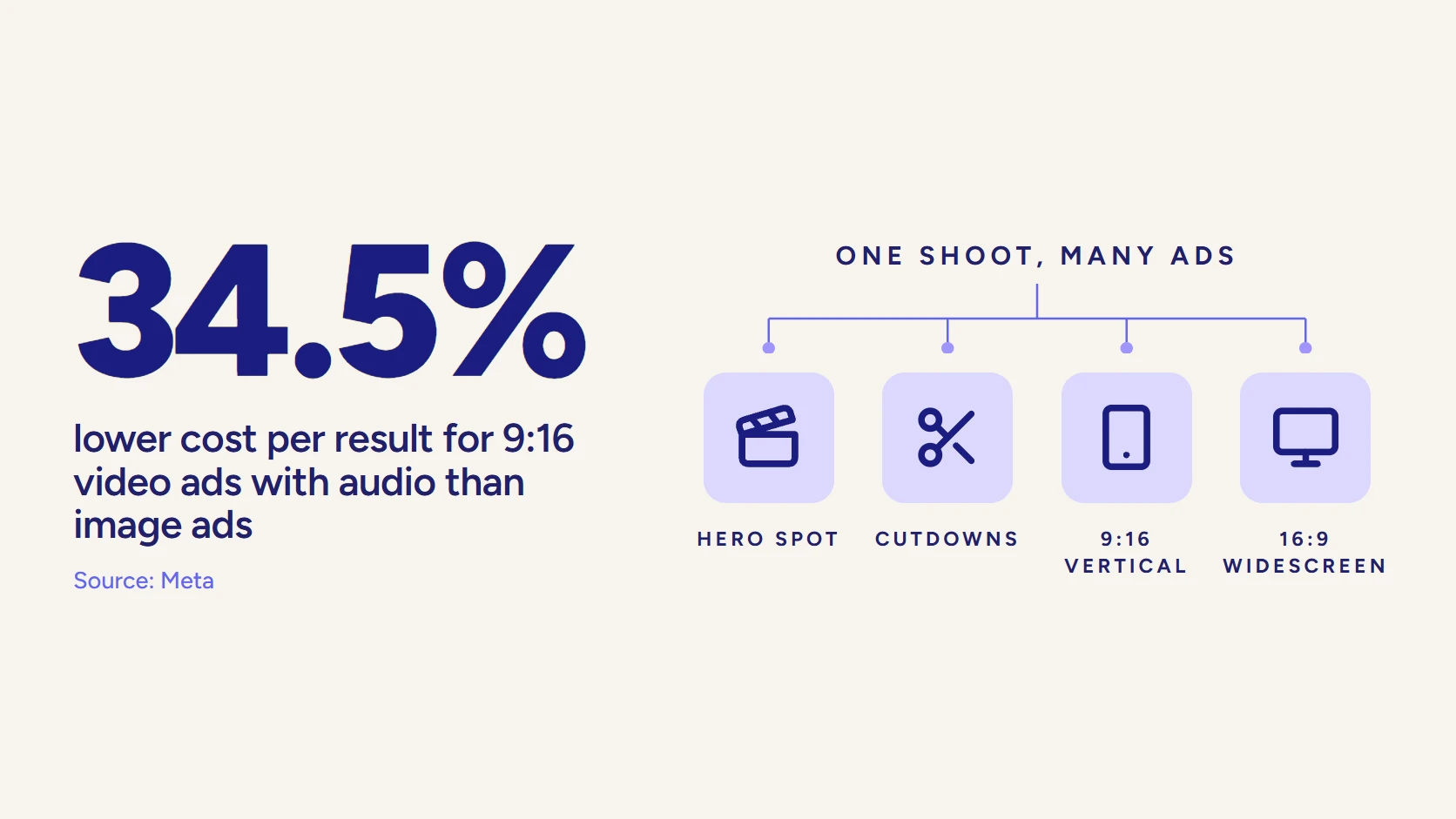
Stronger B2B teams move beyond one hero cut. They plan programmatic video as a campaign-ready asset system. One production can create variants for awareness, proof, retargeting, and sales follow-up.
For example, one 30-second explainer can become:
- Awareness Cut: A clear problem statement for cold audiences.
- Proof Cut: Customer or expert validation for warmer viewers.
- Retargeting Cut: A specific next step for engaged prospects.
- Sales Clip: A short asset reps can send after an account interaction.
This approach also supports role-based persuasion.
- Economic buyers need business impact.
- Technical evaluators need clarity on workflows or integrations.
- End users need practical relevance.
- Executives need confidence and risk reduction.
B2B programmatic advertising works better when those differences are planned in advance of production.
The same is true for promotional video production. A campaign asset should be built for channels and funnel stages from the start.
Reuse is not an extra. It’s how one production investment creates more usable content across paid, owned, and sales channels.
Build Better Programmatic Video Creative With LocalEyes
Programmatic video needs more than a media plan. It needs a creative built for the audience state, placement, role, and funnel stage.
LocalEyes helps B2B teams create performance-driven campaign video assets designed for paid, owned, and earned sales channels. That includes clearer messaging, channel-specific creative, role-based variants, and multi-asset delivery.
The work is built to support sales qualified leads (SQLs), pipeline, and revenue, not just finished files for a media upload.
If your programmatic campaigns need stronger creative, explore our video ad production services.

Founder at LocalEyes Video Production | Inc. 5000 CEO | Emmy Award Winning Producer