Key Takeaways
- A creative video agency owns concept and craft. A production company owns execution. An ad agency owns the broader campaign and media. The labels overlap, so judge capability, not the name on the website.
- Creative that wins awards and creative that moves pipeline are not the same skill. Polish is table stakes. Channel fit, buyer-stage mapping, and multi-asset delivery are what convert.
- A single hero film cannot carry a full B2B buying committee. Buy a system of channel-ready assets that works every stage, not one video.
- Match the format to the buyer’s stage: brand film for awareness, product and platform video for consideration, customer story for proof, and executive video for trust and ABM.
- The buying test is simple: can the agency tell you what the video needs to do before they tell you how it will look?
“Creative” gets used as a compliment, a price justification, and a category label, often in the same sentence, and none of those tell you whether the work will produce an SQL. For a B2B marketing leader who answers for pipeline, that ambiguity is expensive. What follows draws a clear line between video that wins the room in a reel and video that does a job once it hits your channels, and gives you a way to tell the two apart on your next discovery call.
What Is a Creative Video Agency, and How Is It Different From a Production Company or an Ad Agency?
The three terms get used interchangeably, and that is exactly why buyers end up with the wrong partner. Here is the practical difference.
A creative video agency starts with the idea. The team shapes the message, the narrative, the visual approach, and the format, then carries that creative through filming and post. You are buying judgment about what to say and how to say it, plus the craft to make it real.
A video production company is built around execution. Bring a script or a clear brief and they will shoot and edit it to a high standard. Many are excellent at the camera work and weak at the thinking that comes before it.
As our team has written before, the gap between a generic production house and a true video partner is whether they understand marketing funnels and business objectives, not just camera angles.
An ad agency (or full-service marketing agency) sits one level up. It owns brand strategy, the campaign concept across channels, and often the media buy. Video is one deliverable among many, and the actual production is frequently subcontracted to a production company. You get breadth and media planning, sometimes at the cost of video-specific depth and a markup on the production line item.
Creative Video Agency vs Production Company vs Ad Agency
| Dimension | Creative Video Agency | Video Production Company | Ad / Full-Service Agency |
| Starts with | The idea and the message | Your brief or script | Brand and campaign strategy |
| Core product | Concept plus craft | Execution and footage | Strategy, creative, and media |
| Owns the strategy? | Video and channel strategy | Rarely | Yes, across all channels |
| Handles the media buy? | No, builds for the channel | No | Often yes |
| Best when you need | Story and craft tied to a marketing goal | A clear concept produced well | An integrated multi-channel campaign |
| Common failure mode | Beautiful work with no channel plan | Polished footage, no strategy | Video treated as a checkbox, marked up |
The useful takeaway is that these are roles, not rigid company types. A strong creative video agency can carry the strategy a production company skips and the video depth an ad agency outsources. A weak one is just a production company with a nicer reel and a higher invoice.
The label tells you almost nothing. What the team does in the first two weeks tells you everything.
Why Isn’t ‘Creative’ Alone Enough to Move Pipeline in B2B?
Video works. That part is settled. 91% of businesses now use video as a marketing tool, and 82% of marketers say it gives them good ROI. In B2B specifically, 58% of marketers rated video the most effective content type in Content Marketing Institute research, and 61% planned to increase their video investment. Companies that use video grow revenue 49% faster than companies that do not, and 52% of B2B marketers name video their highest-ROI content type.
So if video performs and your video is creative, where does the pipeline go? It leaks in the gap between the work being made and the work being used. Three failures cause most of it.
The Work Is Made for the Edit Bay, Not the Feed
A film cut for a director’s reel and a 15-second asset cut for a cold LinkedIn audience are different products, even from the same shoot. When creative is designed to look its best in a polished case study, it tends to open slowly, lean on music and mood, and save the point for the end.
On a paid feed, the viewer is gone before the point arrives. Think of it like burying the headline on page nine of a newspaper nobody reads past the front. The craft was real. The channel fit was not.
That is the most expensive way to make a video that technically exists and practically does nothing.
One Hero Film, No System Around It
The B2B buying committee does not make a decision off one video. They move through stages, and different people watch different things at different times. A single brand film, however good, cannot carry awareness, consideration, proof, and sales follow-up at once.
Teams that win treat one shoot as the source for a set of assets mapped across the video marketing funnel, not as a one-off. The creative-only shop hands you the film and stops. The performance gap is everything that should have come next and did not.
No Goal Was Set, so No Result Can Be Measured
If the brief was “make us a great brand video,” there is no number to check against. Great by what standard? Useful to whom, at which stage, on which channel?
When the objective is left vague, the work gets judged on taste, the most expensive and least reliable measure in marketing. Buyers consistently confirm video drives outcomes: 84% of video marketers report video has directly helped increase sales, and 85% of people say a video has convinced them to buy a product or service. Those results show up when the video is pointed at a job. They evaporate when it is pointed at a vibe.
This is the heart of the matter. Creative is necessary. It is never sufficient.
Pipeline shows up when craft is attached to a goal, shaped for a channel, and built as a system. Take any one of those away and you have a nice video and a flat funnel.
What Does a Pipeline-Accountable Creative Agency Do Differently?
The agencies that actually move pipeline are not less creative. They are creative inside a set of constraints that the “cool studio” never imposes on itself. Four habits separate them.
They Start From the Goal, Not the Brief
Most agencies ask what video you want. The better question is what you need it to do. A pipeline-first partner opens with the business objective, then works backward to the creative.
If the goal is to compress a 45-day sales cycle, the creative decisions about length, format, and proof all change. At LocalEyes we call this opening move Goal-First Alignment, the first part of our process, because the rest of the project inherits its quality from this step.
They Engineer for the Channel Before They Shoot
Channel-first thinking shapes the edit, not just the export settings. A LinkedIn cold audience, a retargeting pool, a sales email, and a website hero each have different attention windows and different jobs.
The numbers reward getting this right: embedding video on a landing page can lift conversion from 2.9% to 4.8%, and LinkedIn video posts run 5.1% to 6% engagement against 2% to 3% for static images. Those gains come from assets built for the surface, not generic cuts dropped onto it. A strong creative partner plans the hook, the captions, the aspect ratios, and the cutdowns before the camera turns on.
They Deliver a System, Not a Single Asset
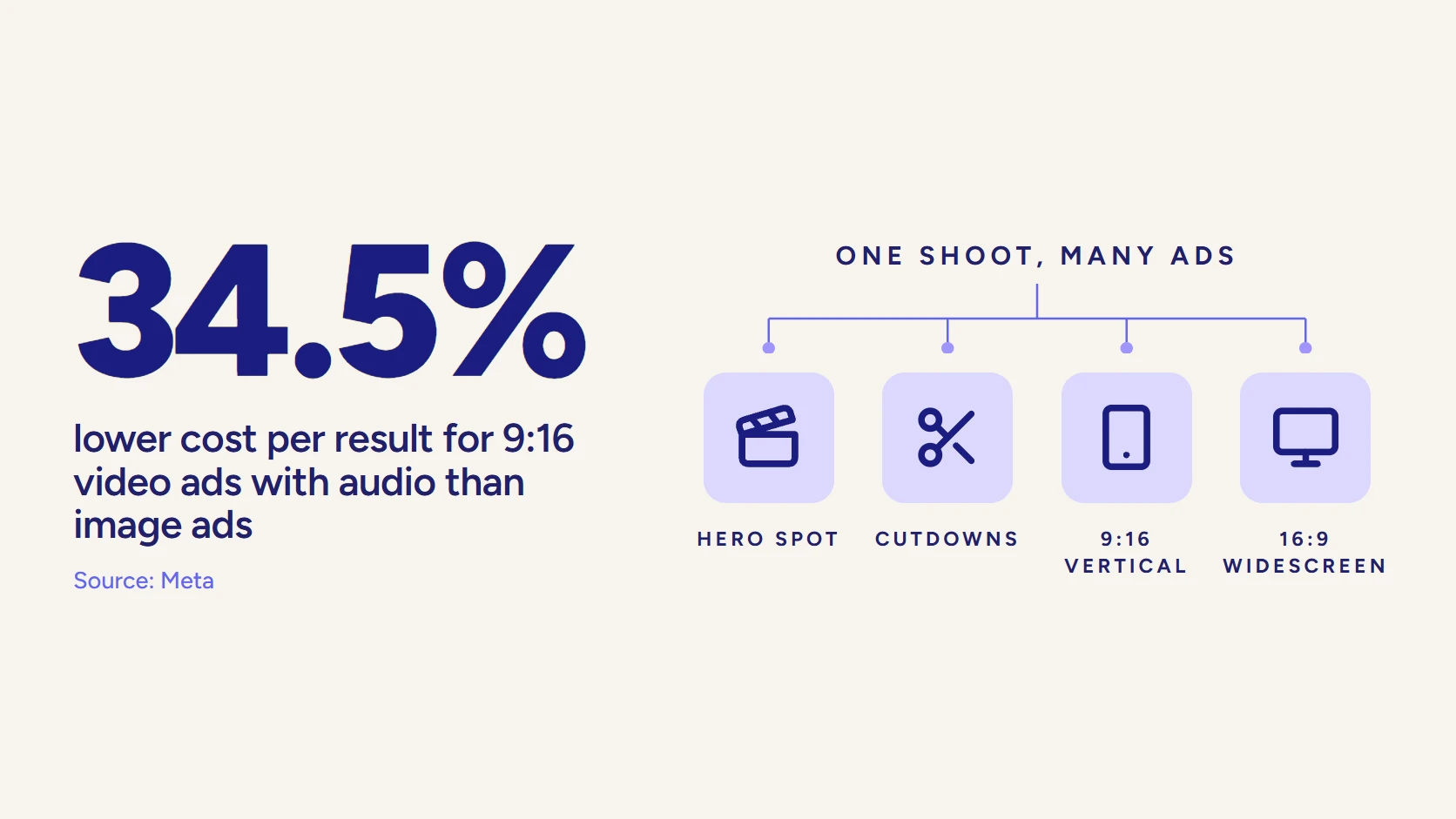
One engagement should produce a hero piece plus the supporting assets that work the rest of the funnel: 15, 30, and 60 to 90 second variants, channel-optimized cutdowns for LinkedIn, YouTube, and retargeting, plus stills and quotes for sales. This is the difference between buying a video and building a campaign.
It is also where most of the return hides. The production cost is largely fixed once the crew is on set, so every additional usable asset improves the math.
They Tie the Work to a Number You Already Report
Pipeline-accountable creative connects to metrics a VP of Marketing or Head of Demand Gen already owns: SQL volume, opportunity creation, pipeline velocity, conversion rate on a key page. The partner should be comfortable saying which asset is responsible for which job, and which leading indicator tells you early whether it is working.
If they only talk about views and “engagement,” they are selling reach, not revenue. For a fuller picture of how this connects to spend, our breakdown of video marketing ROI walks through the measurement side in detail.
Which Creative Formats Map to Each Buyer Stage?
Creative is not one thing. The format should follow the job, and the job follows the buyer’s stage. Here is how the core formats line up against where a B2B buyer actually is, so the creative is pointed at a specific outcome instead of “awareness” in general.
Brand Film for Awareness and Positioning
The brand film carries the top of the funnel and the halo around it: homepage hero, fundraising, repositioning, recruiting. Its job is to make the right buyer feel you are the category-defining choice, fast.
In a feed it has seconds to land a point of view, so the creative has to open with tension, not a logo. This is where craft earns its keep, as long as it serves a position and not just a mood. Our take on brand video goes deeper on making brand work pull weight.
Product and Platform Video for Consideration
Mid-funnel is where the buyer is comparing options and trying to understand how your product solves an expensive, specific problem. Product and platform videos translate complexity into a clear buyer outcome: what it does, who it is for, why it is better.
This format lives on product pages, in launch campaigns, and in sales decks, and it rewards clarity over cinematic flourish.
Customer Story and Case Study for Decision and Proof
Late stage, the committee needs proof more than polish. A customer story video answers the quiet question every buyer is asking: did this work for someone like me?
It is the most powerful sales-enablement asset you can hand a rep, and the format where credibility beats production value. A documented framework helps here, which is why we maintain a testimonial video production framework for getting real proof on camera.
Executive and Thought-Leadership Video for Trust and ABM
Executive formats (keynote, point-of-view, founder narrative) build trust with senior buyers and power account-based plays where one or two people decide a six-figure deal. These run across stages, from a cold ABM touch to a final-stage confidence builder, and they carry the weight of the person on camera, so the creative job is to make a leader sound specific and human, not scripted.
The pattern across all four is the same. The format is chosen to do a job at a stage, and the creative serves that job.
Strong work that is aimed at the wrong stage still misses. For the full menu of formats and where they fit, our video production services page lays out the options.
Which 7 Questions Separate Craft From Performance When Evaluating a Creative Video Agency?
Reels are designed to make every agency look great. They are a filter for taste, not for fit. These seven questions surface what a reel hides. Ask them on the first call.
- What will this video need to do, and how will we know it worked? A performance partner answers in outcomes (SQLs, conversion, cycle time). A craft-only shop answers in adjectives. The first response is the most reliable signal you will get all call.
- How do you shape the message before production starts? Look for a real pre-production process that interrogates the goal and the audience, not a kickoff that jumps straight to mood boards and shot lists.
- What assets come out of one shoot, and how are they built for each channel? You want a system answer: hero plus variants, cutdowns, aspect ratios, and sales clips. “We deliver the final film” is a one-off answer.
- How do you handle stakeholder approvals and feedback? B2B has long review chains. Ask how they keep multiple approvers moving without burning your timeline. This is where projects quietly die.
- Can you show work tied to a business result, not just a nice edit? Ask for an example where the video changed a number. Verified outcomes beat a beautiful reel every time.
- Who actually leads the strategy, and is that person in the room? Many shops put a strategist on the pitch and a coordinator on the project. Confirm the thinking does not disappear after you sign.
- How do you deliver consistent quality across markets and deadlines? If you run multi-city or tight-turnaround programs, ask how they hold one standard everywhere. This is exactly where most agencies fall apart.
Use a simple rule to score the answers. If six of seven are answered in terms of outcomes, channels, and process, you are talking to a performance partner. If most answers circle back to look, feel, and craft, you are talking to a production vendor with a good reel.
Both have a place. Only one of them is accountable to your pipeline.
How Does the LocalEyes Blueprint Turn Creative Into a Campaign System?
Everything above describes the standard. The LocalEyes Blueprint is how we hold it on every engagement. It is a three-part process built so creative cannot drift away from the business goal.
Goal-First Alignment
We start with what the video has to do, not what it should look like. Most agencies ask what video you want. We ask what you need it to accomplish, because every later decision (length, format, proof, channel) follows from the objective.
Get this wrong and no amount of craft saves the project. Get it right and the creative has a target.
The Video Blueprint
Before the camera rolls, you own a structured strategic document, a real, tangible deliverable rather than a directional plan. It defines the goal, the audience, the message, the formats, the channels each asset is built for, and what success looks like.
It is the artifact that keeps a long review chain aligned and stops good creative from quietly becoming off-brief creative by the final cut.
The LocalEyes Production Standard
One agency, more than ten cities, the same premium standard every time. We hold quality where multi-market programs and tight deadlines make other partners crack, using distributed crews and centralized producers so a shoot in Chicago matches a shoot in Austin.
This is the part you feel most when the program scales, because consistency across markets is exactly where a single-studio shop runs out of road.
The output of the Blueprint is not a video. It is a campaign system: a hero asset plus the variants, cutdowns, and sales clips that work the whole funnel, all traceable back to the goal you set in step one. That is what it means to buy creative that is accountable to pipeline rather than creative that is accountable to taste. If you want the broader context on the discipline, our guide to B2B video marketing covers how the pieces fit together.
What Are the Common Mistakes When Hiring a Creative Video Agency?
Most bad outcomes trace back to the same handful of decisions, made early and quietly. Watch for these.
- Hiring on the reel alone. A reel proves the team can make something beautiful. It cannot prove they can handle approvals, hit a deadline, or build for your channels. Judge the process, not just the portfolio.
- Skipping the goal. If you cannot say what the video needs to do before you brief it, the agency cannot either. The work will be judged on taste, and taste is unwinnable.
- Buying one video instead of a system. A single hero film with no variants or cutdowns leaves most of the value on the cutting room floor. The production cost is largely fixed once the crew is booked, so a one-off is the worst return per dollar.
- Letting the strategist vanish after the pitch. Confirm the person who did the thinking stays on the project. A great pitch followed by a junior execution is a common and expensive bait-and-switch.
- Shopping on price. Premium B2B creative is an investment in pipeline, not a line item to minimize. The cheapest bid usually means a template, a weaker crew, or a strategy you have to supply yourself. We do not compete on price for the same reason you do not sell on it.
- Ignoring distribution. A video with no channel plan is a video no one sees. Decide where each asset lives and what it is supposed to do there before you approve the concept.
What Else Do B2B Teams Ask About Creative Video Agencies?
What Is a Creative Video Agency?
A creative video agency is a partner that develops the concept, story, and visual craft of a video and then produces it, with creative direction as the core of the engagement. For B2B teams accountable to pipeline, the useful version goes further: the agency builds video engineered to perform inside your demand gen and sales channels, not video that only looks good in a reel.
Creative Video Agency vs Production Company: What Is the Difference?
A creative video agency starts with the idea and owns the message, the story, and the craft. A production company is built around execution, so it shoots and edits a concept or script you bring.
The simplest test is where the work begins: a creative agency helps decide what to say, a production company helps capture it well. The strongest creative partners also carry the channel and funnel strategy that pure production shops skip.
How Much Does a Creative Video Agency Cost?
Cost depends on scope, formats, and how many channel-ready assets you need, not on a per-minute rate. The signal that matters is whether the price reflects strategy and a multi-asset system or just footage.
For B2B teams running real campaigns, projects typically start in the five-figure range and grow with multi-market and multi-asset scope. Treat it as an investment in pipeline rather than a cost to minimize. The cheapest option usually means a template and a strategy you have to bring yourself.
How Long Does a Creative Video Project Take?
A focused single-asset project commonly runs a few weeks from kickoff to delivery, while a multi-asset campaign with several stakeholders and markets takes longer. The bigger driver of timeline is rarely the shoot. It is the approval chain.
Ask any agency how they keep multiple reviewers moving, because that is where most B2B video projects lose weeks.
Should I Build an In-House Video Team or Hire a Creative Agency?
In-house teams are strong for high-volume, fast-turn content and deep brand familiarity. An agency is the better fit for campaign-level creative, multi-market production, and work that needs senior strategy and a premium standard without the cost of a full internal team.
Many teams run both: in-house for steady output, an agency for the high-stakes assets that have to perform. The deciding question is whether the video is important enough that you do not want to manage every part of it yourself.
Can a Creative Video Agency Run Campaigns Across Multiple Cities or Markets?
The capable ones can, but consistency across markets is exactly where many agencies struggle. Ask how they staff and hold quality on a multi-city program. LocalEyes runs distributed crews with centralized producers across more than ten U.S. markets so the standard holds whether the shoot is in New York, Chicago, or Austin.
How Do I Know if the Creative Is Actually Performing?
Tie each asset to a metric you already report: conversion rate on the page it lives on, contribution to SQLs or opportunities, or sales cycle length for deals that consumed the video. If the only numbers your agency offers are views and generic engagement, you are measuring reach, not revenue. A performance partner will name the leading indicator that tells you early whether an asset is working.
When Should You Hire a Creative Partner Because the Video Actually Has to Work?
Creative is worth paying for when it is built to move pipeline, mapped to your buyer’s stages, and delivered as a system you can run across channels and markets. That is the line between a video that looks good and a video that does its job.
If your next project is too important to hand to someone who will make you manage them, bring us the goal, the audience, and the channels, and we will shape a plan that performs.
Book a call with LocalEyes to scope your campaign and get an estimate.

Founder at LocalEyes Video Production | Inc. 5000 CEO | Emmy Award Winning Producer