Fast answer
Key Takeaways
- San Diego has no shortage of crews; for a B2B team the differentiator is a partner that ties video to pipeline, not just camera work.
- Match the format to the buyer stage: brand film for awareness, product video for launch, customer story for proof, executive video for trust.
- For multi-market programs, a distributed crew with centralized producers holds one standard across every city.
- Premium B2B campaign work in San Diego typically starts around $20,000 and scales into $50K-$150K programs.
- Vet on process and proof (Emmy recognition, 300+ five-star reviews, Fortune-tier clients), never on lowest price.
Search “San Diego video production” and the results split cleanly into two piles. One is directory pages ranking twenty shops by hourly rate and star count. The other is tourism-styled pitches that open on the coastline and a drone pass over La Jolla. Neither pile was built for the person actually holding a San Diego B2B video production budget.
San Diego is not a backdrop. It is one of the densest B2B economies in the country, and the video that performs here looks nothing like a destination reel. Three engines run the metro, and each one shapes what a serious marketing team needs on the day:
- Biotech and life sciences. A dense cluster around Torrey Pines and Sorrento Valley where the buyers reviewing your footage build instruments for a living.
- Defense and dual-use tech. A base tied to the Navy alongside autonomy and aerospace startups like Shield AI and Firestorm Labs, where secure handling is table stakes.
- SaaS and connected devices. A deepening roster of software and hardware firms that need interface and product capture as sharp as the story around it.
Now picture the person signing off on that video. It is a VP of Marketing or Demand Gen who needs an asset to survive a nine-month sales cycle, not a highlight cut for a lobby screen. What they buy has to still be working at the decision stage, long after the applause for the drone shot fades. A directory ranking by hourly rate cannot tell them which shop understands that, and a tourism reel does not even try.
So this guide is written for them. It walks the four decisions that actually determine whether the money comes back as pipeline: how to vet a partner, which format does which job, what it costs, and how a program runs across San Diego and beyond.
Why Does San Diego B2B Video Need a Different Playbook?
The tourism framing fails B2B teams for one reason: it optimizes for the wrong viewer. A tourism board wants a stranger to feel something about a place. A marketing team wants one named buyer to trust a platform enough to take a meeting. Those are not the same job, and the second one almost never gets solved with a beauty shot of the Coronado bridge.
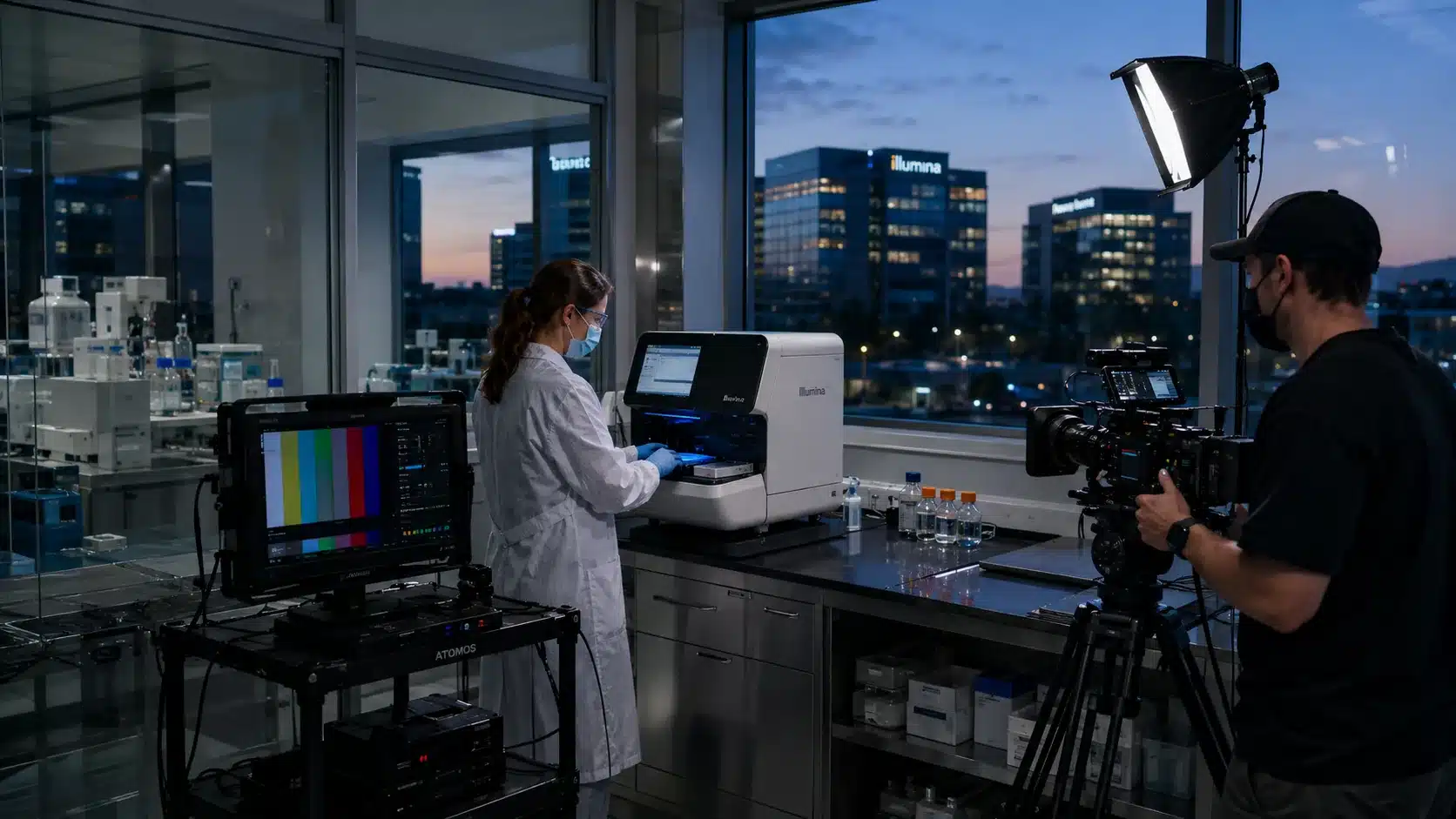
Take a biotech brief. On paper it reads “make us look world-class,” but the real work is getting a specific director of clinical operations to believe this instrument belongs in her lab. San Diego’s B2B mix also raises the technical bar in ways a generalist underestimates, because life sciences work means filming in cleanrooms and labs, respecting gowning protocols, and capturing instruments without contaminating a controlled space.
Defense and dual-use work carries its own load: restricted-site access, handling requirements, and footage that cannot leave a secure chain of custody. SaaS and hardware launches add a third demand, since product and interface capture has to read as crisp on a product page as it does in a paid social cutdown. None of that is exotic to a crew that does it every week, but it is a genuine problem for one that mostly shoots weddings, real estate, and the occasional local spot.
The geography does offer a real gift. Coast, desert, and mountains all sit within about ninety minutes of downtown, which hands a production genuine range without burning a travel day. The discipline is to spend that range on a business goal, not on scenery for its own sake.
Here is the part local pride misses. San Diego companies mostly sell into national and cross-border markets, so their buyers judge the video against polished assets from far larger rivals. A recruiting film competes with San Francisco, and a biotech platform video competes with the category leader’s investor-grade production. That means the bar is set by the audience, not by the local market, and the video has to look like it belongs in the room where the decision gets made.
How Do You Vet a San Diego Video Production Company?
Standard advice says check the reel and read the reviews. That clears out the obviously bad, but it does nothing to separate a competent vendor from a partner who will move your numbers. A sharper test asks three things: where the work starts, what you own before the shoot, and what the company is built to deliver.
The Three Types of San Diego Shop
Three broad types show up in this market, and they behave very differently once the money is on the table.
| What to check | Generic vendor | Cinematic boutique | LocalEyes |
|---|---|---|---|
| Starts from | A shot list | A creative vision | Your business objective (Goal-First) |
| Deliverable before the shoot | A quote | A treatment | The Video Blueprint you own |
| Multi-market delivery | Subcontracts it | Local only | 10 US markets, one standard |
| Optimized for | Lowest bid | Awards | Pipeline and SQLs |
| Proof | A reel | Festival credits | Emmy, 300+ reviews, Zapier / Harvard-tier work |
The generic vendor is not incompetent; the work is simply framed as a transaction. You bring a shot list, they return a quote, and the strategic question of what the video must accomplish never gets asked. That is fine for a quick internal clip and a real risk for a launch that has to carry pipeline.
The cinematic boutique is the opposite failure. On the surface the craft is real and the reel is beautiful, but underneath the work starts from a look rather than a business goal, and it tends to serve the portfolio over your funnel. It is usually local only, which turns into a problem the moment you need the same standard in Austin or Boston.
The third type is the one worth interviewing for, whichever company you land on. Ask any San Diego partner to start from your objective, to hand you a written plan you own before the shoot, to prove outcomes instead of just screening a reel, and to hold one standard if the program crosses markets. Four for four, and you have a shortlist. Stumble on any of them, keep looking, and use our roundup of video production companies in San Diego to walk the field with the same lens.
Four Questions to Ask on the First Call
Turn those four traits into questions you can ask out loud, because a real partner answers them without flinching. Here is the short list worth running on a first call with any video production company in San Diego:
- Start with the objective. “What business result is this video supposed to produce, and how will we know it worked?” A partner who answers with a metric is thinking about your funnel; one who answers with a shot list is thinking about a shoot day.
- Ask about ownership. “What do I have in writing before anyone picks up a camera, and do I own it?” The green flag is a documented plan that belongs to you, and the red flag is a proposal that jumps straight to a quote.
- Probe the sector fit. “Walk me through the last cleanroom, lab, or secure-site shoot you ran.” A crew that has done it describes protocols calmly, while a crew that has not changes the subject back to its reel.
- Close on scale. “If we need the same look in Austin and Boston next quarter, how does that work?” A local-only boutique goes quiet here, and a distributed partner already has an answer ready.
Four questions, four honest answers. If a corporate video production company in San Diego handles all four without hedging, it belongs on your shortlist. Dodge even one, and keep dialing, because the first serious job of a San Diego buyer is telling the transactional crews apart from the strategic ones before a camera is ever booked.
LocalEyes Video Production San Diego
See how LocalEyes Video Production San Diego builds performance video for B2B marketing teams.
Which Video Format Does Your San Diego Team Actually Need?
The costliest mistake in B2B video is making the wrong asset well. A gorgeous brand film does little for a launch that needed a sharp product video, and a slick product demo will not do the reputational work a brand film is built for. So decide the job before you talk to a crew, because the format follows from the buyer stage, never the reverse.
| Video format | Buyer stage | Primary goal | Typical placement |
|---|---|---|---|
| Brand film | Awareness | Reposition, brand halo, recruiting | Homepage hero, paid social |
| Product / platform video | Consideration | Launch, product marketing, conversion | Product pages, launch, retargeting |
| Customer story | Decision / proof | Sales enablement, credibility | Sales, industry, ABM |
| Executive / event | Trust / ABM | Exec presence, keynotes, internal comms | Conferences, ABM, employer brand |
For a San Diego SaaS company, the usual program leans on a product or platform video to carry the consideration stage, then a customer story or two to close the credibility gap at decision. A biotech or medical-device team usually flips the weight onto the customer story and the executive or KOL video, because trust is the entire game in a regulated purchase. Defense and dual-use companies lean elsewhere again, toward executive and event formats, since much of the buying moves through relationships and briefings rather than a public funnel.
The Six Formats a B2B Team Draws From
It helps to see the working set side by side, because each format owns a job and a stage. These are the six a San Diego B2B team draws from most:
- Brand film. The awareness asset that says who you are and why you exist. It earns its place when you are repositioning, entering a new category, or recruiting against bigger names up the coast, and it lives on the homepage and opens events.
- Product or platform video. The consideration workhorse that makes software or hardware legible in ninety seconds, built on native-resolution screen capture and motion graphics that track a workflow. It runs on the product page, inside demos, and across paid retargeting.
- Customer story. The proof asset that lets a peer vouch for you at the decision stage. In regulated markets it does the heaviest lifting, because a named director on camera outweighs any claim you make about yourself.
- Executive or KOL video. The trust asset built on a founder, a chief scientist, or a key opinion leader, carrying the relationship-driven sale that defense and life-sciences buyers actually run. It shows up in briefings, at conferences, and in investor conversations.
- Event and conference capture. The asset that turns a week at a show into a quarter of content, which is why teams increasingly plan to repurpose event footage for B2B marketing before they ever arrive.
- Recruiting film. The talent asset that competes for engineers and scientists against San Francisco salaries by selling the mission and the team rather than the perks. It lives on careers pages and on the profiles candidates check before they reply.
Notice how few of these are one-and-done. Most B2B programs braid three or four together, and the smart move is planning the shoot so a single day feeds several at once. If you take one thing from this section, take this: pick the format for the stage it serves, then build a small system instead of a single hero.
How Do SaaS, Biotech, and Defense Teams Actually Shoot Here?
Each of San Diego’s three anchor sectors imposes production realities a marketing leader should raise on the very first call. Get them right and the shoot runs smooth; get them wrong and you are paying for a reshoot. It is exactly where a generalist crew gets exposed.
SaaS and Connected Devices
The core challenge is making software and hardware look as good as the story around them. That means clean interface capture at native resolution, motion graphics that turn a dashboard into something a viewer can follow, and real product-photography discipline for any physical device. The strongest SaaS pieces pair a human narrative with crisp screen and UI work, then cut down cleanly for LinkedIn, YouTube, and retargeting. To see how the explainer end of that gets handled locally, our San Diego explainer video work is a useful reference.
Biotech and Life Sciences
Filming in and around labs, cleanrooms, and manufacturing suites is a specialized craft, not a lighting preference. It calls for crews who understand gowning and contamination control, who can light a controlled space without introducing heat or particulates that break protocol, and who can shoot instruments and assays accurately enough to satisfy a scientific reviewer. Because claims in regulated markets get scrutinized, compliance-aware review cycles are part of the job rather than an afterthought.
The audience here is unusually expert. The cluster is anchored by names a reviewer will recognize, from Illumina in genomics to the San Diego operations of companies like Thermo Fisher Scientific and Becton Dickinson, spread across Torrey Pines, Sorrento Valley, and the UTC corridor. Footage shot for that crowd has to satisfy people who build the instruments for a living, which is a very different bar from a glossy corporate reel.
Defense, Aerospace, and Dual-Use Tech
This is where secure handling separates the serious from the hopeful. Projects can involve restricted-site access, footage that must stay inside a controlled chain of custody, and export-sensitive material that cannot be edited on any laptop or parked in any cloud. The questions to ask a partner are concrete:
- Who touches the footage. Name every person and role in the chain, from the camera operator to the editor.
- Where it lives. Confirm the storage, the access controls, and whether anything ever leaves a secured environment.
- How it is delivered. Agree the handoff method before the shoot, not as a surprise sprung mid-project.
None of this is hypothetical in San Diego. The region anchors a real defense and autonomy cluster, from General Atomics and its unmanned aircraft to newer firms like Shield AI and Firestorm Labs, sitting alongside a Navy footprint built around the largest surface-ship base on the West Coast. A crew that films in that world already understands why a drive full of footage cannot simply ride home in someone’s backpack.
Cross-Border Manufacturing
A quieter San Diego reality is the border. Many companies run production or supply chains across it in Tijuana and the wider CaliBaja region, one of the densest medical-device manufacturing corridors in North America. A shoot that has to move between a Sorrento Valley lab and a plant an hour south adds logistics, language, and site-access wrinkles a local generalist rarely plans for. The through-line across all of these sectors is simple: the work rewards a producer-led process over a purely creative one, because the creative still has to be excellent inside constraints a wedding or real estate crew never meets.
How Does San Diego Compare to Los Angeles, San Francisco, and New York?
Every San Diego buyer eventually asks a version of the same question: should we just hire in Los Angeles or San Francisco instead? Location matters far less than fit, and the trade-offs are worth naming before you assume a bigger city means a better film.
| What you weigh | Los Angeles | San Francisco | New York | San Diego (LocalEyes) |
|---|---|---|---|---|
| Crew and gear depth | Deepest on the West Coast | Strong, SaaS-fluent | Deep, matches any city | Solid, plus national reach |
| Cost base | LA rates and overhead | Most expensive in the US | High, plus travel | Lower local base |
| Signature strength | Commercial and entertainment | Venture and investor-grade | Brand and finance | Producer-led B2B systems |
| B2B pipeline fit | Not always pipeline-minded | Polish over strategy | Rarely worth the travel | One standard, any market |
Los Angeles offers the deepest crew and gear pool on the West Coast, which genuinely helps on high-end commercial and entertainment work. It also carries LA rates and LA overhead, and the crews built for a national ad spot are not always the ones who think in pipeline. San Francisco brings fluency in SaaS and venture-backed storytelling, and its strongest shops produce investor-grade work, but it is also the most expensive place in the country to shoot, and that premium tends to buy polish more than it buys strategy.
New York sets the pace for brand and finance video, with a bench that can match any city on earth, yet for a San Diego team the travel and coordination rarely pay for themselves unless the story genuinely has to happen there. The pattern across all three is the same: a bigger city buys a deeper talent pool and a higher bill, and neither one guarantees a partner who thinks past the shoot day.
San Diego’s own edge is quieter and often underrated. A corporate video production company in San Diego that already works nationally can shoot locally on a lower cost base, then carry the exact same standard into any of those markets when the program needs it. You get the range without importing the overhead. The deciding factor is never the zip code on the invoice; it is whether the partner starts from your objective and can hold one standard wherever the buyer happens to sit.
What Does San Diego B2B Video Production Cost?
Pricing is the question the directory pages answer worst, usually with an hourly rate that reveals almost nothing about a finished program. Published San Diego rates commonly land near $150 to $200 an hour for a mid-tier shop, with stated minimum budgets that swing from a few thousand dollars for a freelancer up past $50,000 for an established agency. Those numbers are real, but they price inputs, not outcomes.
The more useful frame is the asset set and the job it has to do. Focused projects generally start around $20,000, and multi-asset campaigns get packaged into tiers that scale with the number of formats, shoot days, and markets. The ranges below are how LocalEyes Video Production San Diego structures that work.
| Package | Investment | Best for |
|---|---|---|
| Brand campaign | $50K | Single hero film + channel cutdowns |
| Growth campaign | $75K | Hero plus supporting assets across the funnel |
| Multi-asset campaign | $100K | Several formats, multiple markets |
| Enterprise campaign | $150K | Full multi-market, multi-stage rollout |
What Moves the Number
Five things move the price more than anything else, and a partner who prices transparently will map each of them to your goal rather than hide them inside a round number:
- Shoot days. Each added day carries crew, gear, and location cost, so scope discipline here shows up directly on the invoice.
- Talent. An on-camera host, a professional voiceover, or paid actors all change the budget in different ways.
- Locations. A controlled lab or a secured site takes more planning than a conference room, and that planning has a cost.
- Post-production. Heavy motion graphics, 3D product renders, or animation push the edit longer and the invoice higher.
- Volume. The number of finished cutdowns you need sets how much of that shoot day actually gets monetized.
Price should map to the outcome and the asset set, not the lowest bid. A single explainer that feeds demand generation, sales enablement, and social for two years is a different proposition entirely from the same dollar figure spent on a one-off clip that runs once and disappears. Judged per use rather than per project, a well-built video system is usually the most efficient format a marketing team can buy, which is why the vetting and format calls above matter more than the sticker. Our guide to what actually drives corporate video cost breaks the line items down further.
Video that has to work?
Book a discovery call with LocalEyes Video Production and start from the goal, not the brief.
How Do You Turn One San Diego Shoot Into a Full Content System?
The most expensive way to buy video is one asset at a time. The most efficient is to plan a single shoot as the source for a system, then cut it down for every place your buyer actually spends attention. Picture one well-run day with a customer in Sorrento Valley, and count what that single day can yield:
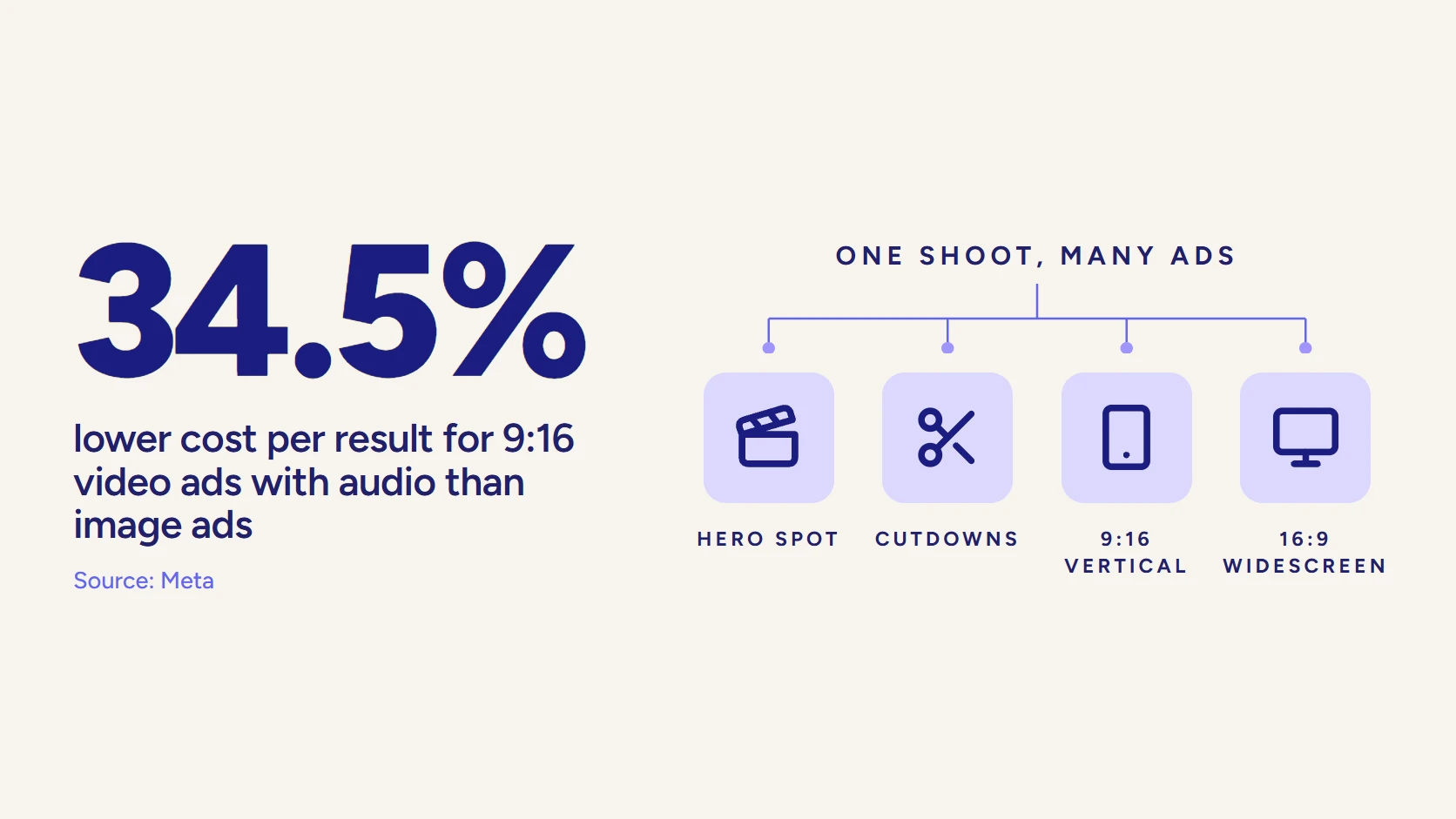
- A two-minute story. The anchor cut that lives on the case-study page and carries the full narrative.
- A sixty-second version. The LinkedIn cut that earns attention in a scrolling feed.
- Three vertical clips. The paid-social set built for the formats each platform rewards.
- A pull-quote reel. The sales-deck asset that lets a peer vouch for you inside a live deal.
- A talking-head segment. The reusable footage that feeds the next brand film.
This is where the distribution question stops being an afterthought. A crew that shoots without a distribution plan hands you a master file and walks away, while a partner that thinks in systems delivers channel-ready cutdowns in the aspect ratios and lengths each platform rewards, so the work earns attention within days instead of sitting in a drive. The same discipline shows up in how SaaS companies get real mileage from professional product videos.
Building a video system from one San Diego shoot
Strengths
- One well-run day yields a quarter of content across every channel
- Priced per use, the cost per asset drops sharply over 18 months
- Channel-ready cutdowns ship in the aspect ratios each platform rewards
- You leave the day with a content calendar, not a lone video
Watch-outs
- You have to decide the cutdowns before the shoot, not after
- It takes a producer-led plan and a tighter brief up front
- A crew with no distribution plan will hand you a master file and walk away
That reuse is also what rewrites the budget math. A single asset priced per project looks expensive, but the same asset priced per use, across demand generation, sales enablement, and eighteen months of social, is usually the cheapest media a marketing team buys. So build the system on purpose: decide the cutdowns before the shoot, brief the crew on where each one runs, and you leave the day with a content calendar rather than a lone video.
How Do You Run a Multi-Market Program From San Diego?
Plenty of San Diego marketing teams do not stay in San Diego. A SaaS company headquartered in Sorrento Valley might need the same launch filmed with customers in New York, an executive series shot at a conference in Las Vegas, and a recruiting film cut for offices in Austin and Boston. The local-only cinematic boutique breaks down here, and a distributed model earns its keep, because the standard has to travel and a single-city crew cannot carry it.
The Distributed Model
The reliable pattern is a distributed crew with centralized producers. Local crews in each market run the shoot, so you are not flying a team across the country, while a central production team owns the creative, the standard, and the through-line so every market looks like one brand. That structure is what keeps a multi-city program from splintering into four different looks at four different quality levels.
LocalEyes Video Production runs this across ten US markets on one production standard, which means a program anchored in San Diego can extend to any of them without a drop in quality or a renegotiated look. Under the hood, that consistency runs on a simple sequence that the client owns and that travels with the program.
The LocalEyes Blueprint: how one standard travels between markets
- Goal-First AlignmentSet the business objective and the metric before any creative talk begins, so every market shoots toward the same result.
- The Video BlueprintTurn that goal into a documented plan the client owns, agreed before the camera rolls so the schedule holds.
- The LocalEyes Production StandardThe bar every crew in every market executes against, so the fifth city looks exactly like the first.
Because the plan locks before anyone shoots, a crew in another city executes the same blueprint instead of improvising. For a team that only needs San Diego today but expects to scale, choosing a partner who can already do the national version is the cheaper decision over time.
Timeline and Measurement
Two questions come up on almost every one of these programs: the first is timeline, and the second is measurement. On timeline, most corporate projects run about 30 to 45 days from kickoff to final delivery, with scope, shoot days, and post complexity setting the range rather than the city. That time splits into three phases:
- Pre-production. The first week or two covers alignment on the goal, the script or interview questions, scheduling, and site access, which in a regulated or secured shoot is the part that cannot be rushed.
- Production. The shoot itself is usually a day or two per market.
- Post-production. Edit, motion graphics, review rounds, and channel cutdowns fill the back half, and the teams that slip their deadlines almost always underinvest in that first phase.
On measurement, tie the program to the metrics the marketing team already reports, agreed at kickoff so the video is judged on business impact rather than view counts. Attribution in a nine-month B2B cycle is never perfectly clean, so the workable approach is to match the metric to the stage:
- Brand film. Judge it on assisted pipeline and brand-search lift, not on raw views.
- Product video. Hold it to demo requests and landing-page conversion.
- Customer story. Measure how often sales attaches it to a deal and what happens to close rates when they do.
Hold each asset to the number it can actually move, and the program earns trust across renewals instead of getting cut in the next budget review.
What Proof Should a Premium San Diego Partner Show?
Reels are easy to stage and reviews are easy to inflate, so the proof that counts is the kind that is hard to manufacture. That is the ceiling a San Diego buyer should hold every shortlisted partner against, LocalEyes Video Production included, and it comes down to four signals:
- Independent recognition. Awards and honors a company cannot simply buy for itself.
- Verified reviews at volume. A deep bench across several platforms, not a single glowing testimonial.
- Named enterprise clients. Buyers with real scrutiny who already trusted the process.
- Outcomes tied to business results. Numbers that moved, not just footage that looked nice.
Verify it yourself rather than taking a pitch deck’s word. Cross-check a partner on independent platforms like Clutch, Google reviews, DesignRush, and GoodFirms, where ratings are harder to stage and the volume of reviews tells its own story. A single glowing testimonial proves little, but a deep bench of verified reviews across several sources is the signal that holds up.
LocalEyes at a glance
Outcomes are the part most vendors cannot show. A 90% sales increase for NewAir and a $2M-plus enrollment impact for USC mark the difference between a company that makes videos and one that makes videos that move a number. Those are the numbers a San Diego marketing leader can carry back into a budget review, and they are the kind a portfolio reel is structurally unable to produce. Anchor work for clients like Zapier and Harvard signals something a reel cannot: that enterprise and heavily scrutinized buyers have already trusted the process, and that the same process is what shows up on your project.
Consistency is not a soft benefit either. Research cited across the creative-agency field holds that a large majority of buyers read congruity across touchpoints as a driver of brand credibility, which is exactly what one production standard across a video system protects. Put the vetting lens, the format map, the pricing logic, and the proof bar together, and the San Diego decision gets simple. You are not hiring a crew with a nice camera and a beach nearby. You are choosing a partner that starts from your objective, hands you a plan you own, delivers the right format for the stage, prices to the outcome, and can prove it worked.
To go deeper on the local offering, see our San Diego corporate video production, brand video production, and product video production pages. When you have a specific launch or campaign in view, that is the moment to talk with a team that starts from the goal, not the scenery.
Video that has to work?
Book a discovery call with LocalEyes Video Production and start from the goal, not the brief.
Frequently Asked Questions
How much does video production cost in San Diego?
What should I look for in a San Diego video production company?
How long does a corporate video take to produce?
Do you work with B2B and SaaS companies?
Can you handle multi-city or national shoots from San Diego?

Founder at LocalEyes Video Production | Inc. 5000 CEO | Emmy Award Winning Producer