
Key Takeaways:
|
Small business video production becomes expensive when one video is expected to do everything.
Smaller teams need credibility, speed, and less waste, but modern distribution requires more than one polished hero asset. You need paid cutdowns, landing page variants, social clips, SDR placements, and campaign assets built for specific channels.
The companies getting stronger results are not simply spending more. They are building leaner, reusable video systems tied to clear business goals.
This guide breaks down how to build sharper video assets without enterprise-level waste.
Why Small Business Video Production Needs a New Playbook
Video is easier to create than ever. Creating video that supports pipeline is still hard.
Production tools are cheaper, and every platform rewards video-first content. The result is a market full of assets that look acceptable but accomplish very little. Teams are not struggling to produce video. They are struggling to produce video that drives action.
Smaller marketing teams often assume the only options are fully DIY content or an oversized brand film with enterprise-level scope. Both can fail when the work is not tied closely enough to business outcomes.
A startup might spend a large portion of its quarterly budget on a hero homepage video, only to realize later that it has no paid social edits, retargeting variants, or specific clips for sales follow-up. The asset looks professional, but the campaign behind it is incomplete.
Visual polish is important, but clarity matters more. Buyers don’t convert because a video looks nice. They convert because the message helps them understand the problem, trust the company, and take the next step.
- Old Way — Buy A Video: The old model treats production as one deliverable. You plan, shoot, edit, approve, publish, and hope the asset finds its audience. This breaks under budget pressure because one video cannot carry every message, serve every channel, and support every stage of the buyer journey.
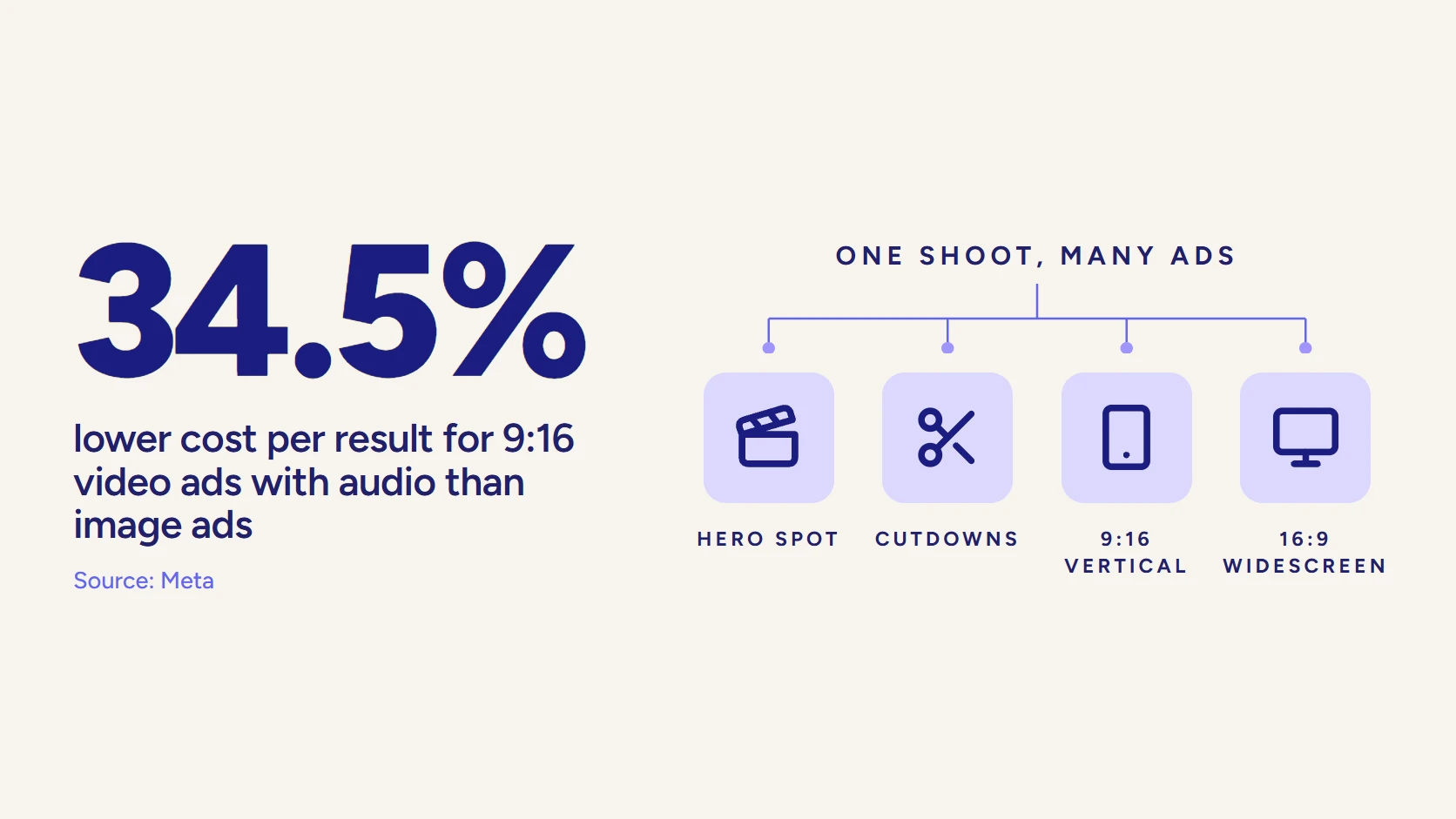
- New Way — Build A Lean Video System: A stronger model starts with business use cases. One production cycle can create a 60- to 90-second hero video, short paid variants, landing page edits, sales clips, product-specific cutdowns, and channel-specific formats. The value is not only the final video. It is the campaign leverage created around it.
Strategic teams now approach small business video production solutions differently. Instead of treating production as a one-time deliverable, they treat it as campaign infrastructure.
What Actually Makes Video ‘Affordable’ for a Small Business
The cheapest quote is rarely the smartest spend. In video, waste usually comes from vague messaging, oversized scope, too many shoot days, unnecessary locations, unclear approvals, and edit plans that expand after production wraps.
That changes how you should evaluate affordable video production. It’s not about stripping the production down to save on costs. It’s about protecting the parts that create business value and cutting the complexity that does not.
| Wasteful Choice | Smarter Choice | Business Impact |
| Starting with a broad concept | Starting with one clear campaign goal | Reduces revisions and strengthens the message |
| Filming too many locations | Choosing fewer, more flexible settings | Controls shoot time and logistics |
| Building one long final cut | Planning multiple edits before production | Improves reuse across paid, web, and sales |
| Expanding crew without a clear need | Matching crew size to the asset type | Keeps quality high without extra overhead |
| Writing for every audience at once | Prioritizing one buyer and one next step | Makes the video easier to act on |
Cost Control Starts Before the Shoot
Small budgets need sharper prioritization, not lower standards. A strong video production process protects both budget and internal time. Your team should not have to manage every script decision, location detail, feedback thread, and delivery format alone.
Small changes in a few areas can dramatically improve efficiency without lowering production quality.
- Script Clarity: Vague messaging creates longer shoots, harder edits, and more revisions.
- Crew Size: Bigger crews only make sense when the production scope requires them.
- Shoot Days: Every additional day should map to a clear asset need.
- Location Complexity: More locations create more logistics, scheduling, and setup costs.
- Edit Scope: Undefined deliverables create expensive post-production drift.
Where Startups and Small Teams Usually Waste Video Budget
Most wasted video budget comes from trying to make one asset solve too many problems.
A startup may want one video to explain the product, impress investors, introduce the founder, support paid ads, sit on the homepage, help sales, and recruit candidates. This approach usually creates a crowded message that does none of those jobs especially well.
Clear roles for each video help teams avoid bloated production scope and weaker messaging.
- Homepage videos need to build trust quickly.
- Paid ads need to earn attention within seconds.
- Sales follow-up clips should answer specific objections clearly.
- Product videos should explain value without overwhelming the viewer with every feature.
The ‘One Video Does Everything’ Trap
The “one video does everything” trap is expensive because it hides the real production need. Your team does not need one universal video. You need a clear asset hierarchy.
A hero video can carry the main narrative, but it should be supported by shorter cuts, product-specific clips, and sales-ready edits. When each asset has a clear role, the message stays tighter and performance becomes easier to evaluate after launch.
Launching the Asset Without Funding Distribution
Production without placement is unfinished strategy. Distribution planning should shape the asset before the script is locked.
If the video lacks a clear plan for landing pages, paid campaigns, organic posts, retargeting, email, or sales outreach, the launch depends too heavily on hope. A stronger distribution plan gives the asset more reach, more reuse, and a clearer path to business impact.
Why Small Business Promo Video Production Is Becoming More Strategic
Promo videos are not just hype assets. A strong promo video can serve as a compact trust builder that explains what you do, who it is for, and what the buyer should do next.
That makes promotional video production especially useful when your team needs one asset to support multiple campaign placements.
A strong promo video frames the problem, introduces the offer, signals credibility, and gives the viewer a next step. That is more useful than a broad, glossy asset that looks polished but leaves the buyer unsure what to do.
Strong small business promo videos usually work because they:
- Clarify the Offer Quickly: They explain why the offer exists, who it is for, and what the next action should be.
- Support Multiple Campaign Placements: The same promo concept can support paid media, landing pages, sales follow-up, and launch campaigns.
- Create Room for Testing: Shorter formats give teams more room to test hooks, messages, audiences, and channels.
- Extend the Value of One Shoot: Several focused cuts can make the production investment useful across the full campaign.
Strong small business video marketing teams start with one business objective, then build the right mix of assets around it.
For promo campaigns, that means using internal content for speed and frequency while reserving professional production for the moments where clarity, trust, and conversion matter most.
Product Video Production Should Support Revenue Conversations
Many SMB companies produce product videos that explain features clearly but fail to move buyers closer to action. Feature walkthroughs alone rarely create pipeline momentum.
Effective product video production focuses on business outcomes, buyer objections, and sales enablement use cases alongside product education.
That means structuring videos around questions like:
- What problem is the buyer trying to solve?
- Which objections stall deals most often?
- Where does sales need stronger visual support?
- Which channels require shorter product-focused cuts?
- What action should viewers take immediately after watching?
A product video should help sales conversations progress faster. If it only explains functionality, it is probably underperforming.
How to Decide Where Professional Production Matters Most
Professional production matters most for the video assets that carry the highest business impact. Use four questions to decide where to invest:
- Stakes: Will this asset influence pipeline, sales conversations, investor confidence, or a major launch?
- Shelf Life: Will the video be useful for months, not days?
- Channel Use: Will it support multiple placements, such as paid, web, email, and sales?
- Trust Requirements: Does the audience need confidence before taking the next step?
If the answer is yes across most of these questions, professional production likely has leverage. If the asset is short-lived or informal, your internal team may be the better fit.
How LocalEyes Helps You Build Higher-Leverage Video Assets
LocalEyes helps smaller marketing teams approach video with the discipline of a larger campaign organization without adding enterprise-style complexity.
We build performance-driven video assets around demand generation goals, structured planning, and multi-asset delivery. That means your team can get more from one production cycle: a 60-90 second hero video, paid variants, landing page cuts, sales enablement clips, and channel-specific edits designed for the places your campaigns already run.
LocalEyes helps clarify the message, define the asset system, and build video that supports the buyer journey from first touch to sales conversation. For startups and small businesses with limited time and finite budgets, that foundation matters.
Explore how LocalEyes approaches promotional video production with campaign-focused strategy, reusable assets, and production built around real business goals.

Founder at LocalEyes Video Production | Inc. 5000 CEO | Emmy Award Winning Producer