
Fast answer
Key Takeaways
- Instagram Reels can be up to 20 minutes long, but Instagram only recommends clips under 3 minutes to people who do not follow you; IGTV is retired.
- Feed videos run up to 60 minutes; Stories are 60 seconds per card; Live runs up to about 4 hours.
- Shoot vertical 9:16 at 1080×1920 for Reels and Stories.
- The 45-to-60-second band earns the best engagement and reach in 2026 data, so treat 3 minutes as your real ceiling and aim well under it.
- For B2B, repurpose one shoot into Reels, feed video, and Stories rather than filming each separately.
How long can an Instagram Reel be? A year ago you would have said three minutes. Ask today and the answer is twenty. Instagram raised the ceiling quietly, and the change matters for more than bragging rights, because it moved where long video lives, closed the book on IGTV, and rewrote how a marketing team should plan a shoot.
Here is how this guide runs. We start with the current number, then map the length limits for every Instagram video format, cover the specs that actually matter, and land on the durations that earn real reach. Running a production budget? The sections on what length performs and how B2B teams should use Reels are the ones to read closely. The answer comes first.
How Long Can an Instagram Reel Be in 2026?
An Instagram Reel can be up to 20 minutes long. That is the technical maximum, and it holds whether you record inside the app or upload a finished file. The caveat is where your strategy actually lives, though, because length and reach have quietly split into two separate questions that most older guides still treat as one.
The 20-Minute Ceiling vs the 3-Minute Reach Cliff
Instagram now treats length and reach separately, and the gap between them is stark. A Reel can run the full twenty minutes, but the algorithm stops recommending anything past three minutes to people who do not already follow you. Cross that mark and the Reel still posts and still plays for your followers. It just stops surfacing on Explore and the Reels tab, which is where most new eyes come from.
Why fixate on the exact number? Because a Reel is the one format Instagram pushes hardest into discovery, so the two limits do very different jobs. Here is what each one actually governs:
- The 20-minute ceiling is a technical cap. It decides what the app will let you upload, and almost nothing you publish should get near it.
- The 3-minute reach cliff is a distribution rule. It decides whether Instagram hands your Reel to strangers, which is the entire reason to post one.
- Everything past three minutes still plays normally for existing followers. You keep the runtime; you lose the reach.
That is why the three-minute reach cliff carries far more weight than the twenty-minute ceiling. The ceiling tells you what is possible, and the cliff tells you what is smart.
How the Limit Climbed to 20 Minutes
The ceiling did not jump straight to twenty. It climbed in stages, and reading the pattern tells you where Instagram is heading:
- 15 seconds at launch in August 2020, when Reels arrived as a fast answer to TikTok.
- 30, then 60 seconds as the format found its footing over the following year.
- 90 seconds, the number most older articles still quote as the hard cap.
- 3 minutes, the version that held until recently and still shapes a lot of stale advice.
- 20 minutes today, which effectively removes runtime as a constraint.
The direction is obvious once you line the numbers up. Instagram keeps loosening the technical limit while its distribution engine keeps rewarding brevity, so the rule of thumb writes itself: treat three minutes as your real ceiling and aim well under it. The one exception is content built purely for existing followers, where a longer runtime is fine as long as you accept that it will not travel far.
What Are the Length Limits for Every Instagram Video Format?
Reels are only one way video lives on Instagram, and the limits swing wildly by placement. Seeing the whole map at once lets you match the format to the job instead of forcing everything into a Reel.
| Placement | Max length | Aspect | Best for |
|---|---|---|---|
| Reels | 20 minutes (3-minute reach cliff) | 9:16 | Reach and discovery |
| Stories | 60s per card | 9:16 | Timely updates, links |
| Feed video | 60 minutes | 4:5 or 1:1 | In-feed watch time |
| Live | ~4 hours | 9:16 | Real-time events |
Each placement earns its spot for a different reason, so it helps to read them as four distinct tools rather than four versions of the same thing:
- Reels are the short-form, vertical, discovery-first format, technically twenty minutes now but practically capped at three for reach. Their one job is distribution, and Instagram pushes them past your existing audience harder than any other placement.
- Stories run up to 60 seconds per card and vanish after 24 hours, and anything longer gets sliced into sequential cards that play in order. Keep them timely and lightweight, a behind-the-scenes clip or an event teaser, and expect them to reach the followers you already have.
- Feed video is where long-form content settled after IGTV, and it stretches to 60 minutes when you upload from the web. It lives permanently on your profile grid and is the right home for a full explainer, a recorded webinar, or a longer customer story.
- Live lets you broadcast for up to about four hours and save the recording afterward. This is the format for real-time moments: a product announcement, a live Q&A, a panel, or a launch event whose replay keeps working after the stream ends.
Notice the pattern across all four. Every placement trades reach for length, so Reels hand you the widest distribution but reward brevity, while feed video gives you room to breathe but reaches a smaller, warmer audience. A strong Instagram strategy uses more than one of them, and it does so on purpose.
What Reel Length Actually Performs Best?
Having twenty minutes available is not a reason to use twenty minutes, and the 2026 data is blunt about it. In Socialinsider’s study of roughly 140,000 business Reels, the 45-to-60-second bracket posted the highest engagement rate and the highest median views, close to double what clips under 30 seconds pulled. So shorter is not automatically safer, which surprises most people who assume the tightest possible cut always wins.
Running a Reel long (past the 45-to-60-second sweet spot)
Strengths
- Room for a story-led or educational Reel when every second earns its place
- Longer watch time can be a strong quality signal if viewers actually finish
- Works well for existing followers who already opted in for the detail
Watch-outs
- Past 3 minutes Instagram stops recommending it to non-followers, so reach drops
- Padding a short idea to fill time tanks completion rate, and reach follows it down
- Misses the 45-to-60-second band that posted the highest engagement and views in 2026 data
Why Completion Rate Rules Everything
The reason the middle band wins is completion rate. Instagram’s ranking rewards videos people finish, and it rewards videos people rewatch even more, so a tight fifty-second Reel with a hook in the first second gives the algorithm both signals at once. A rambling three-minute one gives it neither. The chain that follows is worth spelling out, because it explains why length is really a reach decision in disguise:
- A strong hook in the opening seconds keeps viewers from swiping, which lifts your completion rate.
- High completion signals quality to the ranking system, which is the metric it trusts most.
- That quality signal pushes the Reel to more non-followers, which is the reach you came to Reels for in the first place.
Those opening three seconds carry the most weight of all, and Instagram itself steers creators toward the first-frame hook before anything else, because that window decides whether a viewer stays or swipes. Win the first three seconds and the rest of the length question gets far more forgiving. Our primer on how to make a short video walks through building that hook-first structure from the opening frame.
Sizing a Reel by Intent
None of this makes every short Reel good or every long Reel wrong, since a three-minute Reel that genuinely holds attention for three minutes is a strong asset. The mistake is padding, because stretching a twenty-second idea to ninety seconds with filler tanks completion and drags reach down with it. Here is a practical way to size a Reel by what it is supposed to do:
- Hook or trend piece: 7 to 15 seconds, built around one idea and one payoff that loops cleanly.
- Tip, teaser, or product moment: 15 to 45 seconds of quick value that is easy to finish in a single pass.
- Short explainer or mini demo: 45 to 60 seconds, the 2026 sweet spot for both engagement and views.
- Story-led or educational Reel: 60 seconds to 3 minutes, justified only when every second earns its place and you accept it targets followers more than strangers past the three-minute line.
The old “keep it under 90 seconds” advice was a workaround for a technical limit, not a strategy. Now that the limit is effectively gone, the honest rule is the one that was always true, which is to make it as long as the story needs and not one second longer.
Pacing Beats Raw Length
One factor swings completion harder than raw length, and it is pacing. A fifty-second Reel with a fresh visual beat every few seconds can outperform a fifteen-second one that sits on a single static shot, because the viewer never gets a reason to swipe away. So test cut rhythm alongside duration, since two Reels of identical length can post very different completion numbers purely on how fast they move. Length and pacing are really one decision rather than two.
How Often Should You Post Reels?
Length settles one decision, and cadence settles the next one buyers ask about. Aim for three to four Reels a week and treat it as a floor you can actually hold, because consistency is what teaches the algorithm to keep distributing you. The benchmarks argue for steady over frantic, and a few numbers frame the target:
- About 8 Reels a month is what Socialinsider’s 2026 data pegs as the average brand’s output, so a weekly rhythm already puts you in line with the field.
- A median engagement rate near half a percent is the Reels benchmark to measure yourself against, not a vanity number to chase.
- Quality over raw volume matters because a run of low-completion Reels can quietly cool how far Instagram pushes the next one.
The real target, then, is the most Reels you can make at a standard you would defend, not the most you can physically upload. For most B2B teams that lands at one strong Reel a week carved from a monthly shoot, the kind of repeatable pipeline our overview of what to know about short videos walks through.
Video that has to work?
Book a discovery call with LocalEyes Video Production and start from the goal, not the brief.
What Are the Right Size, Aspect Ratio, and Specs for a Reel?
Length is only half of getting a Reel right. The other half is shooting and exporting to specs that fill the screen and survive the feed, because content built for the wrong frame looks amateur next to content built for the right one.
Instagram Reel specs at a glance
The Frame: 9:16 at 1080 x 1920
Shoot vertical 9:16 at 1080 x 1920 pixels. That is the native frame for both Reels and Stories, and it is the single most important spec to get right. Film horizontally and crop later and you lose resolution, ending up with letterboxed bars that read as repurposed, low-effort content the moment they hit the feed.
Keeping Content Inside the Safe Zone
Where you place things inside that frame matters just as much, because Instagram stacks its own interface over every Reel. The caption, the handle, and the action buttons hug the bottom and right edges, and the profile row sits near the top, so a few placement rules keep your message from getting covered:
- The central safe zone is where every key visual and every line of on-screen text belongs, clear of roughly the top and bottom fifths of the frame.
- Design for sound off first, since a large share of viewers watch muted at least at the start, which makes captions the default experience rather than a nice extra.
- Clear visual storytelling should carry the point on its own, so the Reel still lands when the audio never turns on.
Our guide to vertical video for social media goes deeper on framing for the feed and where the interface tends to crop tightest.
Export Settings That Survive the Feed
The file settings are forgiving, but worth locking in so the platform has a clean master to work from:
- Container and codecs: export an MP4 with H.264 video and AAC audio, the combination Instagram handles most reliably.
- Frame rate: keep it at 30 frames per second or matched to your source so motion stays smooth.
- File size: stay under Instagram’s 4 GB upload ceiling, and export at full resolution rather than pre-compressing.
Hand the platform a clean, full-resolution file and let it handle the compression, and the Reel holds up on every phone it lands on instead of arriving soft and blocky.
What Happened to IGTV, and Where Does Long Video Go Now?
Read older guides and you will see a lot about IGTV, Instagram’s separate long-form video product. It no longer exists. Instagram retired the IGTV brand and its standalone app and folded long video into the regular experience, so any advice built around it is out of date.
So where does something longer than three minutes go now? You point it at the feed, where a video past the three-minute discovery line becomes, in practice, a profile-and-follower asset. Feed video still supports up to 60 minutes from the web, so the old IGTV powers of longer runtimes and a permanent profile home live on. Only the separate brand and tab went away.
The modern mental model is clean once you match each kind of video to its home:
- Short and built for reach goes to Reels, where discovery is the whole point.
- Long and built for depth goes to feed video, which keeps the runtime and the permanent profile slot.
- Timely and ephemeral goes to Stories, where a 24-hour life span is a feature, not a limit.
- Real-time goes to Live, then converts into a saved replay afterward.
Teams that built an IGTV library did not lose it, because that content simply became feed video on the profile. The planning upshot is one fewer format to juggle and one clear home, the feed, for anything that runs past the Reel discovery line.
How Does Reel Length Compare to TikTok and YouTube Shorts?
Reels do not exist in a vacuum. If you produce short-form video, the same footage usually needs to run on TikTok and YouTube Shorts too, and their length limits are not identical. Plan for the strictest common denominator and one edit stays usable everywhere.
| Platform | Max length | Best-performing range |
|---|---|---|
| Instagram Reels | 20 minutes (3-minute reach cliff) | 45 to 60 seconds |
| TikTok | 10 minutes in-app, 60 minutes uploaded | 15 to 34 seconds |
| YouTube Shorts | 3 minutes | 30 to 60 seconds |
The convenient part is how far the practical ranges have converged, since Reels reward 45 to 60 seconds, Shorts reward 30 to 60, and TikTok sits slightly tighter. A single clip built for discovery on one platform tends to land comfortably on the others, so the differences that matter sit in the sweet spot rather than the ceiling. That contrast is one we unpack in our comparison of YouTube Shorts and TikTok, and if Shorts is your main channel, our guide to managing YouTube Shorts time limits covers its rules in detail.
Cross-posting is where the real gotchas hide, so a short discipline protects the reach you worked to earn:
- Strip other platforms’ watermarks first, because Instagram quietly suppresses a file that still carries a TikTok logo in the corner.
- Export one clean master with no platform branding, then publish a native copy to each channel rather than reuploading a download.
- Keep the core story under a minute so the same vertical cut clears the sweet spot on Reels, Shorts, and TikTok at once.
For a B2B team, the strategic read is that you rarely have to pick one platform’s format over another. Shoot vertical, keep the story tight, export a clean master, and one production day becomes a full multi-platform run. Our rundown of the top online video distribution platforms maps where each cut should land.
How Should You Post a Longer Video on Instagram?
Because the twenty-minute Reel ceiling and the 60-minute feed limit sit side by side, the “how do I post something long” question comes up constantly. The mechanics are straightforward once you know which format you are aiming at, and these four steps cover it.
Posting a longer video on Instagram
- Decide the format firstUnder three minutes and built for reach, publish it as a Reel. Longer, or meant to live on your profile as a reference, publish it as a feed video.
- Upload from the web for the longest videosThe full 60-minute feed length, a larger file allowance, and steadier processing all come with desktop upload.
- Trim and set the cover in-appInstagram lets you trim length, choose a cover frame, and add captions and stickers without a separate editor, so light finishing can happen inside the app.
- Cross-post a short cut to ReelsIf you publish a long feed video, carve out a 45-to-60-second highlight and post it as a Reel to pull discovery traffic back to the full piece.
That last step is the one most brands skip, and the one that pays off most, because a long feed video reaches your existing followers while a short Reel cut from it reaches new ones. Publishing both from a single upload is close to free once the footage exists, which quietly turns one asset into two jobs working different audiences.
How Should B2B Teams Use Reel Length in a Real Strategy?
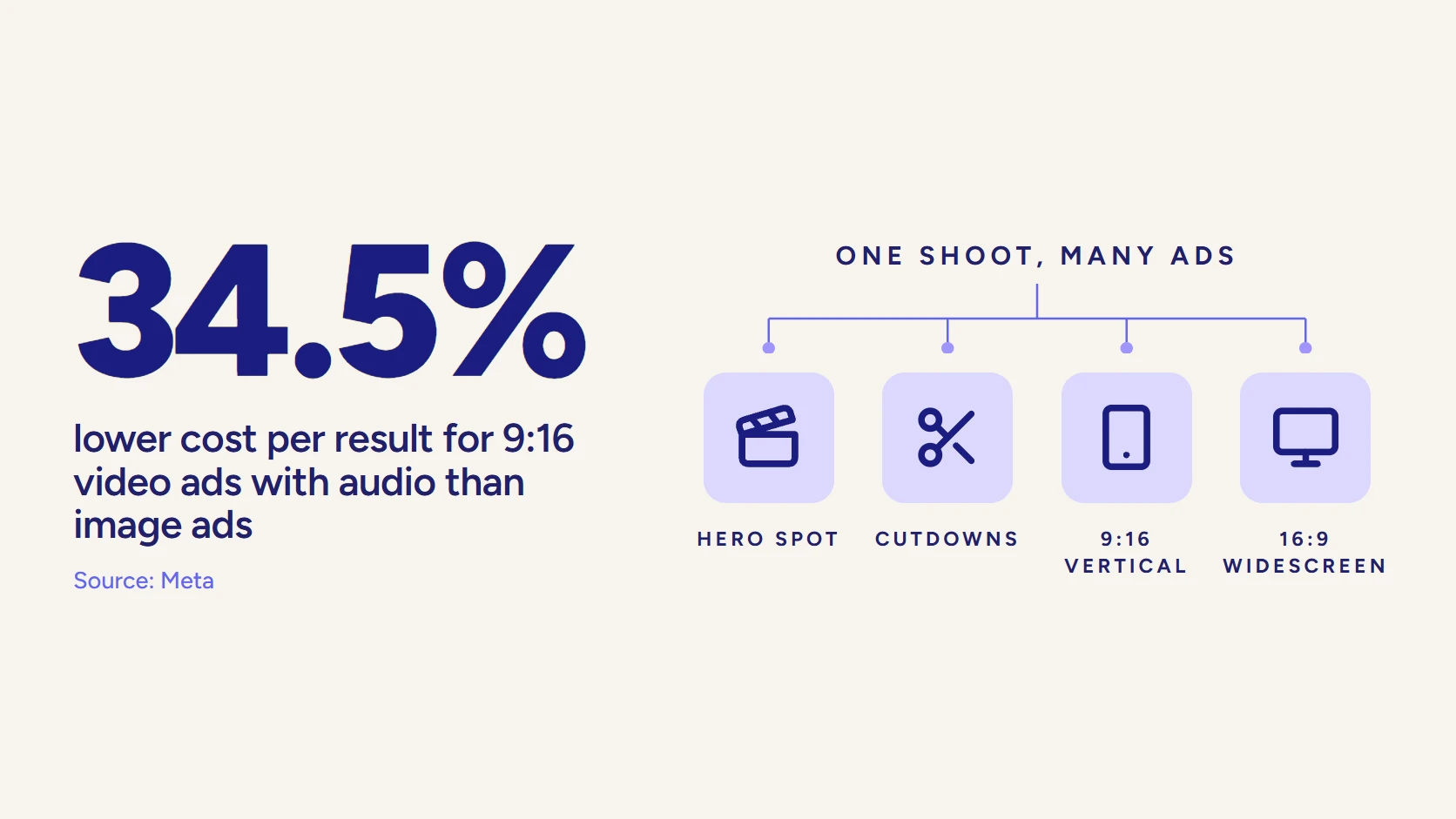
For a marketing team, the limits matter less than what you do with them. The teams that win on Instagram are not chasing the twenty-minute ceiling. They are filming once and cutting for every placement, so a single well-planned shoot produces a story-led feed video, several 45-to-60-second Reels, and a handful of Stories cards, all from the same day of production.
Plan the cutdowns from the start. Frame every setup vertically, capture clean sound-off moments, build in natural hook points, and you leave the shoot with a whole content calendar already sketched. Plan a single hero piece and try to slice it up afterward, and you usually end up with awkward crops and clips that were never built to stand alone.
Match Length to Buyer Stage
The length you reach for should follow the buyer’s stage, not a house style applied to everything. Match the runtime to where the viewer sits in the journey and each asset works at the stage it is built for:
- Awareness: a tight, hook-first Reel in the 45-to-60-second band, engineered to find new prospects who have never heard of you.
- Consideration: a longer explainer that can run past a minute, because the people watching have already opted in and want the detail.
- Proof: a customer story that usually lives as a longer feed video, with a short Reel cut driving discovery back to it.
The same instinct powers our playbook on repurposing event footage for B2B marketing, where one shoot feeds a full calendar, and it belongs inside a broader video marketing strategy that plans distribution before the camera rolls.
The Difference Between a Vendor and a Partner
On the surface this is a question about seconds. Underneath, it is the difference between a vendor and a partner. A vendor films what you ask for at the length you specify. A partner asks what the video has to accomplish and where it will run, then engineers the shoot so one production feeds Reels, feed video, and Stories without compromise.
So here is the move. For a deeper look across formats, see our guides to short-form vs. long-form video and how a Reel plugs into the full video marketing funnel. If you are planning a launch or campaign where Reels are part of the mix, that is the moment to talk with a team that starts from the goal, not the runtime. That is exactly how LocalEyes Video Production approaches every short-form brief.
Video that has to work?
Book a discovery call with LocalEyes Video Production and start from the goal, not the brief.
Frequently Asked Questions
How long can an Instagram Reel be?
What Reel length performs best?
What size and aspect ratio should a Reel be?
Are Reels or feed videos better for B2B?
How often should you post Reels?

Founder at LocalEyes Video Production | Inc. 5000 CEO | Emmy Award Winning Producer