Fast answer
Key Takeaways
- Make the corporate video that fixes your weakest funnel stage first; a brand film is right only when nobody knows your name.
- Testimonial and case study videos are the strongest first production when deals reach the shortlist and then stall.
- Explainers fit companies whose prospects arrive curious but cannot repeat what the company does after a first call.
- Plan one coordinated production that captures footage for several video types, instead of paying setup costs for separate shoots.
- At LocalEyes Video Production most corporate projects land between $15,000 and $30,000, priced by shoot days, cities, and deliverables.
A corporate video is a video a company makes about itself, its offer, or its people, for customers, candidates, investors, or employees. The types of corporate videos differ by the job each one does, and that matters because most B2B marketing leaders have budget for one real production this half and a leadership team that wants to see something ship. Picking the wrong type does not burn the money outright. It spends it on a video that solves a problem you do not have.
So the first question is not “what kind of video is best?” It is where are buyers leaking out of your funnel?
- Nobody outside your niche knows your name. Start with a brand film.
- Prospects arrive but cannot repeat what you do. Start with an explainer.
- Deals reach the shortlist and then stall. Start with customer testimonials.
This guide maps 13 types of corporate video to the job each does, the funnel stage it serves, the channel it runs on, and its typical length and industry cost band, with real LocalEyes Video Production work embedded as examples, so the first production you buy is the right one and the next ones are built from the same footage.
Which Corporate Video Should You Make First on One Budget?
Make the type that repairs your weakest funnel stage, not the type that looks best in a portfolio. A gorgeous brand film does nothing for a company whose real problem is that sales reps spend every first call re-explaining the product.
Before you brief anyone, sit down with your sales leader and answer these questions honestly:
- Where do deals die? If most die before a first meeting, you have an awareness or clarity problem. If most die after a proposal, you have a proof problem.
- What does sales explain over and over? The paragraph every rep repeats on every call is a script waiting to be filmed.
- Who has to say yes that you never meet? Finance, IT, legal, and operations sign off on B2B purchases without sitting in your demo. They need an asset they can watch alone.
Those answers point to one type almost every time. Lost deals before a first meeting point up the funnel, toward a brand film or executive video. Confused prospects point to an explainer. Stalled proposals point to testimonials, and the reviewer you never meet points to sales enablement clips they can watch on their own time.
Resist the video that tries to do everything: introduce the company, explain the product, feature a customer, and pitch recruiting. A video with that many jobs does none of them, because each job needs a different viewer, length, and call to action. Pick one job for the flagship and shoot for the rest at the same time.
What Counts as a Corporate Video?
- Corporate video
- A video a company produces about itself, its offer, or its people, for customers, candidates, investors, or employees. Its job is usually to explain, prove, or align rather than interrupt.
The label is broad on purpose. What separates a corporate video from an ad is the job: most corporate videos explain, prove, or align rather than interrupt. The stiff CEO reading a mission statement at a desk is one format, and usually the weakest. The modern version looks more like a short documentary, an animated product story, or a candid customer interview cut for LinkedIn.
Two distinctions shape every plan:
- External versus internal. Brand, explainer, testimonial, event, and sales videos face the market; internal comms and training face employees; recruiting sits on the line between them.
- Live action versus animation. People, places, and products film well, while software, data flows, and financial systems have no form a lens can capture, so animation shows them honestly and the strongest complex pieces blend both.
For the service-level view of how LocalEyes Video Production scopes this work, start with our corporate video production page, which covers strategy through delivery.
How Do the Types of Corporate Videos Map to the Funnel?
Think of the funnel as a set of jobs. Awareness needs reach and memory. Consideration needs clarity. Decision needs proof. Internal work needs repetition and access. Here is the full map in one view:
| Video type | Main job | Funnel stage | Where it runs |
|---|---|---|---|
| Brand film | Make the company memorable | Awareness | Homepage, LinkedIn, YouTube, events |
| Executive video | Earn trust in your thinking | Awareness | LinkedIn, podcasts, keynotes |
| Event video | Extend the event after it ends | Awareness | Social, on-demand library, email |
| Explainer | Make the offer easy to repeat | Consideration | Landing pages, ads, sales decks |
| Product or demo | Show how it actually works | Consideration | Product pages, sales follow-up |
| Testimonial or case study | Transfer risk to a peer | Decision | Case study pages, sales email, paid social |
| Sales enablement | Answer the question that costs a meeting | Decision | One-to-one email, deal rooms |
| Internal comms | Say it once, the same way, to everyone | Internal | Intranet, all-hands, Slack or Teams |
| Training and onboarding | Teach a task that repeats | Internal and retention | LMS, help center, customer portal |
| Recruiting and culture | Attract the right candidates | Talent | Careers page, LinkedIn, job posts |
| Social-first | Earn attention in the feed | Awareness | LinkedIn, Instagram, YouTube Shorts |
| Investor and stakeholder | Explain the story behind the numbers | Investors | IR site, annual meeting, investor day |
| CSR and impact | Show what a program changed | Reputation | Impact report, newsroom, social |
Read the table by row and it tells you what each type is for. Read it by column and a pattern appears: the channels overlap far more than the jobs do. LinkedIn carries a brand film, an executive clip, and a testimonial cutdown, each doing something different for the same audience. That overlap is why one shoot can feed several types at once. Our guide to the video marketing funnel covers the metrics that show which stage is leaking.
Why does the map matter so much? Gartner research found that B2B buyers spend only 17% of their buying time meeting with potential suppliers, and that share is split across every vendor on the list. The rest of the journey happens in research and internal debate you never attend. Your videos are the version of your company that shows up in those rooms.
Which Corporate Videos Build Awareness at the Top of the Funnel?
Top-of-funnel video has an unglamorous job: be remembered by people who are not shopping yet. The B2B Institute popularized the 95-5 rule, drawn from Ehrenberg-Bass research by John Dawes, which holds that only about 5% of B2B buyers are in market at any given time. Awareness video is how you are already familiar when the rest start looking.
The Brand Film
A brand film tells the market who you are and why you exist. It sells belief, not features, and it is judged on recall over quarters, not form fills over weeks. StudioBinder’s guidance puts most brand films at 60 to 90 seconds, roughly 150 to 225 words of voiceover or dialogue.
- Where it runs: the homepage hero, the About page, LinkedIn and YouTube, trade show screens, and the opening of sales decks.
- Make it first when: you are entering a new market, launching a category, finishing a rebrand, or merging companies whose customers need one story.
Run the relocation test on the script: if a line could sit unchanged in a rival’s film, cut it. Our guide to brand video production covers the rest.
Executive and Thought Leadership Video
Buyers do not trust your brochure. They trust your people. In the 2024 Edelman and LinkedIn B2B Thought Leadership Impact Report, 73% of decision-makers said an organization’s thought leadership is a more trustworthy basis for assessing its capabilities than its marketing materials. On video, a viewer judges the thinking and the person at once.
The format runs as point-of-view clips, interview series cut into short pieces, and properly captured keynotes. It lives mostly on the leader’s own LinkedIn profile, and Wyzowl’s 2026 survey found that 70% of video marketers already use LinkedIn as a video platform.
Make it first when: your market buys on expertise and your leaders hold a view the category has not heard. Skip it if they would rather not be on camera, because reluctance reads instantly.
Event Video
You already paid for the venue, the speakers, and the audience. Video lets the event keep working after the room empties: a highlight reel for next year’s registration, session recordings for an on-demand library, speaker clips partners share, and hallway testimonials that feed the bottom of the funnel. The catch is that the deliverable list has to be set before the event, so the crew frames and books interviews for it.
Make it first when: a flagship conference, customer summit, or launch is already on the calendar. See our overview of event video production for the coverage plan.
Social-First Video
Some corporate video is made for the feed first and the website second. It is also the most common kind of video teams make: in that same 2026 survey, 69% of video marketers had created social media videos, the most popular single use case.
The constraint is the platform, not taste. LinkedIn recommends video ads of 15 to 30 seconds so they qualify for every placement, and YouTube now counts square or vertical uploads of up to 3 minutes as Shorts.
Make it first when: your audience lives in a feed and your other assets have no short versions. Framing has to be planned on set, which our guide to vertical video for social media explains.
Which Videos Help Buyers Evaluate in the Middle of the Funnel?
Once a buyer knows your name, they start comparing you against alternatives, often forwarding links to colleagues who will never take your call. Middle-of-funnel video has one job: make your offer easy to understand and easy to repeat.
The Explainer Video
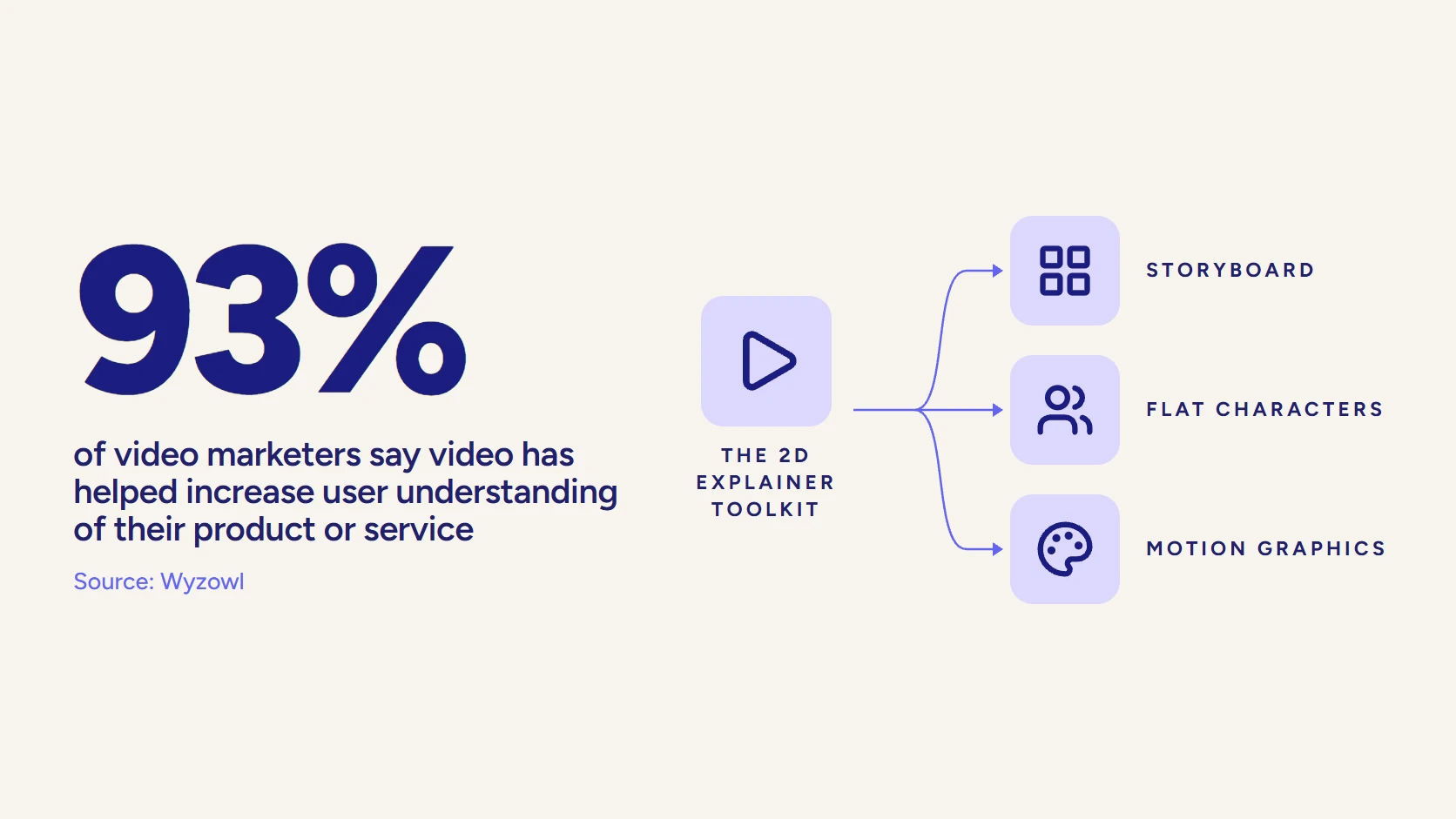
An explainer answers the first question every prospect asks: what exactly do you do, and why does it matter to me? Wyzowl’s video marketing research found that 96% of people say they have watched an explainer video to learn more about a product or service.
The spine is simple: the viewer’s problem, its cost, the solution in one sentence, how it works, and one next action. Animation suits software and anything invisible; live action suits services delivered by people; hybrid suits complex B2B offers.
- Where it runs: landing pages, product pages, paid campaigns, and the second slide of every sales deck.
- Make it first when: sales calls open with a long stretch of re-explaining the basics, or buyers do not yet have a mental category for what you sell.
Our explainer video production page covers scoping, and for animated work see animation video production.
Product and Demo Videos
An explainer sells the idea. A product video shows the thing: the interface, the workflow, the object in real use. B2B teams usually need a polished launch film and a plain narrated walkthrough, because the first earns attention and the second answers the technical evaluator. Film in the order of the buyer’s problem, not the order the product team built the features.
Make it first when: you are launching a product or major release, or technical buyers keep asking for a demo before they will meet. See our guides to product video production and the software demo video.
Which Corporate Videos Close Deals at the Bottom of the Funnel?
At the bottom of the funnel the buyer already likes you. What they need is permission: evidence strong enough to defend the choice to a CFO and a procurement team.
Testimonial and Case Study Videos
A testimonial is a customer saying you delivered; a case study video adds the full arc of problem, decision, work, and result. Both transfer risk from the buyer to a peer who already took it. That matters most for the committee members you never meet. The format is also crowded: the same 2026 survey found 57% of video marketers have created testimonial videos, so a generic one disappears among the rest.
- What converts: specifics over praise, a customer the buyer recognizes as a peer, and real footage of the work.
- Where it runs: case study pages, sales follow-up email, and short vertical cuts for paid social.
- Make it first when: win rates drop after the proposal, prospects ask for references, or you keep losing to a rival with a longer logo list.
Our testimonial video production page shows how we run these shoots, and the testimonial video examples show the formats side by side.
Why proof and presence carry B2B buying
Sales Enablement Video
Sales enablement video is everything built to move a specific deal forward: objection-handling clips, pricing walkthroughs, implementation previews, and security overviews for the IT reviewer. Each answers a question that otherwise costs a meeting. It runs in one-to-one email and deal rooms, and it rarely needs its own shoot, because it is cut from explainer, product, and testimonial footage.
Make it first when: your reps rewrite the same follow-up email every week. Ask your best reps which question they answered most last month; that is the first script.
Which Corporate Videos Work Inside the Company?
Some of the highest-return corporate video faces your own people, and it is judged on comprehension, adoption, and retention instead of pipeline.
Internal Communications Video
Internal comms video carries the messages every employee needs to hear the same way: strategy updates, all-hands recaps, reorganizations, and mergers. The job is consistency at scale, because a memo gets reinterpreted by every manager who forwards it. It runs on the intranet, in all-hands meetings, and in Slack or Teams, and it lands best as a candid interview rather than a boardroom address.
Make it first when: the company is going through a change every employee must understand identically. Our guide to internal communications video production covers format and cadence.
Training and Onboarding Video
Training video has the longest shelf life of any type. An onboarding module or compliance course runs for years in your LMS or help center, which drives its cost per view below almost anything else you produce. Compliance and process content often animates better than it films, and customer onboarding belongs to retention as much as training; see how onboarding videos reduce churn.
Make it first when: growth is outpacing the people who can teach, and senior staff spend their weeks repeating the same sessions. Our guide to corporate training videos covers formats.
Recruiting and Culture Video
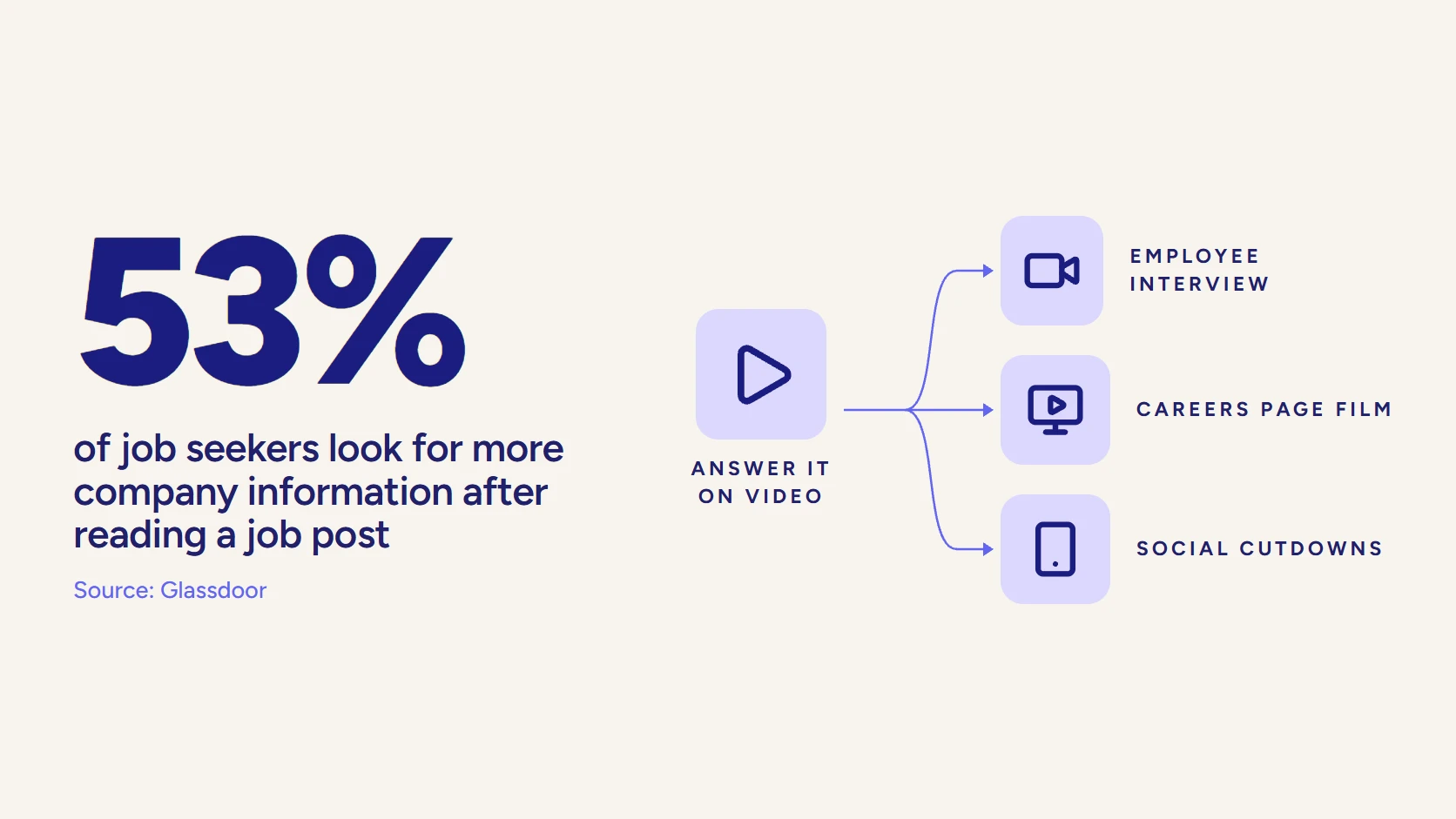
Recruiting video is shot inside the company and aimed at people who do not work there yet. Its job is to show what the work and the team are actually like, so the right people apply and the wrong ones self-select out. It runs on the careers page, LinkedIn, and job posts, and authenticity is the whole game.
Make it first when: hiring is the constraint on growth or candidates drop out late because the job was not what they pictured. See our guide to the company culture video.
Which Corporate Videos Speak to Investors and the Community?
Two types sit outside the sales funnel and the org chart. Their audiences are shareholders, analysts, journalists, and the communities a company works in, and both are read more skeptically than anything marketing ships.
Investor and Stakeholder Video
Investor video carries the story behind the numbers: a CEO message for the annual meeting, a strategy explainer for an investor day, a facility tour for analysts who cannot visit in person. The audience checks every claim against the filings, so the script should clear finance and legal before it reaches a camera.
- Where it runs: the investor relations site, annual and investor-day presentations, and shareholder email.
- Make it first when: you are raising capital, preparing for a listing, or merging companies whose shareholders need one story.
CSR and Impact Video
Impact video shows what a sustainability program, community initiative, or grant actually did, through the people it reached. The rule is show the program, not the logo. A viewer who distrusts corporate good-news stories believes a named participant describing a specific change far sooner than a narrator listing commitments.
Make it first when: you publish an impact report, launch a community program, or run an awards program whose honorees deserve more than a press release. Our guide to documentary-style content covers the observational approach these stories need.
Why Plan Several Video Types From One Production?
Every corporate video carries a fixed cost that has nothing to do with its length: pre-production, travel, crew, lighting setups, and the time of the people on camera. Separate shoots pay that cost again and again. A coordinated production pays it once and captures material for several types in the same days.
One coordinated production vs separate shoots per type
One coordinated production
- Setup, travel, and crew costs are paid once
- One visual language across every type
- Customers and executives are filmed once, not repeatedly
- Footage library feeds future edits
Separate one-off shoots
- Fixed costs repeat with every shoot
- Look and voice drift between vendors
- People on camera get asked back again and again
- Each video starts from zero
Here is what that looks like. A company whose deals stall at the shortlist starts with testimonials. While the crew is on site with each customer, it also films product-in-use footage and a short interview with the account lead. Later in the year, that footage becomes the backbone of an explainer and a set of sales enablement clips, and the brand film comes last, richer for real customers and real work.
A year of corporate video, built outward from the leak
- Diagnose the leakPull lost deals and sales-call notes to find the stage where buyers drop out.
- Make the fixing type firstTestimonials for proof gaps, an explainer for clarity gaps, a brand film for awareness gaps.
- Shoot for the next typesCapture product footage, interviews, and B-roll on the same days for later edits.
- Recut for sales and socialTurn the footage into enablement clips, vertical versions, and email follow-ups.
- Add brand and internal piecesBuild the brand film and training modules from a library of real customers and real work.
This is the pattern behind LocalEyes Video Production’s larger programs. CordenPharma needed coverage of 2 summits with 12 speakers, which became standalone speaker videos plus a retrospective. ZipRecruiter built a case study from a 2-day shoot. Mintegral ran client interviews across 3 cities, cut by one central editor so the series reads as a single voice. Singleton Schreiber used a media day to produce reels, long-form films, portraits, and headshots.
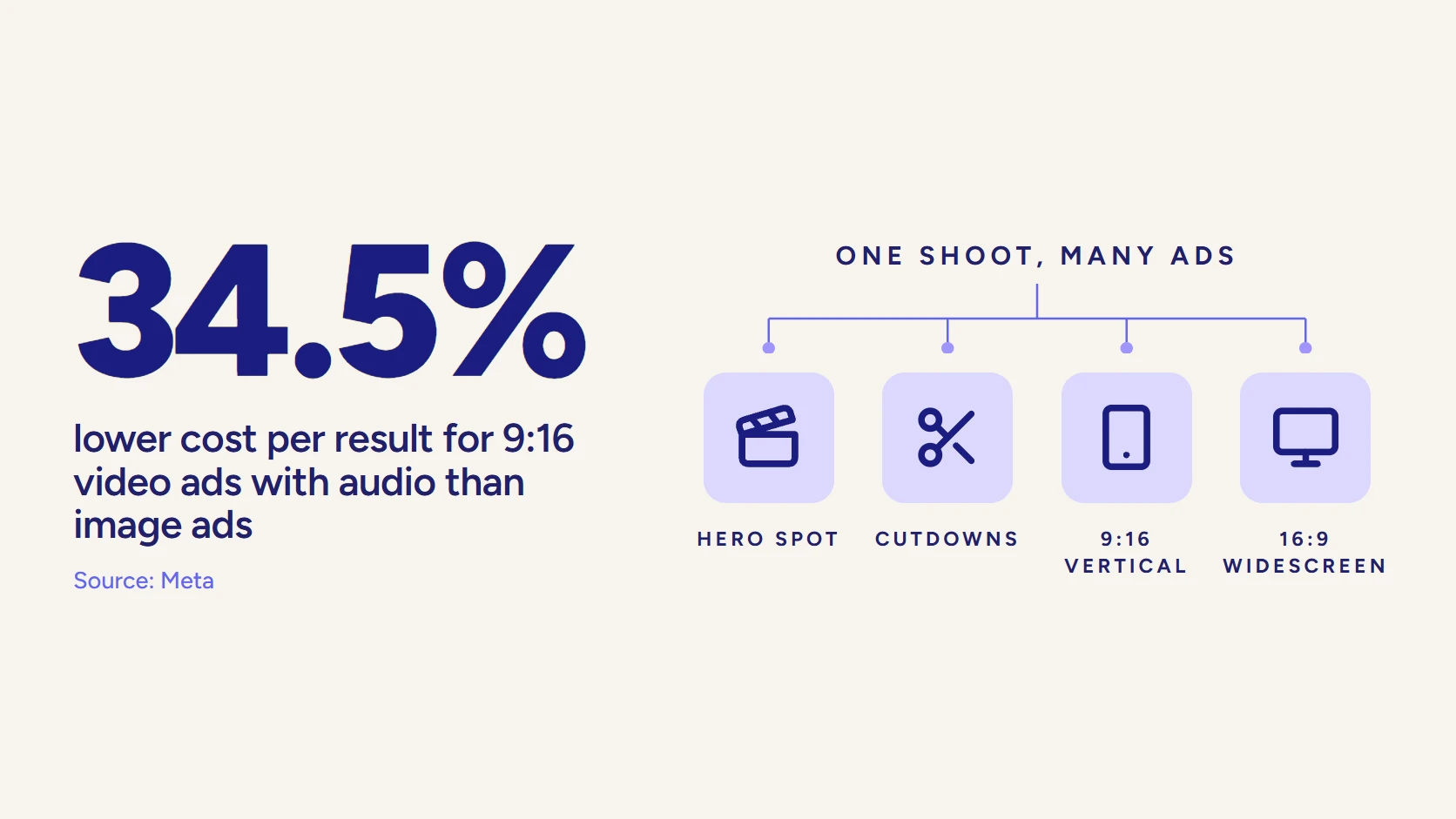
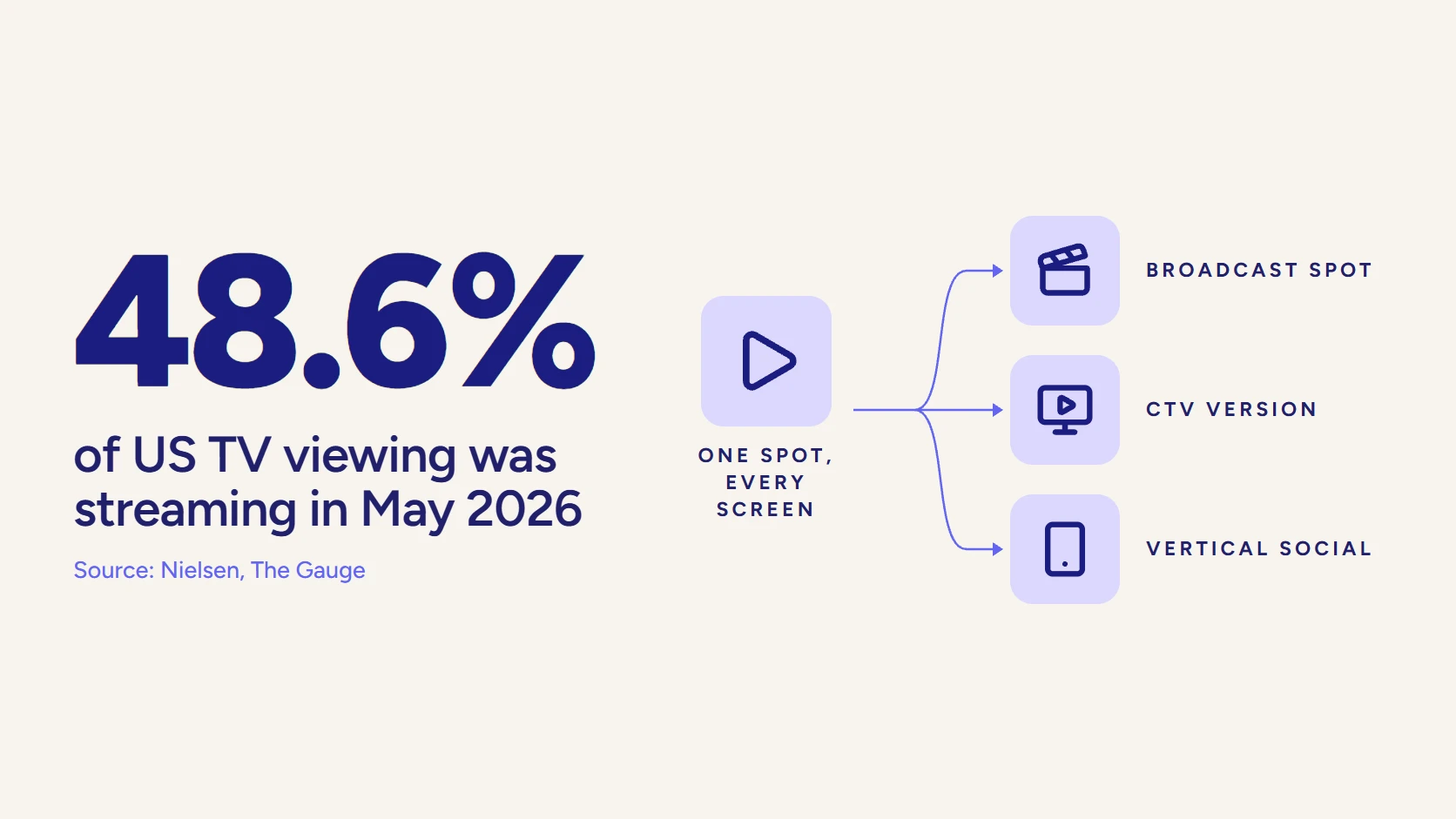
Plan the channel versions at the same time. A finished corporate video is a master edit plus the cuts each channel needs: a captioned horizontal version for your website, a shorter square or vertical cut for LinkedIn, a searchable YouTube upload, short vertical ads, and a silent loop for trade show screens. A crew that knows it owes vertical cuts frames every shot with room to crop, which is why “every channel version” belongs in the scope from the start rather than in a rescue edit later.
None of those client programs was “one video.” Each was a set of finished assets from a single plan, which is the practical answer to which type to make: you rarely have to choose just one if the production is designed around the full list from day one.
Video that has to work?
Plan your next video project with LocalEyes Video Production and start from the goal, not the brief.
How Long Is Each Type, and What Does It Cost?
Length and price follow the job, so the table below pairs each type with a published length guide and an agency-level cost band. The bands come from Levitate Media’s 2026 rate guide, lengths from its guide to corporate video types and from StudioBinder, the explainer figure from a July 2026 quote study by Yum Yum Videos, and the recruiting line from a C&I Studios sample budget.
| Video type | Typical length | Industry cost band (agency level) |
|---|---|---|
| Brand film | 60 to 90 seconds (StudioBinder) | $8,000 to $30,000 (Levitate Media) |
| Executive video | No published benchmark | $3,000 to $16,000 (Levitate Media) |
| Event recap | 90 to 120 seconds in a full-day example (Levitate Media) | $6,000 to $25,000 per video (Levitate Media) |
| Explainer | 60 to 120 seconds (Levitate Media) | $9,680 median for a custom 60-second animated piece (Yum Yum Videos, July 2026) |
| Product demo | 3 to 8 minutes for a deeper demo (Levitate Media) | No published benchmark |
| Testimonial or case study | 60 to 90 seconds; 3 to 5 minutes as a case study (Levitate Media) | $3,500 to $25,000 per video (Levitate Media) |
| Training module | 6 to 8 minutes in a sample lesson (Levitate Media) | $5,000 to $16,000 per module (Levitate Media) |
| Internal comms | No published benchmark | $4,500 to $15,000 per piece (Levitate Media) |
| Recruiting film | A 2-minute hero cut plus shorts (C&I Studios) | Around $22,000 across 2 offices (C&I Studios sample) |
| Social-first | 15 to 30 seconds for LinkedIn ads; up to 3 minutes for YouTube Shorts | No published benchmark |
| Investor, CSR, sales enablement | No published benchmark | No published benchmark |
Where a cell says no published benchmark, none of those sources gives one, and we would rather say so than guess.
What moves any of these budgets is the number of shoot days, cities, and finished deliverables, and how much animation is involved; at LocalEyes Video Production most projects land between $15,000 and $30,000. Our corporate video production cost guide covers the line items in full.
How Should You Brief, Schedule, and Measure a Corporate Video?
A good brief answers a short list of questions: who the viewer is, the one job, the key messages (ranked, with proof), where the video will live, the metric that defines success, and the budget and deadline. Add one more if you want the shoot to go further: what else could this shoot capture? Our pre-production checklist turns the brief into a shoot plan.
Schedules slip for predictable reasons: customer calendars, executive availability, review loops with too many approvers, animation render time, and a deliverable list that grows after the shoot. Lock the list first and name one decision-maker per video. Our video production timeline lays out each phase.
Then measure each type against its own job, never one universal metric. Video is no longer a channel to justify from scratch. Wyzowl’s 2026 survey also found that 91% of businesses use video as a marketing tool, and 85% of video marketers say video has helped them generate leads. The question is whether each piece did its specific job:
- Brand and executive: branded search, direct traffic, and engagement from target accounts.
- Explainer and product: watch-through rate and demo-request conversion on the pages that host them.
- Testimonial and sales enablement: win rate and cycle length on deals where the video was sent.
- Internal and training: completion and fewer repeat questions to HR or support.
Publish a transcript with every external video, too. Search engines and AI answer engines read the page around a video, not the video itself. Our guide to measuring B2B brand video ROI covers attribution for the harder types.
How Do You Choose a Partner and Avoid Wasting the Budget?
Most wasted corporate video spend is decided before anyone picks up a camera: choosing the type by taste, buying one video at a time, writing the script by committee, and shipping without a distribution plan. Quick social clips and screen walkthroughs can stay in-house. Anything a buyer uses to judge your credibility, from brand films to testimonials, belongs with professionals.
Ask these on the first call:
- Can you show a full asset set from one production? Not a demo reel, but every finished piece a single client got from a single plan.
- Do you scope by deliverable or by day? A partner asks what the videos are for before quoting.
- Do you handle live action and animation in house? Hybrid pieces fall apart when two vendors split them.
- Who owns the strategy? If the answer is “you,” you are hiring a crew, not a partner.
LocalEyes Video Production has delivered 4,000 videos for 300+ clients since 2018, with Emmy recognition, 500+ five-star reviews, and an NPS above 95, across crews in 10 US markets. See the approach locally on our Dallas corporate video page, or compare options in our ranking of the best corporate video production companies.
Then take the next step. Write down the funnel stage you are fixing, the type that fixes it, and the types you want footage for on the same shoot. If you want help turning that page into a plan, talk to our corporate video team and we will scope it and send a clear quote and a delivery date.
Video that has to work?
Plan your next video project with LocalEyes Video Production and start from the goal, not the brief.
Frequently Asked Questions
What Are the Main Types of Corporate Videos?
What Type of Company Video Should I Start With?
What Makes a Video Corporate Rather Than a Marketing Video?
How Long Should a Corporate Video Be?
How Much Does a Corporate Video Cost?
Can One Shoot Produce Several Types of Corporate Videos?
How Do You Measure the Success of Corporate Videos?

Founder at LocalEyes Video Production | Inc. 5000 CEO | Emmy Award Winning Producer