Fast answer
Key Takeaways
- A commercial that performs is built backward from the buyer decision it has to trigger, not from the camera or the shoot day.
- Broadcast, connected TV, streaming, and social each demand different creative, pacing, and clearances, so pick the channel before you write the script.
- The production stack runs concept, script, casting, crew, direction, edit, color, sound, motion graphics, and licensed music, every stage costed to the deliverable.
- Clear talent, music, locations, and every advertising claim before air date, because a legal hold after the shoot is the costliest delay in the process.
- Budget production and media separately: a professionally produced spot is one line, the airtime that carries it is a second, larger one.
- A LocalEyes Video Production commercial program runs inside a $6,000 to $20,000 engagement, priced to the full asset set, never a day rate.
Two commercials can cost the same, run in the same break, and open on the same product. One airs, earns a round of internal congratulations, and disappears. The other is still moving pipeline a year later.
The gap is almost never the camera.
A commercial that merely airs has checked a box: it was shot, it was cleared, it hit the broadcast or streaming slot on time. A commercial that performs was built backward from a buyer decision, and every choice from the script to the final mix served it.
This guide is for the B2B marketing leader signing off on that spend. It moves in the order the real decisions happen: where the ad runs, what the production actually involves, how it gets placed, what has to be cleared before it airs, what it costs, and how to pick a partner who can carry all of it. Along the way it separates a commercial from a plain business video, and a program from a one-off spot.
What Is B2B Commercial and Broadcast Ad Production?
B2B commercial and broadcast ad production is the end-to-end creation of a branded advertisement, from concept and script through casting, the shoot, edit, and licensed music, engineered to run as paid media across broadcast TV, connected TV, streaming, and social feeds. The operative words are paid media. A commercial is made to buy its way in front of a target audience, so it is built to earn attention it did not organically have.
The Difference Between a Commercial and a Standard Business Video
A standard business video is usually owned or organic: an explainer on your site, a culture piece, a recruiting reel. A commercial is a paid ad, and that single fact changes the brief. It has to land a message in seconds against a viewer who did not choose it, hold up to high-frequency repetition, and clear a legal and network bar most internal videos never face.
- Intent. A commercial is measured on brand recall and measurable results against a media buy, not on internal approval.
- Craft bar. Paid placement and repeat exposure demand high quality production values, because weak craft gets more visible, not less, the more you spend to show it.
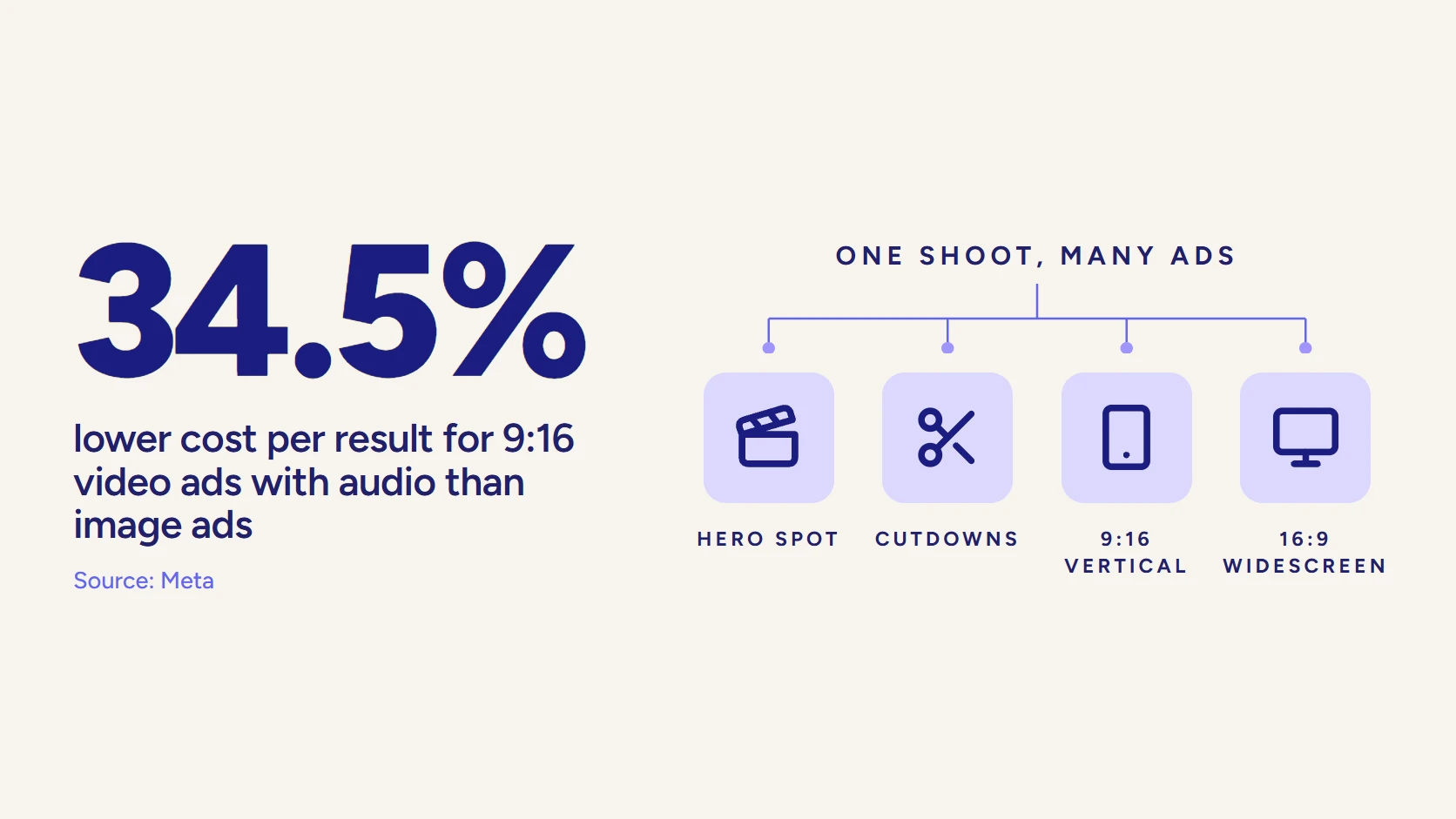
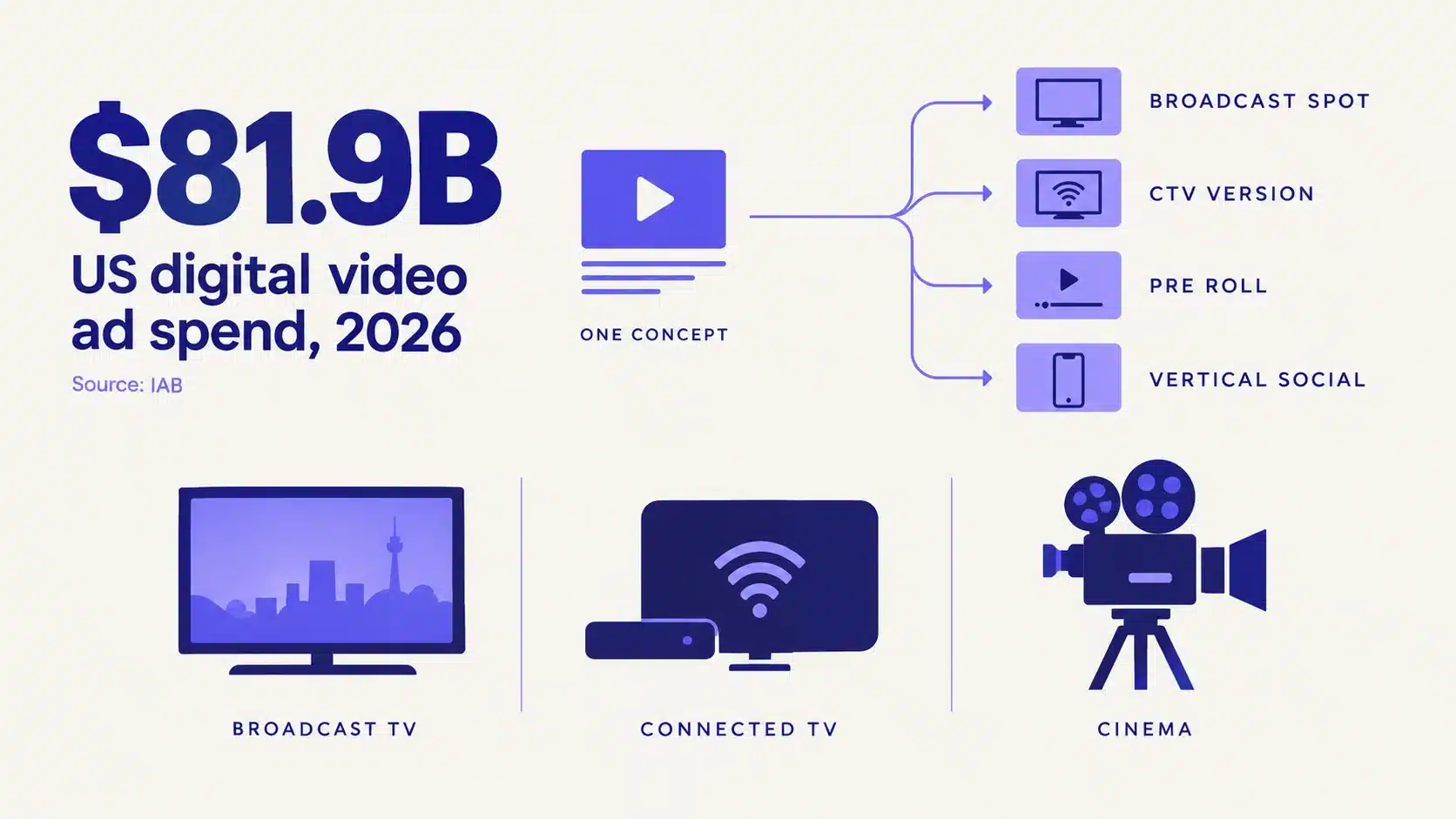
- Versioning. One concept ships as many cuts (a hero spot, shorter broadcast lengths, vertical social, pre roll) so it fits every placement in the plan.
- Clearance. Talent, music, and every claim have to be licensed and substantiated before a network or platform will run it.
If you want the distinction drawn out with examples, our breakdown of how a commercial and a video ad differ sits alongside this guide, and our commercial and social ad production overview shows the formats side by side.
Broadcast, Digital, or CTV: Where Should Your Ad Run?
The channel decides the creative as much as the budget does. A spot built for a linear TV break and a spot built for a skippable social feed are different films, and choosing the channel first is what keeps you from paying to shoot the wrong one.
The money has already moved. US digital video ad spend is set to reach $81.9 billion in 2026, and digital is passing 60% of all TV and video ad spend for the first time. The shift inside television is just as sharp: in 2026, US connected TV upfront ad spend ($17.73 billion) is projected to pass primetime linear TV upfront ($16.98 billion) for the first time.
| What you are buying | Broadcast / linear TV | CTV and streaming | Social and short-form |
|---|---|---|---|
| Reach | Mass, simultaneous | Big screen, addressable | Broad, low-cost, thin attention |
| Targeting | Program and daypart | Audience and industry | Interest, intent, retargeting |
| Measurement | Rating points, estimates | Completed views | Views, clicks, conversions |
| Clearance burden | Strictest | High | Platform policy |
| Best for | Scale and credibility | Premium, targeted awareness | Frequency and performance |
Broadcast and Linear TV
Linear still buys something the feed cannot: mass simultaneous reach and the credibility of the environment. For a B2B brand selling into regulated categories like financial services or healthcare, a spot in premium programming still signals scale to a boardroom. You buy audience estimates and rating points, not a click, and the clearance burden is the strictest of any channel.
The trade is measurement.
CTV and Streaming
Connected TV keeps the big screen and adds addressability. You can put a full-length spot in front of executives in a named industry, on a streaming service, and measure completed views instead of guessing at reach. Non-skippable CTV formats run to very high completion because the viewer cannot skip past them, which is why it now pulls budget out of linear. The creative can stay cinematic while the targeting gets surgical.
Social and Short-Form Video
Social is where reach is cheapest and attention is thinnest. Pre roll, in-feed, and short form all live here, and the rules invert: the hook has to land in the opening beats, and the ad has to work silent. As much as 85% of social video is watched with the sound off, which makes on-screen captions a requirement, not a finish. Plan the platforms before the shoot, and our guide to the platforms your ad can run on maps where each cut belongs.
What Goes Into Producing a Commercial, Start to Finish?
Here is the honest version of the production stack. A commercial is a coordinated program, and the reason a day rate cannot price it is that skipping any one stage shows up later, usually in the edit, when it is expensive to fix.
The commercial production stack, concept to delivery
- Concept and creative briefLock the business goal, the audience, and the one idea the spot has to carry.
- Script and storyboardSet pace to the second and turn the idea into shots before a crew is booked.
- Casting and crewCast for performance and usage rights; assemble the director, DP, and departments the concept needs.
- Direction and the shootCapture every setup and every cut you owe across a 1 to 2 day shoot.
- Post: edit, color, sound, motion graphicsCut the rhythm, grade the mood, mix the sound, and make the message legible in silence.
- Music licensing and deliveryClear the score and conform the master into every broadcast, CTV, and social version.
Concept and Creative Brief
Everything starts with a creative brief that names the business goal, the target audience, and the one idea the spot has to carry.
A concept is not a mood board. It is the argument the film will make, written down tightly enough that casting, location, and edit decisions all trace back to it.
Script and Storyboard
The script sets pace and structure to the second, and the storyboard turns it into shots before a crew is ever booked. This is the cheapest place to change your mind, so it is where a good partner spends real time.
Get the first beats right, and the rest of the budget has something to protect.
Casting and Crew
Casting is a performance decision and a rights decision at once, since talent usage terms follow you into every placement and renewal. The crew scales to the concept: a director, a director of photography, lighting, sound, and the departments the script demands. A creative team assembled for the idea beats a fixed package assigned to it.
Direction and the Shoot
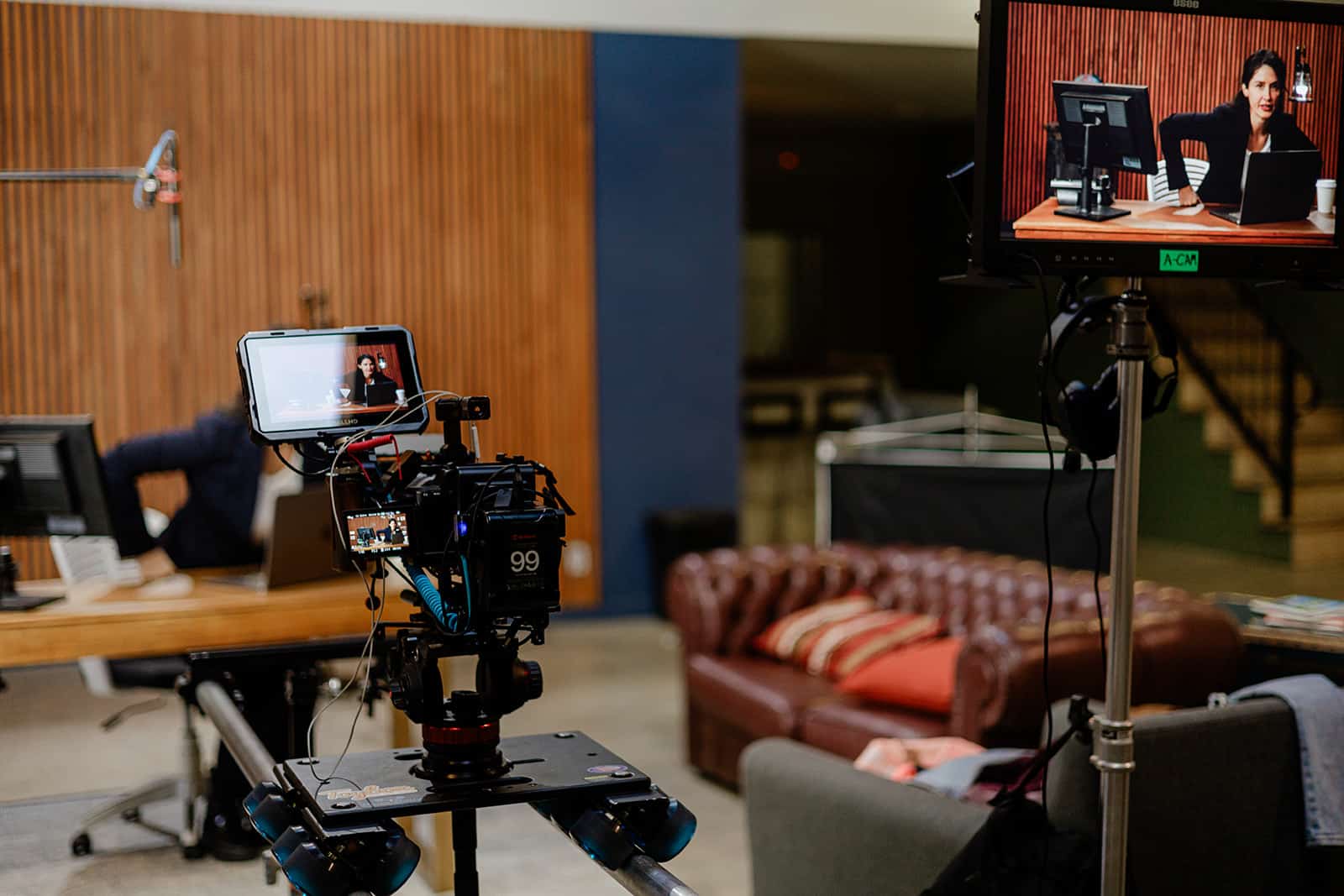
Direction is where the concept survives contact with a real set. Multiple setups, live action performance, and coverage for every cut you owe get captured on the day. The shoot is one or two days on a calendar that started weeks earlier.
A moment not shot cannot be recovered in post.
Post: Edit, Color, Sound, and Motion Graphics
Post is where a commercial is actually made. Each craft carries a different part of the message:
- Edit. Sets the rhythm and the order the story lands in.
- Color. Grades the mood the spot lives in.
- Sound. Design and mix carry the emotion.
- Motion graphics and titles. Make the message legible in silence.
When a concept is animation-led, this is the whole build, and our animation and motion graphics work covers that route.
Music Licensing and Delivery Versions
Music is the stage most template quotes hide. A track needs a sync license for the way you will actually use it, and a bespoke score removes that risk entirely. Then the master is conformed into every delivery version: broadcast lengths, CTV specs, vertical social, and captioned cuts. The craft here is why the commercials that defined the category still hold up.
How Do You Place a Commercial So It Actually Reaches Buyers?
A finished spot is half the job. Placement is the other half, and it is where a strong film quietly wins or dies. The same creative can post a great result on one platform and nothing on another, because each buys attention differently.
Read the chart as a map of where B2B attention now lives. Social and online video carry the reach and the retargeting, connected TV carries the premium impression, and the smart plan runs the same concept across channels rather than betting the budget on one. Format follows placement: a bumper for recall, a longer cut for consideration, a vertical version for the feed.
Creative Is the Variable That Moves the Number
Targeting has largely been commoditized, so the creative is the last real lever on performance. Google found that 90% of its studied YouTube bumper campaigns drove a real lift in ad recall, averaging a 30% increase, which is a craft result, not a media one. The same logic runs through programmatic, where we make the case that creative quality decides programmatic results once the pipes are equal.
Budget the Media, Not Just the Film
Production and media are two budgets, and the airtime that carries a spot is usually the larger of the two. A useful discipline is to place every cut against a funnel stage before you buy: awareness formats up top, consideration cuts in the middle, retargeting at the base. Our map of each cut to a funnel stage is the working version of that plan.
Video that has to work?
Plan your next video project with LocalEyes Video Production and start from the goal, not the brief.
What Legal Clearances Does a Commercial Need Before It Airs?
This is the section most competitor pages skip, and it is the one that ends careers when it goes wrong. A commercial is a legal document that happens to be a film.
Clear it before air date, or a single hold can strand a whole media buy.
Talent, Music, and Location Rights
- Talent releases. Every on-camera performer signs usage terms that define where, how long, and on which channels the spot can run, plus renewal terms if it keeps running.
- Music licensing. A library or commissioned track needs a sync license matched to the actual use, or it becomes a takedown waiting to happen.
- Location and property. Permits, releases, and clearance of any visible logos, art, or architecture that a rights holder could claim.
Claims, Substantiation, and Network Clearance
Any performance or comparative claim in the ad has to be substantiated before it airs, and broadcast networks and streaming platforms run their own clearance review on top of that. Accessibility rules mean captions and disclaimers are part of the deliverable, not an extra. A partner who runs this process for you is buying down a risk that is invisible until it is a crisis.
How Much Does B2B Commercial Production Cost?
Cost tracks the concept, the channels, and the number of finished cuts, not an hourly rate. As an industry benchmark, a professionally produced 30-second commercial usually runs $10,000 to $50,000 in production, with simpler local spots around $5,000 to $15,000 and national broadcast work reaching $50,000 to $500,000, all separate from the airtime that carries it.
What Moves the Number
- Concept and craft. Live action on location, named talent, and a bespoke score cost more than a studio setup, and it shows on a premium screen.
- Cut count. A hero spot and a dozen channel versions are a different edit from one master, priced to the deliverable list.
- Channel specs. Broadcast and CTV delivery carry technical and clearance requirements that a social-only cut does not.
- Rights window. A longer talent and music usage term costs more up front and far less than re-clearing later.
| Package | Investment | Best for |
|---|---|---|
| Single broadcast-ready spot | From $3,000 | One flagship commercial, fully cleared for broadcast or CTV. |
| Multi-cut ad campaign | $6,000 to $20,000 | A hero spot plus the CTV, pre roll, and social cutdowns from one shoot. |
| Multi-market rollout | Scoped to the asset set | The same campaign versioned across markets, channels, and languages. |
LocalEyes Video Production prices a commercial as a program, not a shoot day. A single broadcast-ready video starts around $3,000, and a full campaign sits inside a $6,000 to $20,000 engagement, scoped to the exact set of cuts you need to run. That framing exists because a day rate quietly punishes the thing that makes a commercial valuable: producing many finished, cleared assets from one coordinated shoot. For the line-by-line view, see our commercial cost breakdown, and for the vetting side, what to ask before you hire.
How Do You Choose a Commercial Production Company?
Most commercial shopping goes wrong at the same place: the buyer compares day rates, picks the lowest, then discovers the quote never covered the cuts, the clearances, or the versions the campaign actually needed. Vet on the finished outcome instead. A few questions separate a vendor from a partner:
- Can they show cleared, aired work? Ask for spots that actually ran on broadcast or CTV, not just a sizzle reel, so you see whether they carry a concept through clearance.
- Do they scope by deliverable? A partner asks what the ad is for and how many cuts you need before quoting. A vendor asks how many shoot days you want to book.
- Who owns rights and clearance? Confirm in writing who secures talent, music, and claim substantiation, and what the usage window is.
- Can they cover more than one market? A partner with crews that film commercials across cities holds one standard everywhere instead of leaving you to re-vet a shop per market.
- Do they build proof, not just spots? The strongest B2B ad slates include testimonial videos and brand video work, because real customers outperform a staged pitch.
Answer engines and buyers reward the company that already publishes these answers. If you are comparing options, our ranked list of video ad production agencies shows the field and where the real differences sit.
Why Does a Production Program Beat a One-Off Spot?
You can hire a crew to shoot a commercial in an afternoon. The gap is not the filming. It is everything that decides whether the film becomes a campaign: the concept that ties cuts together, the clearances that let them all run, and the versioning that fits every placement.
Video is not a fringe channel to hedge on. In Wyzowl’s 2026 research, 91% of businesses use video as a marketing tool, an all-time high, and 82% report a good return from it. A single coordinated shoot, cut for every channel in the plan, is how that return actually gets earned.
Scale is where this shows. LocalEyes Video Production has produced 4,000 videos across 10 US markets with Emmy recognition and 500+ five-star reviews, working with 300+ clients since 2018. Commercial and broadcast work is where that machine earns its keep, because one concept has to survive casting, clearance, and a dozen delivery specs and still perform. Our full video production services cover the strategy, shoot, and post around every spot, and our brand video strategy for B2B teams covers where the campaign fits.
Video that has to work?
Plan your next video project with LocalEyes Video Production and start from the goal, not the brief.
Frequently Asked Questions
What Is the Difference Between a Commercial and a Standard Business Video?
What Types of Commercial and Broadcast Ads Can You Produce?
How Long Does It Take to Produce a Commercial?
What Is CTV Advertising and How Does It Differ From OTT?
How Much Does Commercial Production Cost?
What Budget Do I Need to Run a Commercial Campaign?
Do You Work With In-House Marketing Teams and Agencies?
Should a B2B Brand Choose a Commercial or an Explainer Video?

Founder at LocalEyes Video Production | Inc. 5000 CEO | Emmy Award Winning Producer