
Fast answer
Key Takeaways
- YouTube hosts an estimated 14.8 billion videos, the figure a University of Massachusetts Amherst study reached because the platform publishes no official count.
- Creators upload about 500 hours of video every minute, roughly 720,000 hours a day, which makes discoverability, not production capacity, the hard part.
- More than 2.7 billion people watch YouTube each month and view 1 billion hours of video a day, so attention is enormous but contested.
- YouTube Shorts averages over 200 billion daily views, which is why short vertical cutdowns now belong in every B2B channel plan.
- A LocalEyes Video Production program treats YouTube scale as a quality problem, producing many finished assets from one shoot, priced to the asset set.
Type a question into YouTube and you are searching the second-largest search engine on earth. Behind that search box sits a library so large no one has ever counted it precisely, one that grows by hundreds of hours of new footage in the time it takes to read this paragraph. Every upload started with a camera, a creator, and a quiet assumption that it would be found. Most never are. This guide pulls together the current numbers on how much video lives on YouTube, how fast it grows, how many people watch, and where the money moves, then turns each figure into something a marketing leader can decide on. The scale is the story. What you do about it is the strategy.
How Many Videos Are on YouTube Right Now?
As of the most recent independent estimate, YouTube hosts about 14.8 billion videos, a figure researchers reached by sampling the platform because YouTube itself has never published an official total. That number is the closest thing we have to a real answer, and it is worth understanding how anyone arrived at it.
The estimate comes from a team led by Ethan Zuckerman and Ryan McGrady at the University of Massachusetts Amherst. Rather than ask YouTube, they built a program that generated random video URLs until it landed on real uploads, the digital equivalent of dialing random phone numbers to estimate how many phones exist. Their earlier pass in 2022 put the catalog above 9 billion. By mid-2024 it had grown to 14.8 billion, a jump of roughly 60% in two years.
Why There Is No Official Count
YouTube has never released a running total of videos, and the reasons are practical. Every video carries an 11-character identifier, which allows for trillions of possible addresses, so the platform has no incentive to publish a headline number that changes every second. The consequence for marketers is simple: treat any single YouTube statistic as directional, not precise. Even the good ones are estimates built on sampling and disclosure, and they drift year to year.
That caveat is exactly why the old version of this page needed rebuilding. Numbers that read fine in 2024 (a 122 million daily-user figure, a sub-20-minute daily watch time) no longer match what current sources report, and a stats page that carries stale figures quietly loses trust with both readers and the answer engines that quote it.
What 14.8 Billion Videos Means for Getting Found
The headline is not the size of the library. It is what lives inside it. The same research found the median YouTube upload has just 41 views, and a meaningful share of videos have never been watched at all. Most of that catalog is a ghost town.
For a business, that reframes the entire exercise. You are not competing for a shelf in an empty store. You are trying to be the small fraction of uploads that anyone actually finds, watches, and remembers. Uploading a video and publishing a video that gets discovered are different jobs, and the gap between them is where most brand channels quietly stall. Our guide to promoting YouTube videos across other channels covers the distribution side of closing that gap.
How Much Video Is Uploaded to YouTube Every Minute?
Creators upload roughly 500 hours of video every minute, which works out to about 30,000 hours an hour and roughly 720,000 hours, over 82 years of footage, every single day. That is the firehose your one video has to stand in front of.
YouTube's Upload Firehose
The upload rate has hovered near 500 hours a minute for a few years now, having climbed from 300 hours in the mid-2010s. What keeps growing faster is the total library, because uploads compound. The average uploaded video runs about 11.7 minutes, so the daily flood is not just huge in hours, it is huge in the number of discrete things competing for a viewer’s next click.
The Discoverability Problem This Creates
There is no shelf space limit on YouTube, so the constraint is not whether your video can be posted. It is whether it can be found and finished. Against 720,000 hours of fresh competition a day, three things do the real work of getting a business video seen:
- Search-shaped metadata. Titles, descriptions, and chapters written around the actual questions people type, because YouTube ranks and recommends on relevance and watch signals, not on how good the shoot looked on set.
- A first 30 seconds that earns the rest. If viewers leave early, the algorithm stops recommending the video, so retention is the lever that quietly decides reach.
- A reason to exist. A clear job (answer a question, prove a result, show a product working) beats another generic brand clip that the median-41-views pile is already full of.
Notice what is missing from that list: raw upload volume. Posting more mediocre videos into a 720,000-hour-a-day stream does not compound. Posting fewer, better-targeted videos that hold attention does. That is the first place scale should change how a marketing team spends its budget.
How Many People Watch YouTube, and for How Long?
More than 2.7 billion people use YouTube every month, which is close to half of everyone online. Together they watch over 1 billion hours of video a day. The audience is not a niche you are trying to reach. It is most of the internet.
Individually, the average visitor now spends close to 48.7 minutes a day on the platform, a figure that has climbed as YouTube moved onto living-room screens and into daily routines. The old version of this page cited roughly 19 minutes a day. The near-tripling since then is the clearest sign of how much the platform’s grip on attention has deepened, and why refreshing these numbers matters.
Where the Audience Actually Watches
Reach is global and mobile-first. India has the largest audience at about 462 million users, followed by the United States near 254 million, then Indonesia and Brazil in the 150 million range. Roughly 87% of visits come from a phone, which decides how your video should be framed and captioned long before it decides anything else.
The fastest-shifting surface, though, is the television. YouTube is now routinely watched on connected TVs in the living room, not just on a phone at a desk, and that changes the calculus for a brand. A video that looked fine as a thumbnail on mobile has to also hold up at 55 inches. For where each cut belongs across those screens, our guide to online video distribution platforms maps the options.
How Big Is YouTube Shorts?
YouTube Shorts now averages more than 200 billion views a day, up from about 70 billion in early 2024, which makes short vertical video one of the fastest-growing surfaces anywhere on the platform. For a marketing team, Shorts is no longer an experiment to run later. It is a distribution channel with its own physics.
The strategic point is not that short beats long. It is that they do different jobs, and a serious YouTube presence uses both. Shorts win discovery, feeding new viewers into a channel from a fast, sound-off, swipe-heavy feed. Long-form wins consideration, giving a buyer the depth to actually understand a product or trust a company. We break down the trade-offs in short-form versus long-form video content.
Short-Form vs Long-Form for B2B
A practical division of labor tends to hold for business channels:
- Shorts for the top of the funnel. A 30 to 60 second clip that lands one sharp idea, built to be discovered by people who have never heard of you.
- Long-form for the middle. A case study, a demo, or an explainer that a warmer viewer chooses to watch because they are already evaluating you.
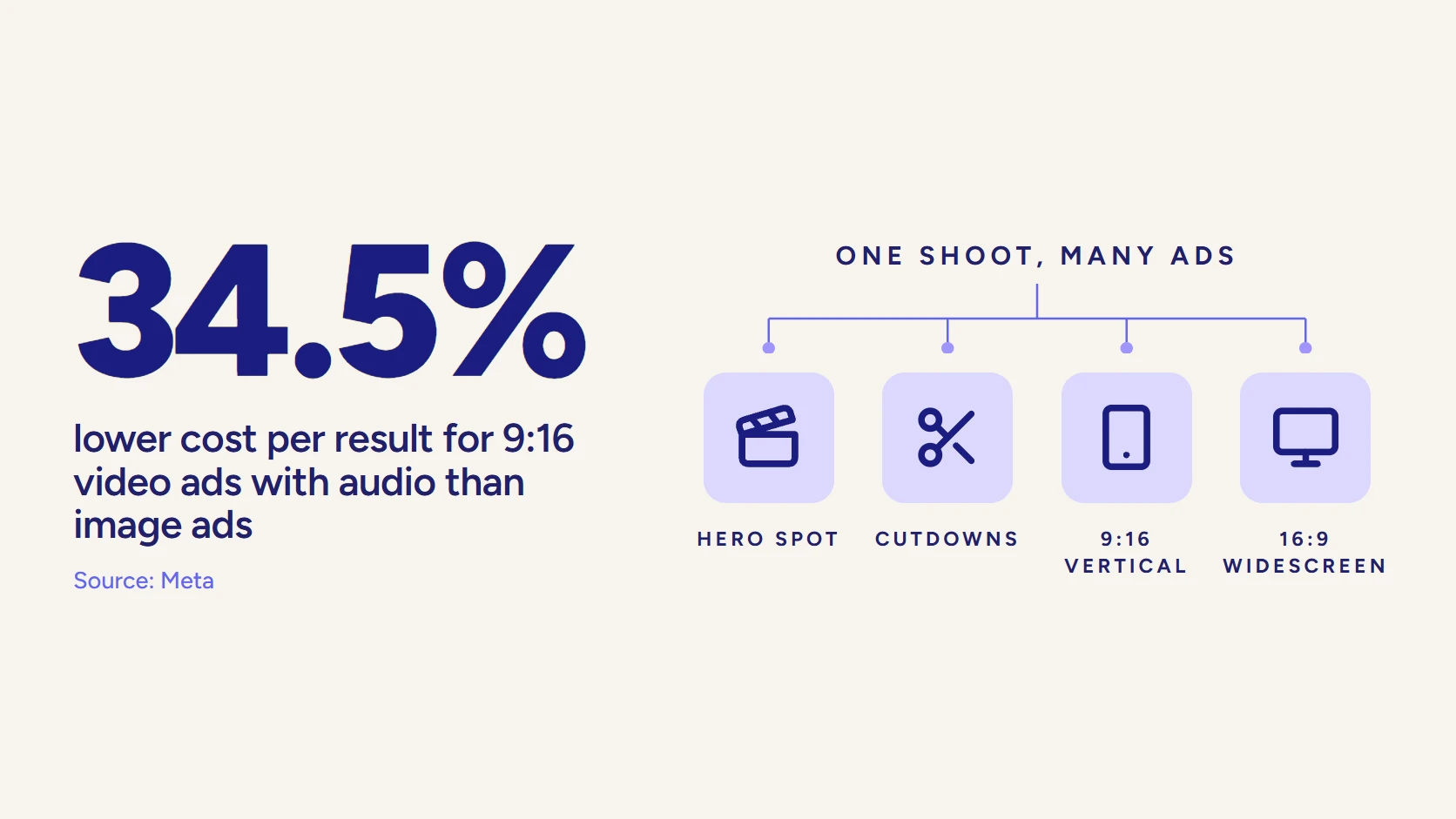
- One shoot feeding both. The efficient move is to plan the vertical cutdowns before the camera rolls, so a single production yields the anchor video and a run of Shorts, not a scramble to reframe a locked-off wide afterward.
Shorts also carry their own rules, from length caps to how the feed treats them, and getting those wrong wastes good footage. Our overview of YouTube Shorts length limits keeps a clip inside the format instead of getting quietly downranked.
How Many YouTube Channels Are There?
There are more than 115 million active YouTube channels, and only a small slice of them, roughly 617,000, have crossed 100,000 subscribers. That contrast is the creator economy in one line: a huge number of channels, a tiny number with real audiences.
For a business, the lesson is not to chase a subscriber count. It is to notice how thin the middle is. Having a channel is nearly free and nearly universal. Having a channel that a target buyer recognizes and returns to is rare, and it is earned by consistency and quality rather than by simply existing on the platform.
That is also why competitor benchmarking on YouTube can mislead. A rival with a channel and 40 videos may have almost no reach if none of them get found, and a smaller, sharper library aimed at a specific buyer can outperform it. If you want to see how brands actually build watchable channels, we keep a running list of marketing YouTube channels worth following.
How Much Money Does YouTube Make?
YouTube generated $40.4 billion in advertising revenue in 2025, which makes it one of the largest ad businesses in the world and a clear signal of how much commercial attention now flows through video. That figure is not trivia. It tells you where buyers already are.
The number matters to a B2B marketer for two reasons. First, it confirms the platform is a serious commercial channel, not a place for cat videos with brand spend as an afterthought. Second, it sets the competitive temperature: a market that valuable attracts polished, well-funded content, which raises the quality bar for anyone trying to be seen next to it.
Ad dollars are only half the picture, though. The organic side, the videos a company owns and publishes on its own channel, is where most B2B teams get their durable return, because a strong explainer or testimonial keeps earning views and trust long after an ad campaign ends. Before committing budget either way, it helps to run the math the way we lay it out in calculating video marketing ROI.
Video that has to work?
Plan your next video project with LocalEyes Video Production and start from the goal, not the brief.
What Does YouTube’s Scale Mean for B2B Video Strategy?
At this scale, the constraint on YouTube is never whether you can make a video. It is whether anyone finds it and stays, which turns discoverability and quality into the two levers that actually decide results. Every number above points back to those two words.
| What you are comparing | Posting videos | A produced video program |
|---|---|---|
| Starting point | A camera and an idea | A business goal and a named audience |
| Discoverability | Hope the algorithm picks it up | Built for search, Shorts, and answer engines |
| Quality bar | Competes with 720,000 hours a day | Made to hold attention past the first 30 seconds |
| Output | One clip per shoot | Many finished assets from one production |
| Measured by | View count | Retention, pipeline, and ROI |
Discoverability Is the Real Constraint
With 720,000 hours uploaded a day and a median video stuck at 41 views, being seen is the whole game. Discoverability on YouTube is not one trick. It is search-shaped titles and descriptions, chapters that map to how people watch, thumbnails that earn a click, and above all a video that holds attention long enough for the algorithm to keep promoting it. A brilliant video no one finds is indistinguishable, in results, from one that was never made. Our video marketing strategy guide connects those signals into a plan rather than a checklist.
Quality Is Now the Filter
When 91% of businesses already use video as a marketing tool, volume alone stopped being a differentiator years ago. The field is crowded, so quality is the filter that decides who gets watched to the end. That does not mean the most expensive production wins. It means the video has to be genuinely worth a busy person’s minutes: clear, well-shot enough to keep them, and built around a real answer or proof point. Weak production reads as low trust in a B2B context, and low trust loses deals. The mechanics of getting that right are in our business video production guide.
Search and Answer Engines Are Watching Too
YouTube is the second-largest search engine, and its videos surface far beyond the platform: inside Google results, and increasingly inside the AI answers that buyers now consult before they ever reach a website. Structure is what makes a video quotable to those systems, which is why chapters, accurate captions, and a clean transcript are no longer optional for a brand that wants to be cited. The connection between video and organic visibility is the whole subject of our piece on how video marketing boosts SEO results.
How Should You Turn These Numbers Into a Plan?
The scale is intimidating until you treat it as a brief. The right response to 14.8 billion videos and a 720,000-hour daily flood is not to post more. It is to plan tighter, produce better, and build every asset to be found. Here is the sequence that turns the data into a working plan.
Turn YouTube's scale into a plan
- Define the job each video doesPick the buyer decision the video should move before anyone books a camera: discovery, trust, or conversion, not all three at once.
- Plan a cluster, not a clipDesign one shoot to produce a long-form anchor plus several Shorts and captioned social cutdowns, so one production feeds months of publishing.
- Build every asset for searchWrite titles and descriptions around real queries, add chapters, and caption everything, since YouTube results also surface in Google and AI answers.
- Design for retentionEarn the first 30 seconds. The median upload gets 41 views, and watch time is what the algorithm actually rewards.
- Measure what pipeline seesTrack retention, qualified traffic, and ROI, not vanity view counts, then feed the winners back into the next shoot.
Two ideas do most of the work in that sequence. The first is planning a cluster instead of a clip, so one production run feeds months of publishing rather than a single upload that disappears. That is exactly the logic behind mapping assets to a video marketing funnel before the shoot, so every cut has a job and a home.
The second is respecting the calendar. Good video takes real time in pre-production and post, and a rushed edit shows on a screen where quality is the filter. Knowing the realistic video production timeline up front keeps a launch from slipping and keeps the work at the standard the platform now demands.
Why Does Production Quality Matter More at This Scale?
When the catalog is measured in billions and the median video gets 41 views, the deciding factor is no longer access. It is whether your video is one of the few worth watching. That is a production problem, not a posting problem, and it is where a coordinated program pulls away from a one-off clip.
LocalEyes Video Production has produced 4,000 videos across 10 US markets with Emmy recognition and 500+ five-star reviews, and has worked this way since 2018. The model is built for exactly the math on this page: one coordinated production yields many finished assets, a long-form anchor plus the Shorts, testimonials, and social cutdowns that keep a channel fed, instead of a single video fighting the firehose alone.
That is also why the pricing is scoped to the asset set rather than a day rate. A single testimonial or case-study video starts around $3,000, and a full program sits inside a $6,000 to $20,000 engagement, priced to the exact list of videos you need to leave with. The day-rate model quietly punishes the thing that beats YouTube scale, which is producing many strong, findable assets from one shoot. You can see the full scope in our video production services, and the format that most often earns B2B trust is broken down in our guide to making testimonial videos.
The scale of YouTube is not a reason to opt out. It is the argument for producing fewer, better, findable videos on purpose. The brands that win the next year on the platform will not be the ones who posted the most. They will be the ones whose videos were worth finding.
Video that has to work?
Plan your next video project with LocalEyes Video Production and start from the goal, not the brief.
Frequently Asked Questions
How Many Videos Are on YouTube in 2026?
How Many Hours of Video Are Uploaded to YouTube Every Minute?
How Many People Use YouTube?
Is YouTube a Search Engine?
How Much Money Does YouTube Make?
Are Short-Form Videos Still Worth It for Brands?
How Much Does Professional YouTube Video Production Cost?

Founder at LocalEyes Video Production | Inc. 5000 CEO | Emmy Award Winning Producer