Business video production uses planned filming, editing, and distribution to achieve marketing, training, internal communication, and customer engagement objectives.
Common business video formats include promotional, explainer, product demo, testimonial, training, social media, event, and brand storytelling videos.
Effective business videos require structured pre-production, professional production fundamentals, strategic distribution, and performance measurement to deliver measurable business impact.
Video has become one of the most powerful tools in modern business communication. Companies now rely on video to market products, train employees, communicate internally, and tell their brand stories. Audiences engage with video more easily than with long blocks of text because it combines visuals, sound, and narrative in a format that is both memorable and persuasive.
Business video is no longer reserved for large corporations with big budgets. Affordable equipment, easy-to-use software, and online distribution platforms have made professional-looking video accessible to companies of all sizes. Whether you are promoting a new service, onboarding new hires, or explaining a complex idea, video allows you to communicate more clearly and effectively.
At its core, business video production is about delivering the right message to the right audience in a format that captures attention and drives action. When done well, video can increase brand trust, improve conversion rates, and strengthen relationships with customers and employees alike.
What Is Business Video Production?
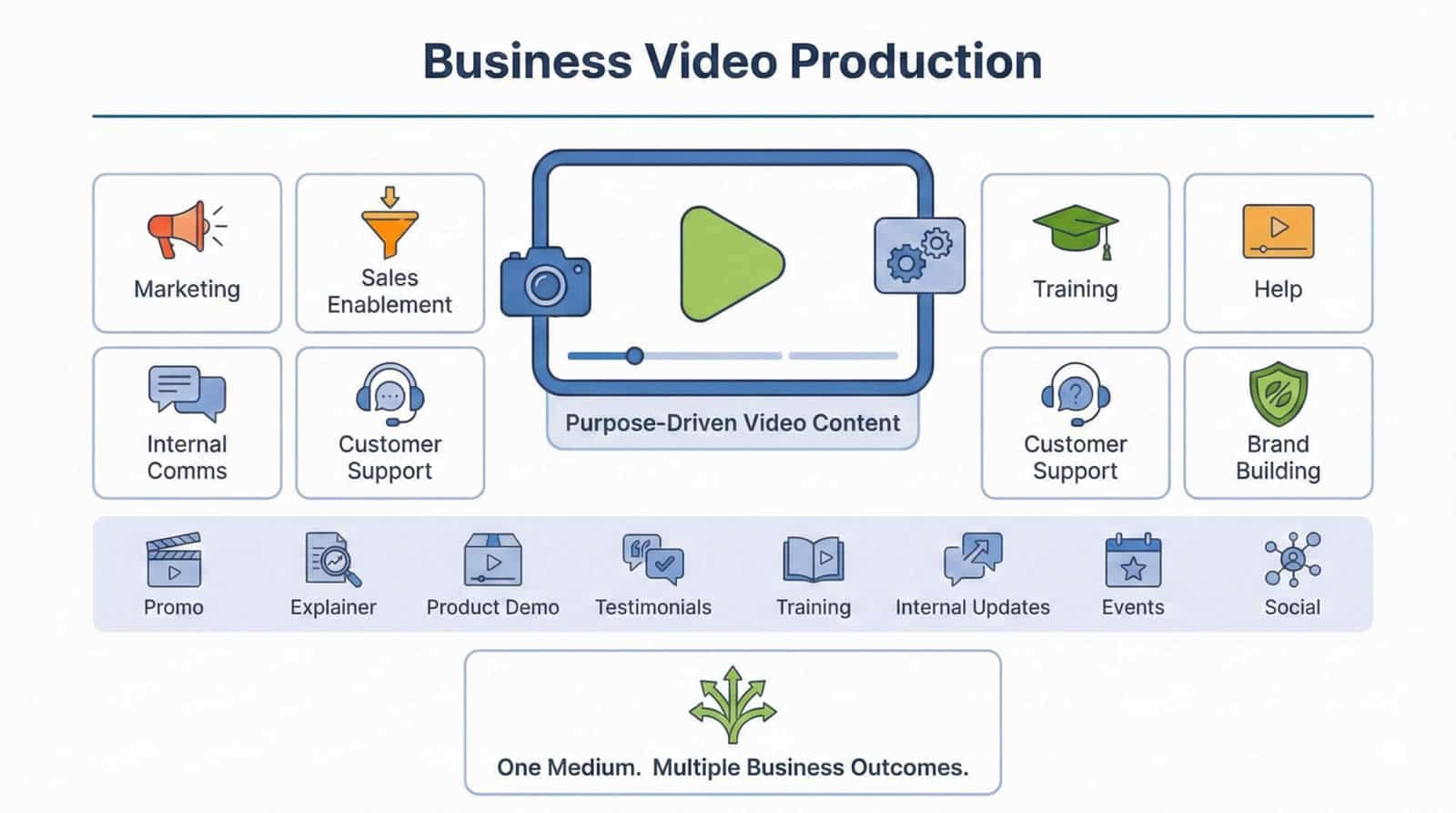
Business video production refers to the planning, filming, editing, and distribution of video content created for professional or organizational purposes. Unlike entertainment media, business videos are designed to support specific objectives such as marketing, education, internal communication, or customer engagement.
Companies use video across many functions, including:
Marketing and advertising campaigns
Sales enablement and product demonstrations
Employee training and onboarding
Internal announcements and leadership messaging
Customer support and tutorials
Brand storytelling and corporate communications
Because video can be distributed across websites, social media, email, presentations, and internal platforms, it offers unmatched flexibility as a communication tool.
Types of Business Videos
Different business goals require different video formats. Understanding the most common types of business videos helps you choose the right approach for your objectives.
Promotional Videos
Promotional videos are designed to generate interest in a product, service, or brand. They focus on benefits, value propositions, and calls to action.
These videos often aim to:
Introduce a new product or service
Highlight key features and competitive advantages
Drive traffic to a website or landing page
Encourage purchases, sign-ups, or inquiries
They are typically short, visually engaging, and optimized for marketing channels such as websites, social media, and paid advertising.
Explainer Videos
Explainer videos simplify complex ideas by breaking them down into clear, engaging narratives. They are commonly used to describe how a product works, how a service solves a problem, or how a process unfolds.
Explainers can be live-action, animated, or a combination of both, depending on the topic and audience.
Product Demo Videos
Product demos show your offering in action. Rather than describing features abstractly, these videos walk viewers through real usage scenarios.
They are especially valuable for:
Software tools and digital platforms
Technical products or equipment
Online services with multiple features
A strong demo video helps potential customers visualize how the product fits into their workflow and builds confidence before purchase.
Customer Testimonial Videos
Testimonial videos feature real customers sharing their experiences. They provide social proof and build trust by showing authentic success stories.
Common elements include:
Customer interviews or quotes
Before-and-after scenarios
Specific results or outcomes
Visuals of the customer using the product or service
These videos are often used on sales pages, in case studies, and during sales presentations.
Training and Onboarding Videos
Training videos support internal education by delivering consistent information across teams. They are used for onboarding new hires, teaching software tools, reinforcing safety procedures, and standardizing processes.
Internal videos keep employees informed and aligned. Examples include leadership updates, company announcements, and department briefings.
They are effective because they:
Add a human face to corporate messages
Increase engagement compared to long emails
Improve clarity on strategy, goals, and change initiatives
Corporate Event Videos
Event videos document conferences, product launches, seminars, and company milestones. These may include highlight reels, speaker recordings, or promotional trailers.
Event videos help organizations:
Extend the life of an event
Reach audiences who could not attend
Create marketing and PR assets from live experiences
Social Media Videos
Social media videos are designed for fast consumption and high engagement. They are often short, captioned, and formatted for mobile viewing.
Typical social video content includes:
Short product teasers
Behind-the-scenes footage
Tips and micro-tutorials
Company culture clips
These videos are optimized for platforms such as LinkedIn, Instagram, TikTok, and Facebook.
Brand Storytelling Videos
Brand videos focus on communicating company values, mission, and identity. Rather than selling directly, they aim to build emotional connection and long-term trust.
They may include:
Founder stories
Company history
Community impact
Vision and purpose narratives
Brand storytelling is often used on About pages, during recruitment campaigns, and in corporate presentations.
The Business Video Production Process
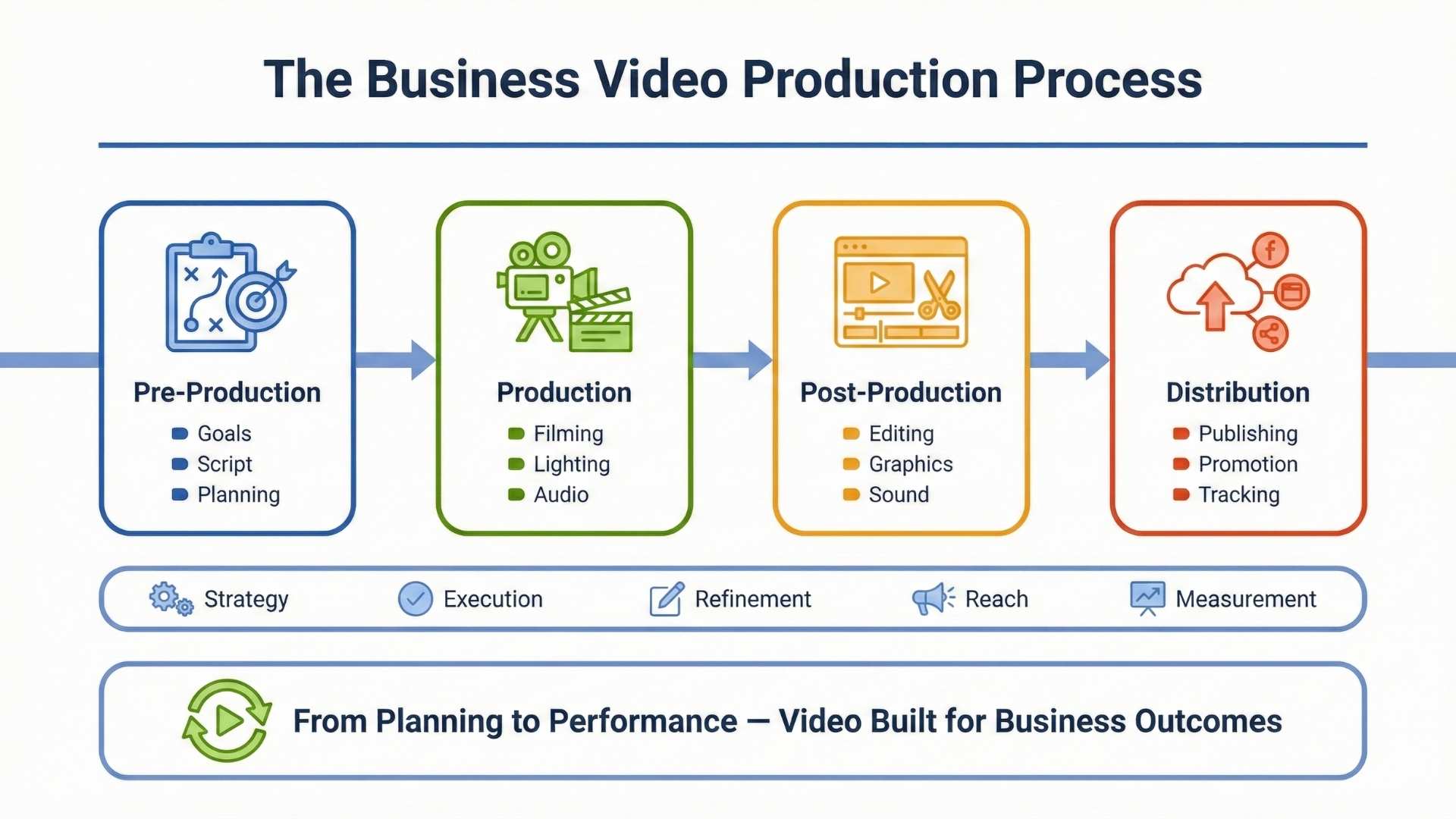
Creating an effective business video requires a structured workflow. The production process typically unfolds in four major stages:
Pre-production
Production
Post-production
Distribution
Each stage plays a critical role in the final outcome.
Pre-Production: Planning and Strategy
Pre-production is where the foundation of your video is built. Decisions made at this stage determine the direction, efficiency, and success of the entire project.
Careful planning reduces costly mistakes during filming and ensures that the final video aligns with business goals.
Production: Filming and Execution
Production is the stage where all footage is captured. This includes filming interviews, demonstrations, presentations, and B-roll footage.
During production, attention must be given to:
Camera setup and stability
Lighting conditions and background composition
Audio quality and microphone placement
Performance and delivery of on-camera speakers
Multiple takes to ensure editing flexibility
Well-executed production ensures clean visuals, clear sound, and a professional appearance.
Post-Production: Editing and Refinement
Post-production is where raw footage becomes a finished, polished video. This stage focuses on shaping the narrative, improving quality, and preparing the video for its intended audience.
The core elements of post-production include:
Editing and sequencing: Selecting the best takes and arranging scenes into a coherent structure that supports the message.
Visual enhancement:Adjusting color, exposure, and contrast to ensure a consistent and professional look.
Motion graphics and text: Adding titles, lower-thirds, branding elements, and on-screen highlights to reinforce key points.
Audio cleanup and mixing: Removing background noise, balancing sound levels, and integrating voiceover or background music.
Subtitles and accessibility: Including captions for viewers who watch without sound and for accessibility compliance.
Final export: Rendering the video in the correct formats and resolutions for each platform where it will be published.
This stage often involves several review rounds. Feedback should focus on clarity, pacing, and accuracy rather than personal preferences. Well-managed post-production ensures the final video communicates effectively and looks professional.
Distribution: Publishing and Promotion
A great video only delivers value if it reaches the right audience. Distribution is the strategic phase that determines where and how your video is shared.
Key distribution considerations include:
Platform selection: Choosing appropriate channels such as YouTube, company websites, social media, internal portals, or email campaigns.
Format optimization: Exporting the video in the correct resolution and aspect ratio for each platform.
Search and metadata: Writing clear titles, descriptions, and tags to improve discoverability.
Promotion strategy: Sharing the video through newsletters, social media posts, paid ads, or sales outreach.
Performance tracking: Monitoring views, engagement, and conversions to evaluate success and guide future improvements.
Effective distribution turns a video into a long-term asset rather than a one-time project.
Equipment and Software for Business Video Production
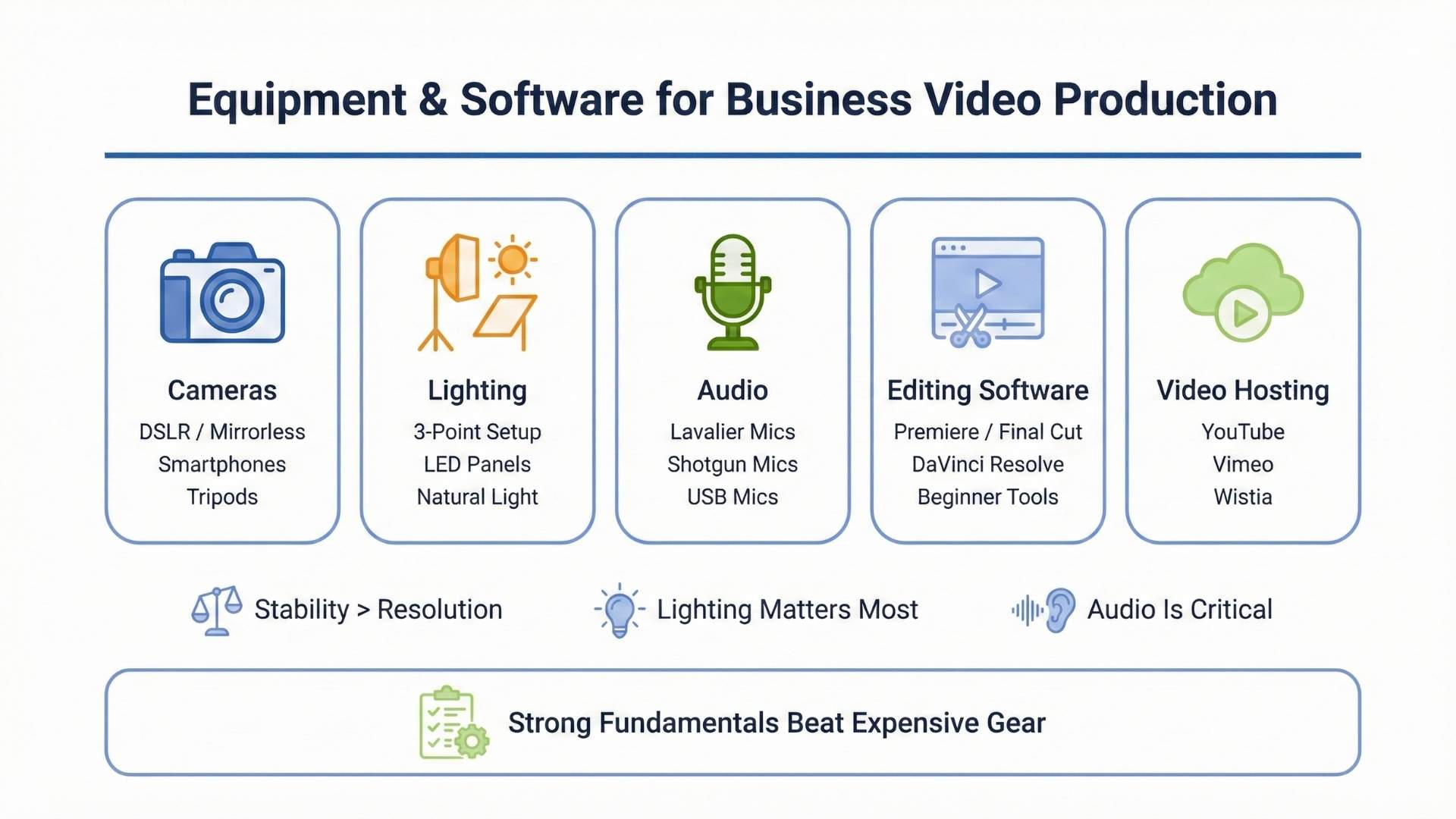
The quality of a business video depends not only on creative direction but also on the tools used to produce it. While high-end equipment can improve results, strong fundamentals matter more than expensive gear.
Cameras
You can create professional-looking videos using a range of camera options:
Professional cameras: DSLR, mirrorless, and dedicated video cameras provide high image quality, interchangeable lenses, and advanced controls.
Budget-friendly options: Modern smartphones and webcams can produce excellent results when paired with good lighting and stable mounting.
Essential accessories: Tripods, spare batteries, and memory cards improve reliability and consistency during filming.
Stability, focus, and lighting often matter more than resolution alone.
Lighting
Lighting determines how professional your video looks. Poor lighting can make even the best camera appear amateur.
Common lighting solutions include:
Three-point lighting kits: Key light, fill light, and backlight setups for controlled environments.
Ring lights and LED panels: Simple, portable lighting for interviews and presentations.
Natural light and reflectors: Budget-friendly solutions using windows and bounce surfaces.
Consistent color temperature and well-lit subjects are essential for visual clarity.
Audio Equipment
Clear sound is critical. Viewers are more tolerant of average visuals than poor audio.
Common microphone options include:
Lavalier microphones: Clip-on mics for interviews and presentations.
Shotgun microphones: Directional mics for focused sound capture.
USB microphones: Useful for voiceovers and screen recordings.
Recording in quiet spaces and monitoring sound during filming significantly improves audio quality.
Editing Software
Video editing software shapes your final output. Options range from beginner tools to professional suites:
Vimeo: Clean presentation, privacy options, professional branding.
Wistia: Marketing-focused features such as lead capture and advanced analytics.
Your choice depends on whether your goal is broad exposure, controlled presentation, or data-driven marketing.
Costs and Budgeting
Video production budgets vary widely. A simple in-house video may cost very little, while a professionally produced commercial can require a significant investment.
Typical Cost Factors
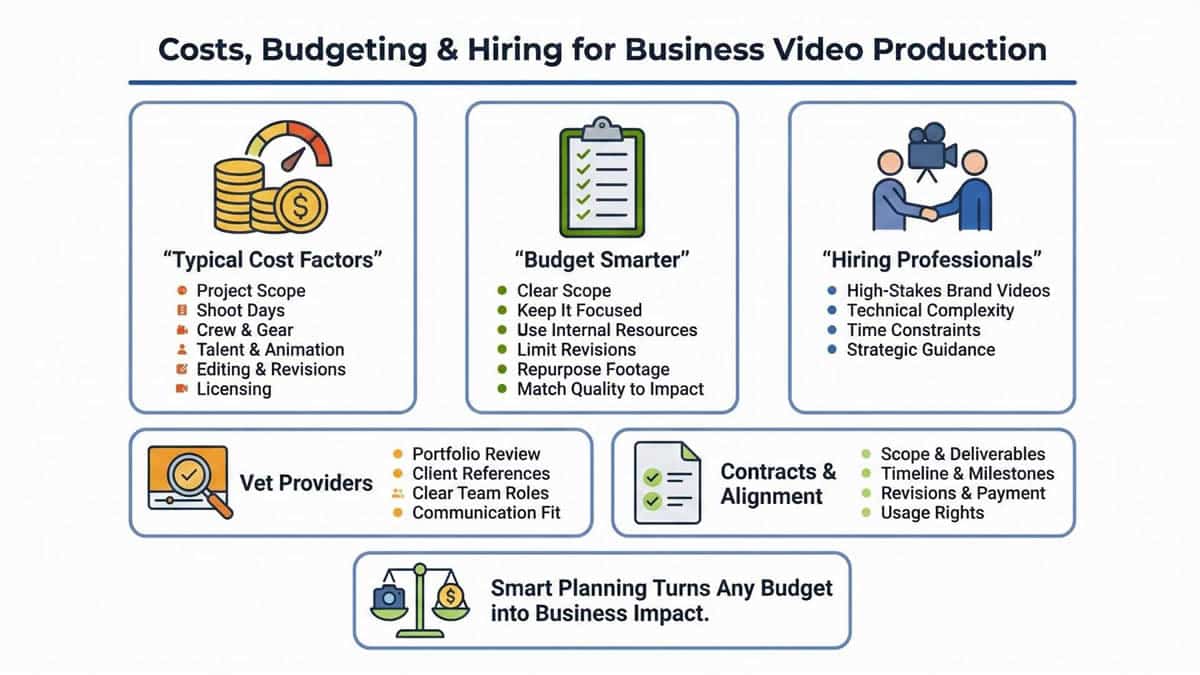
Production costs are influenced by:
Project complexity and length
Number of filming locations and shoot days
Crew size and equipment requirements
Use of actors, voiceover talent, or animation
Editing time, graphics, and revision rounds
Licensing for music, stock footage, or special effects
Understanding these drivers helps you allocate resources strategically.
Budgeting Smartly
To maximize return on investment:
Define the scope clearly before production begins.
Use internal staff and locations when appropriate.
Keep videos concise and focused.
Capture extra footage for repurposing across platforms.
Limit revision rounds and consolidate feedback.
Match production quality to the importance of the project.
Strategic planning allows even modest budgets to produce effective results.
Hiring a Video Production Company
Professional production partners can elevate quality and efficiency when projects are complex or high-stakes.
When to Hire Professionals
Consider outsourcing when:
The video represents your brand externally in a major way.
The project requires advanced equipment or technical expertise.
You lack internal resources or time.
You need strategic input beyond execution.
Smaller projects may still benefit from freelance videographers or hybrid approaches.
How to Vet Providers
When evaluating agencies or freelancers:
Review portfolios for relevant experience and style.
Ask for client references or testimonials.
Clarify who will work on your project.
Assess communication and professionalism.
Choose partners who understand your business goals, not just production techniques.
Key Contract Elements
A solid agreement should address:
Scope of work and deliverables
Timeline and milestones
Payment terms and revision limits
Ownership and usage rights
Confidentiality and cancellation policies
Clear contracts protect both parties and reduce misunderstandings.
Questions to Ask Before Hiring
During consultations, ask:
What similar projects have you completed?
Who will be involved in this project?
What is included in the quoted price?
How many revision rounds are provided?
How do you handle feedback and approvals?
What do you need from us to succeed?
These conversations ensure alignment before production begins.
DIY Video Production Tips
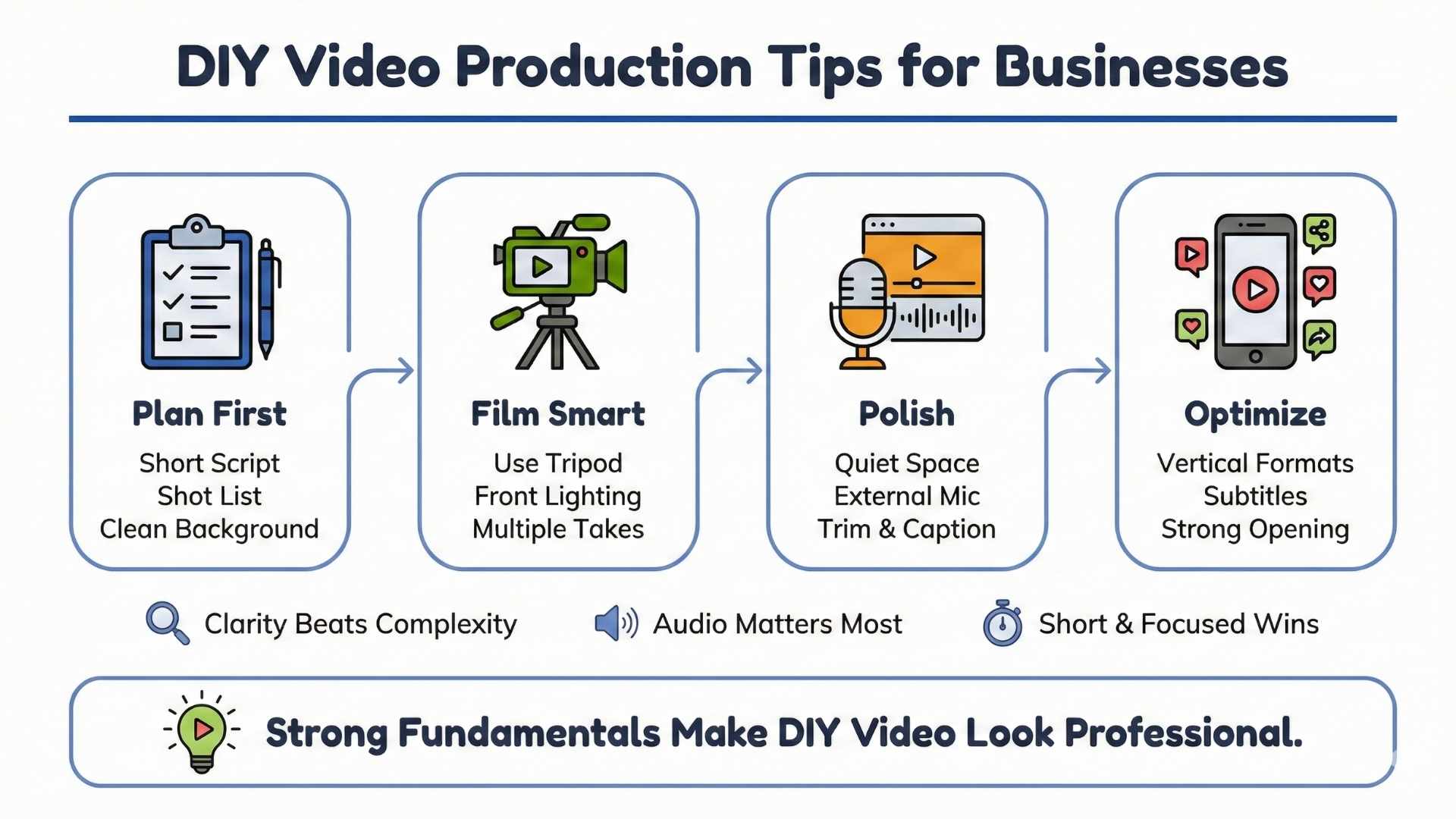
Many businesses successfully create videos in-house by focusing on fundamentals.
Planning and Preparation
Before filming:
Write a short script or outline.
Create a basic shot list or storyboard.
Choose a clean, relevant background.
Clear structure improves efficiency and results.
Filming Techniques
For better visuals:
Use a tripod or stable surface.
Position your subject with good lighting from the front.
Short, focused videos tend to perform better than long, unstructured ones.
Platform Optimization
Adapt each video to its destination:
Vertical or square formats for social platforms.
Subtitles for silent viewing.
Engaging openings within the first few seconds.
Testing performance and refining future content leads to continuous improvement.
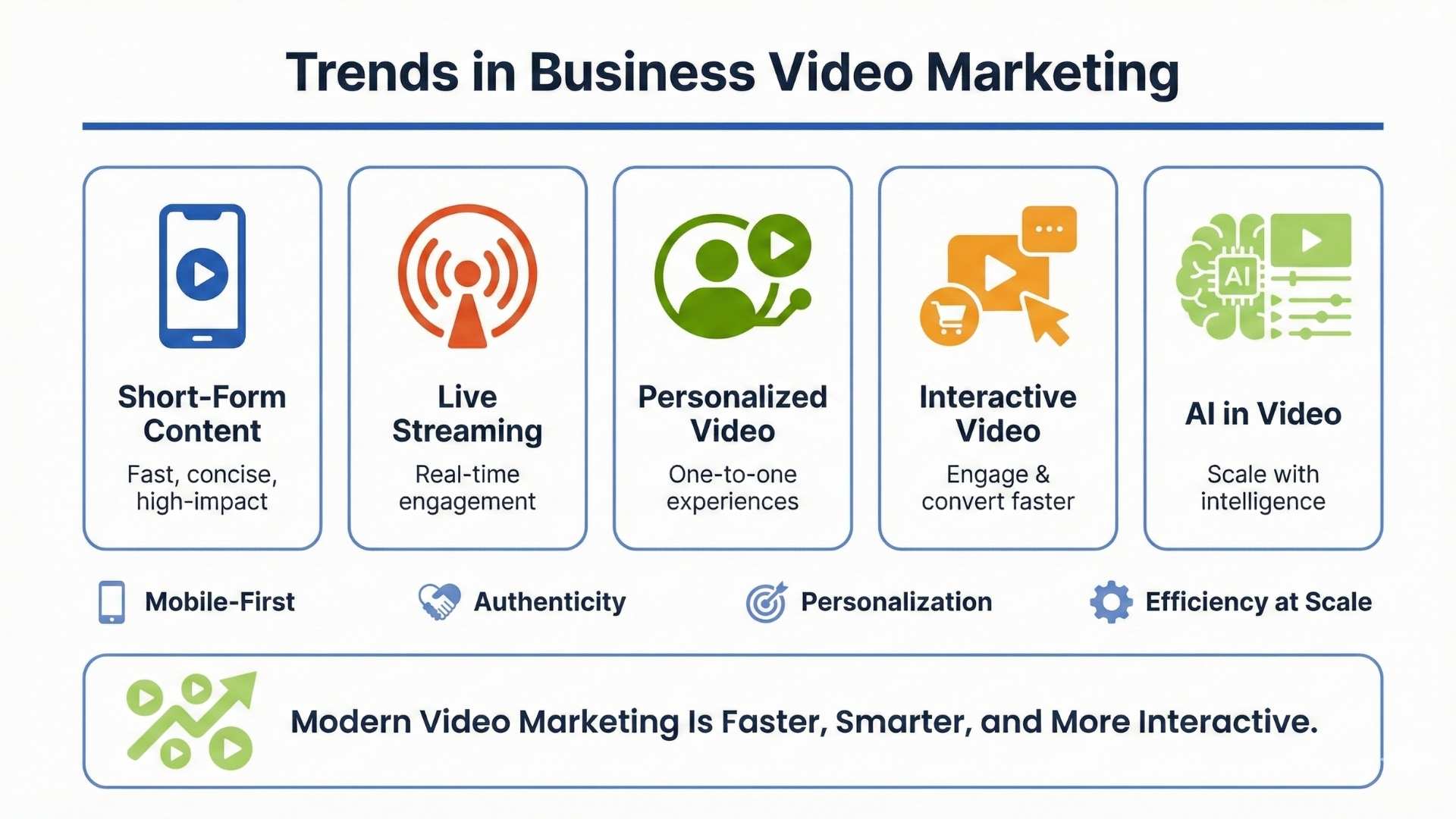
Trends in Business Video Marketing
Video continues to evolve alongside technology and audience behavior.
Short-Form Content
Short videos dominate social platforms due to limited attention spans. Brands focus on delivering value or entertainment within seconds using dynamic visuals and concise messaging.
Live Streaming
Live video enables real-time interaction, making it ideal for product launches, webinars, and Q and A sessions. Audiences value authenticity and immediacy.
Personalized Video
Personalized videos tailor content to individual viewers, increasing engagement and conversion. Sales, onboarding, and customer communications increasingly use customized video messages.
Interactive and Shoppable Video
Interactive elements allow viewers to click, explore, and make choices within videos. Shoppable videos shorten the path from discovery to purchase by integrating direct buying options.
AI in Video Production
Artificial intelligence is transforming editing, scripting, voiceovers, and personalization. AI tools improve efficiency, scalability, and content repurposing, while human oversight ensures quality and relevance.
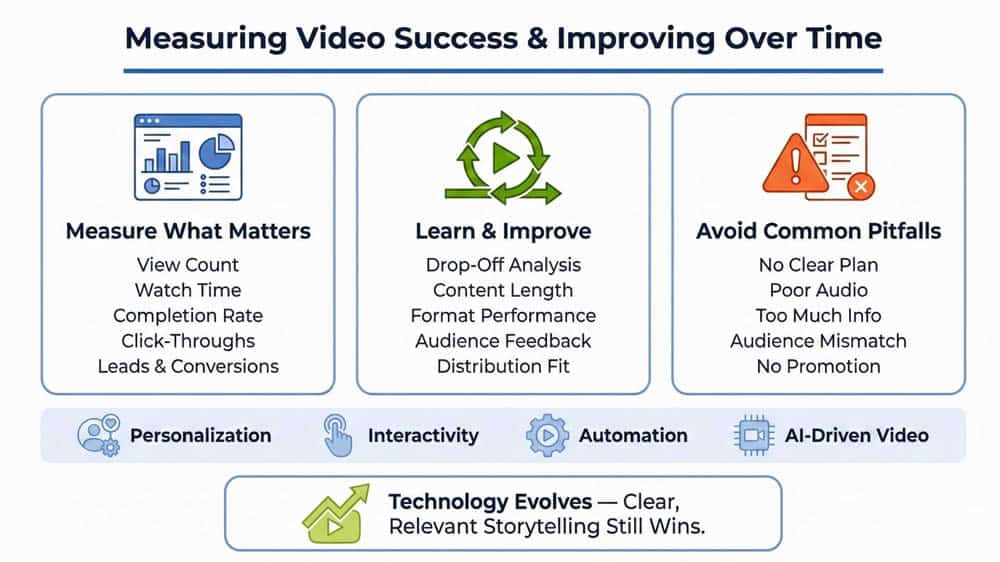
Measuring Success and Improving Over Time
Creating a video is only part of the process. To ensure that your video efforts deliver real business value, it is essential to evaluate performance and refine your approach.
Key metrics to track include:
View count: Indicates reach, but not necessarily impact.
Watch time and completion rate: Shows how engaging your video is.
Click-through rate: Measures how effectively the video drives viewers to take action.
Conversions and leads: Reveals direct business results from the video.
Audience feedback: Comments, shares, and internal feedback provide qualitative insights.
Reviewing these metrics helps identify what resonates with your audience. If viewers consistently drop off at a certain point, your content may be too long or unclear. If one type of video performs better than others, it can guide future production priorities.
Over time, this data-driven approach allows you to improve scripting, pacing, format, and distribution strategy.
Common Mistakes to Avoid
Even well-intentioned video projects can fall short if certain pitfalls are not addressed.
Some common mistakes include:
Skipping planning: Filming without a clear message or structure leads to unfocused content.
Poor audio quality: Background noise or muffled sound undermines professionalism.
Overloading with information: Trying to say too much in one video reduces clarity and impact.
Ignoring the audience: Videos should address viewer needs, not just company features.
Lack of promotion: Publishing without a distribution plan limits visibility and return on investment.
Avoiding these issues improves both the quality and effectiveness of your video output.
The Future of Business Video
Business video production is moving toward greater personalization, interactivity, and automation. As artificial intelligence, data analytics, and immersive technologies continue to develop, companies will be able to produce more targeted and scalable video experiences.
Future trends are likely to include:
Increased use of personalized and dynamic video content
More interactive and immersive formats
Deeper integration with marketing automation and CRM systems
Greater reliance on AI for editing, localization, and content generation
Despite these advancements, the core principles of effective video remain unchanged: clarity, authenticity, and relevance. Technology enhances delivery, but strong storytelling and purposeful communication will always define successful business videos.
Final Thoughts
Business video production is no longer optional. It is a fundamental component of modern communication, marketing, and training strategies. From promotional content and product demos to onboarding and internal updates, video allows organizations to communicate with clarity, emotion, and impact.
Whether you choose a professional production partner or produce content in-house, success depends on:
Clear objectives and audience understanding
Thoughtful planning and execution
Strong audio and visual fundamentals
Strategic distribution and performance measurement
By approaching video as a long-term investment rather than a one-off project, businesses can build a powerful content ecosystem that educates, engages, and converts.
With the right strategy, tools, and mindset, business video becomes more than content. It becomes a competitive advantage.
Why We Create Business Videos at LocalEyes
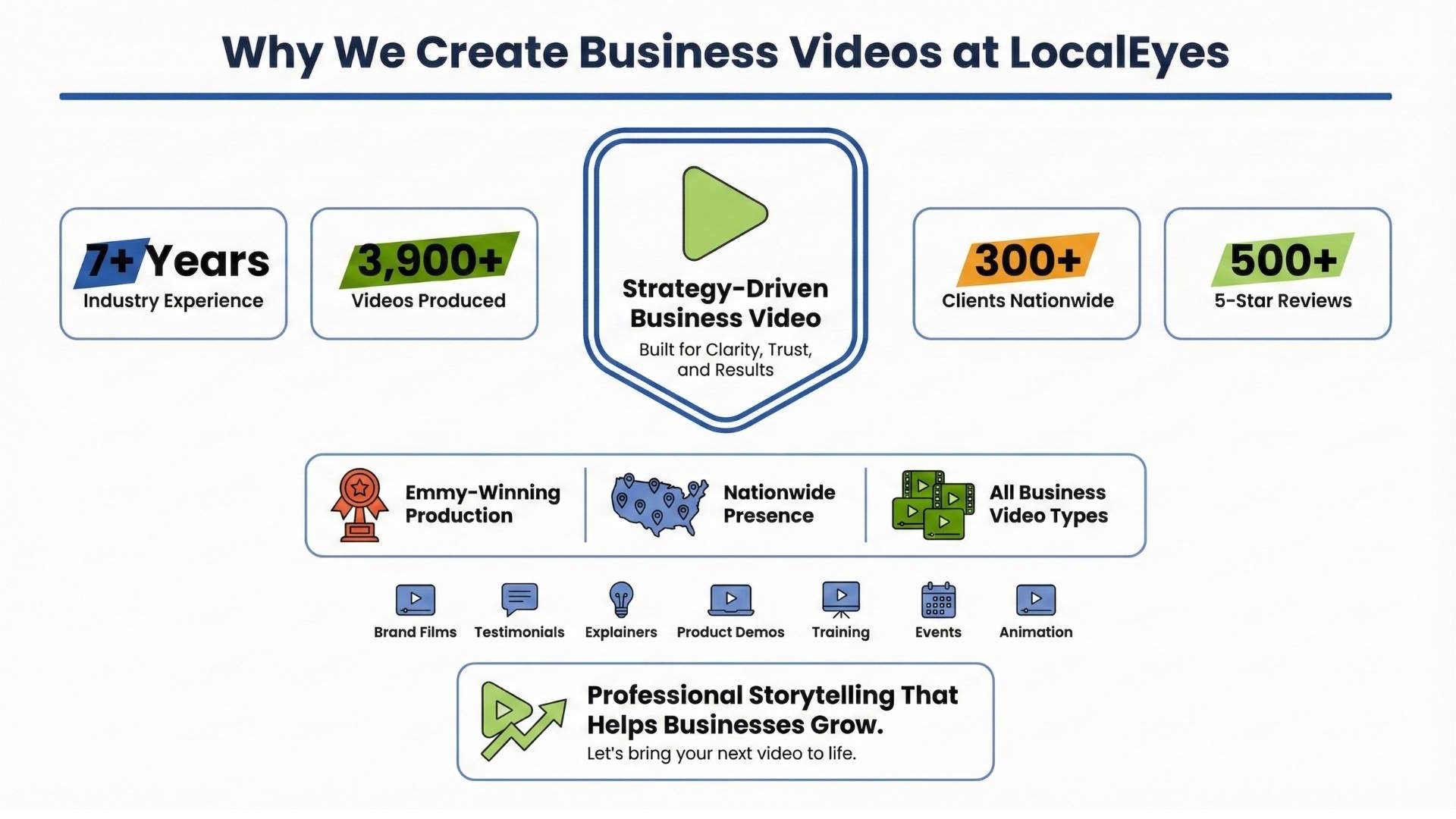
At LocalEyes Video Production, everything discussed in this article reflects how we approach our work every day. We believe that effective business video is not just about visuals. It is about strategy, storytelling, and producing content that delivers real results.
We are proud to be one of America’s premier video production companies, with over seven years of experience, recognition on the Inc. 5000 list for three consecutive years, and more than 3,900 videos produced for 300+ clients nationwide. Our team has earned over 500 five-star reviews across platforms such as Clutch, DesignRush, and Google because we consistently deliver quality, clarity, and impact.
What sets us apart is our Emmy Award-winning production quality combined with a truly national presence. With headquarters in California and full-service offices in major markets including New York City, Los Angeles, Chicago, Dallas, Miami, Boston, Atlanta, and more, we bring local expertise and enterprise-level execution to every project. From brand films and testimonials to explainer videos, product demos, training content, event coverage, and animation, we help businesses use video strategically to grow.
If you are ready to elevate your business video content with a partner that understands both production and results, we would love to help.
Contact LocalEyes today to start your next video project and see how professional storytelling can transform your brand.
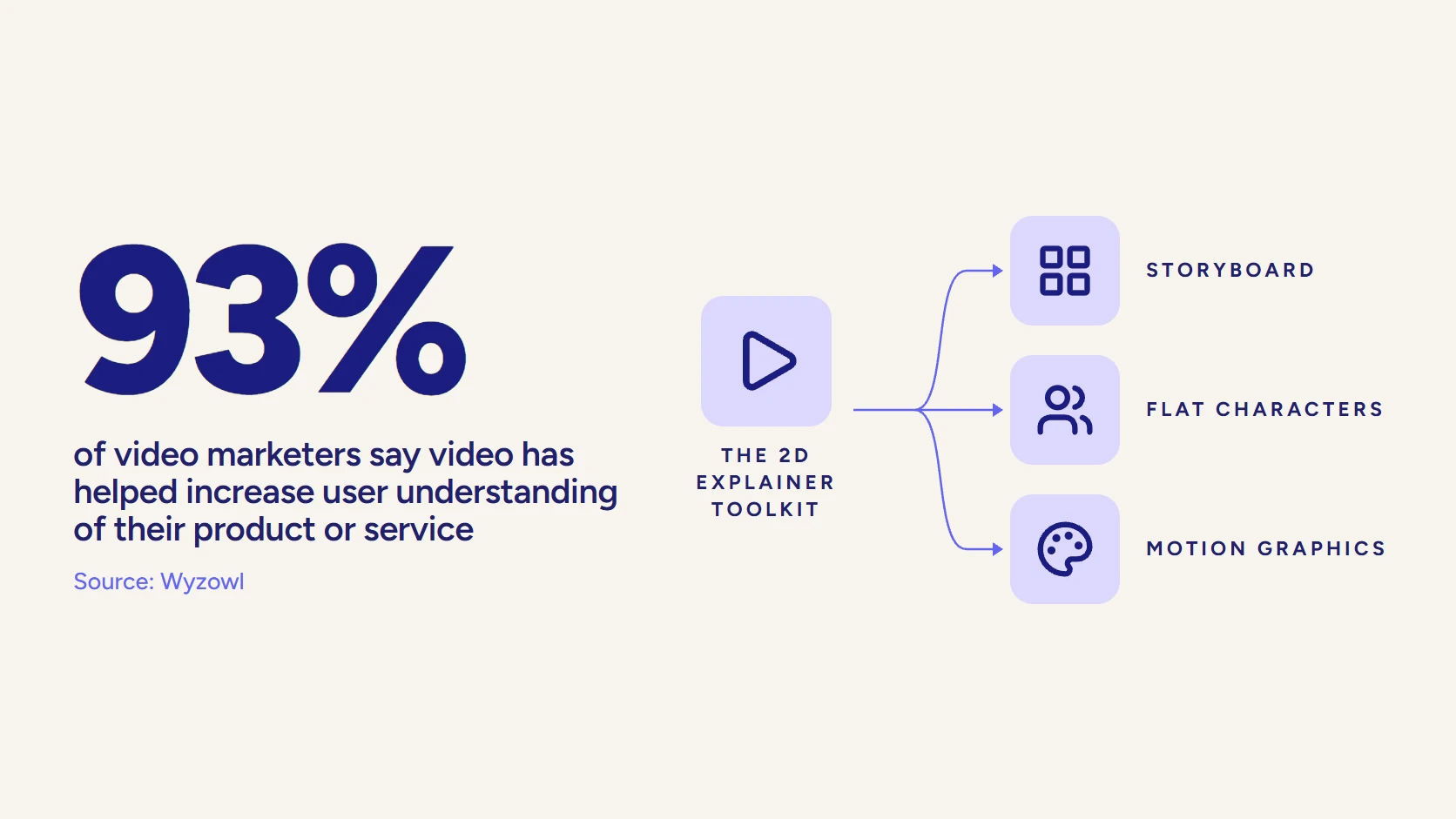
Fast answer Key Takeaways 2D wins when the subject is invisible: software, workflows, data, and services that a camera cannot film and 3D would overbuild. Pick the 2D style by
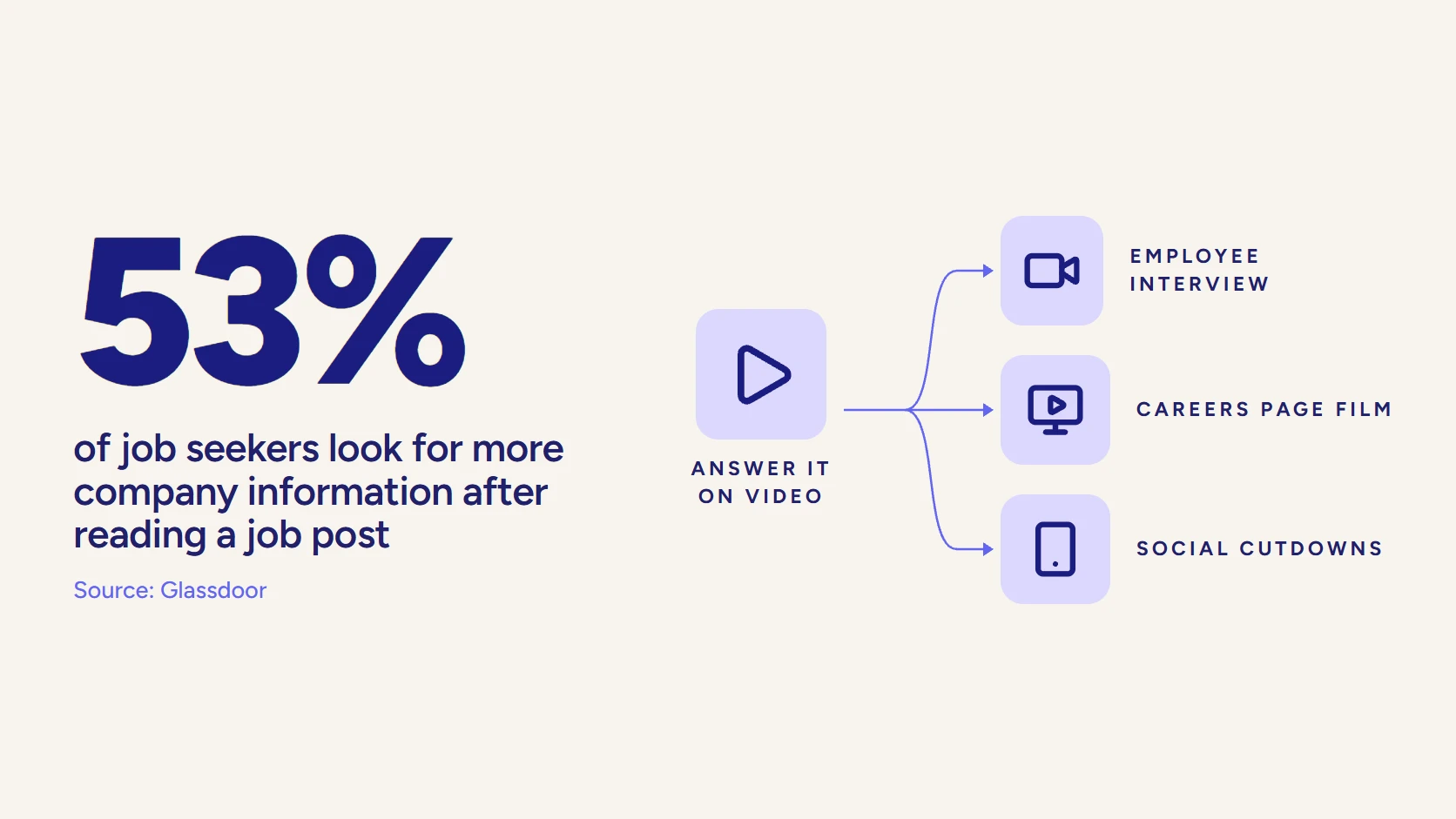
Fast answer Key Takeaways Employer branding video answers one candidate question: what is it actually like to work here? Every format should show a real answer, not a slogan. Plan
Fast answer Key Takeaways Make the corporate video that fixes your weakest funnel stage first; a brand film is right only when nobody knows your name. Testimonial and case study
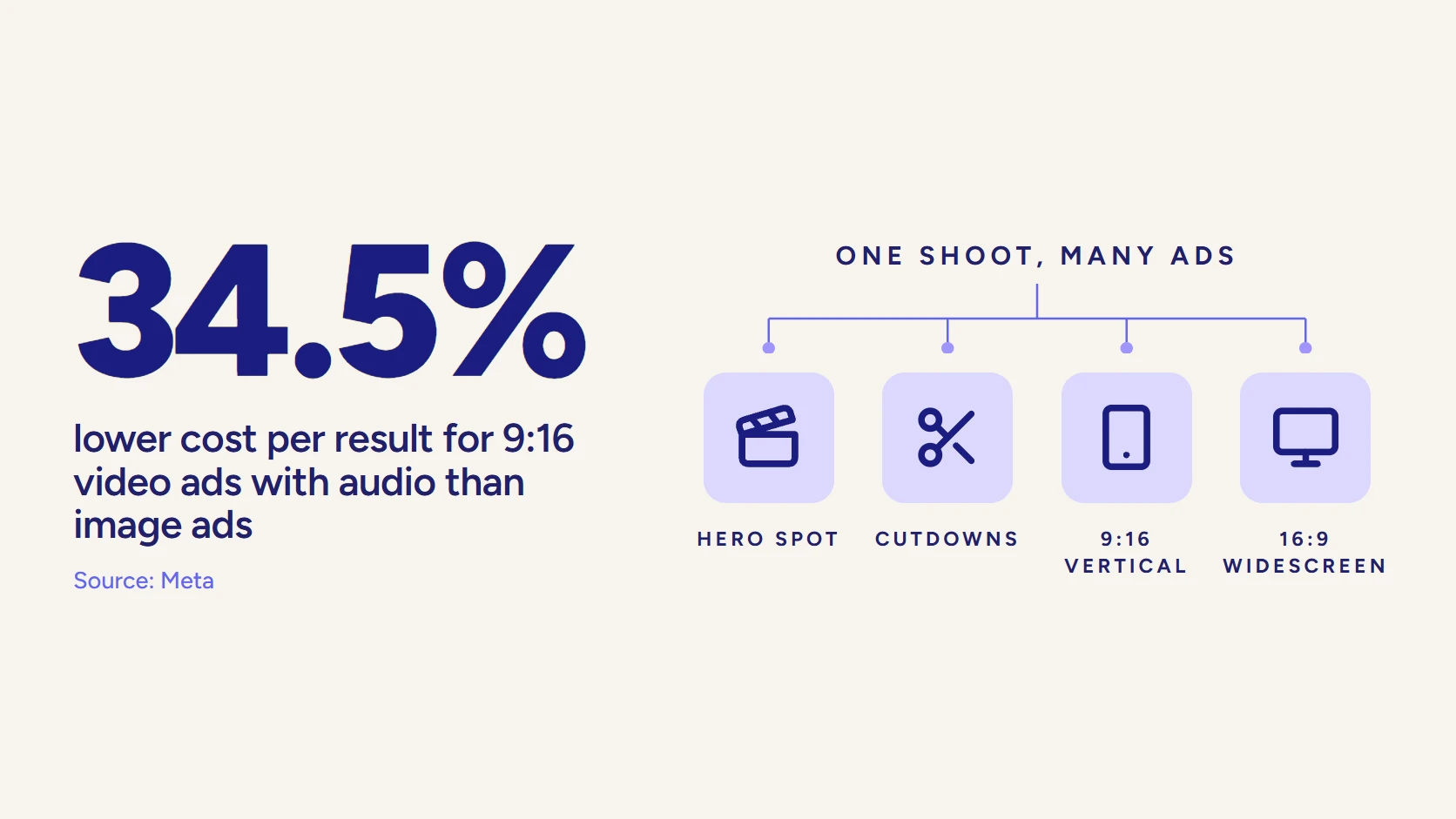
Fast answer Key Takeaways Commercial video production turns one brief and one shoot into a full ad set: a hero spot, shorter cutdowns, and every aspect ratio your channels need.
LocalEyes is an Emmy award-winning video production company that helps businesses increase sales, awareness, and engagement through strategic video marketing.


 Pre-Production: Planning and Strategy
 Pre-Production: Planning and Strategy
 Cameras
 DIY Video Production Tips
 Trends in Business Video Marketing
 Why We Create Business Videos at LocalEyes