
Fast answer
Key Takeaways
- Story beats a feature list because narrative triggers the memory and trust a spec sheet cannot, so a buyer recalls a story far longer than a bullet.
- Three frameworks carry most B2B video: problem-solution, the hero’s journey with the customer as the hero, and before-after-bridge.
- Structure every video around a hook, real stakes, and a resolution, because tension is the only thing that holds attention to the last frame.
- Emotion earns the attention and data earns the trust, so the strongest videos open with a story and let one number land inside it.
- LocalEyes Video Production builds story-led programs inside a $6,000 to $20,000 engagement, with a single testimonial or case-study video from $3,000.
The demo video opens the way most B2B demo videos open. A logo animation, a product screen, and a voiceover reading a list of features the buyer could have read on the pricing page. 90 seconds in, the tab is closed and the deal is no warmer than it was before anyone hit play.
Change one thing. Open on a person with a problem the buyer recognizes, follow them through the friction it causes, and land on the moment it resolves. Same product, same runtime, and now the viewer stays to the end and remembers what they saw.
Nothing changed but the order.
That difference is not decoration. It is the gap between a video a buyer forgets by lunch and one a buyer forwards to a colleague, and it is built from a handful of storytelling techniques that predate film and still decide which videos get watched.
Here is the order this guide follows. Why story outperforms a specification, the frameworks that shape a narrative, how to structure and pace one, and how to apply all of it to brand films, testimonials, and explainer videos.
Summary
Storytelling for B2B Video, at a Glance
- Story beats a feature list because narrative drives memory, trust, and action that a spec sheet cannot.
- Three frameworks do most of the work: problem-solution, the hero’s journey, and before-after-bridge.
- Every watchable video runs a hook, real stakes, and a resolution, with the tension held through the middle.
- Emotion earns the attention, data earns the trust, and the best videos use them in that order.
- One story, planned as a program, becomes a flagship film plus social cuts, a sales cut, and a customer story.
Why Does a Story Beat a Feature List in Video?
A feature list asks the viewer to do the work. It hands over facts and hopes the buyer assembles them into a reason to care. A story does the assembly for them, wrapping every feature in a situation where the feature obviously matters.
Compare the two head to head and the reason is easy to see.
| Dimension | Feature-led video | Story-led video |
|---|---|---|
| Opens with | The product and a list of capabilities | A person with a recognizable problem |
| Asks the viewer to | Assemble the facts into a reason to care | Feel the problem, then meet the fix |
| Emotional entry point | None | Built in from the first seconds |
| What the buyer remembers | That they watched something | The character, the tension, and the result |
| Best for | A reference viewer already sold | Earning attention and moving a decision |
The Difference Between Informing and Moving
Informing changes what a buyer knows. Moving changes what a buyer does. A specification can inform, but it rarely moves, because knowing that a product is 40% faster is not the same as feeling the frustration of the slow version you are living with now.
Story closes that distance. It puts a recognizable person inside the problem, lets the audience feel the cost of it, and only then introduces the product as the thing that changes the outcome. The product features never disappear. They arrive earned instead of announced.
Why the Spec Sheet Loses on Recall
The practical case against the feature list is memory. Superside’s analysis of brand narratives puts the payoff in plain numbers: brands that build a strong story can lift customer loyalty by up to 20% and conversions by 30%.
A list of specifications does none of that work, because there is no emotional connection to hang the facts on. The buyer who watched a story about a team like theirs remembers the team, the tension, and the fix. The buyer who watched a capability rundown remembers that they watched something.
None of this is a vote against information. It is a vote for sequence. Lead with the story, and the specification lands on a viewer who now has a reason to care about it.
What Happens in a Buyer’s Brain During a Story?
Storytelling is not a soft preference. It is a measurable neurological event, and the research explains why a narrative outperforms a fact every time the two compete for the same attention.
The Chemistry of a Character
The neuroeconomist Paul Zak has shown that a character-driven story pushes the brain to release oxytocin, the chemical tied to empathy and trust, and that the amount released predicts what a viewer will actually do next. A story about a person, told with real tension, is doing chemistry on the audience that a bullet point cannot touch.
That is the mechanism behind a truth every editor knows in their hands. The audience does not bond with a product. It bonds with a person who wants something and struggles to get it.
The Memory Multiplier
Recall is where the gap becomes almost unfair. Research from Stanford Graduate School of Business found people remember a message up to 22 times more when it arrives inside a story than when it arrives as facts alone.
Think about what that means for a marketing budget. Two videos can cost the same, run the same length, and name the same product, and one of them is remembered many times more clearly than the other purely because of how it is shaped.
The Attention You Have to Earn
Then there is the clock. Samba Recovery pegs the average human attention span at around 8.25 seconds, shorter than it was a decade ago, which means every second of a video either earns the next one or loses the viewer for good.
A story earns those seconds through a question the viewer needs answered. A feature list offers no question, so there is nothing pulling the eye forward, and the scroll wins.
Why story earns its place in the budget
The payoff shows up in adoption too. In Wyzowl’s 2026 research, 91% of businesses now use video as a marketing tool, a joint all-time high, and 82% report a good return on it. The teams pulling that return are not the ones with the longest feature reels. They are the ones telling the clearest stories.
What Are the Core Narrative Frameworks for Video?
A framework is not a formula that makes a video good. It is a proven skeleton that keeps a video from wandering, so the creative energy goes into the scenes rather than into wondering what comes next. Three frameworks carry the majority of effective B2B work, and a few others earn their place in specific jobs.
| Framework | What it is | Best for |
|---|---|---|
| Problem-solution | Name a felt problem, sit in it, then resolve with the product | Testimonials, explainers, launches |
| Hero’s journey | Customer as hero, brand as guide, a real transformation | Brand films, recruiting, customer stories |
| Before-after-bridge | Show the before, the after, then the product as the bridge | Short social cuts and paid ads |
| Three-act structure | Setup, confrontation, resolution across a longer runtime | Flagship brand films with room to build |
The Three That Do Most of the Work
- Problem-solution. Name a problem the audience feels, sit in it long enough that it stings, then resolve it with the product. The workhorse of B2B, and the structure behind most testimonials and explainer videos.
- The hero’s journey. A character leaves an ordinary world, faces a challenge, is guided through it, and returns changed. In marketing the trick is casting the customer as the hero and the brand as the guide, never the other way around.
- Before-after-bridge. Show the world before, show the better world after, and present the product as the bridge between them. Fast, clean, and ideal for short social cuts where you have seconds, not minutes.
The Specialists Worth Knowing
Beyond the three, a handful of narrative structures solve narrower problems. Reach for them when the standard shapes do not fit the material.
- The three-act structure. Setup, confrontation, resolution, the backbone of nearly every film, useful when a brand story needs room to breathe across two or three minutes.
- Problem-agitate-solve. A sharper cousin of problem-solution that lingers on the pain before the fix, effective in direct-response and paid social.
- The story spine. Pixar’s “once there was, every day, until one day, because of that, until finally” pattern, a reliable way to draft a narrative arc from a blank page.
The frameworks are not rival religions. A single brand film often runs a hero’s journey on the surface and a three-act structure underneath, and a good producer chooses the shape that fits the message rather than forcing the message into a favorite shape. The sections that follow break down the three you will use most.
How Does the Hero’s Journey Work in a Brand Film?
The hero’s journey is the oldest story structure there is, and the most misused in marketing. The failure is almost always the same casting error. The brand makes itself the hero, the audience feels sold to, and the emotional connection never forms.
The hero’s journey, mapped to a brand film
- The ordinary worldDraw the customer’s status quo clearly enough that the audience recognizes their own.
- The call and the challengeIntroduce the problem that makes standing still untenable and forces a change.
- The guide appearsThe brand enters with understanding and a way forward, not a pitch.
- The turning pointThe customer commits, adopts the tool, and crosses into the work of change.
- The returnShow the transformed customer, the measurable result, and the new normal.
Cast the Customer as the Hero
Fix the casting and the framework comes alive. The customer is the hero with a goal and a problem. The brand is the guide who has been there before, hands over the tool or the plan, and steps back so the customer wins. The story is about the customer’s transformation, and the product is what made it possible.
That single move changes how every scene reads. A screen recording stops being a demo and becomes the moment the hero gets the map. A results slide stops being a brag and becomes the proof the journey worked.
The Beats That Matter for Video
You do not need all seventeen stages the folklore scholars catalog. A brand film needs a handful of load-bearing beats, and the rest is trimming.
- The ordinary world. The customer’s status quo, drawn clearly enough that the audience recognizes their own.
- The call and the challenge. The problem that makes the status quo untenable, the moment something has to change.
- The guide appears. The brand enters, not with a pitch but with understanding and a way forward.
- The turning point. The customer commits, adopts the tool, and crosses into the harder work of change.
- The return. The transformed customer, the measurable result, and the new normal that the old world can no longer compete with.
Where It Fits and Where It Does Not
The hero’s journey shines in longer brand films, recruiting videos, and customer stories where there is room for a real arc. It is the wrong tool for a 15 second social clip, which does not have the runtime to build and pay off a transformation. For those, reach for before-after-bridge instead, and save the full journey for the flagship film that anchors the campaign.
What Is the Problem-Solution Framework, and When Does It Fit?
Problem-solution is the framework most B2B videos should start with, because it maps cleanly onto how buyers actually think. Someone has a problem, they look for a fix, and they choose the option that most convincingly proves it solves the problem. The video simply dramatizes that logic.
The Anatomy of the Framework
The structure has three moves and a discipline.
- Name the problem. Put it in terms the audience recognizes without translation.
- Make the cost felt. Show what the problem costs, do not just state it.
- Resolve with the product. Let it land as the natural answer, not a hard cut to a sales pitch.
The discipline is patience. Weak versions rush to the solution because the team is proud of the product. Strong versions stay in the problem long enough that the audience is leaning in, wanting the fix before it arrives.
A Quick Contrast
Picture two videos for the same analytics tool. The first opens on the dashboard and lists what it tracks. The second opens on an operations lead at 6pm, staring at four tabs that disagree with each other, missing the number the board wants tomorrow. The product appears in the second video as relief, and relief is a feeling a spec sheet cannot manufacture.
That is the whole framework in one image. The difference between the two is not budget. It is which one respected the problem before it sold the answer.
Where Problem-Solution Earns Its Keep
- Testimonials and case studies, where a real customer names the problem and the result carries the proof.
- Explainer videos, where a complex product needs a concrete before it earns an abstract.
- Product launches, where the new capability only matters if the old pain is fresh in the viewer’s mind.
If you only master one framework, master this one. It underpins more finished B2B video than any other, and it forgives a modest budget better than any other.
How Do You Use the Before-After-Bridge Framework?
Before-after-bridge is problem-solution with the pacing of a sprint. It is built for the feed, where the audience has seconds and the sound is off by default, and where a slow build is a luxury nobody will wait through.
Three Panels, One Idea
The framework is almost visual by nature. Show the “before,” the world with the problem in it. Show the “after,” the world once the problem is gone. Then reveal the “bridge,” the product that carries the viewer from one to the other. The contrast between the first two panels does the persuading, and the bridge simply names how to get there.
Because the shape is so compact, it survives the harsh conditions of social media better than any long-form structure. A viewer can grasp the whole argument in a caption and a few frames, then decide to keep watching for the detail.
Making the Contrast Land
The craft lives in the gap between before and after. If the two states look too similar, there is no story, only a claim. Widen the gap honestly. Use light, color, pace, and sound to make the “before” feel like friction and the “after” feel like room to breathe. A split screen can carry this in a single shot, which is why the technique shows up so often in short brand work. Our breakdown of the split screen in film covers how to stage that contrast without gimmickry.
The Right Jobs for a Short Frame
Before-after-bridge is the framework for vertical social cuts, paid ads, and the opening hook of a longer film that you later expand. It is a poor fit for a nuanced customer story that needs a real character arc, because compression is its strength and also its ceiling. Use it to earn the click, and let a deeper structure earn the trust once the viewer arrives.
How Do You Structure a Video With a Hook, Stakes, and Resolution?
Frameworks decide the shape of the whole. Structure decides the experience minute to minute, and almost every watchable video, whatever framework it runs, moves through the same three phases. Get these right and the framework almost takes care of itself.
The Hook: Buy the First Ten Seconds
The hook is a promise that the next moments are worth the viewer’s time. It can be a question, a surprising image, a bold claim, or a person mid-problem, but it has to create a small open loop the brain wants closed. With attention measured in single-digit seconds, a slow logo intro is a decision to lose most of the audience before the story starts.
Open the loop, and leave it open.
The best hooks show stakes immediately. They do not explain what the video is about. They drop the viewer into a moment that matters and trust curiosity to do the rest.
The Stakes: Give the Audience a Reason to Stay
Stakes are what the character stands to gain or lose, and they are the engine that pulls a viewer through the middle. This is where amateur videos sag, because the middle is where nothing seems to be happening unless tension has been built into it. Raise the stakes and the middle becomes the most watchable part.
In B2B, the stakes are rarely life and death, and they do not need to be. A missed quarter, a team drowning in manual work, a launch that could slip, a customer who might churn. Concrete, recognizable, and specific beats grand and vague every time.
The Resolution: Land the Change
The resolution is the payoff the hook promised. The problem resolves, the character is changed, and the audience feels the closure that makes a story satisfying rather than merely finished. This is also where the single call to action belongs, aimed at a viewer who now has an emotional reason to act, not just an instruction to.
Resolution is not the same as a happy ending. It is a completed arc. The strongest resolutions show the new normal, the world the product made possible, so the viewer pictures themselves inside it. For a fuller map of how each cut then moves a buyer forward, our video marketing funnel guide places every stage in order.
Video that has to work?
Plan your next video project with LocalEyes Video Production and start from the goal, not the brief.
Where Does the Tension Live in a Video Story?
Tension is the quiet force that makes a viewer unable to look away, and it is the single element most B2B videos are missing. A polished video with no tension is a screensaver with a logo. Understanding where tension lives is what separates a story from a slideshow.
Tension Is a Gap the Viewer Wants Closed
At its root, tension is the distance between what the character wants and what they have. The wider and clearer that gap, the harder the audience pulls toward the close. Every technique for building tension is really a way of holding that gap open a little longer before you resolve it.
That is why the middle of a video is so dangerous. Once the gap is established, the temptation is to close it fast and get to the product. Resist it. The value is in the wanting, and a resolution that arrives too soon feels unearned.
Practical Sources of Tension
- Conflict. A clear obstacle between the character and the goal, whether a rival, a deadline, or a broken process.
- Stakes. A cost to failure the audience can feel, so the outcome matters.
- An open question. A “how will this resolve” the hook plants and the story refuses to answer until the right moment.
- Contrast. A gap between expectation and reality, which is why the before-after structure is so magnetic.
- Time pressure. A ticking clock, real or implied, that makes standing still feel expensive.
Tension in a Two-Minute Video
You do not need a thriller to use tension. A customer story can hold it simply by delaying the result. Introduce the team, show the problem, and let the audience wonder whether the fix worked before you reveal that it did. The reveal is only satisfying because you made them wait for it. That restraint, more than any camera, is what makes a modest budget feel cinematic.
How Long Should Each Part of the Story Run?
Pacing is where good structure either delivers or dies. The right length is not a fixed number, it is a proportion, and the proportion shifts with where the video will play. A story that breathes on a landing page will suffocate on a phone feed.
The Shape of the Runtime
In a classic narrative, the setup takes the first quarter, the confrontation fills the long middle, and the resolution closes the final quarter. That balance keeps the audience in the tension for the bulk of the runtime rather than rushing to the end. The exact minutes matter less than the ratio, which is why the same shape scales from a two-minute film to a feature.
The mistake is a bloated setup. Marketers love to explain, and explanation front-loads the video with context nobody asked for. Cut the setup to the bone, get to the problem fast, and spend the runtime you save on the middle where the tension lives.
Length by Where It Plays
- Social feeds. 15 to 60 seconds, with the hook in the first 3, because the scroll is merciless and the sound is off.
- Landing pages and ads. 60 to 90 seconds, long enough for a full problem-solution arc, short enough to hold a warm visitor.
- Brand films and customer stories. 2 to 3 minutes, the room a hero’s journey needs to build and pay off a real transformation.
- Explainer videos. 60 to 90 seconds for the core, because comprehension drops when a single idea runs long.
Plan the Cutdowns Before the Shoot
The teams that get the most from a story plan every length before a camera rolls. Knowing you owe a 2 minute flagship and six 15 second cuts changes how a scene is framed and where the beats land. Trying to reverse-engineer a vertical clip from a locked-off wide shot after the fact is how good footage becomes unusable. The same discipline runs through the whole video production process, where the deliverable list is set before the shoot day, not after it.
How Do You Apply Story to a Brand Film?
A brand film is where storytelling technique is most visible and most abused. The goal is to make an audience feel something true about who a company is, without a product ever taking the stage as the hero. Brand storytelling done well builds brand identity that outlasts any single campaign.
What a Brand Film Is Actually Selling
A brand film sells a belief, not a feature. The most durable examples in advertising history barely mention the product. Nike’s “Just Do It” work, launched in 1988, sold a stance toward effort and rarely lingered on a shoe. Apple’s 1997 “Think Different” campaign did not name a single product and reset the company’s brand identity anyway. Patagonia’s “Don’t Buy This Jacket” ran against its own sales and deepened the story it had always told.
The lesson for a B2B brand is not to copy the budgets. It is to notice what those films risked. They removed the product from the center and put a value there instead, and the audience rewarded the confidence. If you are still defining the format, our primer on what a brand video is covers where it sits next to the rest of a library.
Finding the True Story
Brand stories fail when they are invented in a marketing room and true when they are excavated from the company. The founder’s original frustration, the customer the team keeps thinking about, the belief that shapes what the company will and will not do. These are the raw material, and audiences can tell the difference between a story a company lives and a story it borrowed.
Work the angle down to something a stranger could not have written about a competitor. If the film would sit unchanged on a rival’s channel, it is not a story yet, it is a category description with music.
The Visual Language of a Brand
A brand film also sets a visual style that the rest of the library inherits. The palette, the pace of the edit, the way people are framed, and the light all carry meaning before a word is spoken. A film about craft should feel unhurried. A film about speed should cut fast. Getting that language right is a craft in itself, and our guide to cinematic lighting techniques shows how lighting alone shifts the emotional register of a scene.
How Do You Tell a Story in a Testimonial or Case Study?
A testimonial is the most story-ready asset a company owns, because the story already happened. The customer had a problem, found the product, and got a result. The job is not to invent a narrative, it is to interview one out and edit it clean. Handled well, a customer story is the most trusted video a brand can publish.
Structure the Interview Like a Story
A great testimonial follows problem-solution without ever announcing it. The customer describes the world before, the moment they realized something had to change, what it was like to adopt the product, and what changed after. That is a complete arc, drawn entirely from a real person, and it is the reason our approach to the best ways to make testimonial videos starts with the questions, not the camera.
The interviewer’s craft is in the order and the follow-up. Ask for the “before” in sensory detail, not summary. Push past the first tidy answer to the real frustration underneath. The usable gold is almost never in the first sentence of a response.
Let the Result Carry the Proof
The resolution of a testimonial should be concrete. A named outcome, a specific change, a number the customer chose to say. Vague praise convinces no one, because it could describe any vendor. A precise result convinces because it could only describe this one.
The strongest customer stories borrow the honesty of documentary. They keep the rough edges, the pauses, the real room, because those signals of truth are exactly what makes the praise credible. Our look at documentary-style content covers how that unpolished register earns trust a scripted read cannot.
Case Studies Scale the Story
Case studies extend the testimonial into detail for a buyer deeper in the funnel. Where a testimonial delivers the emotional hit, a case study lays out the mechanism, the timeline, and the numbers for the analyst who has to build the internal case. The pair works because they serve two readers, and the story spine holds them both together.
How Do You Bring Story to an Explainer Video?
Explainer videos are where story is most needed and least used. The instinct is to explain, feature by feature, until the viewer understands. The better instinct is to tell one small story that makes the product’s value obvious, then explain only what the story leaves open.
Give the Explanation a Character
Abstract products get concrete when a person carries them. Instead of describing what a fitness tracker measures, follow someone training for a first race and show how the tracker keeps them on plan. The features arrive as moments in a journey, and a technical concept becomes a story a viewer can retell. That is the difference between a manual and an explainer.
The same move rescues software, security, and infrastructure videos, the categories where jargon multiplies fastest. A character gives the audience someone to follow through the complexity, and complexity followed is complexity understood.
Simplify Without Dumbing Down
Story simplifies complex messages by choosing what to leave out. A good explainer answers one question completely rather than five questions partially. It uses a concrete example before an abstract claim, and it trusts a single clear idea to do more than a crowded rundown ever could.
Animation is often the right tool here, because it can visualize the invisible, a data flow, a process, a network, without the constraints of a live shoot. The choice between styles matters more than teams expect, which is why our comparison of 2D and 3D animation is worth reading before you commission one, alongside the wider range of animation styles that each carry a different tone.
Keep the Data in Service of the Story
Explainers often need to prove a point with a statistic, and the technique is to let the story hold the number rather than the number holding the story. Present one figure at the moment the narrative has earned it, support it with a clean visual, and move on. A wall of charts informs nobody. One well-placed number inside a story sticks. For a sense of what different explainer scopes involve, our note on explainer video pricing lays out the trade-offs.
Emotion or Data: Which Should Carry the Video?
The false choice at the center of most video debates is emotion versus data, story versus proof. The answer is not one or the other. The strongest videos use emotion to earn the attention and data to earn the trust, in that order, and they know which job each is doing.
Emotion Opens the Door
Emotion is what gets a video watched and remembered. It is the reason the oxytocin research matters, and the reason a story out-recalls a fact many times over. Lead with it. Open on a person, a problem, a feeling the audience shares, and you have bought the attention you need to make a point at all.
A video that opens with a statistic has spent its first seconds asking the viewer to care about a number before giving them any reason to. The order is backwards, and the scroll punishes it.
Data Closes the Deal
Once emotion has the room, data is what lets a rational buyer justify the decision. B2B purchases pass through committees and business cases, and no committee approves a feeling. It approves a number that survives scrutiny. So the video earns the emotional yes, then hands the viewer the proof they will need to defend the choice to a boss.
The craft is restraint. One credible number, placed where the story has earned it, does more than ten thrown at a viewer who has not been given a reason to trust any of them. Data is a scalpel in a story, not a bucket.
The Weave in Practice
A finished B2B film usually runs the pattern three times. An emotional open, a proof point, a deeper stakes beat, a harder number, the resolution, and the final figure that makes the result undeniable. Emotion and data taking turns, each covering the other’s weakness, is what a mature video sounds like.
What Visual Techniques Let You Show Instead of Tell?
“Show, don’t tell” is the oldest advice in storytelling and the most literal in video, because video is the one medium built to show. Visual storytelling carries meaning through image, motion, and sound so the narration can do less and the audience can feel more. When the picture makes the point, the voiceover can get out of the way.
The Tools of Visual Storytelling
- Composition. Where a subject sits in the frame signals power, isolation, or connection before anyone speaks.
- Light and color. Warm and soft reads as safety, cold and hard reads as friction, and a shift between them can carry a whole before-and-after.
- Movement. A slow push in builds intimacy, a handheld follow builds urgency, and a locked frame builds calm.
- Editing rhythm. Cut fast to raise energy, hold a shot to let a moment breathe, and let the pace echo the emotion of the beat.
- Sound and silence. Music sets the register, and a well-placed silence can land harder than any line of dialogue.
Techniques That Compress Time and Meaning
Some visual devices do narrative work on their own. A time-lapse condenses a long transformation into a few seconds, perfect for showing progress or a build. A split screen holds two realities at once, the expectation beside the outcome, which is why it carries contrast so efficiently. A match cut can move a story across time or place in a single frame, hiding the seam.
These are not decoration. Each one replaces a paragraph of narration with an image, which is the entire point of choosing video over a blog post in the first place. Getting the coverage to support them is a production discipline, and our guide to multi-camera shooting techniques covers how the angles get planned so the edit has options.
Let the Visuals Do the Selling
The most confident B2B videos trust the image. They show the product in a real hand solving a real problem instead of narrating its benefits over a stock montage. They capture a genuine reaction rather than describing one. When the visuals carry the story, the audience feels they discovered the point themselves, and a conclusion you reach on your own is far more persuasive than one you were told.
What Are the 10 Storytelling Techniques That Hold Attention?
Frameworks give a video its shape, but a handful of techniques do the moment-to-moment work of keeping a viewer in the frame. These are the tools you reach for inside any structure, and most strong videos stack several at once.
- The emotional hook. Open on a feeling the audience shares, joy, frustration, or fear, so the first seconds create a reason to keep watching.
- The hero’s journey. Cast the customer as the protagonist and track a real transformation from problem to result.
- Conflict and resolution. Introduce a clear obstacle and delay the fix, because the wait is what makes the resolution satisfying.
- Character-driven narrative. Anchor the story in a person the target audience recognizes, so viewers see themselves in the frame.
- Show, don’t tell. Let action, expression, and imagery carry the message and keep the narration lean.
- Visual storyboarding. Plan the beats as images first, so the story flows across scenes instead of arriving as a list.
- Time-lapse and chronology. Compress a long change into a short, vivid stretch that makes progress visible.
- Interactive moments. Give the viewer a choice or a branch where the format allows, so they feel part of the story rather than an audience to it.
- Data woven into the narrative. Drop one credible number where the story has earned it, supported by a clean visual, never a wall of charts.
- A single, clear call to action. Close with one next step aimed at a viewer who now has an emotional reason to take it.
None of these is a gimmick to bolt on at the end. Each is a decision made at the script stage and protected through the edit, and the videos that hold attention are simply the ones that made those decisions on purpose.
What Are the Most Common Storytelling Mistakes?
Most weak B2B videos fail in the same few ways, and every failure is a storytelling choice, not a production one. A bigger camera fixes none of these. A better script fixes all of them.
The Mistakes That Sink a Video
- Making the brand the hero. The audience wants to see themselves win, not watch a company take a bow. Cast the customer as the hero and demote the brand to the guide.
- Skipping the problem. A video that opens on the solution has no tension, because there is nothing at stake yet. Earn the fix by respecting the problem first.
- Explaining instead of showing. Narration that describes what the picture could show wastes the medium. Cut the line and let the image carry it.
- Overcomplicating the message. Trying to say five things means saying none of them. Choose the one idea the viewer must remember and protect it.
- No emotional entry point. A video built entirely from features and data gives the audience nothing to feel, and nothing to feel is nothing to remember.
- A missing or buried call to action. A story that resolves and then just stops wastes the moment the viewer is most ready to act.
The Pattern Behind the Mistakes
Notice what unites the list. Every mistake is the company’s point of view crowding out the audience’s. The fix, in every case, is the same discipline. Start from what the viewer feels and needs, and let the product earn its place inside that, rather than demanding the spotlight from the first frame.
That is also why a second set of eyes matters. The team closest to the product is the least able to see it the way a stranger will, and a storytelling problem is almost invisible from the inside. A good production partner is, in part, a professional stranger.
How Do You Turn One Story Into a Content Program?
A single strong story is not a single video. It is the source material for a season of content, and the teams that understand that get far more from one production than teams that ship one film and move on. This is where storytelling technique meets content strategy.
One Shoot, Many Cuts
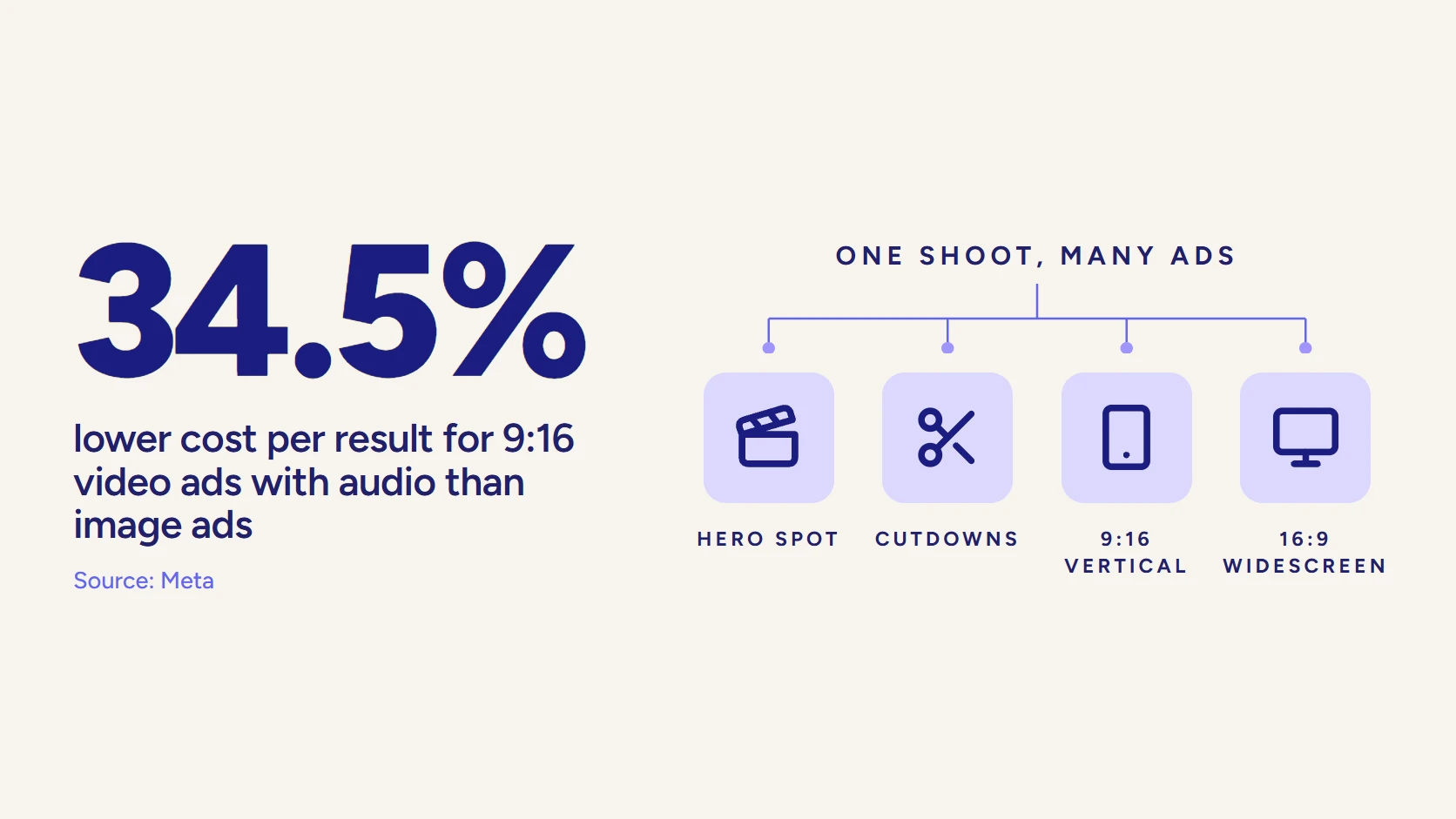
A well-planned story shoot yields a flagship film and a library around it. The two-minute brand film becomes the anchor. The same footage yields 15 second social hooks, a set of character moments, a data-led cut for the sales team, and vertical versions for the feeds where the audience actually lives. The story is written once and expressed many ways.
The discipline that makes this possible is planning the asset list before the shoot, so the coverage exists to support every cut. Retrofitting a program onto footage captured for one film is the expensive way to learn this lesson.
Match Each Cut to a Stage
Different cuts do different jobs across the buyer’s path. Short emotional hooks earn the first click. The full story builds consideration. The data-forward cut and the customer story arm the late-stage decision. Mapping each asset to a stage of the buyer journey turns a pile of clips into a system that moves people forward. The related discipline of video seeding covers how to place each cut where its audience already is.
The Program Compounds
Story-led content also ages well. A feature video is obsolete when the feature changes. A story about a human problem your product solves stays true for years, which is why the brand films people still cite are decades old. Built as a program, one story keeps returning value long after the invoice clears, across social media, sales enablement, the website, and the next campaign.
Why Choose a Production Partner Over a Day-Rate Videographer?
You can hire someone to point a camera for a day in an afternoon. What that does not buy is the storytelling judgment that decides whether the footage becomes a video anyone remembers. The gap between a videographer and a partner is the gap between capture and narrative.
Story Is a Program, Not a Shoot Day
A day-rate hire is measured by whether the cameras rolled. A production partner is measured by whether, weeks later, the story is still earning attention and moving buyers. That is a different job, and it is why LocalEyes Video Production prices a story as a program rather than an hourly rate. A single testimonial or case-study video starts around $3,000, and a full story-led program sits inside a $6,000 to $20,000 engagement, scoped to the exact set of assets you need to leave with.
The reason for that framing is the whole argument of this guide. A story is worth building well because a story, built well, produces many finished pieces and keeps working long after a day rate would have clocked out.
What Experience Buys
Storytelling judgment is earned across hundreds of edits, not read from a manual. LocalEyes Video Production has produced 4,000 videos across 10 US markets since 2018, with Emmy recognition and 500+ five-star reviews, and that volume is exactly what teaches a team which stories land and which fall flat before a client ever pays to find out.
That experience shows up in the small decisions. Which question to ask an interview subject, how long to hold on a reaction, when to let a silence sit. None of it is visible in a portfolio and all of it decides whether a video works.
Where to Go From Here
If you are weighing a partner, look at the finished stories, not the demo reel. Ask to see a customer film, a brand film, and the social cuts from one production, so you can judge whether a team can carry a narrative across formats. Our full video production services lay out how the strategy, script, and edit fit together, and if you want to compare providers in one market, our roundup of video production companies in Denver shows how to read a portfolio for story, not just polish.
Story is the oldest technology in marketing and still the one that decides which videos get watched, remembered, and repeated. The frameworks in this guide are how you put it to work on purpose, every time, instead of hoping a good video happens by accident.
Video that has to work?
Plan your next video project with LocalEyes Video Production and start from the goal, not the brief.
Frequently Asked Questions
What Are the Best Storytelling Techniques for Video?
What Is the Hero’s Journey in a Brand Video?
What Is the Three-Act Structure?
Should a Video Lead With Emotion or Data?
What Is Brand Storytelling?
How Do You Structure a Story in a Marketing Video?
What Are the Most Common Storytelling Mistakes in Video?

Founder at LocalEyes Video Production | Inc. 5000 CEO | Emmy Award Winning Producer