Fast answer
Key Takeaways
- Denver has no shortage of crews; for a B2B team the differentiator is a partner that ties video to pipeline, not just camera work.
- Match the format to the buyer stage: brand film for awareness, product video for launch, customer story for proof, executive video for trust.
- For multi-market programs, a distributed crew with centralized producers holds one standard across every city.
- Premium B2B campaign work in Denver typically starts around $20,000 and scales into $50K-$150K programs.
- Vet on process and proof (Emmy recognition, 300+ five-star reviews, Fortune-tier clients), never on lowest price.
Denver does not lack cameras, and that is the trap.
Run a search for “corporate video production in Denver” and you will scroll past dozens of crews, boutique shops, and full-service creative agencies, and nearly all of them can shoot something that looks good. For a mid-market or enterprise marketing team, that abundance is the problem rather than the fix, because the hard part was never finding someone who owns a nice camera.
When the asset is a high-budget product launch or an executive message a board will watch, “looks good” is the floor and not the goal. The real question is whether the finished video moves a buyer, protects a reputation, and earns back the budget it consumed, and that question rarely shows up in a reel.
This guide is written for the marketing leader who signs off on that spend. It maps what makes Denver a distinct place to produce in, how to vet a partner without being dazzled by a highlight reel, which format fits which stage of the funnel, what launch and executive work actually costs, and how to prove the result once the video ships.
Reading with a specific launch or leadership film already in mind? Slow down on the vetting, format, and investment sections below, because that is where the money is won or lost. First, though, the ground under your feet.
What Makes Denver a Distinct Market for B2B Video?
Denver pairs a genuine B2B buyer base with a national go-to-market, and that combination is exactly what justifies serious video investment. The metro is not a set you fly into for a weekend, it is a place where the buyers, the light, and the crews all behave differently than a national vendor expects.
The Denver B2B video market at a glance
The Buyer Base That Justifies the Spend
The Denver and Boulder corridor stacks software, aerospace, cleantech and renewable energy, financial services, healthcare, and telecom into a single metro, and many of those companies are headquartered here while selling to the rest of the country. That national reach is what turns a local shoot into a national asset, and it is why the spend can be justified to a CFO.
Aerospace is the standout. Denver now ranks first among the 50 largest US metros for private aerospace employment, with more than 30,000 professionals spread across firms like Lockheed Martin Space, Ball Aerospace, and Sierra Nevada in the region. A buyer in that category expects technical credibility on screen, which is a very different brief from a consumer spot.
The Physical Reality of Shooting a Mile Up
Then there is the physical reality of shooting here, the part a national vendor parachuting in tends to underestimate. Denver sits a mile above sea level, and the variables that follow from that altitude decide whether a scheduled day survives contact with reality:
- Altitude and light. The high-altitude sun is intense and contrast is punishing, so exposure and skin tones need a crew that plans for the light rather than trying to rescue it in post.
- Weather. A clear Denver morning can turn into a storm by lunch, which matters for any exterior or rooftop shoot framed against downtown or the Front Range.
- Permitting. LoDo, RiNo, and the Denver Tech Center each run on their own rhythm, and lead times stretch during festival and conference season.
- Talent depth. Denver has a deep bench of camera operators, gaffers, and editors, but availability tightens around peak seasons and large conferences, and rates climb with it.
None of this is exotic. It is simply the gap between a team that works the market week in and week out and one that is guessing, because a partner who knows the calendar can crew a demanding shoot on short notice while an occasional visitor is stuck with whoever happens to be free.
The Local Advantages an Out-of-Town Crew Leaves on the Table
Industry mix shapes what good work even looks like here, since an aerospace or cleantech buyer expects technical credibility, a fintech or SaaS audience expects clarity and speed, and a healthcare buyer expects a careful, compliant tone. Denver’s deep film and broadcast history feeds the talent pool, and a partner who has produced across those verticals reads the room before the shoot, which is why category-relevant experience beats a generic reel every time.
One structural advantage sits under all of it. Colorado runs a state film incentive program through the Colorado Office of Film, Television and Media that rewards qualifying in-state production spend, so a large shoot planned with a local partner can recover part of a budget an out-of-state crew would leave on the table. The takeaway for a marketing leader is plain: the Denver market rewards a partner who treats local knowledge as the baseline, then adds what the local scene often lacks, a method for tying the video to a business goal.
Which Denver Industries Invest Most in Corporate Video Production?
Denver’s heaviest video buyers cluster in five verticals, and each one rewards a different kind of proof on screen. The pattern that runs through all of them is that the camera package matters far less than whether the team has produced inside your category before:
- Aerospace and defense. When the product is a satellite subsystem or a ground station, a camera alone cannot explain it, so this work leans on 3D and motion graphics to show what is sealed inside a payload, and it demands a crew comfortable with technical review cycles and export-sensitive facilities.
- Software and SaaS. A Denver or Boulder platform company sells to buyers it will never meet in person, so tech video production here skews toward interface animation, customer proof, and a steady drip of channel-ready cutdowns rather than one glossy hero film.
- Energy and cleantech. A renewable-energy developer or a battery startup is often raising capital and courting enterprise buyers at once, so its video has to feed an investor’s appetite for scale and a customer’s appetite for detail from the same asset set.
- Healthcare and biotech. A medical-device or digital-health company works under real limits on what it can claim, so healthcare video production lives or dies on a partner who understands review workflows and can hold a credible tone without draining the feeling out of the story.
- Financial services. A Denver fintech, bank, or asset manager sells trust as much as product, which is why financial services video pairs polished executive presence with plain-language explanation, and why an off-message line costs more here than almost anywhere else.
Notice the through-line across all five. The strongest Denver B2B work is defined not by the gear but by whether the team behind it knows what a buyer in that specific category actually needs to see before they will act.
How Do You Plan a Shoot Around Denver’s Locations, Altitude, and Seasons?
Plan a Denver shoot around the light, the weather, and the permit rules before anything else, because those three variables decide whether a scheduled day holds. An experienced local producer treats each of the following as a planning input rather than a surprise on the morning of the shoot:
- Location. Downtown’s LoDo and the mural-heavy RiNo district give a shoot texture, the Denver Tech Center reads corporate and clean, and the Front Range or Red Rocks delivers a backdrop no other market can match, but each one looks like a free set only until you account for access, power, and the crowd.
- Altitude. At a mile up, midday sun is harsh and shadows are hard, so an experienced crew shoots exteriors near the edges of the day, brings real grip and diffusion, and often picks a scouted interior for anything with an executive on camera.
- Weather. A Colorado afternoon can swing from clear to hail in under an hour, so any outdoor day needs a covered fallback and a producer willing to reorder the schedule on the spot rather than lose the shot.
- Permits. Shooting on city property, closing part of a street, or working a public plaza usually requires a permit and proof of liability insurance arranged in advance, and those lead times stretch during festival and conference season.
- Season. Late spring through early fall gives the most reliable light and the fullest crew availability, while winter opens up dramatic mountain looks at the cost of shorter days and real weather risk.
The practical rule that falls out of the list is simple. Book a demanding shoot months ahead and you get the crew and the window you actually want, while a last-minute booking hands you whatever the calendar has left.
How Do You Vet a Denver Video Production Company?
Vet on how a company works before the camera rolls, and on verified proof, not on the polish of the reel. That single shift in emphasis separates a partner who will hit a number from a vendor who will hand you a pretty file that does no job at all.
Look Past the Reel to the Method
Most vetting goes wrong because it starts with the reel, and a polished reel proves only that a company can shoot, which nearly every serious vendor can. The more useful test is to look at how a company works before the camera ever rolls, weighing evidence over gloss. Picture the three archetypes you will meet in Denver: the generic vendor who executes a brief, the cinematic boutique that chases a look, and a strategy-led B2B partner that starts from your objective.
| What to check | Generic vendor | Cinematic boutique | LocalEyes |
|---|---|---|---|
| Starts from | A shot list | A creative vision | Your business objective (Goal-First) |
| Deliverable before the shoot | A quote | A treatment | The Video Blueprint you own |
| Multi-market delivery | Subcontracts it | Local only | 10 US markets, one standard |
| Optimized for | Lowest bid | Awards | Pipeline and SQLs |
| Proof | A reel | Festival credits | Emmy, 300+ reviews, Zapier / Harvard-tier work |
Read that table as a set of interview questions rather than a scorecard. The most revealing question is what you will hold in your hands before the shoot, because a quote is a transaction, a treatment is a mood, and a written plan you own, one that names the goal, the audience, the message, and the metric, is a commitment. At LocalEyes Video Production that plan is the Video Blueprint, produced under a Goal-First Alignment process and handed to the client before anyone loads a truck.
Weigh Proof Over Polish
Then press on proof, because verified reviews, named clients, and measurable results are far harder to fake than a highlight reel. When you compare finalists, give the most weight to the signals that cost something to earn:
- Verified reviews. A large volume of third-party five-star reviews reflects consistency across many projects, not a single lucky shoot.
- Named clients and outcomes. Recognizable logos paired with a real business result carry more weight than an anonymous montage set to music.
- A goal in plain language. If a company cannot connect its work to a marketing goal without hiding behind craft talk, that hesitation is your answer.
What Should Your Denver Video Production RFP Ask?
A strong RFP asks about strategy, category fit, ownership, and measurement, because those four answers predict outcomes far better than a day rate ever will. Most briefs sent to a Denver video production company describe a deliverable, “a two-minute brand film,” and a budget, then leave the decisive questions unasked, so you end up with a stack of quotes that cannot be compared because every vendor scoped a different project.
Put these seven questions in writing and make every bidder answer them:
- What is the business goal, in one sentence? If you cannot state it, the vendor cannot build to it, so force the conversation toward a specific outcome, pipeline for a launch or trust for a leadership film, before anyone mentions gear.
- Who is the exact audience, and what do they believe today? A video for a technical evaluator is a different film from one aimed at an economic buyer, and a good partner presses you on that difference rather than papering over it.
- What will we own before the shoot? Ask for the planning artifact by name, because a written strategy you keep, not just a shot list, is the clearest sign the work is being engineered rather than improvised.
- Where will this run, and in how many cuts? A single master file is rarely the whole job, so ask how the shoot yields channel-ready versions for the website, paid social, sales, and email out of the same days on set.
- What relevant work have you shipped in our category? Ask for examples in your vertical with real outcomes rather than a general reel, because category fit is the line between a crew that guesses and one that already knows the room.
- How do you measure whether it worked? A partner who talks only about views is optimizing for the wrong thing, so look for one that ties the asset to a marketing metric you already report.
- Who is on the crew, and are they local? Confirm that the people in the pitch are the people on set, and that the team can crew a demanding Denver day without subcontracting the whole thing to strangers.
The answers sort the field fast. A vendor who talks only about equipment and price is telling you exactly what they are, while a partner who reframes the brief around your goal is telling you the same about themselves.
Which Video Format Does Your Denver Campaign Need?
Match the format to the buyer stage before you fall for an idea: brand film for awareness, product video for the launch, customer story for proof, executive video for trust. The most expensive mistake in corporate video is commissioning the wrong format for the job, because a beautiful brand film when the funnel needed a product video burns the budget before the work has a chance to perform.
| Video format | Buyer stage | Primary goal | Typical placement |
|---|---|---|---|
| Brand film | Awareness | Reposition, brand halo, recruiting | Homepage hero, paid social |
| Product / platform video | Consideration | Launch, product marketing, conversion | Product pages, launch, retargeting |
| Customer story | Decision / proof | Sales enablement, credibility | Sales, industry, ABM |
| Executive / event | Trust / ABM | Exec presence, keynotes, internal comms | Conferences, ABM, employer brand |
Read across the funnel and the logic falls out. A brand film earns attention at the top, a product or platform video does the persuading in the consideration stage where a launch lives, a customer story closes the trust gap at the decision stage, and executive and event video build the credibility that account-based programs run on.
A serious Denver campaign rarely needs just one of these, it needs a full-funnel set that hands the buyer from awareness to a signed contract. Reuse is where that pays off, because one well-planned shoot can yield a coordinated family of assets rather than a single upload:
- A hero brand film for the homepage and paid awareness, cut to carry the brand at the top of the funnel.
- A product cut for the launch and the product page, focused on the buyer in active consideration.
- Short customer-proof clips a rep can send at the decision stage to shorten a cycle.
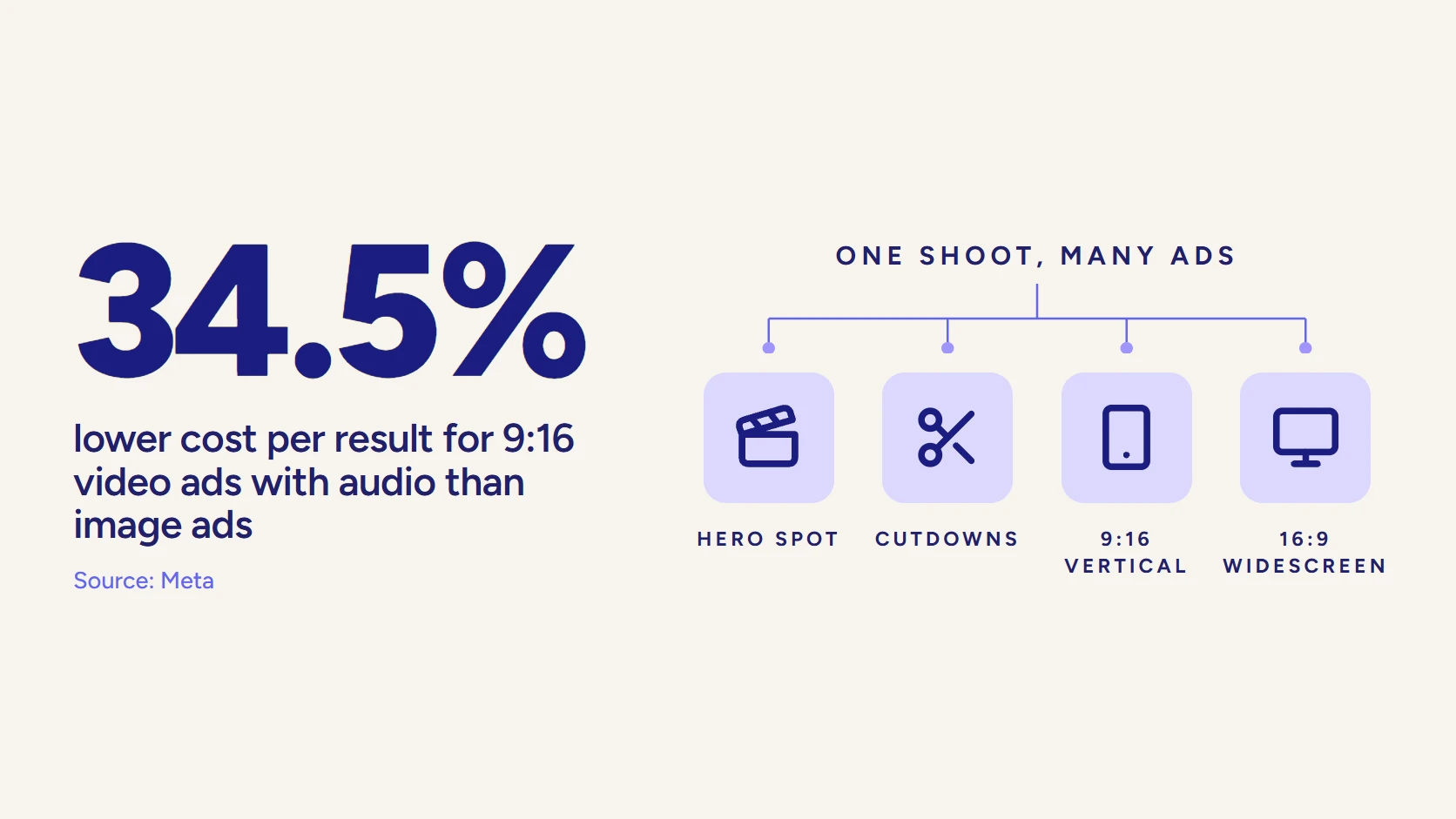
- Channel-ready cutdowns for paid social and retargeting, all from the same days on set.
Judged per asset rather than per shoot, a coordinated program runs far more efficiently than commissioning each corporate video as a one-off, and it keeps every piece looking like one brand. If you want the underlying logic in one place, our guide to the video marketing funnel maps each format to the stage it serves and the metric it should move.
LocalEyes Video Production Denver
See how LocalEyes Video Production Denver builds performance video for B2B marketing teams.
How Do You Produce a High-Budget Product Launch Video in Denver?
Produce it as a campaign, not a clip. A product launch is the highest-leverage video a Denver B2B team will commission and the one with the least room for error, because the asset has a date attached, an audience that will not see it twice, and a revenue target riding on it.
Start with the launch narrative rather than the shot list. The video’s job is to make a complex product legible and desirable to a specific buyer in under two minutes, which means the message architecture, what problem, what shift, what proof, has to be locked before the shoot. This is where the Video Blueprint earns its cost, because it forces the launch team, product marketing, and the crew to agree on the story and the success metric while changes are still cheap, so the shoot becomes execution instead of discovery.
High-budget launch work usually blends live action with motion graphics or 3D so the product can be shown in ways a camera cannot reach, through cutaways, interface animation, and cleanly rendered detail. That same combination lets one launch shoot flex into a family of assets, a hero film for the announcement, a tighter product cut for the product page, and short vertical cutdowns to fuel paid social and retargeting in the weeks after go-live.
Budget and timeline discipline are what make it land. A premium launch program is engineered so the biggest decisions, script and creative direction, are approved early and the costly shoot days are fully planned, which is how a demanding shoot still hits a fixed launch date. For a national rollout, the same asset localizes and versions across markets without a reshoot, so a Denver launch scales to the rest of the country while holding one standard.
What Does Executive Communications Video Require?
It requires managing the person as carefully as the picture, because the audience is often a board or the entire company and the margin for an off-message line is thin. Executive video is a different discipline from marketing video, even when the same crew shoots it.
Managing the Person, Not Just the Picture
A leadership message, a keynote, an earnings or all-hands address, or a founder’s launch statement carries reputational weight, and the viewer is frequently internal rather than a buyer. Let the delivery go wooden or the line drift off message, and the cost is not a soft metric, it is trust. The craft that matters most here is usually invisible: a calm set, a teleprompter workflow that lets a busy executive sound natural, a lighting and lens choice that flatters without feeling staged, and a director who can pull a genuine take from someone who does not perform for a living.
Denver’s altitude and hard light make a controlled interior or a carefully scouted exterior the safer bet for this work, and an experienced local crew plans the environment rather than fighting it. Because these assets touch stakeholders well beyond marketing, a confident leadership film supports employer brand and recruiting, anchors an account-based sequence aimed at a key account, and reassures a board that the company is in steady hands, so aligning on the message before the shoot is not a nicety, it is the whole job.
Event Capture at Real Denver Scale
Event capture belongs in the same conversation, and Denver gives it real scale. The Colorado Convention Center offers roughly 2.2 million square feet of space, including about 584,000 square feet of exhibit hall, so a company hosting a user conference, an investor day, or a leadership summit here is often working a genuinely large stage. That scale is wasted on a crew that simply records the room, whereas a partner who plans event coverage as content, a keynote film, speaker clips, and social cutdowns, turns a single day into weeks of channel-ready assets.
So treat executive video as a standing capability rather than a scramble before every event. A partner who already knows your leaders, your brand system, and your standard can turn a keynote or a customer-proof piece around on a compressed timeline, which is exactly when the stakes tend to be highest.
In-House, Freelancer, or Agency: Which Is Right in Denver?
Use in-house for volume and speed, a freelancer for a contained one-off, and an agency partner for the high-stakes campaign work that has to perform. The question surfaces on every budget cycle, and the honest answer is that it depends on what the video has to do, because each model is built for a different job.
| Consideration | In-house team | Freelancer / small crew | Agency partner |
|---|---|---|---|
| Best for | High-frequency content | A contained one-off | High-stakes campaign work |
| Cost per asset | Lowest once gear is owned | Low for a single day | Premium, priced to outcome |
| Strategy layer | Limited | Usually none | Built in (the Video Blueprint) |
| Capacity at scale | Caps at team size | Caps at one calendar | Deep bench, no single point of failure |
| Right job | Weekly social, recruiting reels | Simple projects you already scoped | Launches, exec films, national rollouts |
An in-house team is unbeatable for cadence, since weekly social clips, recruiting reels, and quick internal updates cost less per asset once the gear and the salary are already on the books. What that team rarely has is the range to produce a launch or an executive film at the top of the market, and a freelancer or small crew fits a single well-defined project but caps out at one person’s calendar and backup plan the moment you try to scale.
An agency partner earns its premium on the work you cannot afford to get wrong, because a commercial video production Denver project with a fixed launch date, a board-facing message, or a national rollout needs producers, a strategy layer, and a bench deep enough to absorb a sick day or a weather call without missing the date. The most efficient setup is often a blend: keep the high-frequency work in-house, then bring in a corporate video production partner for the two or three assets a year where a miss is measured in pipeline, not in likes.
How Long Does a Denver Video Project Take?
Most corporate projects run about 30 to 45 days from kickoff to final delivery, with the strategy and approval stages, not the shoot, eating the most calendar. The timeline surprises first-time buyers because the filming they picture is the shortest part of it, and a typical B2B project moves through four stages where knowing the time split tells you where your own decisions carry the most weight.
The four stages of a Denver video project (about 30 to 45 days)
- Strategy and pre-productionThe goal, the script, and the plan get locked here, and this is where a slow round of internal approvals can quietly add a week. It is also the cheapest place to make a change.
- ProductionThe visible stage and usually the quickest, often one to three shoot days for a focused B2B asset. A well-planned pre-production keeps those expensive days from slipping.
- Post-productionThe long tail of editing, motion graphics, color, sound, and revision rounds. Animation-heavy or 3D-heavy work stretches here, so the format you chose shows up again in the schedule.
- Versioning and deliveryThe master becomes the cutdowns each channel needs, from vertical social edits to a search-friendly website version, closing out the timeline.
Once you can see the full video production process end to end, the levers that protect a deadline are obvious, and both of them sit with you rather than the crew:
- Approve the script fast. A slow round of internal approvals in pre-production quietly adds a week, and that is the cheapest place in the whole project to make a change.
- Keep revision rounds tight. Animation-heavy or 3D-heavy work stretches in post, so a clear feedback process protects the final delivery date more than any amount of overtime.
What Does B2B Video Production Cost in Denver?
Premium B2B campaign video in Denver generally starts around $20,000 for a focused project and scales into $50,000 to $150,000 for a multi-asset program, priced to the outcome rather than the lowest bid. Pricing is the question the ranked “Denver video company” pages tend to dodge, and the one marketing leaders care about most.
The public listings show a wide band. Minimum project budgets commonly run from about $1,000 to $25,000 and up, with hourly rates for listed firms clustering around $100 to $200 an hour, and that range is broad because it mixes single social clips with full campaigns, which makes it close to useless for planning a launch.
| Package | Investment | Best for |
|---|---|---|
| Brand campaign | $50K | Single hero film + channel cutdowns |
| Growth campaign | $75K | Hero plus supporting assets across the funnel |
| Multi-asset campaign | $100K | Several formats, multiple markets |
| Enterprise campaign | $150K | Full multi-market, multi-stage rollout |
Two things decide where a project lands on that ladder. The first is the asset set, since a single hero film costs less than a launch that also has to feed product pages, sales enablement, and a month of paid social, and the second is reach, since a Denver-only program is lighter than a national rollout that has to hold one standard across ten markets. Underneath those two sit the line items that actually move a quote:
- Crew size and shoot days. More setups and more days on set raise the number the fastest, so a tight, well-planned schedule is the biggest cost lever you control.
- Motion graphics and 3D. Animation-heavy work adds post time, which is why an aerospace or SaaS explainer often costs more than a straightforward interview film.
- On-camera talent and location. Professional talent, permits, and access at premium Denver locations each add real line items to a quote.
- Revision and versioning depth. The number of cutdowns and the depth of the review process decide how much of the budget lands in post.
That is how two “two-minute videos” can be priced a bracket apart and both be fair. For a fuller breakdown of what sits inside each bracket, our guide to corporate video production costs walks the drivers line by line, and judged against the pipeline a launch or an executive campaign is meant to generate, that spend is measured in return rather than in day rates.
Video that has to work?
Book a discovery call with LocalEyes Video Production and start from the goal, not the brief.
How Do You Tie a Denver B2B Video to Pipeline?
Tie it to pipeline by deciding the metric before you shoot, then tracking the video through the same funnel your marketing team already reports on. So much corporate video fails to prove its worth for one reason, nobody defined worth before the shoot, so view counts pile up, the asset feels successful, and no one can say whether it moved a single deal.
Start by naming the metric the video is accountable for, because one asset should own one primary number rather than a vague sense of reach. The metric that matters shifts with the format and the stage it serves:
- Brand film. A top-of-funnel film should move reach, qualified traffic, and brand-search lift, the early signals that awareness is actually landing.
- Launch or product video. A consideration-stage asset should move demo requests and influenced pipeline, the numbers a launch is ultimately judged on.
- Customer story. A decision-stage proof piece should move win rate and sales-cycle length, since its whole job is to shorten the path to a signature.
Then instrument it. Landing-page conversion rate, view-through on paid social, and assisted conversions get you started, and for high-intent assets the influenced-pipeline and closed-won figures your CRM already tracks translate a video into revenue language a CFO recognizes. Sales enablement is the quiet multiplier here, because a customer testimonial a rep sends at the decision stage can shorten a cycle in a way no view count captures, so usage inside the sales motion belongs in the scorecard alongside the marketing metrics.
How Do You Distribute and Repurpose a Denver Video?
Distribute one shoot into many cuts across the funnel, because the asset earns its budget in reuse rather than in a single upload. Here is the common, costly habit: spend heavily on a shoot, post one master file to the website, and move on, when the value was in the footage all along and most of it never ran.
Think in cuts rather than in a single video, because one set of shoot days can produce a whole library if you plan the deliverables up front instead of going back for them later:
- A hero film for the homepage and a tighter product cut for the launch page.
- Paid-social versions at fifteen and thirty seconds, plus a vertical set built for feeds.
- Speaker and customer clips a rep can drop into an email or an account-based sequence.
- Stills and pull quotes for email, decks, and organic social, harvested from the same days on set.
Then map each cut to a channel and a job, since paid social wants short hook-first vertical edits, the website and YouTube reward a fuller search-friendly version, and account-based programs want the executive and customer pieces aimed at named accounts. Sequencing matters as much as format, because the same launch asset can seed awareness at go-live, retarget engaged viewers a week later, and arm sales in the weeks after, so one production keeps working across the quarter instead of spiking once and fading. That discipline of planning the cutdowns into the brief is the difference between a video and a campaign.
What Mistakes Should Denver Companies Avoid With Video?
The recurring mistakes are choosing on price, skipping strategy, picking the wrong format, and forgetting distribution, and every one of them is avoidable at the brief. After enough projects the failure patterns start to rhyme, and naming them is the fastest way to keep your own launch or leadership film off the list:
- Buying on day rate. The lowest bid usually wins by scoping less than you need, and the gap surfaces on shoot day or in a thin edit, so judge value against the outcome rather than the invoice.
- Skipping the strategy step. Rushing to a shoot without a locked goal, audience, and message is how a good-looking video ends up doing no job at all, and the plan is the cheapest insurance you can buy.
- Commissioning the wrong format. A brand film when the funnel needed a product video wastes the whole budget, so decide what the video has to accomplish before you fall for a look.
- Ignoring distribution. One master file on the website leaves most of the footage unused, so plan the cutdowns and the channels before the camera rolls.
- Treating executives like actors. A leader put in front of a camera without a teleprompter workflow and a patient director will read as stiff, and the audience will feel it, so manage the person and not just the picture.
- Hiring a stranger for high-stakes work. A national rollout or a board-facing film is not the place for an untested one-off crew, so match the model to the moment and keep the riskiest work with a proven partner.
Why Do Mid-Market and Enterprise Teams Choose LocalEyes Video Production?
Because it is built to clear the one bar everything above points at: connecting a demanding video to a business result, and proving it has done exactly that before. LocalEyes Video Production Denver is a premium B2B video agency with a single promise, video that drives pipeline, and a method, the LocalEyes Blueprint, that puts a written plan you own in your hands before the shoot and holds the LocalEyes Production Standard across every one of its ten US markets.
LocalEyes at a glance
Those measurable results are the point. An Emmy and 300-plus five-star reviews speak to craft and consistency, a 95-plus Net Promoter Score speaks to how clients feel once the project is done, and verified outcomes like a 90% sales increase for NewAir and more than $2M in enrollment impact for USC speak to the only thing a marketing leader is ultimately measured on. Anchor work for clients on the order of Zapier and Harvard tells a Denver buyer one thing plainly, that they are not the experiment.
For a distributed team, the ten-market model is the quiet differentiator, because a distributed crew with centralized producers means a Denver launch and a coordinated rollout in four other cities look and feel like one program run to one standard. That is the capability a local-only boutique cannot offer and a national vendor rarely delivers without seams.
Shortlisting partners? Compare the field directly. Our roundup of the top video production companies in Denver lays out the market, our corporate video work in Denver shows the range, our Denver brand video page shows how we work, and our Denver explainer video page shows how we make a complex product legible. When you are ready to talk about a specific launch, a leadership film, or a national program, the right first conversation is about the goal, not the gear.
Video that has to work?
Book a discovery call with LocalEyes Video Production and start from the goal, not the brief.
Frequently Asked Questions
How much does video production cost in Denver?
What should I look for in a Denver video production company?
How long does a corporate video take to produce?
Do you work with B2B and SaaS companies?
Can you handle multi-city or national shoots from Denver?
Which industries commission the most B2B video in Denver?
How do you measure whether a B2B video worked?

Founder at LocalEyes Video Production | Inc. 5000 CEO | Emmy Award Winning Producer