Fast answer
Key Takeaways
- Miami has no shortage of crews; for a B2B team the differentiator is a partner that ties video to pipeline, not just camera work.
- Match the format to the buyer stage: brand film for awareness, product video for launch, customer story for proof, executive video for trust.
- For multi-market programs, a distributed crew with centralized producers holds one standard across every city.
- Premium B2B campaign work in Miami typically starts around $20,000 and scales into $50K-$150K programs.
- Vet on process and proof (Emmy recognition, 300+ five-star reviews, Fortune-tier clients), never on lowest price.
Search for a Miami video production company and the first page of results tells you what the city thinks video is for: rooftop event recaps, drone reels banking over Brickell, glossy real estate walkthroughs, and yacht-and-sunset brand films. That reflex is an honest read on where the local market’s attention sits, and the footage is genuinely gorgeous. Miami may be the best-looking city in the country to point a camera at.
But if you run marketing for a mid-market or enterprise company, none of that default is your job. Your job is to move a buyer, fill a pipeline, and prove a return on the spend. This guide is written for that reader, about B2B and corporate video production in Miami, the kind a demand gen or growth team commissions to explain a product, win a category, and carry a sales cycle.
Here is the ground we cover:
- The local default. Why Miami’s market leans toward events and real estate, and where that stops serving a B2B goal.
- What campaign video does differently. How performance work starts from a business outcome instead of a shot list.
- Format by funnel stage. Which video fits awareness, consideration, proof, and trust.
- Vetting and pricing. How to separate a commodity crew from a real partner, and what a serious program actually costs.
Already know you need pipeline over pretty footage? Skip ahead to the format, vetting, and pricing sections. Everything here is built to be extractable, so a busy team can lift the part it needs.
Why Does Miami Default to Events and Real Estate Video, and Why Is That Not Enough for B2B?
Miami leans toward events and real estate video because its economy runs on hospitality, tourism, and property, so most local demand is for content that documents a moment or sells a lifestyle.
The Economy Behind the Reel
The scale behind that pull is real. Miami is a leading global cruise port and a major trade gateway to Central and South America, with a metro economy that runs into the hundreds of billions of dollars. Numbers like those bend the creative market toward glamour, travel, and property storytelling, because that is where the money and the attention have always been.
The Bilingual Advantage, and Where It Stops
There is a second force, and it is a genuine asset. Roughly two-thirds of Miami-Dade residents speak Spanish at home, which makes Miami the most bilingual major market in the United States and a natural launchpad for content aimed at Latin America. That is why so many Miami shops lead with bilingual brand storytelling, and it is also why many of them stop there.
None of that is wrong. It is just not what a B2B marketing leader is buying.
Where the Default Breaks for B2B
When your goal is qualified pipeline for a SaaS platform, a financial services product, or a healthcare solution, a beautiful event recap does not move the metric that gets you promoted. You need video that carries a message through a considered buying cycle, that a sales team can send, and that a media budget can scale behind. The events-and-real-estate default optimizes for a look; B2B campaign work has to optimize for a business goal.
The gap surfaces the moment you ask a vendor a strategy question. Watch how the two starting points diverge:
- The events crew answers with gear. Cameras, drones, turnaround times, and a highlight reel.
- The B2B partner answers with your funnel. Your buyer, the stage you are trying to move, and the outcome the video has to produce.
Same city, opposite instincts. That difference is exactly where the local default falls short.
The Miami events-and-real-estate default, weighed for B2B
Strengths
- Cinematic craft that rivals any US market
- Bilingual storytelling built for Latin America
- Fast, camera-friendly access to iconic locations
Watch-outs
- Optimizes for a look, not a pipeline metric
- Rarely ties the video to a funnel stage
- Usually local-only, so multi-market rollouts fragment
Read the split above as a decision, not a judgment. The cinematic look and bilingual reach are real strengths worth paying for when the brief calls for them. The problem is only that neither one, on its own, ties a video to revenue.
What Makes B2B and Corporate Video Different from Miami’s Usual Work?
The difference is not production value; it is what the video is built to do. B2B campaign video starts from a business objective and works backward to the creative, so every choice serves a measurable result.
Built Backward from the Outcome
Miami is full of crews that shoot gorgeous, high-quality footage, so craft is table stakes. What sets campaign video apart is the sequence: it opens with the goal, not the shot list, and every decision from the script to the final edit answers to a qualified lead, an accelerated deal, or a repositioned brand.
That is the discipline behind The LocalEyes Blueprint, and it runs as a simple sequence you can hold a partner to.
The LocalEyes Blueprint
- Goal-First AlignmentWe settle the business outcome before anyone talks about shots, so the whole production answers to a metric.
- The Video BlueprintYou own a strategic plan before the shoot, so the brief never becomes a moving target once cameras roll.
- The LocalEyes Production StandardOne bar for craft and process holds across all 10 of our US markets.
Corporate videos built this way are not one-off deliverables. They are assets designed to work inside a marketing system, which is a different thing from a nice edit handed back after a shoot day.
One Launch, Two Mindsets
Watch how the two approaches treat a product launch. A general vendor books a shoot day, captures footage, and hands back an edit. A B2B partner treats the same launch as a campaign, planned as one program so the message compounds across channels:
- Hero product film. The centerpiece for the launch moment itself.
- Paid social cutdowns. Short versions cut for the feeds where demand gets created.
- Product-page demo. The piece that converts a curious visitor into a request.
- Customer proof piece. The story a sales rep sends to close the loop.
One is a video. The other drives a launch. That is the whole distinction in a single example.
Formats Become Tools, Not the Point
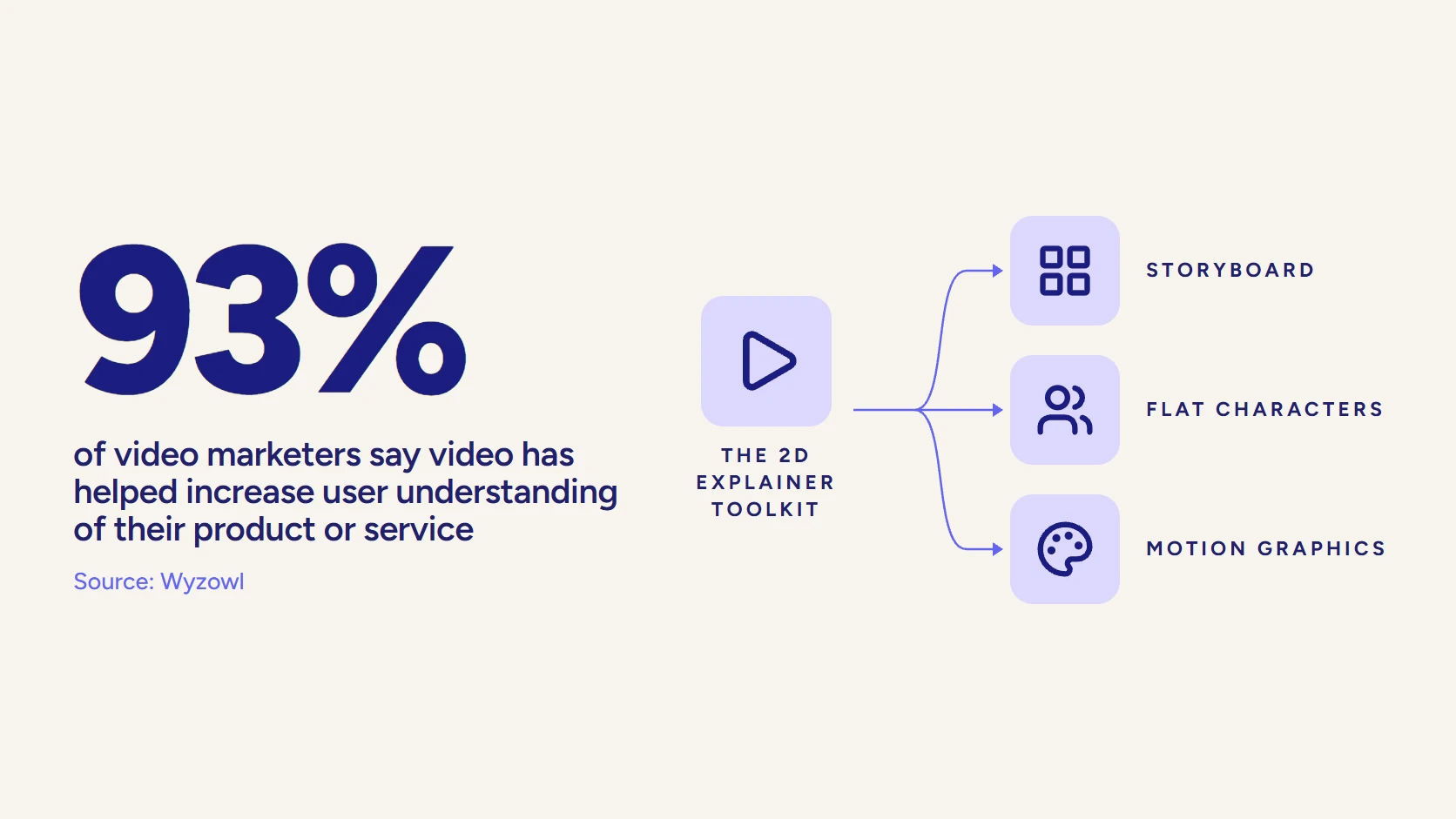
This is also where the disciplines Miami shops advertise, animated explainer work, motion graphics, live action, and training video, become tools rather than the product. A partner who starts from your goal reaches for the format that fits the job:
- Explainer. Earns its place when a complex idea has to land in 90 seconds.
- Motion graphics. Take over when data or an interface has to stay legible on screen.
- Live action. Carries a customer story or an executive’s message with a human on camera.
The practical test is reuse. A single well-built campaign asset should feed demand generation, sales enablement, onboarding, and organic social for a year or more, and re-version into shorter cutdowns without a reshoot. Read that way, cost effective is not the cheapest quote; it is the asset that keeps working long after the invoice clears, which is the whole argument behind measuring video marketing returns.
Which Video Format Does Your Miami Campaign Actually Need?
The most common and most expensive mistake is picking a format because it looks impressive, then discovering it does not fit the stage of the funnel you are trying to move. Start from the buyer instead: where are they in the decision, and what does the video have to do for them there?
Answer that and the format usually names itself. The matrix below maps each format to the buyer stage it serves.
| Video format | Buyer stage | Primary goal | Typical placement |
|---|---|---|---|
| Brand film | Awareness | Reposition, brand halo, recruiting | Homepage hero, paid social |
| Product / platform video | Consideration | Launch, product marketing, conversion | Product pages, launch, retargeting |
| Customer story | Decision / proof | Sales enablement, credibility | Sales, industry, ABM |
| Executive / event | Trust / ABM | Exec presence, keynotes, internal comms | Conferences, ABM, employer brand |
Awareness and Consideration
A brand film sits at the top of the funnel, doing the awareness and repositioning work, and it doubles as a recruiting and employer-brand asset when talent is watching. It is the piece most likely to justify Miami’s cinematic strengths, because a brand hero is where craft and emotion actually pay off. If you are shaping that top-of-funnel story, our take on brand video strategy for modern B2B teams maps the thinking.
A product or platform video lives in the consideration stage, where a buyer is comparing options and needs to grasp what you do and why it is different. This is launch and product-marketing territory, where explainer and motion-graphics techniques turn a dense idea into something a busy buyer can follow. For a Miami team introducing a new release, a sharp SaaS explainer video is usually the workhorse of the program.
Proof and Trust
A customer story is the proof-stage asset, the video a rep sends when a deal stalls and the case study that makes a claim believable because a real customer is the one making it. For considered purchases in financial services, healthcare, or enterprise software, it often outweighs any brand film, because it answers the buyer’s real question: has this worked for someone like me? Our B2B testimonial framework covers how to build one that convinces.
Executive and event video handles trust and account-based marketing. A crisp keynote capture, a founder’s point of view, or an internal-comms piece builds executive presence and gives an ABM program a human anchor. In a relationship-driven market like Miami, where plenty of business still moves through in-person events, this is the format that connects the room to the pipeline.
Most strong programs run two or three of these together, sequenced to the buyer’s journey. The matrix is not asking you to pick one; it is asking you to make sure every asset you commission has a job, which is the discipline behind a real video marketing funnel.
Which Miami Industries Get the Most from B2B Video Production?
The Miami that shows up in a B2B pipeline is not the Miami of the tourism reel. Over the past few years the metro has pulled in finance, technology, and health companies at a pace that reshaped who is actually buying video production services in Miami, and that shift decides which format earns its budget.
Five categories drive most of the serious demand:
- Financial services and fintech. The migration of hedge funds, private equity, and crypto firms into Brickell earned the district its Wall Street South nickname, and those buyers sell trust in a regulated, skeptical category, so the explainer and the customer story do the heavy lifting.
- Trade and logistics. Because Miami is the gateway between the United States and Latin America, freight forwarders, port-side operators, and cross-border SaaS platforms need video that plays to two audiences at once, which is where a bilingual production earns back its cost in a single shoot.
- Healthcare and life sciences. A hospital network, a medtech vendor, or a digital-health platform sells into long, committee-driven cycles, so a patient or clinician proof story usually moves the needle more than a hero brand film.
- High-consideration software and technology. These teams lean on explainer work to shorten the time a buyer needs to understand the product.
- Professional services. Law, consulting, and real estate technology firms downtown use executive and thought-leadership video to turn individual reputations into a company brand.
For the fintech version of this in detail, our Miami fintech explainer guide goes deeper, and software teams can see how we handle explainer video production in Miami specifically.
The pattern underneath all five is the same: the industry sets the buyer’s level of skepticism and the length of the sales cycle, and those two facts, not the local love of a cinematic look, should decide the format you commission.
Video that has to work?
Book a discovery call with LocalEyes Video Production and start from the goal, not the brief.
How Do You Vet a Miami Video Production Company?
Miami has a deep bench of talented shops, from full-service production houses to boutique studios with real festival credits, so the question is not who can shoot well. The question is who will start from your business objective and stay accountable to it.
The fastest way to tell is to watch how three kinds of vendor answer the same basic questions.
| What to check | Generic vendor | Cinematic boutique | LocalEyes |
|---|---|---|---|
| Starts from | A shot list | A creative vision | Your business objective (Goal-First) |
| Deliverable before the shoot | A quote | A treatment | The Video Blueprint you own |
| Multi-market delivery | Subcontracts it | Local only | 10 US markets, one standard |
| Optimized for | Lowest bid | Awards | Pipeline and SQLs |
| Proof | A reel | Festival credits | Emmy, 300+ reviews, Zapier / Harvard-tier work |
Reading the Three Columns
Each column is a different bet, and each fits a different brief:
- The commodity vendor. Leads with a shot list and a price, subcontracts anything outside its zip code, and proves itself with a reel. Fine for a single-location shoot, a poor fit for a campaign measured against revenue.
- The cinematic boutique. Begins from a creative vision, delivers a beautiful treatment, and collects awards. An excellent choice when a brand-craft hero is genuinely all you need, but usually local-only and optimized for the work itself rather than your pipeline.
- The B2B partner. Starts from the objective, hands you a plan you own before the shoot, holds one standard across markets, and measures success in pipeline. This is the standard we hold LocalEyes Video Production Miami to.
The proof in that third column is not a reel. It is Emmy recognition, more than 300 five-star reviews, and campaign work for clients on the level of Zapier, Harvard, and Monomoy Capital.
The Questions to Ask Every Candidate
When you run your own shortlist, steal the table as a checklist and ask every Miami candidate the same five questions:
- What do you start from? An objective, or a shot list.
- What will I own before filming? A strategic plan, or just a quote.
- How do you handle a multi-city shoot? One standard, or a subcontract scramble.
- What do you optimize for? Pipeline, or awards.
- What proof beyond a reel can you show? Named clients and outcomes, or a highlight montage.
Their answers will sort the commodity vendors, the boutiques, and the true B2B partners faster than any portfolio review. Our guide to choosing a video production partner turns these questions into a full checklist. One more item belongs on it: a transparent, written answer to the pricing question, because a partner who will not put deliverables and a fixed fee in writing is telling you something.
LocalEyes Video Production Miami
See how LocalEyes Video Production Miami builds performance video for B2B marketing teams.
How Much Does B2B Video Production Cost in Miami?
Pricing is the question the ranking pages skip or bury, and it is the one marketing leaders care about most. Cost tracks scope, the number of assets, shoot days, locations, and post complexity, so any honest answer is a range, not a sticker.
The Market Benchmark
As a market benchmark, Miami video production is commonly quoted anywhere from about $5,000 for a simple single-video job to $25,000 and up as complexity climbs. Those are industry figures, and they span a wide range of quality and intent. Premium B2B campaign video sits at the top of that market and above it, because the deliverable is a program, not a clip.
As a working benchmark, a focused LocalEyes Video Production project typically starts around $20,000, and multi-asset campaigns are packaged in tiers. Our full breakdown of corporate video production costs shows what each tier includes.
| Package | Investment | Best for |
|---|---|---|
| Brand campaign | $50K | Single hero film + channel cutdowns |
| Growth campaign | $75K | Hero plus supporting assets across the funnel |
| Multi-asset campaign | $100K | Several formats, multiple markets |
| Enterprise campaign | $150K | Full multi-market, multi-stage rollout |
The numbers step up because each tier buys more of the funnel. A brand campaign delivers one hero film plus the cutdowns that let it run across paid and organic; a growth campaign adds the product piece and the customer story that carry a buyer from awareness to decision; a multi-asset campaign spans several formats and more than one market; and an enterprise campaign is a full, multi-stage rollout across cities.
Price per Outcome, Not per Shoot Day
Judge these figures per outcome, not per shoot day. A commodity vendor’s low quote often buys a single asset that solves one moment and then sits idle, while a campaign built to a Blueprint produces a set of assets engineered to keep working across demand generation, sales, and social for a year or more. Price the reuse and the pipeline it supports, and the premium tier is frequently the more cost-effective decision, not the more expensive one.
A few Miami-specific line items move the number, and a transparent partner will name them up front:
- Location permits. A shoot on the water, on the beach, or in a landmark district adds cost and lead time.
- Drone or marine work. Aerial and on-water production carries its own licensing and insurance.
- Bilingual versioning. Common here because so much B2B work reaches Latin America, it adds a post pass rather than a second shoot, so it stays modest when planned into the Blueprint from the start.
We price to the asset set and the result, never to the lowest bid, and we never position on being cheap.
How Long Does Production Take, and Can You Run Multi-Market and Bilingual Shoots from Miami?
Most competitor pages quote six to twelve weeks for a Miami project, and for a complex, multi-location shoot that is fair. For a focused corporate video with a locked scope, we plan on roughly 30 to 45 days from kickoff to final delivery.
Where the Timeline Is Won or Lost
The single biggest driver of a predictable timeline is the Video Blueprint. Because the plan is agreed and owned before the camera rolls, the brief does not drift mid-project, which is where most schedules quietly blow up. The work breaks into three stages:
Inside a 30 to 45 day production
- Pre-productionConcept development, scriptwriting, and Miami location scouting, the longest and most decisive stage.
- ProductionThe shoot itself, run efficiently because the Blueprint locked the brief before day one.
- Post-productionEditing, sound design, motion graphics, and an agreed number of revision rounds.
Pre-production is where the time is really won. Concept development, scriptwriting, and location scouting across Miami and the wider South Florida area happen before day one, so the shoot runs efficiently and post stays clean. We also agree the number of revision rounds up front, a habit our full video production process walks through stage by stage.
Bilingual and Multi-Market by Design
Miami’s bilingual reality is a genuine asset here, and one of the few places the local default and the B2B need line up. Because the metro is the country’s leading Spanish-speaking market and a gateway to Latin America, we plan bilingual and multilingual versions into the shoot instead of bolting them on later, so one production yields English and Spanish cutdowns that carry the same brand into multiple markets.
Multi-market capability is where a distributed model earns its keep. A Miami launch that also needs footage in New York, Los Angeles, or another of our markets is not a subcontracting scramble; it is one program run by centralized producers with a consistent crew standard in every city, so the footage feels like one brand, not two vendors. For a closer look at the local team, our pages on corporate video production in Miami and product video production in Miami go deeper on each.
What Proof Should a Premium Miami Video Partner Show?
On a five- or six-figure spend, proof is the whole game. A reel shows a vendor can shoot; it does not show that the work performs, that clients stay, or that the team can be trusted with an enterprise brand.
Before you sign, ask for the evidence that separates a track record from a highlight reel:
- Verified reviews at volume. A stack of more than 300 five-star reviews speaks to consistency, not a lucky project.
- Real client names. Enterprise brands like Zapier, Harvard, and Amazon-tier organizations that trust the work.
- Awards that judge craft. Emmy recognition from a body that actually evaluates the work.
- Outcomes tied to revenue. Results a marketing leader can defend, not view counts.
LocalEyes at a glance
Read those numbers as a set. Emmy recognition and the review volume speak to craft and consistency; a Net Promoter Score above 95 speaks to whether clients would do it again, which is the honest test of a partnership; and ten US markets means the standard travels.
The outcome figures matter most to a marketing leader, because they connect video to revenue rather than to views: a 90 percent sales increase for NewAir and a $2 million-plus enrollment impact for USC. When you evaluate any Miami partner, hold them to the same bar. Case studies with named clients and real outcomes beat a generic reel every time, and in regulated finance, healthcare, or high-consideration software those specifics are exactly what a skeptical buyer checks for.
How Do You Measure Whether a Miami Video Production Investment Actually Worked?
You measure it by pipeline movement and asset usage, not by views. A five- or six-figure video program is a marketing investment, so hold it to the same accountability as any other line in the budget.
Set the Metric Before the Shoot
Agree the metric before the shoot, not after, and match it to the format:
- Brand film. Judged on reach, brand lift, and assisted pipeline at the top of the funnel.
- Product video. Judged on landing-page conversion and demo requests in consideration.
- Customer story. Judged on how often sales sends it and whether it shows up in the deals that close.
Here is the test most Miami buyers skip. Ask a candidate how they will help you attribute results, and whether the deliverables arrive tagged and cut for the channels where the metric lives. A partner who hands back one master file and walks away has left the measurement to you.
Distribution Is Where the Return Is Won
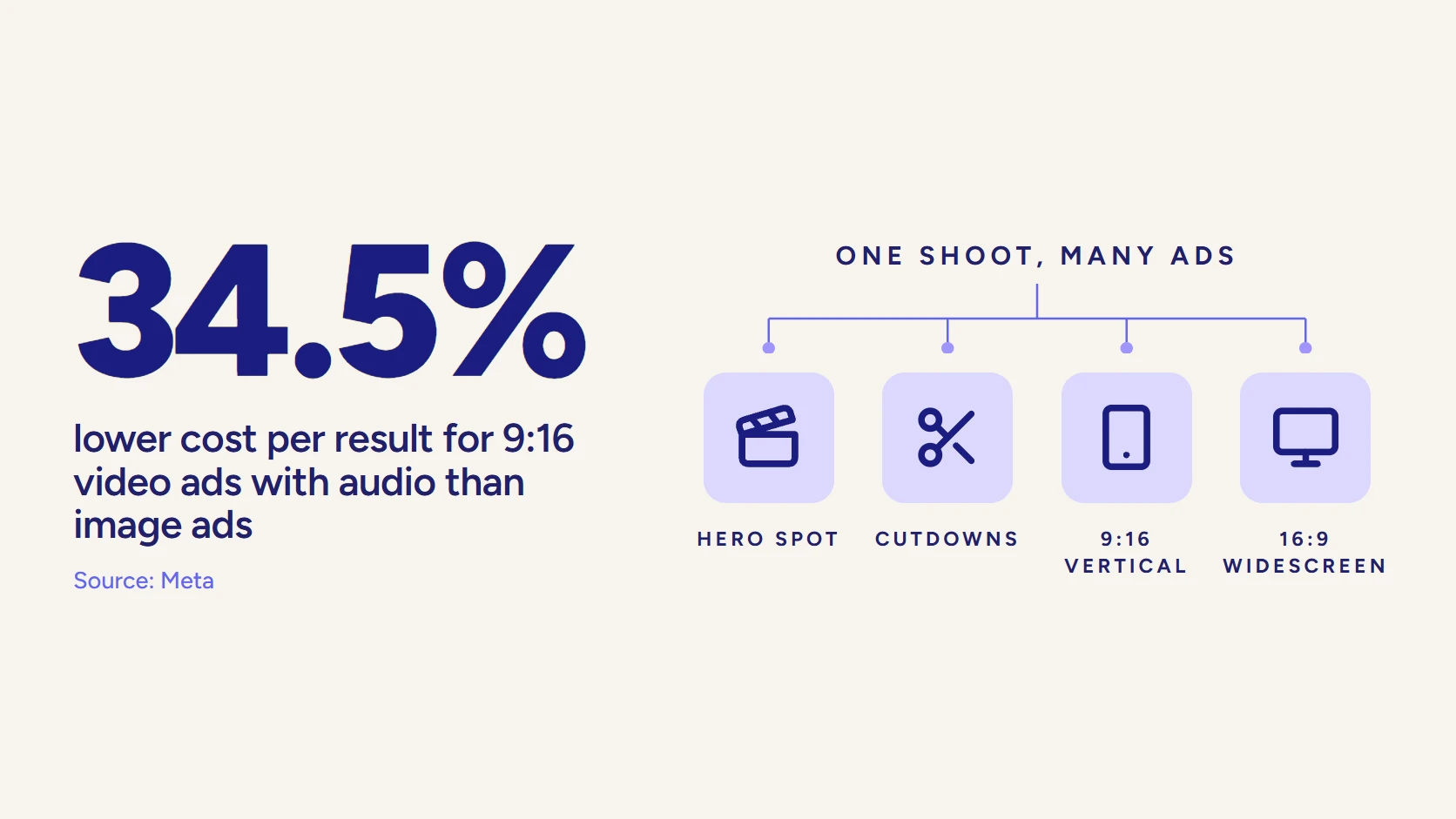
Distribution is the question competitor pages almost never answer, and it is where the return is won or lost. A single interview shoot should leave you with the long-form asset, promotional cutdowns for paid social, a website hero, and clips a sales rep can drop into an email, all planned up front so the footage works across every channel instead of one.
That reuse is the real economics of the spend. When one production feeds demand generation, sales enablement, and organic social for a year, the cost per usable asset falls far below what a cheaper single-video quote ever delivers, and the premium tier quietly becomes the efficient choice. Set the metric, tag the assets, plan the distribution, and a Miami video program stops being a creative expense and becomes a measurable channel.
The takeaway for a Miami marketing team is simple. The city will always be a great place to make beautiful video, and the events-and-real-estate default is a feature of a creative, camera-friendly market, not a flaw.
But if your job is pipeline, hold out for a partner that starts from your goal, hands you a plan you own, proves outcomes, and holds one standard wherever you need to shoot. That is the line between video that looks good in a feed and video that shows up in your pipeline. When you are scoping a specific launch, that is the moment to talk with a team that starts from the objective, not the lens. You can start with our overview of the best video production company in Miami.
Video that has to work?
Book a discovery call with LocalEyes Video Production and start from the goal, not the brief.
Frequently Asked Questions
How much does video production cost in Miami?
What should I look for in a Miami video production company?
How long does a corporate video take to produce?
Do you work with B2B and SaaS companies?
Can you handle multi-city or national shoots from Miami?

Founder at LocalEyes Video Production | Inc. 5000 CEO | Emmy Award Winning Producer