Fast answer
Key Takeaways
- AI accelerates scripting, previz, rough cuts, transcription, and versioning; it does not replace brand or product craft.
- AI generation is not the same as CGI or motion graphics, which are human-directed disciplines, not machine-generated output.
- The reliable pattern in 2026 is hybrid: AI speeds the workflow, humans make the creative and brand calls.
- For B2B brands, unedited AI video risks generic, off-brand, or inaccurate output, so keep a human finishing pass.
- The 2026 tool set (Veo 3.1, Runway Gen-4.5, Kling 3.0, Synthesia, Descript) is powerful for drafts and scale, but hero work still runs through a director.
In 2021, “AI in the editing suite” mostly meant an auto-color button that most editors clicked off and forgot. The picture in 2026 looks nothing like that, and the gap between those two moments is the real story.
A marketing team can now draft a script, storyboard a concept, generate a usable clip, transcribe an interview, and rough-cut a first assembly before anyone settles into the timeline in earnest. That is a genuine shift in how the work starts, and it changes where a team spends its hours.
Not everything wearing the AI label is actually new, though. Plenty of it is older craft in fresh packaging, or a demo built to dazzle for five seconds and quietly fall apart the moment a brand needs ninety consistent, accurate, on-message ones. This guide keeps two things apart: what the 2026 tools genuinely do, and what the marketing keeps promising they will.
Lead demand generation, growth, or brand at a mid-market or enterprise company? The sections on the AI-versus-professional decision, where AI fits, and what it means for B2B are the ones to read closest. First, by the numbers, here is the shift everyone is reacting to.
How Is AI in Video Production Actually Changing the Work?
AI is a set of accelerators, not a replacement for craft. It compresses the slow, repetitive stretches of production and leaves the judgment calls where they have always lived, with a team that knows what the video is for. That through-line runs across this year’s corporate video production trends.
Pre-Production: Where the Hours Come Back First
Pre-production shows it first. Teams hand a messy brief to a language model, get back a shoot-ready script draft, spin up alternate hooks, then generate storyboard frames and previz in minutes rather than days. The time savings are not hypothetical, and they cluster in a few predictable places:
- Ideation. Roughly half of marketers now reach for AI at the idea stage, using it to break a blank page into hooks and outlines.
- Drafting. A rough brief becomes a first-draft script and three storyboard directions to react to, instead of a week of blank-page work.
- Reclaimed time. One widely cited study put the weekly saving for AI-integrated creative teams at around eleven hours, time that moves to refinement and strategy rather than vanishing.
Post-Production: Where the Gains Turn Concrete
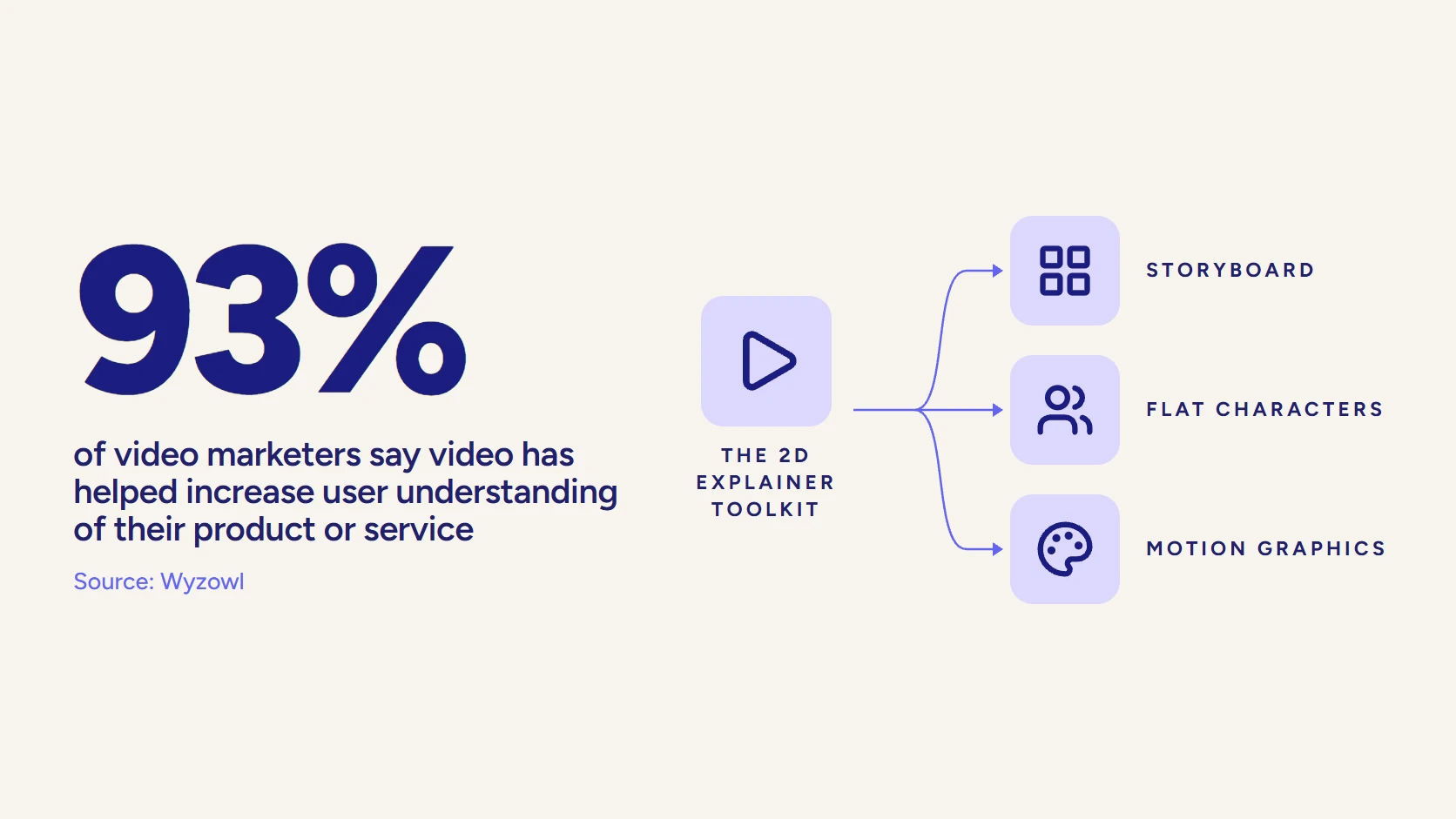
Post-production is where the gains turn concrete. Transcription, auto-captioning, filler-word removal, rough-cut assembly, noise cleanup, and upscaling are all handled as a matter of course now. Push a grainy 480p demo toward a clean 4K master, or scan a five-hour webinar for its highlights and cut a short recap.
Vendors cite editing-time reductions of up to 70 percent on the repetitive stages, and while the honest figure depends on the footage, the direction is settled.
What AI Tools Do Video Teams Use in 2026?
The tools that matter sort into four jobs, not one magic button. A 2024 list is already a museum piece, so here is the current shape of it, grouped by where each one actually helps rather than by whose logo is loudest.
The Four Jobs AI Tools Do
- Generative video models. Google Veo 3.1, Runway Gen-4.5, Kling 3.0, Luma Ray3, and Seedance turn text or reference images into short clips, and they have leapt forward on motion, coherence, and prompt fidelity.
- Avatar and presenter tools. Synthesia and HeyGen build a talking presenter from a script in dozens of languages, saving reshoots and scaling one message across markets.
- Editing and post-production assistants. Adobe Premiere Pro with Firefly, Descript, Runway’s editor, Topaz Video AI, and clip tools like OpusClip and CapCut speed transcription, captioning, cutdowns, object removal, and cleanup.
- Scripting, voice, and previz. General assistants draft scripts and outlines, image models generate storyboard frames, and voice tools like ElevenLabs and Murf produce scratch voiceover for timing.
The generative models grab the headlines, and their leaderboard turns over fast. OpenAI’s original Sora cracked the category open in late 2024, Sora 2 followed in late 2025, and OpenAI then wound the consumer product down in 2026 amid reports it was burning cash. Assume today’s frontrunner is not next quarter’s.
| Tool category | Best for | Strength | Watch-out |
|---|---|---|---|
| Generative video models | Mood boards, concept, B-roll, social tests | Speed, novelty, prompt fidelity | Coherence past about eight seconds |
| Avatar and presenter tools | Scaled, multilingual talking-head | Reshoot-free, many languages | Less on-camera warmth |
| Editing and post assistants | Transcription, captions, cutdowns, cleanup | Real hours saved inside your workflow | Assists, does not direct |
| Scripting, voice, previz | First-draft scripts, storyboards, scratch VO | Fast drafts to react to | Final creative call stays human |
Capability Is Not the Same as Reliability
Here is the trap that sinks tool-buying decisions. A generative model can render native 4K with synchronized audio, yet a single generation still runs about eight seconds before you extend or restitch it, and holding a character, a product, or a brand look steady across a controlled ninety-second piece is still hard. Capability and reliability are simply not the same axis.
Remember that the demos are cut to show the ceiling, while production work lives on the floor. Choose tools by their best-case reel and you end up with a library of clips you can never actually assemble into a finished, on-brand piece.
How Does an AI Video Generator Actually Work?
An AI video generator does not film anything. It predicts pixels, frame by frame, from a mathematical model of what billions of images and clips tend to look like, and knowing the rough mechanics helps a buyer see exactly where it shines and where it slips.
- What is an AI video generator?
- A model that predicts video frame by frame from a text prompt or reference image rather than filming anything. A language layer interprets the prompt, a diffusion model paints each frame, and temporal layers try to hold it consistent over time.
The pipeline runs in four stages, each doing a different job:
- Prompt interpretation. A language model reads your text or a reference image and turns that intent into structured instructions, which is why a vague prompt yields a vague clip while a specific one yields a usable draft.
- Diffusion. A diffusion model begins with a field of random noise and, step by step, removes it toward an image that matches the prompt, using what it learned in training about how real frames are put together.
- Temporal consistency. Video adds time, so the model predicts sequences rather than stills and leans on temporal layers to hold a face, an object, and a light source steady from frame to frame.
- Upscaling and audio. The least glamorous and most reliable stages sharpen the output toward 4K and add synchronized sound through a separate audio model.
That third stage is precisely where generative AI video still breaks, and why coherence, not resolution, is the real 2026 bottleneck. None of it involves a camera, a lens, or a real person, which is the whole point to hold onto when the result has to represent a real product or customer.
Is AI the Same as CGI or Motion Graphics?
No, and getting it wrong produces bad briefs and bad budgets. CGI, visual effects, and motion graphics are human-directed craft disciplines, while generative AI is a separate, newer capability, and trend pieces lump them together when they should not.
The Human-Directed Crafts
Look at the history that usually gets muddled. CGI made its feature debut in the early 1980s, and Adobe After Effects arrived in the early 1990s to power the effects in a generation of films, none of which was artificial intelligence. Those were, and still are, painstaking human crafts: artists model, rig, light, key-frame, composite, and render, frame by deliberate frame, so a motion designer animating a data story is making thousands of intentional choices.
What Generative AI Actually Is
What is genuinely new is generative AI: models that invent imagery or video from a prompt instead of executing a human’s frame-by-frame instructions. Text-to-image diffusion became usable around 2022, the first credible text-to-video models landed in 2023, and the leap to longer, more coherent output came with Sora in late 2024 and the 2025 to 2026 wave of Veo, Runway, and Kling. Why does the split matter to a buyer? Because it changes what you can promise and what you can control:
- Directed pipelines (CGI, motion graphics). Exact, repeatable, on-brand output, because a human directs every element from the first frame.
- Generative models. Speed and surprise, but less control and no guarantee the result is accurate, licensable, or consistent shot to shot.
Treat them as the same thing in a brief and the budget, the timeline, and the expectations all come out wrong. We go deeper in our comparison of AI animation versus studio-crafted animation, and because a photoreal product cutaway or an exact brand system is a directed job, not a prompted one, complex products still lean on human-directed 3D rather than generation.
AI-Generated vs Professional vs Hybrid: Which Should You Choose?
The real choice runs three ways, and for most B2B work the answer is hybrid. Teams frame this as AI versus humans, which is the wrong question. Here is the practical comparison on the dimensions that actually drive the call.
| Dimension | AI-generated | Professional | Hybrid (recommended) |
|---|---|---|---|
| Best for | Drafts, scale, iteration | Brand, product, hero | Speed plus quality |
| Strength | Fast and cheap | Craft, trust, originality | AI accelerates, humans finish |
| Risk | Generic, off-brand, errors | Cost and time | Needs human oversight |
Read the table as a decision, not a ranking. Pure AI generation is the right call for throwaway drafts, high-volume social tests, and internal work where speed beats polish and a mistake costs nothing, while fully professional production is the right call for the hero asset, the flagship product film, and anything where accuracy, brand, and trust are on the line.
The hybrid path is where the market is settling, because it banks most of the speed without surrendering the quality. Agencies that have adopted the pattern report cutting design hours by around 40 percent and production costs by up to 60 percent on the right projects, with no drop in storytelling quality. That maps closely to how a modern B2B brand video strategy gets planned before a single frame is shot.
Where Does AI Fit in the Production Workflow?
AI pays off at every stage, but it does a different job at each. If AI is an accelerator rather than a replacement, the useful question is where in the pipeline it earns that keep, and the human role never leaves the room.
Where AI fits across the workflow
- Pre-productionScripting drafts, storyboards, and previsualization move faster.
- ProductionPreviz and virtual scouting inform the shoot; cameras still roll.
- Post-productionRough cuts, transcription, captioning, and upscaling speed up.
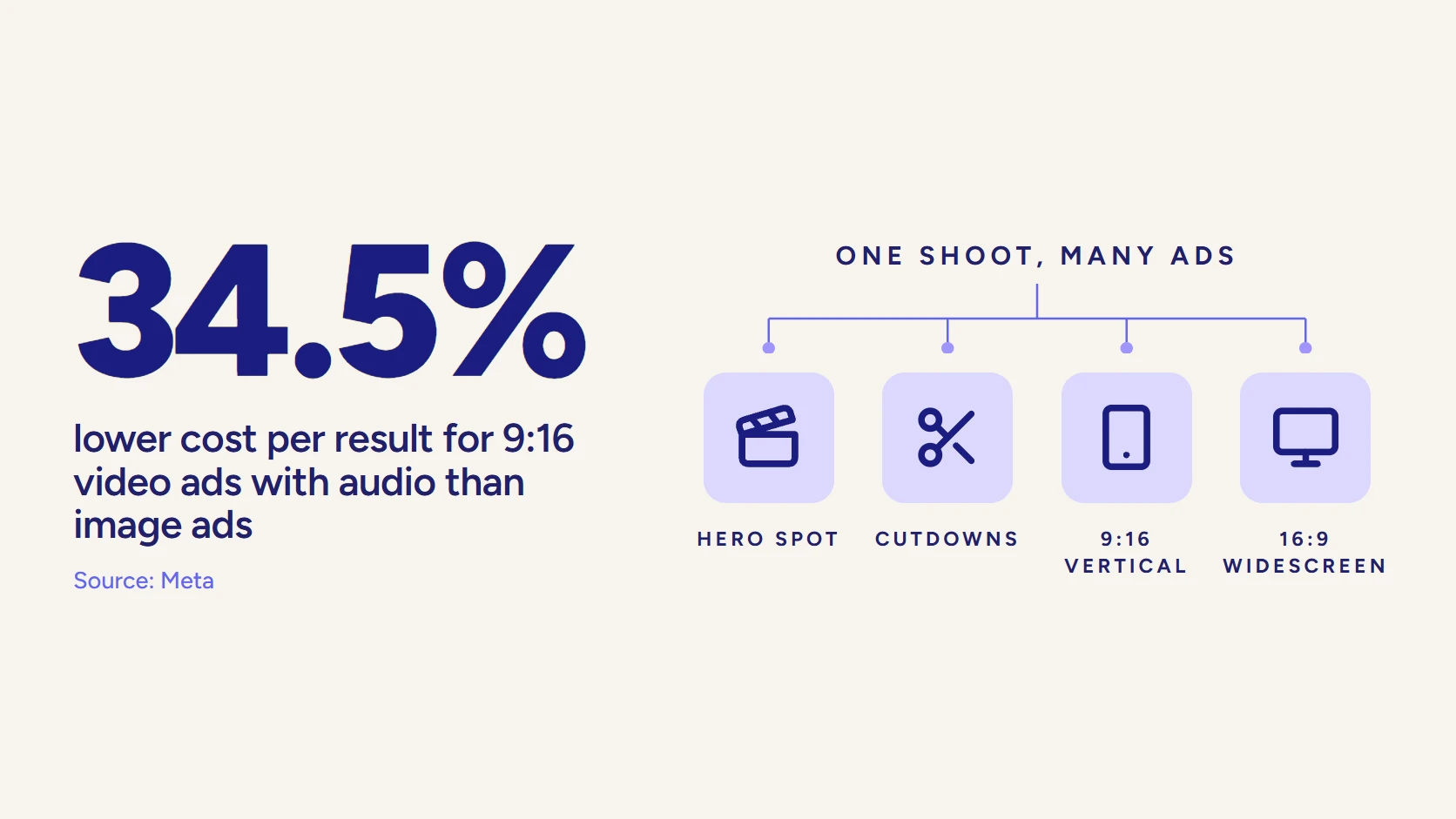
- DistributionVersioning and localization scale one asset into many.
Pre-production is where AI buys back the most calendar time. Turning a brief into a first-draft script, generating three storyboard directions to react to, previsualizing a scene: all of it collapses from days into an afternoon, and the recovered hours go to the story, the offer, and the call to action. On set, the shift is subtler, because previz and virtual scouting help a crew arrive with a sharper plan, yet the camera still rolls and a real subject still carries the trust a synthetic one cannot.
Post-production is the workhorse stage, where transcription, captioning, rough assembly, cleanup, and upscaling are the repetitive tasks machine assistance handles well. Distribution is the quiet multiplier: once a hero asset locks, AI-assisted versioning and localization spin it into channel-ready cutdowns and additional languages, so one shoot becomes a library instead of a single file. Our breakdown of the animation production process shows the same stage-by-stage logic end to end.
Video that has to work?
Book a discovery call with LocalEyes Video Production and start from the goal, not the brief.
Is AI-Generated Video Good Enough for B2B Brands?
Sometimes, in the right role, but not as the hero asset. As a draft, a storyboard, a social experiment, or a supporting B-roll element, AI-generated video can be genuinely good enough. As the asset that represents the brand, carries a product claim, or tells a customer’s story, it needs a human finishing pass.
Where unedited AI video fits, and where it does not
Good enough for
- Throwaway drafts and storyboards
- High-volume social tests
- Supporting B-roll elements
- Internal, low-stakes work
Needs a human pass for
- The hero brand or product film
- Anything carrying a factual product claim
- Regulated healthcare or finance work
- A real customer story that must earn trust
Three risks explain where that line falls:
- Generic and off-brand output. Models train on the average of everything, so their default look is the average of everything, and without a strong human hand AI video drifts toward a recognizable sameness that undercuts a premium brand.
- Accuracy and compliance. Generative models can hallucinate details, misrepresent a product, or produce imagery with unclear licensing, which is no small risk in regulated verticals like healthcare and finance, or for any factual product claim.
- Trust and originality. The same technology that generates a friendly avatar also generates deepfakes, and audiences know it, so a real person, a real place, and a real customer only grow more valuable as synthetic video floods the feed.
B2B buyers making six- and seven-figure decisions respond to evidence they can trust, and an obviously synthetic film works against them. Our breakdown of AI explainer video versus professional production traces where the line sits for one specific format. The honest summary: AI lowers the floor, so almost anyone can make a passable video, but it does not raise the ceiling.
Who Owns AI-Generated Video, and Is It Safe to Use Commercially?
Treat AI-generated video as a licensing question, not just a creative one. This is the question most explainers skip and most legal teams ask first, and the short answer is that the ground is still shifting.
There is a likeness and consent layer too. An avatar or a face the model invents can stray uncomfortably close to a real person, and using someone’s voice or image without a release invites its own claim, which for regulated verticals is not a theoretical exposure.
The Practical Guardrails
The safe path is a short checklist you can hand to legal:
- Prefer indemnified tools. Favor platforms that indemnify commercial use and train on licensed or owned data.
- Keep a human in the loop. Retain meaningful human authorship so the work stays defensible.
- Secure releases. Get written consent for any real people whose likeness or voice appears in the piece.
- Route through review. Send anything customer-facing through legal before it ships externally.
Handled that way, AI is a safe accelerator. Handled carelessly, it is a liability disguised as a shortcut, which is one more reason the hero asset tends to route through a directed pipeline.
How Much Does AI Video Cost Compared to Professional Production?
On paper the gap looks enormous, but the two are not doing the same job. A generative or template tool runs from free up to a few hundred dollars a month, while a premium B2B campaign is a different order of spend, with multi-asset programs typically ranging from about $50,000 to $150,000 depending on the asset set, shoot days, and markets.
| You are paying for | A tool subscription | A B2B campaign |
|---|---|---|
| What it delivers | Raw generation and task automation | A finished asset engineered to move a buyer |
| Includes | Clips, captions, versions | Strategy, direction, on-camera trust, accuracy |
| Priced | Free to a few hundred a month | About $50,000 to $150,000 per program |
| Best read as | An input | The outcome |
Why the Cheap Number Misleads
Judging one by the other is like comparing the price of a word processor to the cost of a signed contract: the tool is an input, and the outcome is the product. The honest way to read cost is per outcome, not per minute. If an AI draft saves a professional team days of assembly on a project that still has to perform, that saving is real and it flows into the work; if an unedited AI clip ships as a hero asset and quietly underperforms, or worse misstates a product claim, the “cheap” video was the most expensive one you made.
This is why the hybrid model tends to win on total cost, since AI removes the low-value hours and the budget concentrates on the decisions that actually determine whether the video returns pipeline. For a fuller map of where the money goes, our guide to corporate video production costs lays out the drivers. Timelines follow the same logic: AI compresses a first draft from days to hours, but scripting, direction, and the finishing pass still take the time they take, and rushing them is where AI-assisted projects most often come apart.
| Package | Investment | Best for |
|---|---|---|
| Brand campaign | $50K | Single hero film + channel cutdowns |
| Growth campaign | $75K | Hero plus supporting assets across the funnel |
| Multi-asset campaign | $100K | Several formats, multiple markets |
| Enterprise campaign | $150K | Full multi-market, multi-stage rollout |
How Should a B2B Team Start Using AI in Video Production?
Start with the workflow, not the flashiest generator, and let AI earn its place one stage at a time. A sensible on-ramp looks like this:
- Map where the hours actually go. Audit a recent project and mark the repetitive, judgment-free stretches: transcription, captioning, versioning, first-draft scripting. Those are the safe, high-return places to hand work to a machine.
- Adopt AI video editing before AI generation. Editing assistants slot into a tool your team already runs and cut real hours with low risk, while generative clips carry more brand and legal exposure, so bring them in second and mostly for drafts and B-roll.
- Keep a named human on the finishing pass. Assign one person to own accuracy, brand, and the final quality check on anything that ships externally. That single gate is what separates an accelerator from a liability.
- Reserve generation for the low-stakes lane. Use it for internal drafts, concept exploration, and social tests where a miss costs nothing, and keep the hero asset on a directed pipeline.
Run it this way and AI compounds quietly in the background while the work that carries your name stays under human control. Want a partner who has already wired this in?
What Does This Mean for Marketing Leaders?
The takeaway is not “adopt AI” or “avoid AI,” it is to be deliberate about which stage and which asset each tool touches. Use AI to compress ideation, drafting, editing, captioning, versioning, and localization, and to run cheap experiments at volume, while keeping human direction on strategy, brand, on-camera trust, and the final quality pass on anything that carries the brand’s name.
The fear that AI removes the need for a production partner gets the economics backward. When drafting and rough editing turn cheap, the scarce, valuable work shifts to judgment: knowing what the video must accomplish before deciding how it should look, and making sure the finished asset is accurate, distinctive, and on-brand. That is the difference between a vendor who renders a prompt and a partner who builds video engineered to drive pipeline.
Why teams keep a human studio in the loop
That is how LocalEyes Video Production works. We fold AI into the workflow wherever it genuinely speeds things up, and we keep Emmy-recognized producers and one consistent production standard on the parts that decide whether the video performs, across ten US markets. For the reasoning behind that stance, see why B2B brands are choosing studio-crafted work, and if a specific launch is on the table, our guide to choosing a studio for enterprise video is the right next read.
Video that has to work?
Book a discovery call with LocalEyes Video Production and start from the goal, not the brief.
Frequently Asked Questions
Can AI replace video production?
What AI tools are used in video production in 2026?
Is AI-generated video good enough for B2B brands?
Is AI the same as CGI or motion graphics?

Executive Producer at LocalEyes Video Production | Emmy Award Winning Producer