Key Takeaways:
|
Animated explainer videos help brands turn complex product messaging into a clearer path for buyers, sales teams, and demand generation campaigns.
According to 2026 performance data released by Broadcast2World, strategically structured animated explainer videos generated measurable lifts in business-to-business (B2B) sales outcomes, including a 45% increase in qualified inbound leads.
Your animation can look sharp, move fast, and still leave the buyer exactly where they started. The difference comes down to whether the video is built around the buyer’s decision in addition to the company’s message.
This guide breaks down how B2B marketing teams evaluate explainer video styles, scripts, and production partners when the goal is pipeline impact, not just a visual asset.
What Is an Animated Explainer Video?
Animated explainer videos are short, structured videos that use motion design, illustration, or animation to explain a product, service, process, or business problem clearly.
An animated explainer video allows an audience to understand a complex offer quickly. It can:
- Introduce the problem.
- Explain how the solution works.
- Show why the product is different.
- Guide viewers to the next step, such as watching a demo, visiting a landing page, or talking to sales.
Why Animated Explainer Videos Work for B2B Marketing Teams
B2B buyers are dealing with crowded categories, longer evaluation cycles, and increasingly technical products. Clearly explaining a platform in under 90 seconds is now a competitive advantage.
Animated explainer videos help marketing teams distill complex messaging into something buyers can quickly understand without requiring a live demo or sales call.
For B2B teams, the value goes beyond awareness:
- Clarifying Complex Products: Animation simplifies workflows, APIs, infrastructure, and abstract software concepts that are difficult to film live.
- Supporting Multiple Funnel Stages: A single animation explainer video can be repurposed for paid media, sales development representative (SDR) outreach, landing pages, onboarding, and retargeting.
- Reducing Sales Friction: Buyers understand the product faster before they speak with sales.
- Improving Message Consistency: Marketing, product marketing, and sales teams all communicate the same core positioning.
The strongest teams plan the video around how it will be used across demand generation channels.
Where Animated Explainer Videos Fit in the Buyer Journey
Different explainer video formats serve different buyer-stage goals. Trying to make one video do everything usually weakens performance.
| Style | Best For | Strength | Limitation |
| 2D Animation | Software-as-a-service (SaaS) platforms, services, and workflow-based products | Simplifies abstract ideas with clean visuals and flexible pacing | Can feel generic if the concept, script, or visual system is not specific enough |
| Motion Graphics | Data-heavy products, process explainers, and demand generation campaigns | Makes complex information easier to follow without overloading the viewer | Needs strong visual hierarchy or it can become too fast and dense |
| 3D Animation | Hardware, manufacturing, medical devices, and technical products | Shows depth, spatial relationships, and physical product detail clearly | Usually requires more time, budget, and technical review |
| Mixed Media | Products that need both human credibility and technical explanation | Combines people, UI, product visuals, and animation in one asset | Can feel disjointed if the creative direction is not tightly managed |
| Live Action | Customer stories, founder messages, and human-led service narratives | Builds trust through real people, settings, and context | Often struggles to explain invisible systems, software workflows, or abstract processes |
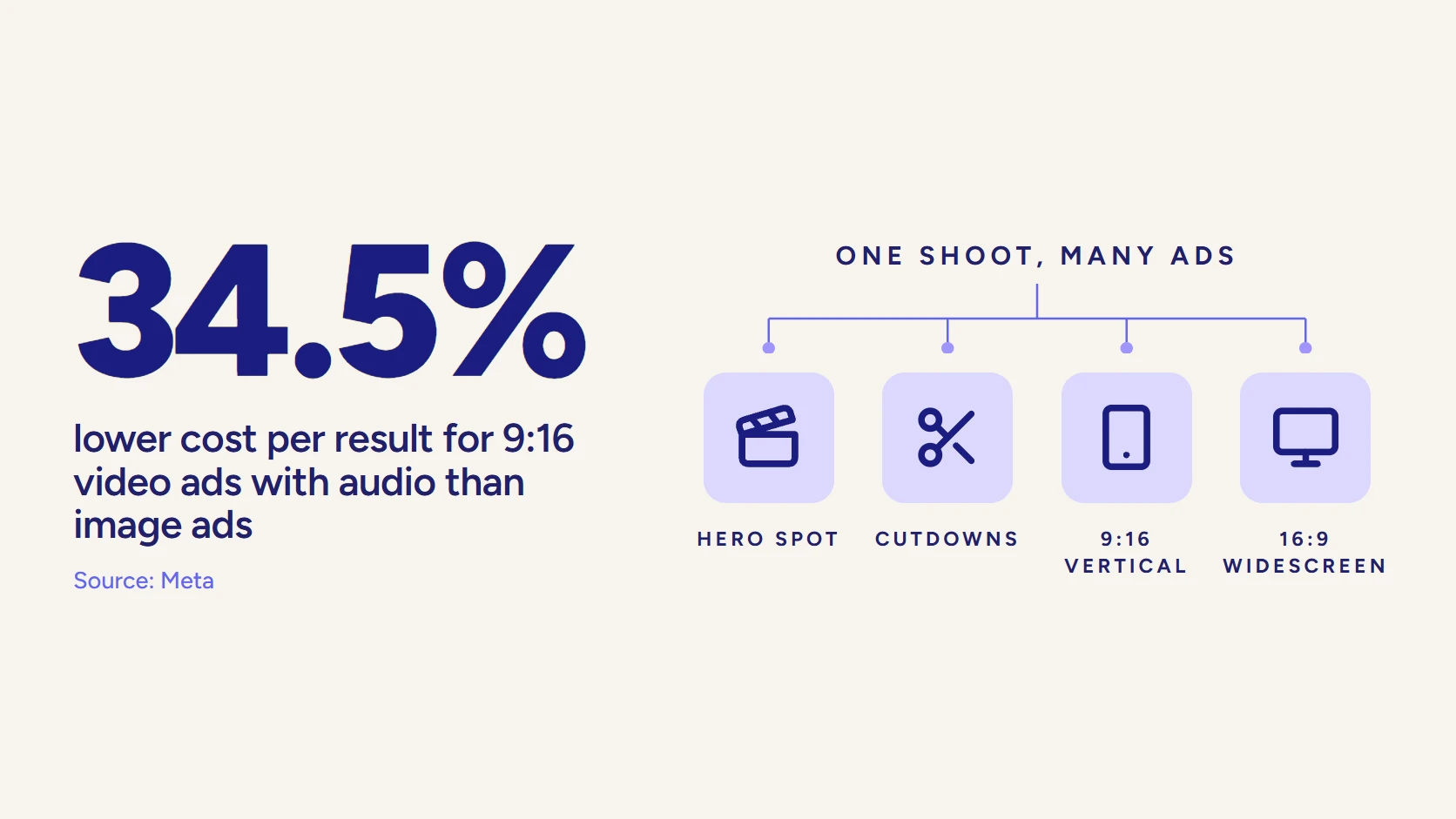
Revenue-focused teams commission multiple cuts from a single production engagement. That approach creates consistency across the funnel while reducing creative fragmentation.
A 60- to 90-second hero asset often becomes:
- 15-second paid social variants
- SDR outreach clips
- Landing page explainers
- Retargeting assets
- Sales enablement placements
Why Animation Often Outperforms Live Action for Complex Products
Live action still works well for customer stories, executive messaging, and recruiting content. But when the product itself is technical, animated explainers usually outperform because they remove physical limitations.
Animation can visualize:
- Back-end workflows
- Security architecture
- Data movement
- AI processes
- Platform integrations
- Abstract operational problems
A live action explainer video often struggles when the product experience happens inside software interfaces or invisible infrastructure.
Animation also gives teams more flexibility during revisions. Updating a motion sequence is significantly easier than reshooting live footage after messaging changes. For SaaS companies, this flexibility matters.
Teams exploring SaaS explainer video examples often find that the strongest assets focus less on product tours and more on business clarity.
Which Explainer Video Styles Work Best for Different Use Cases
Not every animated explainer video style solves the same problem. The format should match the buyer’s information needs and the complexity of the product.
2D Animation and Motion Graphics: Best for SaaS and Services
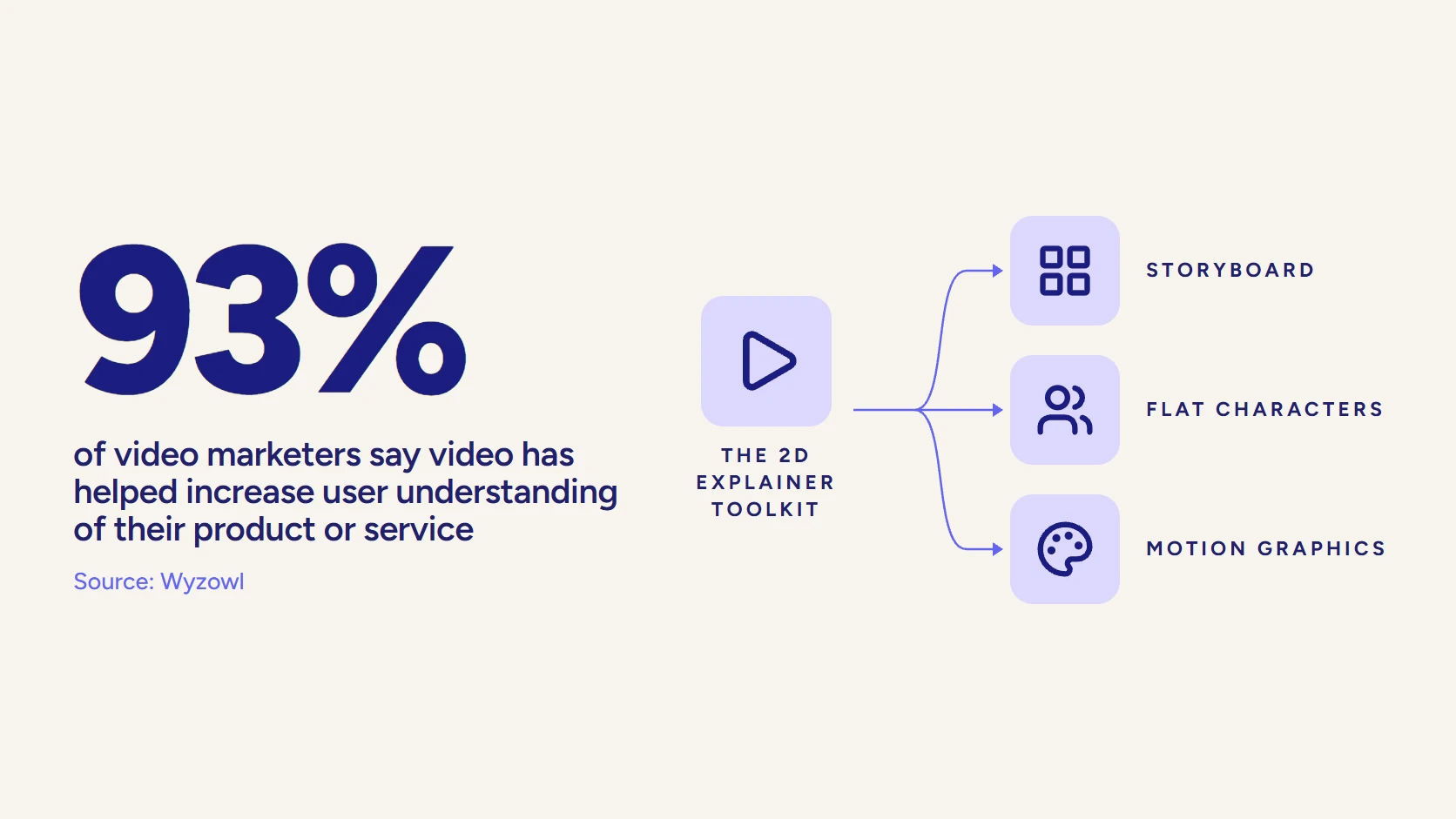
2D animation explainer video formats remain the most effective option for many B2B companies because they balance speed, clarity, and scalability.
They work especially well for:
- SaaS platforms
- Healthcare technology
- Financial services
- Cybersecurity
- Professional services
- Workflow automation products
Motion graphics explainer video formats help simplify processes without overwhelming viewers visually. The best executions prioritize clean pacing, strong visual hierarchy, minimal on-screen text, and clear transitions.
This is also the most adaptable format for repurposing into paid media cuts and channel-specific variants. If your team is comparing popular animation styles, focus less on trendiness and more on how quickly buyers understand the message.
3D Animation and Mixed-Media: Best for Technical
3D explainer videos are useful when the product requires spatial understanding or physical visualization.
Examples include:
- Manufacturing systems
- Medical devices
- Hardware products
- Robotics
- Industrial technology
- Infrastructure platforms
The tradeoff is complexity. Production timelines are longer, revisions are heavier, and the creative overhead increases substantially.
Mixed-media explainers combine animation with user interface (UI) demonstrations, live action footage, product captures, screen recordings, and motion graphics overlays. These formats work well when credibility depends on showing both the people behind the company and the technology itself.
The mistake many teams make is choosing 3D because it looks expensive. Buyers care more about clarity than production complexity.
Why the Wrong Style Can Weaken the Message
A style can look impressive and still be strategically wrong. If the format draws attention to itself instead of clarifying the message, the buyer spends more time processing the creative choice than understanding the value.
Some common mistakes include when teams choose:
- 3D animation for a simple software workflow
- Live action for an invisible technical process
- Fast motion graphics for a message that needs more context
The right style should reduce the need for explanation, build trust, and make the next step easier to understand.
What Makes an Explainer Video Script Work
Strong animated explainer videos start with a clear message before they move into visuals. The script should help the right buyer recognize the problem, understand the value, and know what step to take next.
When that foundation is strong, animation can make the message easier to follow, remember, and use in a real buying conversation.
Problem-First Messaging Gets Attention Faster
Your opening needs to make the right audience feel recognized immediately. Generic frustration language wastes valuable seconds.
- Weak opening: “Managing your business processes can be challenging.”
- Specific opening: “Your sales team is manually updating CRM records while marketing is reporting on different pipeline numbers entirely.”
One sounds like marketing copy. The other sounds like someone who understands operational reality. Effective explainer video scripts identify a concrete operational problem, a specific audience, a recognizable business consequence, and clear tension.
One Clear Idea Always Beats a Product Dump
Many B2B explainer videos collapse because too many stakeholders add too many talking points. The strongest animated explainer videos usually focus on a single core transformation. Not every capability belongs in the first video.
Editorial discipline improves:
- Message retention
- Visual pacing
- Audience comprehension
- Call to action (CTA) conversion rates
This principle applies whether you are building a short motion graphics explainer video or a longer product walkthrough.
Teams researching the elements of a good explainer video often discover that simplicity is usually the hardest part of the process.
Proof and Specificity Build Trust Faster
B2B buyers are skeptical by default. Your script should acknowledge that. Specificity improves credibility because buyers can visualize the practical impact.
Strong explainer videos include:
- Specific operational examples
- Measurable outcomes
- Industry context
- Credible use cases
- Real implementation scenarios
The CTA should also match buyer intent. A top-of-funnel explainer should not aggressively push a demo request. A better CTA might invite viewers to watch a deeper walkthrough, explore use cases, see implementation examples, or compare deployment options.
Why Modern B2B Teams Treat Explainer Videos as Systems
One standalone explainer video rarely drives sustained pipeline outcomes on its own. High-performing teams build systems around the core asset.
That often includes:
- Hero video
- Paid social variants
- LinkedIn cuts
- SDR outreach assets
- Landing page embeds
- Retargeting clips
- Product-specific edits
- Verticalized versions
This is the difference between commissioning a video and building campaign infrastructure. The underlying animation video production process matters because scaling assets efficiently requires planning distribution before production begins.
Otherwise, teams end up retrofitting one generic video into channels it was never designed for.
How B2B Buyers Should Evaluate Explainer Video Agencies
The most visually appealing reel is often the least useful buying signal. Great cinematic work doesn’t automatically translate into demand gen performance. B2B marketing leaders need to evaluate whether a studio understands pipeline mechanics, buyer stages, and demand generation workflows.
Here is what sophisticated buyers look for:
- Messaging Strategy: The studio challenges weak positioning before scripting starts.
- Channel Understanding: Every cut has a defined purpose tied to a specific channel and buyer stage.
- Operational Process: The production workflow reduces internal coordination overhead instead of creating more work for your team.
- Multi-Asset Delivery: Strong partners plan campaign systems rather than delivering one isolated video.
- Business Fluency: The team understands sales qualified leads (SQLs), funnel stages, conversion goals, and demand generation workflows.
- Revision Flexibility: Assets can evolve as positioning, products, or campaigns change.
- Production Scalability: Quality and execution stay consistent across multiple markets, campaigns, and deliverable types.
Checklist: Questions to Answer Before Commissioning Animated Explainer Videos
Before starting production, align internally on these questions. The answers will shape the script, style, distribution plan, and how useful the final asset is after launch.
- Who is the exact audience? VP Marketing and product users require very different messaging.
- What operational problem are you clarifying? Avoid generic positioning.
- Where will the asset live first? Paid social, homepage, SDR outreach, or onboarding all require different pacing.
- What single idea should viewers remember? More talking points usually reduce retention.
- What proof can support the message? Outcomes increase trust.
- What action should viewers take next? Match the CTA to buyer intent.
- What additional variants will marketing and sales need? Plan distribution early.
- How will performance be measured? SQL influence, conversion lift, demo rates, or sales acceleration all require different tracking approaches.
When investing in custom animation video production, these conversations should happen before scripting begins, not after storyboards are approved.
How LocalEyes Approaches Animated Explainer Videos for Pipeline and Clarity
Most explainer videos fail because they are treated like isolated creative projects. LocalEyes approaches animated explainer videos differently: as performance-driven campaign assets engineered for existing demand generation channels.
Production decisions are tied directly to:
- Buyer-stage messaging
- Distribution channels
- Sales enablement
- Paid media performance
- Pipeline contribution
Instead of delivering one standalone asset, engagements are structured around multi-asset campaign systems that include hero videos, paid variants, landing page placements, and sales-ready cuts.
If your team is ready to turn a complex product message into campaign-ready video assets, explore LocalEyes’ explainer video production services. See how we build explainers for pipeline, sales enablement, and buyer clarity.

Founder at LocalEyes Video Production | Inc. 5000 CEO | Emmy Award Winning Producer