
Fast answer
Key Takeaways
- Video production cost tracks the deliverable list and production complexity, not a day rate, which is why the same brief can be quoted thousands of dollars apart.
- Pre-production, the shoot, and post-production each claim a fixed slice of any budget, so cutting one stage quietly cuts the finished quality of all three.
- Market rates in 2026 run from simple social clips to cinematic brand films, so a quote only means something once scope, crew, and deliverables are attached.
- Prove the return before the invoice: video drives leads, trust, and conversions, and the strongest ROI comes from reusing one shoot across many finished assets.
- A LocalEyes Video Production engagement runs $6,000 to $20,000, with a single testimonial or case-study video from $3,000, priced to the asset set.
You ask what a video costs, and the honest first answer is another question: what is the video for? A quote is not a sticker price. It is the sum of decisions about scope, crew, talent, locations, animation, and how many finished cuts you leave with. Change any one of those and the number moves by thousands.
Here is how the number comes together, in the order the decisions actually happen. We start with what you are paying for, then the drivers that widen the range, real 2026 ranges by video type, whether animation saves money, how to build a budget that survives finance, how to prove the return, and where a full production program fits. The aim is a figure you can plan against, not a guess you hope holds.
One promise up front: every benchmark range below is a verified 2026 market figure with its source attached. Where a range is ours, it is labeled as ours.
What Are You Actually Paying For in a Video Quote?
A quote pays for a process, not a day of filming. Every professional video moves through three stages, and each one carries real cost whether or not you see it broken out on the invoice. Understanding the split is the fastest way to read a quote and spot where a cheap one has cut a corner.
The Three Stages Behind Every Number
Think of the budget as three envelopes that get filled in sequence. Miss the money in the first envelope and the other two overspend trying to fix what planning should have solved.
- Pre-production is the planning, scripting, casting, location scouting, and scheduling that decides whether the shoot day runs on rails or on luck.
- Production is the shoot itself: crew, camera, lighting, audio, talent, and location, the stage where most of the money and most of the risk live.
- Post-production is the edit, color grading, sound design, motion graphics, captions, and every channel version, the stage that turns footage into finished assets.
Industry budgets commonly split that work across roughly 20% to 25% for pre-production, 50% to 60% for the shoot, and 20% to 25% for post-production. The shares matter because they expose false economy. A quote that looks cheap because it skimped on pre-production is really a promise to improvise on the most expensive day.
That is also why the per-minute number you see quoted online is so slippery. Across 2026 pricing guides, professional video runs about $1,000 to $10,000 per finished minute, from a basic talking-head piece to a fully animated explainer with custom motion graphics. A single average hides a tenfold spread, so treat per-minute figures as a sanity check, never a quote. For a fuller picture of how a shoot moves from brief to delivery, our breakdown of the video production process walks each stage in order.
Fixed Costs Versus the Ones You Can Move
Part of a quote is effectively fixed and part is yours to shape, and knowing which is which is where real control comes from. Crew, gear, and insurance are largely fixed for a given production level. The movable money sits in scope: how many locations, how much talent, how many finished cuts, and how many revision rounds. You rarely negotiate a rate. You negotiate a scope, and the rate follows.
That distinction also explains why the cheapest quote is so often the most expensive one. A low number usually signals a smaller crew, fewer safeguards, and a plan to shoot fast and fix later. When something goes wrong on the day, and on a live shoot something always does, the savings evaporate into reshoots the budget never planned for.
You shape the scope; the rate only reports it.
What a Bargain Quote Usually Leaves Out
The lowest bid is rarely the same product at a discount. It is usually a narrower scope wearing the same title, and the gaps only surface once you compare line by line. The pieces most often missing from a cheap number are the ones that decide whether the video works:
- Strategy and scripting. The pre-production thinking that makes a video say the right thing, not just look professional.
- Enough coverage. The extra angles, B-roll, and safety takes that make an edit flexible instead of locked to one flawed shot.
- Real audio. A dedicated sound setup, because bad audio is the fastest way to make expensive footage unwatchable.
- Finishing. Color, sound mix, motion graphics, and captions, the polish that separates brand-grade video from a raw recording.
- Versioning. The channel cuts and aspect ratios you actually need, rather than one master you are left to adapt yourself.
None of that is upselling. It is the difference between a video and footage, and it is why two quotes for the same brief can both be honest and still land far apart.
Where Post-Production Money Goes
Post-production is the stage buyers underrate most, and it is where a fifth to a quarter of the budget quietly lives. It is not one task, it is several skilled ones stacked together, and each adds real hours:
- Editing shapes the story from raw footage, the pass that decides whether the video holds attention or loses it.
- Color grading gives the footage a consistent, brand-right look instead of the flat, uneven tones a camera records.
- Sound design and mix balance dialogue, music, and effects, the invisible craft audiences only notice when it is missing.
- Motion graphics and captions add titles, lower thirds, data, and the on-screen text that makes a video work with the sound off.
Rush or skip any of these and the footage looks amateur no matter how good the shoot was. That is why a low quote that trims post is a false saving. It hands you the same footage with the finishing that makes it usable stripped out.
Why Is the Price of Video Such a Wide Range?
Two projects with the same runtime can be quoted tens of thousands of dollars apart, and the gap is never random. It comes from a handful of drivers that each multiply the work behind the camera. Once you can name them, an unfamiliar quote stops looking arbitrary.
The Drivers That Move a Quote Most
Length is one of the smallest levers. These are the ones that actually swing the number:
- Crew size and seniority. A director, a dedicated audio engineer, and a gaffer cost more than a one-person shooter, and the difference shows in every frame.
- On-screen talent. Professional actors, a licensed voiceover, and casting add fees that a founder on camera does not.
- Locations and travel. A studio is controlled and predictable. Multiple real-world locations mean scouting, permits, travel, and lost hours moving between them.
- Animation and motion graphics. Custom animation, visual effects, and 2D or 3D work are built frame by frame, which is why they scale cost faster than almost anything else.
- Revision rounds and usage rights. The number of edit passes and the licensing for music and talent are quiet multipliers most first-time buyers forget to price.
Because those drivers stack, the same subject can anchor a modest social job or a flagship campaign an order of magnitude larger. That is why a partner asks what the video is for before quoting, and why the ranges by video type below are bands rather than fixed prices. Keeping a shoot inside its budget is mostly a project-management problem, which is where our note on keeping a production on schedule and on budget earns its keep.
The Rates Behind the Range, per Finished Minute
Broken down by content type, 2026 per-minute rates run roughly $500 to $3,000 for social and short-form, $1,000 to $4,000 for testimonial and interview pieces, $1,000 to $5,000 for corporate and training video, and $15,000 to $50,000 or more for high-end commercials and brand films. Read those as tiers of ambition, not tiers of quality: the right tier is the cheapest one that still does the job you need done.
Per-Finished-Minute Rates by Tier (2026 Market)
The Costs That Hide Below the Line
The sticker range is only part of the story, and the extras are where a tidy quote quietly balloons after you sign. Common add-ons include extra revision rounds at $500 to $2,000 each, localization at $600 to $2,000 per language per video, and content updates at $2,000 to $5,000 per video when a product changes. None of those are hidden if you ask for them up front, which is exactly the point of asking.
Scope Creep Is the Silent Line Item
Most budget overruns are not the shoot going wrong. They are the scope quietly growing after everyone agreed on a number. A new stakeholder wants a version for their region, sales asks for three more cutdowns, someone remembers captions in two languages, and the tidy quote drifts upward. Each request is reasonable on its own, which is exactly why the total slips past the plan without a single bad decision.
A seasoned team compounds the same effect from the other direction, in your favor. It costs more per day and yet often less per finished asset, because it plans the versions in from the start and captures them in one pass. A cheaper crew that has to come back to grab what it missed turns a single production into two. Paying for judgment up front is usually the frugal choice, not the extravagant one.
Complexity and Logistics, the Quiet Multipliers
Underneath the visible drivers sits a second layer that scales with ambition: complexity and logistics. A shoot that spans several days, moves between cities, coordinates a dozen calendars, or needs permits and insurance for a public space carries coordination cost long before a camera turns on. The more moving parts, the more producing it takes, and producing is real, billable work. That is why a project’s scope and logistics, not its final runtime, are the honest predictors of what it will cost.
Does a Longer Video Automatically Cost More?
Only a little, and far less than intuition suggests. Doubling a finished video’s length does not double its cost, because the expensive parts, planning the shoot and lighting the set, happen once regardless of runtime. What actually adds cost is added complexity: another location, another day, another round of animation, another batch of deliverables. A tight brand film with a full crew and custom motion easily outcosts a plain interview shot in one room. Buy the production values the message needs, then let the length follow the story.
Complexity sets the price. The clock barely moves it.
How Much Does Each Type of Video Cost in 2026?
Averages mislead because a testimonial and a brand film are barely the same product. The useful answer is a band per format, verified against current rate guides. Read them as starting points that scope, crew, and deliverables then move within.
Search “how much does a video cost” and you get a single blended average that is useless for planning, because it mixes a $1,500 social clip with a six-figure commercial into one meaningless midpoint. The fix is to price the format you actually need, then adjust for your scope. The table below does the first half, and the rest of this section does the second.
| Video type | Typical 2026 market range | What sits inside the number |
|---|---|---|
| Social / short-form | $1,500 to $5,000 | Single camera, tight edit, a few cutdowns |
| Explainer (animated) | $3,000 to $8,000 | Script, voiceover, custom animation, revisions |
| Testimonial | $3,000 to $15,000 | Interview capture, B-roll, one to two finished cuts |
| Event / conference | $3,000 to $20,000 | Multi-camera coverage, recap, speaker clips |
| Product demo | $5,000 to $25,000 | On-screen product, motion graphics, versioning |
| Training / onboarding | $5,000 to $15,000 | Per module, screen capture, accessibility |
| Brand / promotional film | $8,000 to $30,000+ | Concept, crew, talent, color, sound, story |
The Ranges Buyers Ask About Most
Here is where the common formats land in 2026 market data, before your specific scope is applied:
- Social and short-form. Simple, single-camera social content runs about $1,500 to $5,000, built for feeds where a tight cut and a few versions matter more than a big crew.
- Explainer video. A 60-second animated explainer commonly runs $3,000 to $8,000, with freelancers near $1,000 to $2,500 per minute and expert agencies past $10,000.
- Testimonial video. Customer stories land around $3,000 to $15,000, driven by capture method, how many people you film, and the number of finished cuts.
- Event and conference video. Coverage plus a recap runs roughly $3,000 to $20,000, scaling with cameras, rooms, and how fast you need clips.
- Product demo. A demo with motion graphics and versioning sits near $5,000 to $25,000, depending on how much of the product is shown on screen.
- Training and onboarding. Priced per module, training video runs about $5,000 to $15,000, with accessibility and updates adding to a longer library.
Brand and promotional films sit at the top, roughly $8,000 to $30,000 for agency-level work, and climb from there with ambition. Levitate Media’s 2026 brand framework prices a lean single-location production at $15,000 to $30,000, a mid-range production at $30,000 to $50,000, and a full cinematic or multi-day production at $50,000 or more. The pattern holds across all of these: format sets the neighborhood, and scope sets the house.
If you are pricing a specific format, our format guides go deeper on each: what a testimonial video costs, explainer video pricing, event video pricing, and educational video budgets. For broadcast, the math shifts again, which our guide to TV commercial budgets covers.
Zoom out to the whole project and the same shape appears. Vidico’s 2026 marketing-video guide prices small projects at $5,000 to $20,000, mid-range at $15,000 to $40,000, and large productions at $40,000 to $100,000 or more, with most B2B teams landing between $5,000 and $25,000 per video. That mid band is where most serious marketing video actually lives.
Why Deliverable Count Moves the Total More Than Runtime
Two teams can book the identical shoot and walk away with very different bills, because one asked for a single hero video and the other asked for the hero plus a dozen derivative cuts. The shoot day is nearly the same. The edit is not. Every additional finished asset is its own round of editing, color, captioning, and versioning, so the deliverable list, not the length, is the real cost engine in post-production.
This is the number most quotes get wrong in the buyer’s favor, then correct painfully later. Ask for the finished list in writing, count the versions, and price them as line items from the start. A plan for one video that grows into eight after the shoot is the most common way a budget doubles without anyone consciously choosing to spend more.
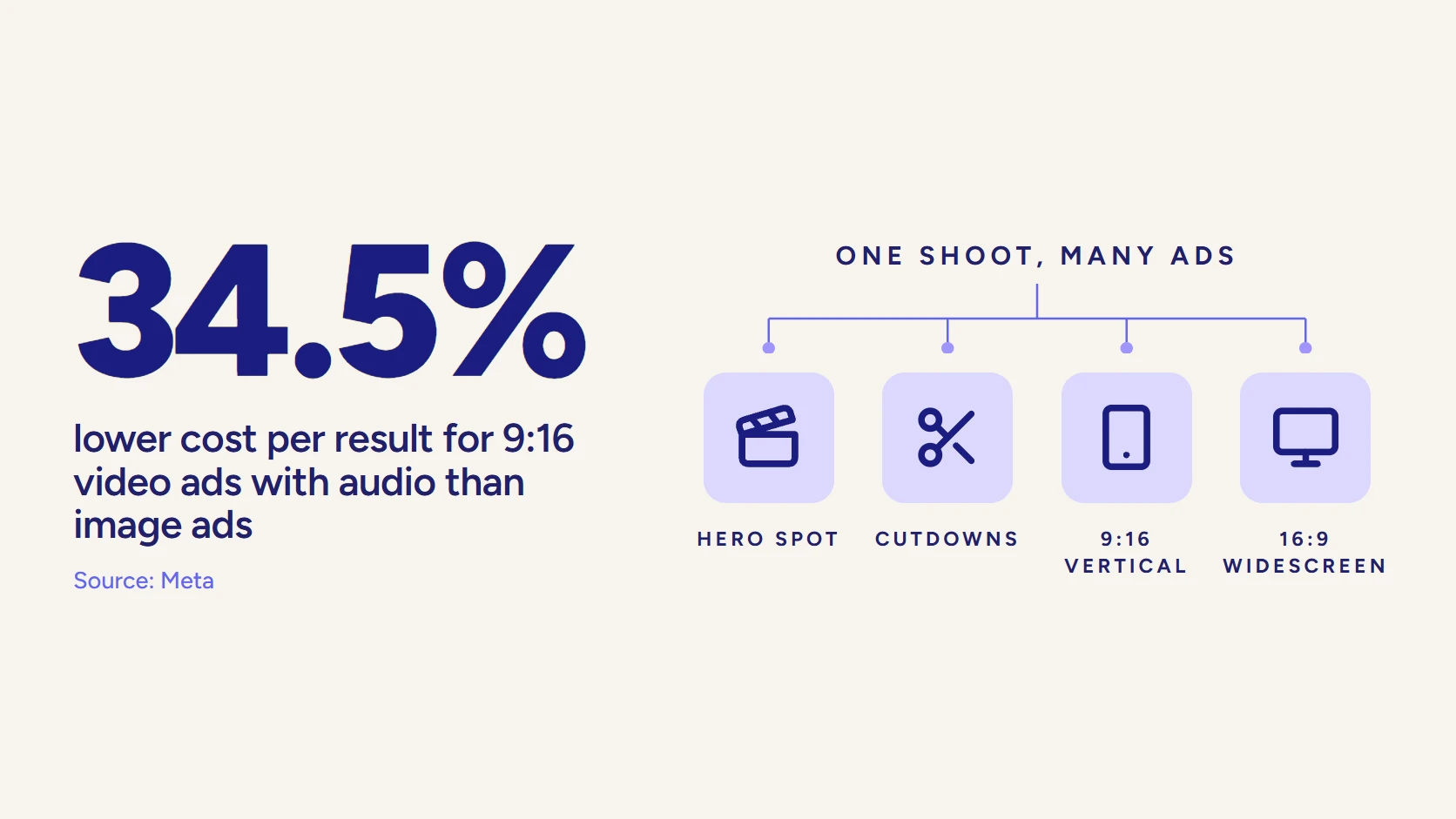
One shoot, many edits, and the edits are the bill.
A Few Formats Buyers Underestimate
Beyond the headline formats, several workhorse video types carry their own ranges and their own traps:
- Recruiting and culture films look simple and are not, because authentic employee moments take patience to capture and careful editing to keep real.
- Webinar and on-demand content is cheap to record and easy to underinvest in, yet it becomes the gated library sales leans on for months.
- Social series priced as a batch beat one-off clips on cost per asset, since one setup can feed weeks of posts.
- Product and demo updates recur every time the product changes, which is why versioning cost belongs in the first budget, not the fifth.
Does Location Change What You Pay?
It can, though less than it used to. Rates in major production hubs like New York and Los Angeles still run higher than in smaller cities, driven by crew day rates and studio costs. Traveling crews and remote collaboration have flattened much of that gap, so a national partner can hold one price band across markets instead of charging a local premium in each. Location matters most when a specific place or on-site talent is part of the creative itself.
Is Animation Cheaper Than Live-Action Video?
Not reliably, and the assumption that it is has blown more budgets than almost any other. Animation removes a crew, a location, and travel, but replaces them with skilled labor that builds every second by hand. The cost moves from the shoot day to the workstation, it does not disappear.
Where animation genuinely wins is on things you cannot film. A software interface, an invisible process, an abstract concept, or a product that does not exist yet are all cheaper and clearer animated than staged. Where it loses is when you want human trust, because a real face in a real room still carries proof that a character cannot.
Cost tracks complexity of style, not the choice of animation itself. A simple motion-graphics explainer is affordable, while custom character animation, detailed 2D scenes, or full 3D work climbs quickly, which is why an animated explainer spans such a wide band. Our rundown of the range of animation styles shows how style choice sets the price, and there is a real argument, laid out in our look at how animated corporate video can outperform live-action, that the format is a strategy call before it is a cost one.
The honest rule is simple. Pick the format the message needs, then control cost through style and scope, not by defaulting to animation as the budget option. If the work is complex or high stakes, our guide to choosing an animation studio covers what separates a bargain from a false economy.
When Each Format Earns Its Cost
Rather than asking which is cheaper, ask which removes the most risk from your message. That reframes the money as an investment in clarity, and it usually points to a clean answer:
- Reach for live-action when you need human trust: testimonials, culture and recruiting films, executive messages, anything where a real face is the proof.
- Reach for animation when the subject is invisible or abstract: software, data flows, chemistry, financial mechanics, or a product that is not built yet.
- Reach for mixed media when a live story needs animated explanation dropped in, common in product marketing and often the most cost-effective of the three.
The option buyers forget is mixed media, and it frequently beats picking a side. A live interview with animated overlays that carry the hard parts gives you trust and clarity in one edit, and it stretches a single shoot across more use cases than either pure format manages alone.
Within animation, the gap between styles is bigger than most buyers expect. Simple 2D motion graphics are the affordable end, kinetic typography cheaper still, while detailed character work and full 3D sit at the top because every asset, rig, and frame is built by hand. Choosing a style is choosing a budget, which is why the smart move is to let the message pick the simplest style that still lands it.
AI tools have started to shave real cost off certain jobs, especially first drafts, synthetic voiceover, rough motion, and quick social variants. They rarely replace a crewed shoot for brand-critical work, where judgment, direction, and a real room still do things a model cannot. Used well, the technology lowers the cost of the routine so the budget can go where it matters. Used lazily, it produces cheap video that looks exactly like cheap video.
How Do You Build a Video Budget That Gets Approved?
A budget wins internal approval when it reads as a plan, not a guess. The teams that get signed off fastest do not lead with a single number. They show what the money buys, stage by stage, and tie every asset to a business job. That is a scope conversation, and it starts before anyone quotes.
How to Build a Video Budget That Gets Approved
- Start from the deliverable listName every finished cut, channel version, and caption file before you ask for a number.
- Split across the three stagesHold roughly a fifth for pre-production, half for the shoot, and the rest for post.
- Price the drivers, not the minutesCrew size, talent, locations, and animation move the quote far more than runtime.
- Book revisions and rights up frontExtra rounds, usage licenses, and localizations are where quotes quietly balloon.
- Tie each asset to a funnel stageA cut with a job attached is a cut a finance team will approve.
Start From the Deliverables, Never the Runtime
The single biggest budgeting mistake is pricing a runtime instead of an outcome. A one-line request to film a conference and a plan for a highlight reel, session recordings, speaker clips, and social cutdowns produce very different quotes at the same length. Name the finished list first, and the number stops surprising you.
From there, a defensible budget does three things: it splits spend across the three stages so nothing gets starved, it prices the drivers rather than the minutes, and it books the revision rounds and usage rights up front instead of discovering them later. Our overview of what B2B teams should budget puts real numbers against that framework.
Keep Cost Down Without Cutting the Result
Cheaper is not the same as wasteful, and there are honest ways to spend less. The trick is to cut scope, not craft:
- Shoot once, cut many. Capture enough in one production day to feed a quarter of content instead of booking a crew four times.
- Batch across a single setup. Filming several executives or products in one lighting and location build spreads the fixed costs.
- Lock the script early. Most overruns come from changing your mind after the shoot, not from the shoot itself.
- Right-size the tier. A social clip does not need a brand-film crew, and paying for one is the most common quiet overspend.
Efficiency is a planning discipline, not a discount, and our guide to keeping production costs efficient separates the savings that protect quality from the ones that quietly destroy it. Where each finished cut belongs afterward is a question your video marketing strategy should answer before the camera rolls.
Every Budget Needs a Contingency Line
Even a well-planned production meets surprises: a weather day, an extra approval round, a location that falls through at the last minute. Professionals plan for it with a contingency line, a small reserve held back against the unexpected rather than an admission that the plan is weak. A budget with no slack is not a lean budget. It is a fragile one, and fragile budgets are the ones that blow past their number the moment the first thing goes sideways.
Sequence the Spend Instead of Front-Loading It
You do not have to commit the whole budget at once. A phased approach, funding strategy and a pilot first and then scaling into the full asset set once the direction is proven, turns one large bet into a series of smaller, evidence-backed ones. It is how cautious teams get started without over-committing, and it tends to produce better work, because the big spend follows a tested creative rather than a hopeful brief.
Turnaround Is a Cost Lever Too
Speed has a price. A same-week edit means an editor is booked exclusively while other work waits, so a rush turnaround carries a premium a comfortable timeline does not. Most standard videos move through post in a few weeks, a simple social cut can land in days, and a multi-asset program runs longer. Build the schedule you need into the budget from the start, because compressing it later is one of the more expensive changes you can ask for.
Video that has to work?
Plan your next video project with LocalEyes Video Production and start from the goal, not the brief.
How Do You Prove ROI on a Video Investment?
The budget question and the return question are the same conversation viewed from two ends. Video earns its cost when it moves a metric a finance team already tracks, so the case for spend is easiest to make in their language: leads, trust, conversion, and reuse.
The Numbers a Finance Team Will Recognize
The category-level evidence is strong and current. In Wyzowl’s State of Video Marketing 2026, 91% of businesses use video as a marketing tool, 93% call it an important part of their strategy, and 82% of video marketers report a good return on investment, down from 93% a year earlier as more teams ship more video. The dip is the real lesson: the return is not automatic, it is a function of whether the video is any good.
Reuse Is Where the Return Compounds
The strongest ROI lever is not a clever edit, it is reuse. One well-planned shoot should become a hero film, a set of cutdowns, and a run of social clips, so the cost is spread across a dozen jobs instead of one. Buyer preference rewards that too, since 71% of marketers say videos between 30 seconds and 2 minutes are the most effective, which is exactly the length a good shoot produces in bulk.
The arithmetic makes the case on its own. Divide a program’s cost by the number of usable assets it produces and the per-asset figure collapses, which is why the projects that look priciest per shoot are frequently the cheapest per finished piece. Budget for what you will actually publish, and an intimidating number often turns out to be the efficient one.
Attribution is where most teams stop short. Decide before the shoot which asset serves which stage of the buying journey, then measure each one against that job. Our guide to measuring video ROI and our map of the video marketing funnel turn that from a vague promise into a tracked number.
Tie the Video to a Number the Business Already Watches
The strongest ROI case borrows a metric finance already trusts rather than inventing a new one. Attach the video to pipeline influenced, landing-page conversion, sales-cycle length, or win rate, and measure the before and after against that line. Landing pages with an embedded video can lift conversion by as much as 86%, the kind of movement a revenue team notices without being taught to care about video.
Where Video Quietly Underperforms
Honesty about the downside is what makes the upside credible. Video underperforms when it is made without a job, published without a distribution plan, or polished for a channel that rewards raw and immediate. A beautiful film nobody is driven to watch returns nothing, whatever its production value. The failure is almost never the camera work. It is a missing plan for who sees the video and what they do next.
So price distribution and measurement into the project from the start, not as an afterthought once the invoice clears. A slightly smaller production with a real plan to put it in front of buyers beats a lavish one that lands in a folder. The most expensive video of all is the one that never gets used.
Distribution is the cheapest fix and the one most skipped.
Should You Produce Video In-House or Hire a Partner?
This is the build-versus-buy question underneath every video budget, and the answer is rarely all one way. An in-house team is worth it for volume and speed on lower-stakes content. A partner is worth it when the work is high stakes, technically demanding, or has to look like the brand at its best.
Doing it in-house is not free, even when no invoice arrives. Gear, software, and the time of people who have other jobs are real costs, and the hidden expense is the learning curve on the shoots that matter most. The math tips toward in-house when you are producing constantly, and toward a partner when you are producing rarely but importantly.
The bill shows up in four places most teams forget to total when they compare building the capability to hiring it out:
- Equipment and software. Cameras, lenses, lighting, audio, and editing licenses that need refreshing as formats and standards change.
- Skilled time. The hours of people hired to do something else, plus the ramp while they learn to shoot and edit well.
- Redundancy and backup. The second camera, the backup audio, and the spare plan a one-person team rarely has on the day.
- Opportunity cost. The flagship projects that come out merely fine because the team was still learning on the ones that mattered.
A useful test is stakes against frequency. Weekly social clips can live in-house once a system exists. A flagship brand film, a customer story a deal depends on, or a launch you only get one shot at belongs with a team that does this every day. Our overview of corporate video production shows what that partner-grade standard looks like across formats.
The framing that keeps this honest is simple: hire out the videos where a miss is expensive, and insource the ones where a miss is cheap. Most growing teams end up running both, and the ones that get the split right stop paying premium rates for routine work and stop cutting corners on the work that carries weight.
What Should You Ask Before You Approve a Video Quote?
A quote is only comparable when you know what sits inside it, and most quotes do not say. Before you sign, run any proposal through the same short list of questions. The answers separate a real scope from a number designed to win on price and grow later.
- What exactly do I receive? Get the full deliverable list in writing: every finished cut, every channel version, every caption and language file.
- How many revision rounds are included? Confirm the count and the price of extra rounds, since add-on edits commonly run $500 to $2,000 each.
- Who owns the footage and the rights? Clarify raw-footage ownership and how long music and talent licenses last before relicensing is due.
- What happens if the shoot day runs over or goes wrong? Ask about backup gear, contingency, and whether any overages are capped.
- Is strategy and scripting included, or extra? A quote that skips pre-production is quietly cheaper because it is quietly smaller.
Line those answers up across two or three vendors and the real price differences appear, which are almost never the ones on the front page of the quote. The lowest headline number frequently hides the smallest scope, and that gap surfaces exactly when you can least afford it, after the footage is shot. A quote you can interrogate is worth more than a quote that is merely low.
None of these questions is adversarial. A good partner welcomes them, because the answers are how a serious buyer tells a real scope from a hopeful one. If a vendor gets cagey when you ask what is included, you have learned something more useful than any price.
What Does a LocalEyes Video Production Program Cost?
LocalEyes Video Production prices a program, not a shoot day. The reason is the same one running through every section above: the value of video is producing many finished assets from one coordinated production, and a day rate quietly punishes exactly that. So the number is scoped to the deliverable list, not to hours on a calendar.
| Package | Investment | Best for |
|---|---|---|
| Quick project (one-day shoot, short social, or explainer) | From $2,500 | A fast single deliverable when you need one clean asset |
| Single testimonial or case-study video | From $3,000 | One proof asset built to reuse across the funnel |
| Full production program | $6,000 to $20,000 | Many finished assets from one coordinated production |
The program comes in three tiers, each scoped to the exact asset set you need to leave with. A quick project, a one-day shoot, a short social video, or an explainer, starts at $2,500. A single testimonial or case-study video starts around $3,000. A full program runs $6,000 to $20,000 and covers strategy, scripting, casting, crewing, direction, the shoot, edit, color, sound, motion graphics, captions, every channel version, post-production, and revisions, with nothing on that list an add-on discovered later.
What moves a project up or down is the number of shoot days, cities, and finished deliverables, and how much animation is involved. Book a call and we’ll scope your project and send a clear quote and a delivery date.
Priced to the asset set means the quote starts from your list, not our calendar. Tell us the finished pieces you need to walk away with, the channels they run on, and the jobs they have to do, and the number is built up from there. That is the opposite of a day rate, where you buy hours and hope the hours produce what you needed. Here the deliverables come first and the price follows them, which is the only way a total stays honest as scope shifts.
The scale behind that price is what makes the reuse math work. LocalEyes Video Production has produced 4,000 videos across 10 US markets with Emmy recognition and 500+ five-star reviews, and cost-heavy programs are where that experience pays off, because the same day of footage has to feed a dozen downstream jobs. You can see the asset sets in our production portfolio, and the full scope in our full-service video production overview.
Read the wide market ranges above as the map and this program as the vehicle. The day-rate videographer competes on the cheapest quote for a single deliverable. A program competes on the total cost of everything you actually need, which is usually the lower number once you count the assets a cheap shoot never produced.
Total cost of ownership is the fair comparison, not the invoice. A lower sticker frequently buys less finished work, so the money you save at signing comes back later as separate commissions, and sometimes as a redo when the one piece you ordered did not perform. Counting the whole outcome once, up front, is what keeps a budget from leaking after it is approved.
That is also why the ranges throughout this guide should be read as context, not as your quote. The market bands tell you whether a number is sane. Your scope, your deliverable list, and the jobs each asset has to do tell you what the number should actually be. Start there, in a scope conversation, and the price stops being a mystery and becomes a decision.
Video that has to work?
Plan your next video project with LocalEyes Video Production and start from the goal, not the brief.
Frequently Asked Questions
How Much Does Video Production Cost in 2026?
What Factors Influence Video Production Costs Most?
How Much Should I Budget for a Corporate Video?
Is Animation Cheaper Than Live-Action Video?
What Is the Cost of Video Production per Minute?
Can I Produce a Video With an In-House Team?
Why Are Video Production Quotes So Different for the Same Project?
What Does a LocalEyes Video Production Engagement Cost?

Founder at LocalEyes Video Production | Inc. 5000 CEO | Emmy Award Winning Producer